Kirjojen hintavertailu. Mukana 11 532 157 kirjaa ja 12 kauppaa.

Kirjahaku

Etsi kirjoja tekijän nimen, kirjan nimen tai ISBN:n perusteella.

8 kirjaa tekijältä Howard Good

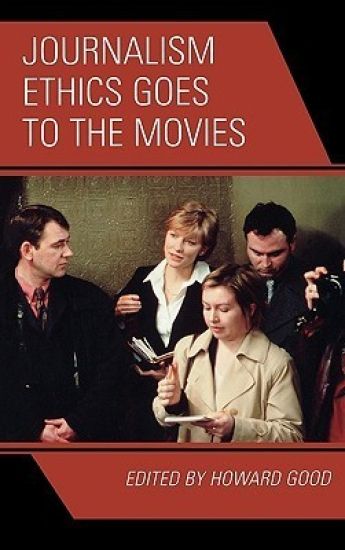
Journalism Ethics Goes to the Movies

Journalism Ethics Goes to the Movies

Howard Good

Rowman Littlefield Publishers
2007
sidottu
How far should a reporter go for a story? What's the role of the press at the scene of an emergency, or a murder? Why has journalism suddenly become so susceptible to plagiarism? Here's a book that poses these and other urgent questions_and offers candid answers. At a time when professionals and the public alike worry that journalism has lost its way, Journalism Ethics Goes to the Movies is available to provide much-needed, accessible guidance. Its twelve chapters, written by some of the nation's leading journalism scholars, explore issues that should concern anyone who aspires to a career in journalism, who works in the field, or who relies on news for daily information. Best of all, as the title suggests the contributors conduct their dynamic and engaging investigations at the movies, where sportswriters, war correspondents, investigative reporters, crime reporters, spin doctors, TV anchors, and harried city editors tackle these pressing issues. Journalism Ethics Goes to the Movies isn't your typical textbook. Using popular movies from Wag the Dog to Good Night, and Good Luck to illustrate the kind of ethical dilemmas journalists encounter on the job, this student-friendly book is sure to spark interest and stimulate thinking.
Journalism Ethics Goes to the Movies

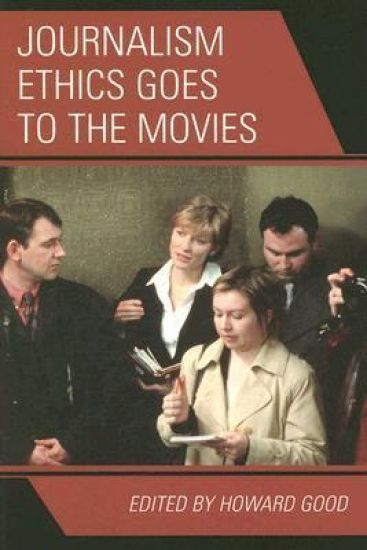
Journalism Ethics Goes to the Movies

Howard Good

Rowman Littlefield Publishers
2007
nidottu
How far should a reporter go for a story? What's the role of the press at the scene of an emergency, or a murder? Why has journalism suddenly become so susceptible to plagiarism? Here's a book that poses these and other urgent questions—and offers candid answers. At a time when professionals and the public alike worry that journalism has lost its way, Journalism Ethics Goes to the Movies is available to provide much-needed, accessible guidance. Its twelve chapters, written by some of the nation's leading journalism scholars, explore issues that should concern anyone who aspires to a career in journalism, who works in the field, or who relies on news for daily information. Best of all, as the title suggests the contributors conduct their dynamic and engaging investigations at the movies, where sportswriters, war correspondents, investigative reporters, crime reporters, spin doctors, TV anchors, and harried city editors tackle these pressing issues. Journalism Ethics Goes to the Movies isn't your typical textbook. Using popular movies from Wag the Dog to Good Night, and Good Luck to illustrate the kind of ethical dilemmas journalists encounter on the job, this student-friendly book is sure to spark interest and stimulate thinking.
Outcasts

Outcasts

Howard Good

Scarecrow Press
1989
sidottu
This book examines how representative films about journalism from the early 1960s to the mid-1980s allegorized the working life of the journalist. The central chapters deal with three popular images of journalists: the war correspondent, the scoop- crazed reporter or ratings-hungry TV executive, and the investigative journalist. Among the films discussed are The Green Berets, The Killing Fields, Under Fire, Absence of Malice, Network, The China Syndrome, and All the President's Men.
Girl Reporter

Girl Reporter

Howard Good

Scarecrow Press
1998
sidottu
Howard Good uses Torchy Blane, the hero of nine Warner Brothers films from the 1930s, as the centerpiece of this important cultural study of Hollywood's infatuation with the female reporter. Good argues that, despite illusions of equality between male and female reporters on film, many portrayals of female reporters in fact reinforce traditional gender roles. Good draws on a variety of cultural materials to deploy his argument. Not only does he include close readings of many important films from the 1930s through the 1990s, but he also presents theater posters, press books, legal documents, comic strips, fan magazines, and film reviews. Other sisters of the female reporter movie role that the book investigates include characters played by Joan Crawford and Katharine Hepburn, as well as recent portrayals of women reporters in popular films such as The Paper, I Love Trouble, and To Die For. This book does not just stop its investigation at the portrayal of women as reporters in movies. Good concludes with a crucial comparison of the female reporter on screen and her counterpart in the real world. He raises disturbing questions about ethics, conduct, and gender relations in journalism that Hollywood films have not yet been able to resolve satisfactorily. Written boldly, Howard Good provides a fresh and exciting look at a classic Hollywood role that supports the possibility that Torchy Blane, and other female film reporters and their real-world counterparts, are the grittiest girls around.
The Drunken Journalist

The Drunken Journalist

Howard Good

Scarecrow Press
2000
sidottu
"No other human problem," a critic once remarked, "seems to have afflicted movie newspapermen more often than drinking." Howard Good's latest book analyzes the stereotype of the hard-drinking journalist, with the goal of discovering why it exists and how it operates in films. Early chapters consider whether there is a historical basis for the stereotype of the hard-drinking journalist;while later chapters deal with films from across the decades, including the 1980s and 1990s. They identify the fate of the romantic couple as a major—if not the major—concern of silent films featuring drunken journalists; explore the many and often conflicting meanings associated with drinking in the 1930s, the so-called "golden age of newspaper films"; and discuss the influence of Alcoholics Anonymous on such newspaper films of the 1940s and 1950s as Welcome Stranger and Come Fill the Cup. The concluding chapter points out that the dominant culture has frequently marginalized subgroups—for example, Native Americans and Irish immigrants—by stereotyping them as drunks, and theorizes that the stereotype of the hard-drinking journalist signals ambivalence not only about drinking, but also about the effects of the press on American life. Written in the clear, incisive style for which Good is known, this book offers illuminating new interpretations of classic newspaper films from The Front Page to All the President's Men. It is a must-read for anyone interested in the implications of popular culture for how we think and live.
Desperately Seeking Ethics

Desperately Seeking Ethics

Howard Good

Scarecrow Press
2003
nidottu
Trends prevailing in the media suggest a seemingly disintegrating concept of media ethics. It is no surprise; being ethical is hard work and, could very well put a person in conflict with prevailing trends. Many of the people cited within the 13 essays of Desperately Seeking Ethics illustrate this_from Socrates and Martin Luther King Jr., who both died for their principles, to reporter David Kidwell of the Miami Herald who chose jail over testifying for the prosecution in a murder trial. This is not just another media ethics book. Engaging and non-conventional it breaks away from the usual text practice of presenting the ethical theories of well-known philosophers in watered-down form. Instead, the contributors, all of whom teach media ethics, select a poem, movie, song, speech, or other cultural document, analyze it for implied or explicit ethical lessons, and then apply the lessons of that work to a specific case that involved controversial media conduct. In addition to endnotes, each chapter contains questions for discussion and a list of further readings. Where possible, the contributors have included all or part of the poems, speeches, and other documents they analyze as sources of ethical instruction and inspiration.
Inside the Board Room

Inside the Board Room

Howard Good

Rowman Littlefield Education
2006
nidottu
Reading Howard Good's latest book, Inside the Board Room, is an education in itself. Humorous, provocative, touching, and philosophical, the 20 essays in this book will open eyes to what really goes on in the classroom and on the school board. Good draws on his extensive experience to examine some of the hottest educational issues including school reform, civic education, the function of honor societies, the decline of reading and writing skills, the role of guidance counselors, and the effectiveness of school boards. Readers may not always agree with his perspective, but they will always be enlightened by it. Whether writing about the perils of standardized testing or the challenges of board service, the author's prose is as fresh as the start of a new school year. Inside the Board Room isn't an abstract treatise, instead it is that rare thing among education books-quick, lively, and down to earth. In the tone of a good friend with a sharp sense of humor, Good shares stories of his experiences as a board member, a teacher, and a parent. This is a book for anyone who has ever taught, served on a school board, or simply tried to raise a well-rounded child. Its mixture of practical advice, moral inspiration, and wry humor will leave a lasting impression.
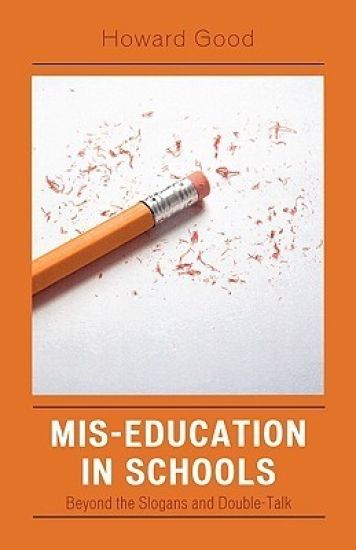
Mis-Education in Schools

Mis-Education in Schools

Howard Good

Rowman Littlefield Education
2006
nidottu
In Mis-Education in Schools: Beyond the Slogans and Double-Talk, Howard Good uses his experiences as a parent, teacher, and school board member to explore what's gone wrong with education and how to make it right. He takes the reader inside classrooms, locker rooms, school board meetings, and parent-teacher conferences to discover how our children are being educated -or, more often than not, miseducated. Good demonstrates that despite the 'children first' rhetoric of educators, students are often ill served by teachers, principals, guidance counselors, coaches, and school boards. Readers will be challenged by Good's candid perspective and engaged by his energetic prose. Mis-Education in Schools isn't just another education book. It cuts through the double talk that characterizes so much of the debate over education today, exposing the troubling gap between what schools preach and what they actually practice.