Kirjojen hintavertailu. Mukana 12 083 983 kirjaa ja 12 kauppaa.

Kirjahaku

Etsi kirjoja tekijän nimen, kirjan nimen tai ISBN:n perusteella.

6 kirjaa tekijältä Howard J. Curzer

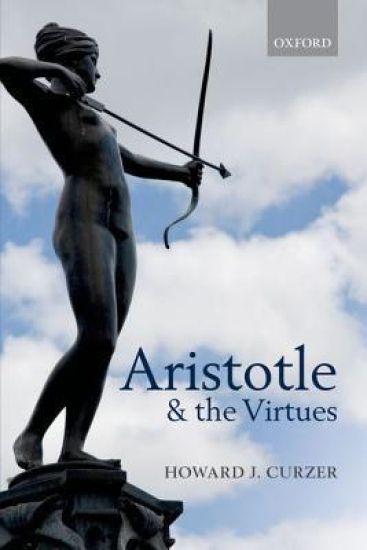
Aristotle and the Virtues

Aristotle and the Virtues

Howard J. Curzer

Oxford University Press
2015
nidottu
Aristotle is the father of virtue ethics--a discipline which is receiving renewed scholarly attention. Yet Aristotle's accounts of the individual virtues remain opaque, for most contemporary commentators of Aristotle's Nicomachean Ethics have focused upon other matters. In contrast, Howard J. Curzer takes Aristotle's detailed description of the individual virtues to be central to his ethical theory. Working through the Nicomachean Ethics virtue-by-virtue, explaining and generally defending Aristotle's claims, this book brings each of Aristotle's virtues alive. A new Aristotle emerges, an Aristotle fascinated by the details of the individual virtues. Justice and friendship hold special places in Aristotle's virtue theory. Many contemporary discussions place justice and friendship at opposite, perhaps even conflicting, poles of a spectrum. Justice seems to be very much a public, impartial, and dispassionate thing, while friendship is paradigmatically private, partial, and passionate. Yet Curzer argues that in Aristotle's view they are actually symbiotic. Justice is defined in terms of friendship, and good friendship is defined in terms of justice. Curzer goes on to reveal how virtue ethics is not only about being good; it is also about becoming good. Aristotle and the Virtues reconstructs Aristotle's account of moral development. Certain character types serve as stages of moral development. Certain catalysts and mechanisms lead from one stage to the next. Explaining why some people cannot make moral progress specifies the preconditions of moral development. Finally, Curzer describes Aristotle's quest to determine the ultimate goal of moral development, happiness.
Aristotle and the Virtues

Aristotle and the Virtues

Howard J. Curzer

Oxford University Press
2012
sidottu
Aristotle is the father of virtue ethics--a discipline which is receiving renewed scholarly attention. Yet Aristotle's accounts of the individual virtues remain opaque, for most contemporary commentators of Aristotle's Nicomachean Ethics have focused upon other matters. In contrast, Howard J. Curzer takes Aristotle's detailed description of the individual virtues to be central to his ethical theory. Working through the Nicomachean Ethics virtue-by-virtue, explaining and generally defending Aristotle's claims, this book brings each of Aristotle's virtues alive. A new Aristotle emerges, an Aristotle fascinated by the details of the individual virtues. Justice and friendship hold special places in Aristotle's virtue theory. Many contemporary discussions place justice and friendship at opposite, perhaps even conflicting, poles of a spectrum. Justice seems to be very much a public, impartial, and dispassionate thing, while friendship is paradigmatically private, partial, and passionate. Yet Curzer argues that in Aristotle's view they are actually symbiotic. Justice is defined in terms of friendship, and good friendship is defined in terms of justice. Curzer goes on to reveal how virtue ethics is not only about being good; it is also about becoming good. Aristotle and the Virtues reconstructs Aristotle's account of moral development. Certain character types serve as stages of moral development. Certain catalysts and mechanisms lead from one stage to the next. Explaining why some people cannot make moral progress specifies the preconditions of moral development. Finally, Curzer describes Aristotle's quest to determine the ultimate goal of moral development, happiness.
Virtue Ethics for the Real World

Virtue Ethics for the Real World

Howard J. Curzer

TAYLOR FRANCIS LTD
2023
sidottu
In Virtue Ethics for the Real World: Improving Character without Idealization, Howard J. Curzer argues that character ideals seduce virtue ethicists into counterintuitive claims, mislead and psychologically harm people seeking to improve their characters, and sometimes become tools for exploitation. Curzer offers a theory of Aristotelian virtue ethics that eschews idealization and that harmonizes with common sense. To explain the many dilemmas of ordinary life, he allows that different virtues sometimes enjoin incompatible actions and even enjoin actions that conflict with duty. Curzer defends the doctrine of the mean, arguing that idealized traits such as unilateral forgiveness, universal civility, unconditional commitments, and unlimited generosity are not virtues. He shows that the reciprocity of virtues doctrine depends upon idealization and rejects it. When undergirding his theory, Curzer wears several hats. He is a eudaimonist when grounding virtue, a constructivist when grounding value, and a perspectivist (a la Nietzsche) when grounding virtuous action. How can people improve without aiming at an ideal? Curzer offers an individualized approach to character improvement modeled on contemporary medicine. First, diagnose each person’s character flaws. Then tailor treatment plans to each flaw. An important tool is a fine-grained table of the components of character, their failure modes, and corresponding therapies. Curzer provides the beginnings of such a table.
Virtue Ethics for the Real World

Virtue Ethics for the Real World

Howard J. Curzer

TAYLOR FRANCIS LTD
2024
nidottu
In Virtue Ethics for the Real World: Improving Character without Idealization, Howard J. Curzer argues that character ideals seduce virtue ethicists into counterintuitive claims, mislead and psychologically harm people seeking to improve their characters, and sometimes become tools for exploitation. Curzer offers a theory of Aristotelian virtue ethics that eschews idealization and that harmonizes with common sense. To explain the many dilemmas of ordinary life, he allows that different virtues sometimes enjoin incompatible actions and even enjoin actions that conflict with duty. Curzer defends the doctrine of the mean, arguing that idealized traits such as unilateral forgiveness, universal civility, unconditional commitments, and unlimited generosity are not virtues. He shows that the reciprocity of virtues doctrine depends upon idealization and rejects it. When undergirding his theory, Curzer wears several hats. He is a eudaimonist when grounding virtue, a constructivist when grounding value, and a perspectivist (a la Nietzsche) when grounding virtuous action. How can people improve without aiming at an ideal? Curzer offers an individualized approach to character improvement modeled on contemporary medicine. First, diagnose each person’s character flaws. Then tailor treatment plans to each flaw. An important tool is a fine-grained table of the components of character, their failure modes, and corresponding therapies. Curzer provides the beginnings of such a table.
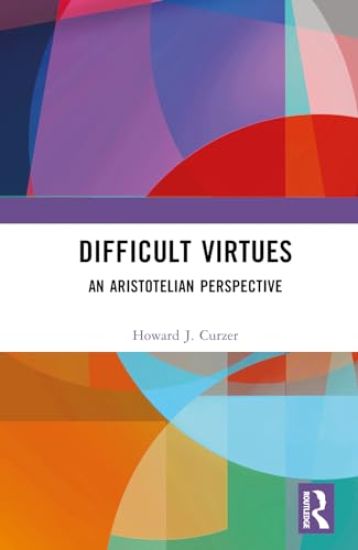
Difficult Virtues

Difficult Virtues

Howard J. Curzer

TAYLOR FRANCIS LTD
2024
sidottu
In this book, Howard J. Curzer describes eight virtues that have proven problematic to virtue ethicists. Integrity has been the subject of wildly different accounts. Open-mindedness and forgiveness are described in ways that many endorse, but few seek to practice. Accounts of tolerance and civility generally fit only the privileged. Finally, good timing, ambition, and creativity have attracted almost no attention at all. Curzer offers novel, plausible accounts of all of these eight difficult virtues, and demonstrates that they possess the standard features of Aristotelian virtues (for example, conformity to the Doctrine of the Mean). This enlarges the scope of Aristotelian virtue ethics by enabling it to cover eight additional spheres of human life.Using these difficult virtues as springboards and extrapolating from some of Aristotle’s remarks, Curzer codifies some standard features of Aristotelian virtues, and speculatively suggests additional features to enhance the descriptive and prescriptive power of Aristotelian virtue ethics. Thus, Curzer adds to the standard list of Aristotelian virtues and to the standard list of features that make virtues Aristotelian.Each difficult virtue is different, but certain themes thread through all of them: self-construction, social critique, and significant creation. Curzer’s accounts of these virtues illuminate the ways people forge their own identities, struggle to acquire virtue despite disadvantage, and produce and appreciate novelty.
Difficult Virtues

Difficult Virtues

Howard J. Curzer

TAYLOR FRANCIS LTD
2025
nidottu
In this book, Howard J. Curzer describes eight virtues that have proven problematic to virtue ethicists. Integrity has been the subject of wildly different accounts. Open-mindedness and forgiveness are described in ways that many endorse, but few seek to practice. Accounts of tolerance and civility generally fit only the privileged. Finally, good timing, ambition, and creativity have attracted almost no attention at all. Curzer offers novel, plausible accounts of all of these eight difficult virtues, and demonstrates that they possess the standard features of Aristotelian virtues (for example, conformity to the Doctrine of the Mean). This enlarges the scope of Aristotelian virtue ethics by enabling it to cover eight additional spheres of human life.Using these difficult virtues as springboards and extrapolating from some of Aristotle’s remarks, Curzer codifies some standard features of Aristotelian virtues, and speculatively suggests additional features to enhance the descriptive and prescriptive power of Aristotelian virtue ethics. Thus, Curzer adds to the standard list of Aristotelian virtues and to the standard list of features that make virtues Aristotelian.Each difficult virtue is different, but certain themes thread through all of them: self-construction, social critique, and significant creation. Curzer’s accounts of these virtues illuminate the ways people forge their own identities, struggle to acquire virtue despite disadvantage, and produce and appreciate novelty.