Kirjojen hintavertailu. Mukana 12 016 292 kirjaa ja 12 kauppaa.

Kirjahaku

Etsi kirjoja tekijän nimen, kirjan nimen tai ISBN:n perusteella.

37 kirjaa tekijältä Howard Williams

Kant and the End of War

Kant and the End of War

Howard Williams

Palgrave Macmillan
2012
sidottu
The paperback edition (published in 2016) includes a new preface with a discussion of recent examples.Kant stands almost unchallenged as one of the major thinkers of the European Enlightenment. This book brings the ideas of his critical philosophy to bear on one of the leading political and legal questions of our age: under what circumstances, if any, is recourse to war legally and morally justifiable? This issue was strikingly brought to the fore by the 2003 war in Iraq. The book critiques the tradition of just war thinking and suggests how international law and international relations can be viewed from an alternative perspective that aims at a more pacific system of states. Instead of seeing the theory of just war as providing a stabilizing context within which international politics can be carried out, Williams argues that the theory contributes to the current unstable international condition. The just war tradition is not the silver lining in a generally dark horizon but rather an integral feature of the dark horizon of current world politics. Kant was one of the first and most profound thinkers to moot this understanding of just war reasoning and his work remains a crucial starting point for a critical theory of war today.
The Ethics of Diet

The Ethics of Diet

Howard Williams

University of Illinois Press
2003
nidottu
“Now we can join Gandhi and Tolstoy and nameless others who encountered this vigorous and invigorating book. Welcome to a company of radicals who believed we could and should stop eating non-human animals. They brought vegetarianism out of history and into the here and now.” -- from the introduction Ethical vegetarianism is no recent development, as this unrivaled historical anthology dramatizes. When it was first published 120 years ago, countless people read and endorsed The Ethics of Diet. But then it became a rare book, hard to find even in libraries. For countless more readers, it is at last available again. In this classic of vegetarian writing, Howard Williams presents a line of thought, a continuous thread, a tradition, a catena of protestation against living on “Butchery.” What he finds striking is the variety of the witnesses, the prophets of “Reformed Dietetics” who have “shrunk from the régime of blood,” including Gautama Buddha, Pythagoras, Plato, Hesiod, Epicurus, Seneca, Ovid, Thomas More, Montaigne, Mandeville, Pope, Voltaire, Swedenborg, Wesley, Rousseau, Shelley, Byron, Lamar-tine, Michelet, Bentham, Sinclair, Schopenhauer, and Thoreau. Their words are accompanied by the vigorous narrative voice of Williams himself, who put to rest, once and for all, the idea that vegetarianism is a fad.
International Relations and the Limits of Political Theory
This book shows how the traditional concerns of political theory push it increasingly into the study of international relations. This is done, first, by demonstrating how many of the issues usually dealt with by political theory, such as democracy and justice, arise within an increasingly global context and, secondly, by considering how international issues, such as colonialism and war, are best illuminated by building on the work of political theorists. The book suggests that political theory and international relations theory can now both be successfully engaged in as a joint enterprise only.
International Relations and the Limits of Political Theory
This book shows how the traditional concerns of political theory push it increasingly into the study of international relations. This is done, first, by demonstrating how many of the issues usually dealt with by political theory, such as democracy and justice, arise within an increasingly global context and, secondly, by considering how international issues, such as colonialism and war, are best illuminated by building on the work of political theorists. The book suggests that political theory and international relations theory can now both be successfully engaged in as a joint enterprise only.
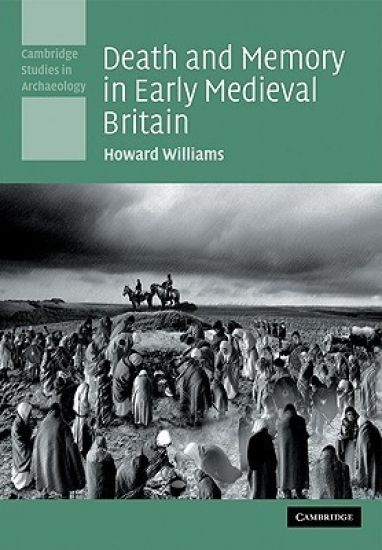
Death and Memory in Early Medieval Britain

Death and Memory in Early Medieval Britain

Howard Williams

Cambridge University Press
2010
pokkari
How were the dead remembered in early medieval Britain? Originally published in 2006, this innovative study demonstrates how perceptions of the past and the dead, and hence social identities, were constructed through mortuary practices and commemoration between c. 400–1100 AD. Drawing on archaeological evidence from across Britain, including archaeological discoveries, Howard Williams presents a fresh interpretation of the significance of portable artefacts, the body, structures, monuments and landscapes in early medieval mortuary practices. He argues that materials and spaces were used in ritual performances that served as 'technologies of remembrance', practices that created shared 'social' memories intended to link past, present and future. Through the deployment of material culture, early medieval societies were therefore selectively remembering and forgetting their ancestors and their history. Throwing light on an important aspect of medieval society, this book is essential reading for archaeologists and historians with an interest in the early medieval period.
Death and Memory in Early Medieval Britain

Death and Memory in Early Medieval Britain

Howard Williams

Cambridge University Press
2006
sidottu
How were the dead remembered in early medieval Britain? Originally published in 2006, this innovative study demonstrates how perceptions of the past and the dead, and hence social identities, were constructed through mortuary practices and commemoration between c. 400–1100 AD. Drawing on archaeological evidence from across Britain, including archaeological discoveries, Howard Williams presents a fresh interpretation of the significance of portable artefacts, the body, structures, monuments and landscapes in early medieval mortuary practices. He argues that materials and spaces were used in ritual performances that served as 'technologies of remembrance', practices that created shared 'social' memories intended to link past, present and future. Through the deployment of material culture, early medieval societies were therefore selectively remembering and forgetting their ancestors and their history. Throwing light on an important aspect of medieval society, this book is essential reading for archaeologists and historians with an interest in the early medieval period.
Kant and the End of War

Kant and the End of War

Howard Williams

Palgrave Macmillan
2012
nidottu
The paperback edition (published in 2016) includes a new preface with a discussion of recent examples.Kant stands almost unchallenged as one of the major thinkers of the European Enlightenment. This book brings the ideas of his critical philosophy to bear on one of the leading political and legal questions of our age: under what circumstances, if any, is recourse to war legally and morally justifiable? This issue was strikingly brought to the fore by the 2003 war in Iraq. The book critiques the tradition of just war thinking and suggests how international law and international relations can be viewed from an alternative perspective that aims at a more pacific system of states. Instead of seeing the theory of just war as providing a stabilizing context within which international politics can be carried out, Williams argues that the theory contributes to the current unstable international condition. The just war tradition is not the silver lining in a generally dark horizon but rather an integral feature of the dark horizon of current world politics. Kant was one of the first and most profound thinkers to moot this understanding of just war reasoning and his work remains a crucial starting point for a critical theory of war today.
A Year in the Life of Peartree House B&B
A year in the life of Peartree House Bed & Breakfast describes the first year of trading of a Bed and Breakfast guest house operation in Scotland and is a cracking good read. Written with hints of the Bryson and Blackadder styles it has escapades as good as any Fawlty Towers episode and has something for everyone. For existing and aspiring B&B owners it is essential reading. Spread over 20 chapters it describes how a male ex-IT programme manager, management consultant and management executive gets to grips with mundane chores while trying to provide a superior service to tourists from around the world. From the arrival of the redundancy cheque through the first traumatic weeks of trading, subsequent quality inspection, the provision of dinner, management of websites and the Internet to the hilarious actions of guests the book is fast moving.
The Superstitions of Witchcraft

The Superstitions of Witchcraft

Howard Williams

Createspace Independent Publishing Platform
2012
nidottu
'The Superstitions of Witchcraft' is designed to exhibit a consecutive review of the characteristic forms and facts of a creed which (if at present apparently dead, or at least harmless, in Christendom) in the seventeenth century was a living and lively faith, and caused thousands of victims to be sent to the torture-chamber, to the stake, and to the scaffold. At this day, the remembrance of its superhuman art, in its different manifestations, is immortalised in the every-day language of the peoples of Europe. The belief in Witchcraft is, indeed, in its full development and most fearful results, modern still more than medi val, Christian still more than Pagan, and Protestant not less than Catholic.