Kirjojen hintavertailu. Mukana 11 967 790 kirjaa ja 12 kauppaa.

Kirjahaku

Etsi kirjoja tekijän nimen, kirjan nimen tai ISBN:n perusteella.

9 kirjaa tekijältä Howell G. M. Edwards

18th and 19th Century Porcelain Analysis

18th and 19th Century Porcelain Analysis

Howell G. M. Edwards

Springer Nature Switzerland AG
2020
sidottu
This book addresses the contributions made by analytical chemistry to the characterisation of 18th and early 19th Century English and Welsh porcelains commencing with the earliest reports of Sir Arthur Church and of Herbert Eccles and Bernard Rackham using chemical digestion techniques and concluding with the most recent instrumental experiments, which together span more than a hundred years of study. From the earliest experiments which required necessarily the sacrifice of significant portions of each specimen, which may already have been damaged , to the latest experiments which needed only microsampling or the non-destructive interrogation of valuable perfect specimens a comprehensive survey is undertaken of more than twenty manufactories of quality porcelains. The correlation is made between the quantitative elemental oxide determinations of the scanning electron microscopic diffraction and Xray fluorescence data and the qualitative molecular spectroscopic Raman data to demonstrate their complementarity and use in the holistic forensic assessment of the origin of the fired procelains ; this will form the groundwork for the adoption of analytical techniques for the attribution of unknown or questionable procelains to their potential source factories . The book will also examine the perception of what constitutes a porcelain and its definitions and examines the assignment of porcelains to types which currently employs the definitions of hard paste , soft paste , hybrid , magnesian and bone china from the conclusions derived from the analytical data and a consideration of the raw materials employed in their manufacturing processes. During the discussion of this analytical evidence several themes and protocols have been established for its utilisation in the potential identification of porcelains and several case studies undertaken for this purpose are cited. The book will be of interest toanalytical scientists , to museum ceramics curators and to ceramics historians.
18th and 19th Century Porcelain Analysis

18th and 19th Century Porcelain Analysis

Howell G. M. Edwards

Springer Nature Switzerland AG
2021
nidottu
This book addresses the contributions made by analytical chemistry to the characterisation of 18th and early 19th Century English and Welsh porcelains commencing with the earliest reports of Sir Arthur Church and of Herbert Eccles and Bernard Rackham using chemical digestion techniques and concluding with the most recent instrumental experiments, which together span more than a hundred years of study. From the earliest experiments which required necessarily the sacrifice of significant portions of each specimen, which may already have been damaged , to the latest experiments which needed only microsampling or the non-destructive interrogation of valuable perfect specimens a comprehensive survey is undertaken of more than twenty manufactories of quality porcelains. The correlation is made between the quantitative elemental oxide determinations of the scanning electron microscopic diffraction and Xray fluorescence data and the qualitative molecular spectroscopic Raman data to demonstrate their complementarity and use in the holistic forensic assessment of the origin of the fired procelains ; this will form the groundwork for the adoption of analytical techniques for the attribution of unknown or questionable procelains to their potential source factories . The book will also examine the perception of what constitutes a porcelain and its definitions and examines the assignment of porcelains to types which currently employs the definitions of hard paste , soft paste , hybrid , magnesian and bone china from the conclusions derived from the analytical data and a consideration of the raw materials employed in their manufacturing processes. During the discussion of this analytical evidence several themes and protocols have been established for its utilisation in the potential identification of porcelains and several case studies undertaken for this purpose are cited. The book will be of interest toanalytical scientists , to museum ceramics curators and to ceramics historians.
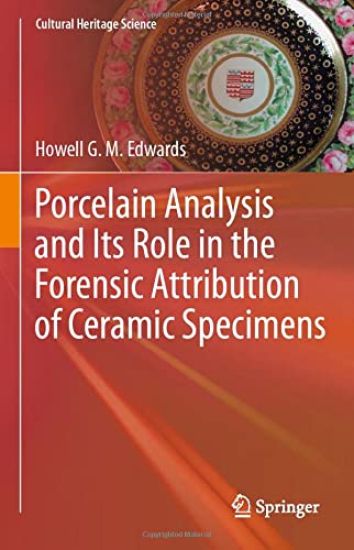
Porcelain Analysis and Its Role in the Forensic Attribution of Ceramic Specimens
The material for this book arose from the author’s research into porcelains over many years, as a collector in appreciation of their artistic beauty , as an analytical chemist in the scientific interrogation of their body paste, enamel pigments and glaze compositions, and as a ceramic historian in the assessment of their manufactory foundations and their correlation with available documentation relating to their recipes and formulations. A discussion of the role of analysis in the framework of a holistic assessment of artworks and specifically the composition of porcelain, namely hard paste, soft paste, phosphatic, bone china and magnesian, is followed by its growth from its beginnings in China to its importation into Europe in the 16th Century. A survey of European porcelain manufactories in the 17th and 18th Centuries is followed by a description of the raw materials, minerals and recipes for porcelain manufacture and details of thechemistry of the high temperature firing processes involved therein. The historical backgrounds to several important European factories are considered, highlighting the imperfections in the written record that have been perpetuated through the ages. The analytical chemical information derived from the interrogation of specimens, from fragments, shards or perfect finished items, is reviewed and operational protocols established for the identification of a factory output from the data presented. Several case studies are examined in detail across several porcelain manufactories to indicate the role adopted by modern analytical science, with information provided at the quantitative elemental oxide and qualitative molecular spectroscopic levels, where applicable. The attribution of a specimen to a particular factory is either supported thereby or in some cases a potential reassessment of an earlier attribution is indicated. Overall, the information provided by analytical chemical data is seen to be extremely useful for porcelain identification and for its potential attribution in the context of a holistic forensic evaluation of hitherto unknown porcelain exemplars of questionable factory origins.
Porcelain Analysis and Its Role in the Forensic Attribution of Ceramic Specimens
The material for this book arose from the author’s research into porcelains over many years, as a collector in appreciation of their artistic beauty , as an analytical chemist in the scientific interrogation of their body paste, enamel pigments and glaze compositions, and as a ceramic historian in the assessment of their manufactory foundations and their correlation with available documentation relating to their recipes and formulations. A discussion of the role of analysis in the framework of a holistic assessment of artworks and specifically the composition of porcelain, namely hard paste, soft paste, phosphatic, bone china and magnesian, is followed by its growth from its beginnings in China to its importation into Europe in the 16th Century. A survey of European porcelain manufactories in the 17th and 18th Centuries is followed by a description of the raw materials, minerals and recipes for porcelain manufacture and details of thechemistry of the high temperature firing processes involved therein. The historical backgrounds to several important European factories are considered, highlighting the imperfections in the written record that have been perpetuated through the ages. The analytical chemical information derived from the interrogation of specimens, from fragments, shards or perfect finished items, is reviewed and operational protocols established for the identification of a factory output from the data presented. Several case studies are examined in detail across several porcelain manufactories to indicate the role adopted by modern analytical science, with information provided at the quantitative elemental oxide and qualitative molecular spectroscopic levels, where applicable. The attribution of a specimen to a particular factory is either supported thereby or in some cases a potential reassessment of an earlier attribution is indicated. Overall, the information provided by analytical chemical data is seen to be extremely useful for porcelain identification and for its potential attribution in the context of a holistic forensic evaluation of hitherto unknown porcelain exemplars of questionable factory origins.
Welsh Armorial Porcelain

Welsh Armorial Porcelain

Howell G. M. Edwards

Springer Nature Switzerland AG
2022
sidottu
Armorial porcelains comprised the output of most European ceramics factories in the 18th and 19th Centuries in response to the large quantity of armorial porcelain services that were being imported from China bearing the coats of arms and crests of aristocratic families. Whereas these armorial services have been identified and covered for most porcelain manufactories the information relevant to their production by the two relatively short-lived Nantgarw and Swansea China Works has not been addressed as a theme until now. As an integral component of the holistic forensic appraisal of porcelain, a functional and decorative artwork manifestly part of our cultural heritage and its ongoing preservation , the recording and identification of such artefacts is material for the future establishment of a database of factory production . The Nantgarw and Swansea factories only operated for a limited period in the second decade of the 19th Century and their porcelains were much appreciated for their high quality and desirability by Georgian households. Today, examples are to be found in many museums and ceramics collections and continue to excite the interest of specialists and the general public . This text provides the first comprehensive assessment of armorial porcelains from these two factories and the methodology and procedure for the identification of unknown armorial bearings and crests is illustrated; individual bearings are discussed in detail and existing incorrect assignments in the literature are re-appraised. The difficulties in attribution of armorial heraldic achievements that are only minimally depicted are considered and directions for further studies using historical documentation are invoked. This book therefore fills a currently existing gap in the ceramics literature of the 19th Century.
Welsh Armorial Porcelain

Welsh Armorial Porcelain

Howell G. M. Edwards

Springer Nature Switzerland AG
2023
nidottu
Armorial porcelains comprised the output of most European ceramics factories in the 18th and 19th Centuries in response to the large quantity of armorial porcelain services that were being imported from China bearing the coats of arms and crests of aristocratic families. Whereas these armorial services have been identified and covered for most porcelain manufactories the information relevant to their production by the two relatively short-lived Nantgarw and Swansea China Works has not been addressed as a theme until now. As an integral component of the holistic forensic appraisal of porcelain, a functional and decorative artwork manifestly part of our cultural heritage and its ongoing preservation , the recording and identification of such artefacts is material for the future establishment of a database of factory production . The Nantgarw and Swansea factories only operated for a limited period in the second decade of the 19th Century and their porcelains were much appreciated for their high quality and desirability by Georgian households. Today, examples are to be found in many museums and ceramics collections and continue to excite the interest of specialists and the general public . This text provides the first comprehensive assessment of armorial porcelains from these two factories and the methodology and procedure for the identification of unknown armorial bearings and crests is illustrated; individual bearings are discussed in detail and existing incorrect assignments in the literature are re-appraised. The difficulties in attribution of armorial heraldic achievements that are only minimally depicted are considered and directions for further studies using historical documentation are invoked. This book therefore fills a currently existing gap in the ceramics literature of the 19th Century.
The Farnley Hall Service: A Unique Survivor in Nantgarw Porcelain

The Farnley Hall Service: A Unique Survivor in Nantgarw Porcelain

Howell G. M. Edwards

Springer International Publishing AG
2023
sidottu
This book covers the discovery and the results of the analytical study of the composition of the Farnley Hall service, involving both the embossed moulding and the decorative compositions. The discovery of this missing porcelain service, which was manufactured 200 years ago, is a modern detective story in the preservation of cultural heritage, whilst its physical analysis has identified some new data that need to be incorporated into correcting and expanding the literature that is used for the differentiation of porcelains by ceramic historians and museum conservators. The importance of the Farnley Hall service discovery is that it provides the only example of such a Nantgarw Porcelain service that still resides in its original place of usage from 200 years ago: it is therefore a unique example and is a very important part of our national cultural heritage. It provides an illustration of the data that can be accessed from the application of inductive reasoning to elicit novel information about a manufactory whose work books no longer exist and its comparison with contemporary manufactories in the late eighteenth and early nineteenth centuries. The concepts can be appreciated by experts and also by non-technical readers. This is the first time that such a detailed research approach has been adopted for any comparative ceramic project. The book is therefore relevant for a specialist and non-specialist readership, including museum ceramics curators and collectors of the genre.
The Farnley Hall Service: A Unique Survivor in Nantgarw Porcelain

The Farnley Hall Service: A Unique Survivor in Nantgarw Porcelain

Howell G. M. Edwards

Springer International Publishing AG
2024
nidottu
This book covers the discovery and the results of the analytical study of the composition of the Farnley Hall service, involving both the embossed moulding and the decorative compositions. The discovery of this missing porcelain service, which was manufactured 200 years ago, is a modern detective story in the preservation of cultural heritage, whilst its physical analysis has identified some new data that need to be incorporated into correcting and expanding the literature that is used for the differentiation of porcelains by ceramic historians and museum conservators. The importance of the Farnley Hall service discovery is that it provides the only example of such a Nantgarw Porcelain service that still resides in its original place of usage from 200 years ago: it is therefore a unique example and is a very important part of our national cultural heritage. It provides an illustration of the data that can be accessed from the application of inductive reasoning to elicit novel information about a manufactory whose work books no longer exist and its comparison with contemporary manufactories in the late eighteenth and early nineteenth centuries. The concepts can be appreciated by experts and also by non-technical readers. This is the first time that such a detailed research approach has been adopted for any comparative ceramic project. The book is therefore relevant for a specialist and non-specialist readership, including museum ceramics curators and collectors of the genre.
A Raphael Madonna and Child Oil Painting:  A Forensic Analytical Evaluation

A Raphael Madonna and Child Oil Painting: A Forensic Analytical Evaluation

Howell G. M. Edwards

Springer International Publishing AG
2024
sidottu
This book presents a comprehensive forensic analysis of an oil painting depicting a Madonna and Child in a tondo format, previously thought to be a Victorian copy. Detailed historical and scientific studies confirm that this painting was, in fact, created by Raphael around 1512 as a study for his renowned Sistine Madonna, commissioned by Pope Julius II as an altarpiece for the monastic church of San Sisto in Piacenza. The painting underwent rigorous forensic examination, combining historical research with both invasive and non-invasive scientific imaging techniques. The analysis utilized advanced physical and chemical instrumentation to determine the painting's authenticity and accurate chronological placement. A comparative review of published chemical analyses of pigments, dyes, and substrates used in Raphael’s works from collections worldwide is included. Additionally, this study explores the innovative use of artificial intelligence (AI) for facial comparison between the figures in the tondo painting, the Sistine Madonna, and other Raphael artworks. These AI-generated insights provide novel information about the identities of Raphael’s models and shed light on his working techniques, as well as those of his associates.