Kirjojen hintavertailu. Mukana 11 627 484 kirjaa ja 12 kauppaa.

Kirjahaku

Etsi kirjoja tekijän nimen, kirjan nimen tai ISBN:n perusteella.

5 kirjaa tekijältä Howell G.M. Edwards

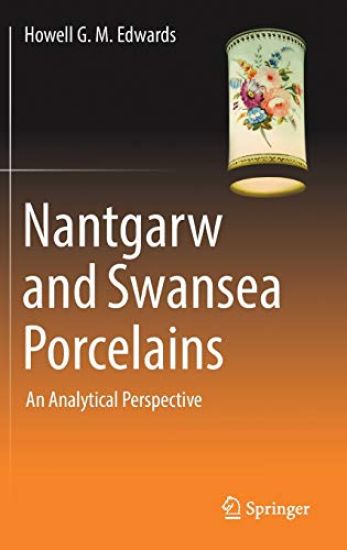
Nantgarw and Swansea Porcelains

Nantgarw and Swansea Porcelains

Howell G.M. Edwards

Springer Nature Switzerland AG
2019
nidottu
This book gives a detailed account of the holistic research carried out on the analytical data obtained historically on the products of the Nantgarw and Swansea porcelain manufactories which existed for a few years only during the second decade of the 19th Century. A background to the establishment of the two factories, which are linked through the persons of the enigmatic William Billingsley and his kiln manager, Samuel Walker, involves the sourcing of their raw materials and problems associated with the manufacture and distribution of the finished products. A description of the minerals and additives used in porcelain production is recounted to set the scene for the critical evaluation of the comprehensive analytical data which have been published on Nantgarw and Swansea porcelains. For the first time, the author has adopted a nondestructive technique, Raman spectroscopy, to interrogate perfect samples of Nantgarw and Swansea porcelain, as well as a selection of shardsfrom an archaeological excavation carried out at a waste dump at the Nantgarw China Works site. Following these experiments, several questions relating to the porcelain bodies of Swansea and Nantgarw china can be answered and a protocol established for the preliminary evaluation of items of suspect attribution to confirm or not the correctness of their assignment to these Welsh porcelain factories.
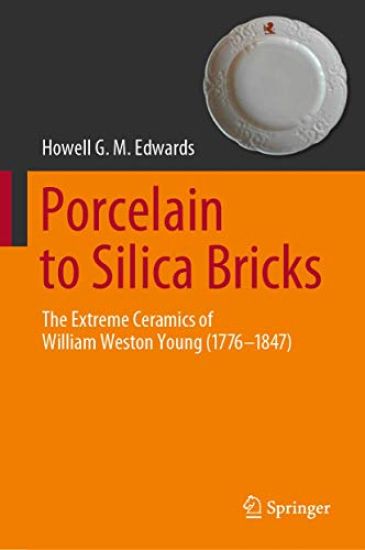
Porcelain to Silica Bricks

Porcelain to Silica Bricks

Howell G.M. Edwards

Springer Nature Switzerland AG
2019
sidottu
The title of this book describes the two extremes of ceramic invention from aesthetically beautiful and decorative works of art that graced the tables of the aristocracy to the functional silica brick that lined the smelting furnaces of industrialised nations in the 19th century designed to produce iron, copper and glass. Both of these ceramics are linked to one man, William Weston Young (1776-1847) and with his contemporaries both of these ceramic extremes became world leaders in their own right. The book traces the history of Young and his ambitions, his interactions with numerous associates and the influence these ceramics attained in 19th century society. The book provides a sequel to the two preceding texts on Nantgarw and Swansea porcelains (also published by Springer), which cover one extreme and extends the discourse onto the other extreme, which until now has been relatively ignored despite its scientific and engineering importance. The trilogyhas now therefore been completed. This book examines the historical documentation along with scientific analytical data from the last 100 years up to the present in a novel holistic forensic approach.It will be of interest to porcelain collectors, ceramics analysts, museum ceramic curators, ceramic historians, analytical scientists, cultural heritage preservation, industrial archaeologists and industrial museums.
Swansea and Nantgarw Porcelains

Swansea and Nantgarw Porcelains

Howell G.M. Edwards

Springer International Publishing AG
2017
sidottu
This book describes a holistic study of the porcelain manufactured at Nantgarw and Swansea in the first quarter of the 19th Century, using both scientific analytical data and historical provenancing. This porcelain is acclaimed as some of the finest and most translucent porcelain ever produced. These two porcelain factories are linked through the artistic and creative activities of the enigmatic William Billingsley and had a strictly limited production over only three or four years during the period 1812-1820. The earliest chemical analysis of these porcelains were undertaken almost 100 years ago and are compared with the results of more recent analyses The chemical composition of these porcelains, their artistic decoration and the struggle to maintain quality production is reviewed. Scientific explanations are proposed for the characteristic Swansea duck-egg porcelain translucency and for the Nantgarw iridescence. The book is well illustrated throughout and affords a good basis for the further in-depth study of Swansea and Nantgarw porcelains.
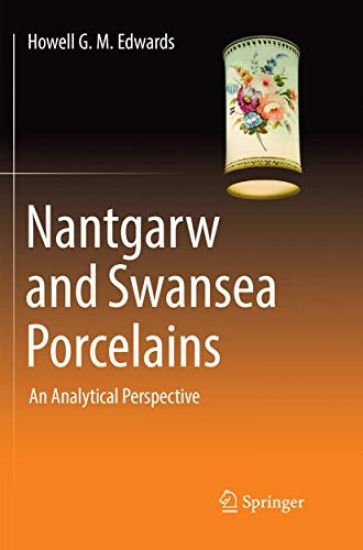
Nantgarw and Swansea Porcelains

Nantgarw and Swansea Porcelains

Howell G.M. Edwards

Springer International Publishing AG
2018
sidottu
This book gives a detailed account of the holistic research carried out on the analytical data obtained historically on the products of the Nantgarw and Swansea porcelain manufactories which existed for a few years only during the second decade of the 19th Century. A background to the establishment of the two factories, which are linked through the persons of the enigmatic William Billingsley and his kiln manager, Samuel Walker, involves the sourcing of their raw materials and problems associated with the manufacture and distribution of the finished products. A description of the minerals and additives used in porcelain production is recounted to set the scene for the critical evaluation of the comprehensive analytical data which have been published on Nantgarw and Swansea porcelains. For the first time, the author has adopted a nondestructive technique, Raman spectroscopy, to interrogate perfect samples of Nantgarw and Swansea porcelain, as well as a selection of shardsfrom an archaeological excavation carried out at a waste dump at the Nantgarw China Works site. Following these experiments, several questions relating to the porcelain bodies of Swansea and Nantgarw china can be answered and a protocol established for the preliminary evaluation of items of suspect attribution to confirm or not the correctness of their assignment to these Welsh porcelain factories.
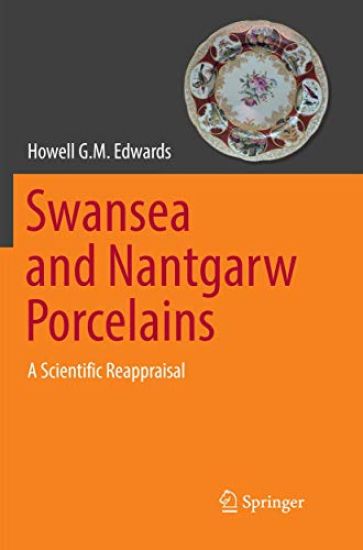
Swansea and Nantgarw Porcelains

Swansea and Nantgarw Porcelains

Howell G.M. Edwards

Springer International Publishing AG
2018
nidottu
This book describes a holistic study of the porcelain manufactured at Nantgarw and Swansea in the first quarter of the 19th Century, using both scientific analytical data and historical provenancing. This porcelain is acclaimed as some of the finest and most translucent porcelain ever produced. These two porcelain factories are linked through the artistic and creative activities of the enigmatic William Billingsley and had a strictly limited production over only three or four years during the period 1812-1820. The earliest chemical analysis of these porcelains were undertaken almost 100 years ago and are compared with the results of more recent analyses The chemical composition of these porcelains, their artistic decoration and the struggle to maintain quality production is reviewed. Scientific explanations are proposed for the characteristic Swansea duck-egg porcelain translucency and for the Nantgarw iridescence. The book is well illustrated throughout and affords a good basis for the further in-depth study of Swansea and Nantgarw porcelains.