Kirjojen hintavertailu. Mukana 11 699 587 kirjaa ja 12 kauppaa.

Kirjahaku

Etsi kirjoja tekijän nimen, kirjan nimen tai ISBN:n perusteella.

8 kirjaa tekijältä Hubert Chanson

Air Bubble Entrainment in Free-Surface Turbulent Shear Flows
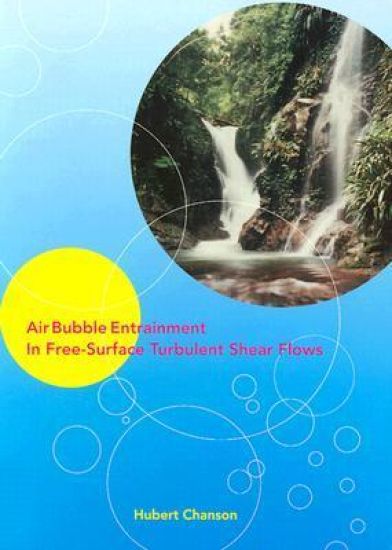
This book develops an analysis of the air entrainment processes in free-surface flows. These flows are investigated as homogeneous mixtures with variable density. Several types of air-water free-surface flows are studied: plunging jet flows, open channel flows, and turbulent water jets discharging into air. Experimental observations reported by the author confirm the concept that the air-water mixture behaves as a homogeneous compressible fluid in each case. This book will be of great interest to professionals working in many fields of engineering: chemical, civil, environmental, mechanical, mining, metallurgy, and nuclear.
Applied Hydrodynamics

Applied Hydrodynamics

Hubert Chanson

CRC Press
2009
sidottu
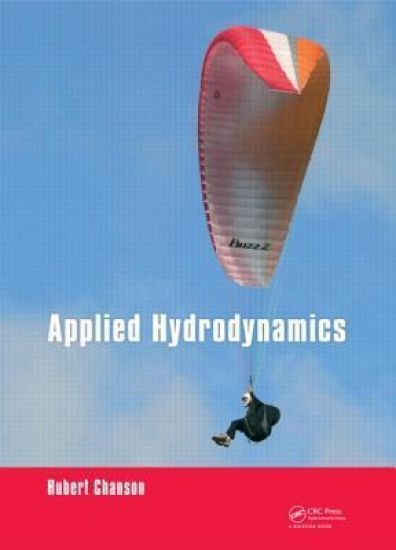
Fluid dynamics is the engineering science dealing with forces and energies generated by fluids in motion. Fluid dynamics and hydrodynamics play a vital role in everyday life. Practical examples include the flow motion in the kitchen sink, the exhaust fan above the stove, and the air conditioning system in our home. When driving a car, the air flow around the vehicle body induces some drag which increases with the square of the car speed and contributes to excess fuel consumption. Engineering applications encompass fluid transport in pipes and canals, energy generation, environmental processes and transportation (cars, ships, aircrafts). Other applications include coastal structures, wind flow around buildings, fluid circulations in lakes, oceans and atmosphere, and even fluid motion in the human body.This textbook deals with the topic of applied hydrodynamics. The lecture material is grouped into two complementary sections: ideal fluid flow and real fluid flow. The former deals with two- and possibly three-dimensional fluid motions that are not subject to boundary friction effects, while the latter considers the flow regions affected by boundary friction and turbulent shear. The lecture material is designed as an intermediate course in fluid dynamics for senior undergraduate and postgraduate students in Civil, Environmental, Hydraulic and Mechanical Engineering. It is supported by notes, applications, remarks and discussions in each chapter. Moreover a series of appendices is added, while some major homework assignments are developed at the end of the book, before the bibliographic references.
Hydraulics of Open Channel Flow

Hydraulics of Open Channel Flow

Hubert Chanson

Butterworth-Heinemann Ltd
2004
nidottu
Since the publication of its first edition in 1999, 'The Hydraulics of Open Channel Flow' has been praised by professionals, academics, students and researchers alike as the most practical modern textbook on open channel flow available. This new edition includes substantial new material on hydraulic modelling, in particular addressing unsteady open channel flows. There are also many new exercises and projects, including a major new revision assignment. This innovative textbook contains numerous examples and practical applications, and is fully illustrated with photographs. Dr Chanson introduces the basic principles of open channel flow and takes readers through the key topics of sediment transport, hydraulic modelling and the design of hydraulic structures.
Applied Hydrodynamics

Applied Hydrodynamics

Hubert Chanson

CRC Press
2013
sidottu
This textbook treats Hydro- and Fluid Dynamics, the engineering science dealing with forces and energies generated by fluids in motion, playing a vital role in everyday life. Practical examples include the flow motion in the kitchen sink, the exhaust fan above the stove, and the air conditioning system in our home. When driving a car, the air flow around the vehicle body induces some drag which increases with the square of the car speed and contributes to excess fuel consumption. Engineering applications encompass fluid transport in pipes and canals, energy generation, environmental processes and transportation (cars, ships, aircrafts). This book deals with the topic of applied hydrodynamics. The lecture material is grouped into two complementary sections: ideal fluid flow and real fluid flow. The former deals with two- and possibly three-dimensional fluid motions that are not subject to boundary friction effects, while the latter considers the flow regions affected by boundary friction and turbulent shear. The lecture material is designed as an intermediate course in fluid dynamics for senior undergraduate and postgraduate students in Civil, Environmental, Hydraulic and Mechanical Engineering. It is supported by notes, applications, remarks and discussions in each chapter. Moreover a series of appendices is added, while some major homework assignments are developed at the end of the book, before the bibliographic references.
Hydraulics of Stepped Chutes and Spillways

Hydraulics of Stepped Chutes and Spillways

Hubert Chanson

A A Balkema Publishers
2002
sidottu
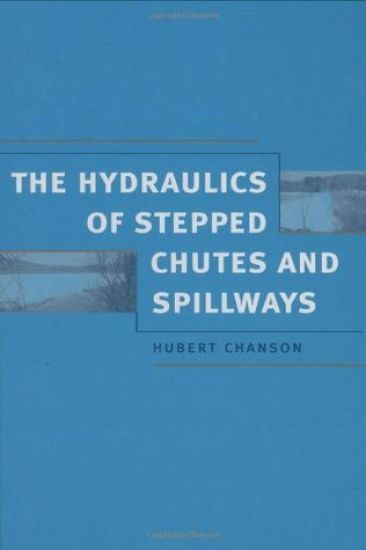
Stepped channel designs have been used for more than 3,500 years. A significant number of dams were built with overflow stepped spillways during the nineteenth and early twentieth centuries, before the design technique became outdated with the progresses in hydraulic jump stilling basin design. Recent advances in technology (e.g. RCC, polymer-coated gabion wire) have triggered a regain in interest for the stepped design, although much expertise had been lost in the last eighty years. The steps increase significantly the rate of energy dissipation taking place along the chute and reduce the size of the required downstream energy dissipation basin. Stepped cascades are used also in water treatment plants to enhance the air-water transfer of atmospheric gases (e.g. oxygen, nitrogen) and of volatile organic components (VOC). This book presents the state-of-the-art in stepped channel hydraulics. It is based upon the research expertise of the writer, his professional experience as an expert-consultant, and his experience in teaching stepped spillway hydraulics to undergraduate students, postgraduate research students and professionals since 1982. Results from more than forty-five laboratory studies and four prototype investigations were reanalyzed and compared, enabling the book to provide a new understanding of stepped channel hydraulics, aimed at both the research and professional communities.
Tidal Bores, Aegir, Eagre, Mascaret, Pororoca: Theory And Observations

Tidal Bores, Aegir, Eagre, Mascaret, Pororoca: Theory And Observations

Hubert Chanson

World Scientific Publishing Co Pte Ltd
2011
sidottu
A tidal bore is a series of waves propagating upstream as the tidal flow turns to rising. It forms during spring tide conditions when the tidal range exceeds 4 to 6 m and the flood tide is confined to a narrow funnelled estuary. Its existence is based upon a fragile hydrodynamic balance between the tidal amplitude, the freshwater river flow conditions and the river channel bathymetry, and it is shown that this balance may be easily disturbed by changes in boundary conditions and freshwater inflow. This book demystifies the physics of a tidal bore and it thoroughly documents the tidal bores on our planet with reliable and accurate information. It aims to cultivate a passion for a beautiful, but fragile geophysical process, with in-depth updated content and by over 190 illustrations and photographs.
Applied Hydrodynamics

Applied Hydrodynamics

Hubert Chanson

TAYLOR FRANCIS LTD
2026
sidottu
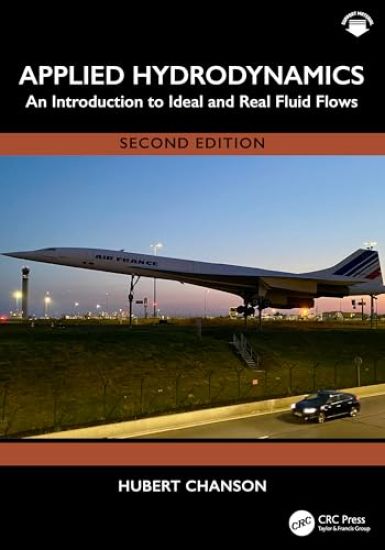
This new edition textbook is a comprehensive guide to hydrodynamics and fluid dynamics, addressing phenomena encountered in everyday life and critical engineering applications across multiple disciplines. Introducing brand new photographs and figures, an additional chapter, along with expanded appendices and a comprehensive subject index, this is an exposition on the application of the fundamental principles of mechanics and thermodynamics to understand fluid flow motion, forces, and energies. The book is divided into two major sections: ideal fluid flow and real fluid flow. Ideal fluid flow examines two and three-dimensional fluid motions unaffected by boundary friction effects, while real fluid flow addresses regions influenced by boundary friction and turbulent shear. Practical examples range from flow motion in kitchen sinks and exhaust fans to air conditioning systems. Engineering applications encompass fluid transport in pipes and canals, energy generation, environmental processes, and transportation systems including cars, ships, and aircraft. Additional topics include wind flow around buildings, fluid circulations in lakes, oceans, and the atmosphere, and fluid motion within the human body. The material illustrates how air flow around a vehicle body induces drag force that increases with the square of speed, contributing to fuel consumption. The lecture material is designed as an intermediate course for senior undergraduate and postgraduate students in Civil, Environmental, Hydraulic, and Mechanical Engineering.
Applied Hydrodynamics

Applied Hydrodynamics

Hubert Chanson

TAYLOR FRANCIS LTD
2026
nidottu
This new edition textbook is a comprehensive guide to hydrodynamics and fluid dynamics, addressing phenomena encountered in everyday life and critical engineering applications across multiple disciplines. Introducing brand new photographs and figures, an additional chapter, along with expanded appendices and a comprehensive subject index, this is an exposition on the application of the fundamental principles of mechanics and thermodynamics to understand fluid flow motion, forces, and energies. The book is divided into two major sections: ideal fluid flow and real fluid flow. Ideal fluid flow examines two and three-dimensional fluid motions unaffected by boundary friction effects, while real fluid flow addresses regions influenced by boundary friction and turbulent shear. Practical examples range from flow motion in kitchen sinks and exhaust fans to air conditioning systems. Engineering applications encompass fluid transport in pipes and canals, energy generation, environmental processes, and transportation systems including cars, ships, and aircraft. Additional topics include wind flow around buildings, fluid circulations in lakes, oceans, and the atmosphere, and fluid motion within the human body. The material illustrates how air flow around a vehicle body induces drag force that increases with the square of speed, contributing to fuel consumption. The lecture material is designed as an intermediate course for senior undergraduate and postgraduate students in Civil, Environmental, Hydraulic, and Mechanical Engineering.