Kirjojen hintavertailu. Mukana 11 342 296 kirjaa ja 12 kauppaa.

Kirjahaku

Etsi kirjoja tekijän nimen, kirjan nimen tai ISBN:n perusteella.

9 kirjaa tekijältä Hubert Damisch

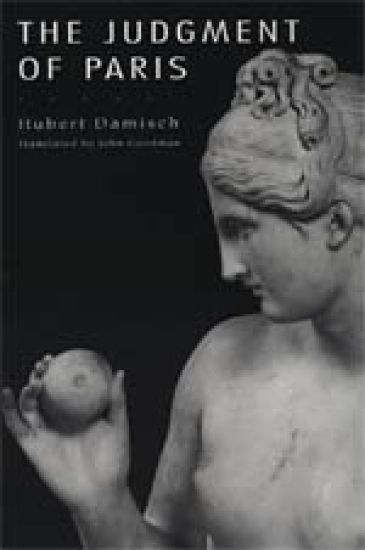
The Judgment of Paris

The Judgment of Paris

Hubert Damisch

University of Chicago Press
1996
sidottu
Drawing on Freudian theories of sexuality and Kant's conception of the beautiful, French art historian Hubert Damisch considers artists as diverse as Raphael, Picasso, Watteau, and Manet to demonstrate that beauty has always been connected to ideas of sexual difference and pleasure. Damisch's tale begins with the judgment of Paris, in which Paris awards Venus the golden apple and thus forever links beauty with desire. The casting of this decision as a mistake--in which desire is rewarded over wisdom and strength--is then linked to theories of the unconscious and psychological drives. In his quest for an exposition of the beautiful in its relation to visual pleasure, Damisch employs what he terms "analytic iconology," following the revisions and repetitions of the motif of the judgment through art history, philosophy, aesthetics, and psychoanalysis. This translation brings an important figure of the French art historical tradition to Anglo-American audiences.
The Judgment of Paris

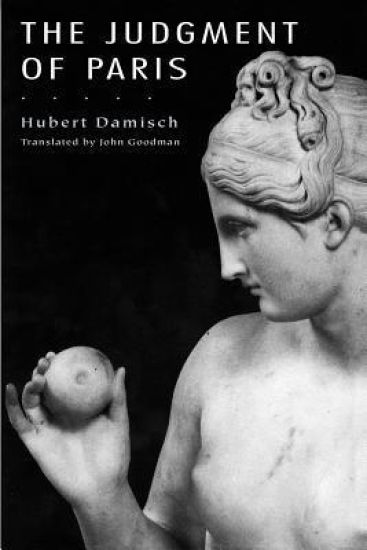
The Judgment of Paris

Hubert Damisch

University of Chicago Press
1996
nidottu
Drawing on Freudian theories of sexuality and Kant's conception of the beautiful, French art historian Hubert Damisch considers artists as diverse as Raphael, Picasso, Watteau, and Manet to demonstrate that beauty has always been connected to ideas of sexual difference and pleasure. Damisch's tale begins with the judgment of Paris, in which Paris awards Venus the golden apple and thus forever links beauty with desire. The casting of this decision as a mistake—in which desire is rewarded over wisdom and strength—is then linked to theories of the unconscious and psychological drives. In his quest for an exposition of the beautiful in its relation to visual pleasure, Damisch employs what he terms “analytic iconology,” following the revisions and repetitions of the motif of the judgment through art history, philosophy, aesthetics, and psychoanalysis. This translation brings an important figure of the French art historical tradition to Anglo-American audiences.

Noah's Ark

Noah's Ark

Hubert Damisch

MIT Press
2016
pokkari
From Noah's Ark to Diller + Scofidio's "Blur" Building, a distinguished art historian maps new ways to think about architecture's origin and development.Trained as an art historian but viewing architecture from the perspective of a "displaced philosopher," Hubert Damisch in these essays offers a meticulous parsing of language and structure to "think architecture in a different key," as Anthony Vidler puts it in his introduction. Drawn to architecture because it provides "an open series of structural models," Damisch examines the origin of architecture and then its structural development from the nineteenth through the twenty-first centuries. He leads the reader from Jean-Francois Blondel to Eugene Viollet-le-Duc to Mies van der Rohe to Diller + Scofidio, with stops along the way at the Temple of Jerusalem, Vitruvius's De Architectura, and the Louvre. In the title essay, Damisch moves easily from Diderot's Encylopedie to Noah's Ark (discussing the provisioning, access, floor plan) to the Pan American Building to Le Corbusier to Ground Zero. Noah's Ark marks the origin of construction, and thus of architecture itself. Diderot's Encylopedie entry on architecture followed his entry on Noah's Ark; architecture could only find its way after the Flood.In these thirteen essays, written over a span of forty years, Damisch takes on other histories and theories of architecture to trace a unique trajectory of architectural structure and thought. The essays are, as Vidler says, "a set of exercises" in thinking about architecture.
Skyline

Skyline

Hubert Damisch

Stanford University Press
2002
sidottu
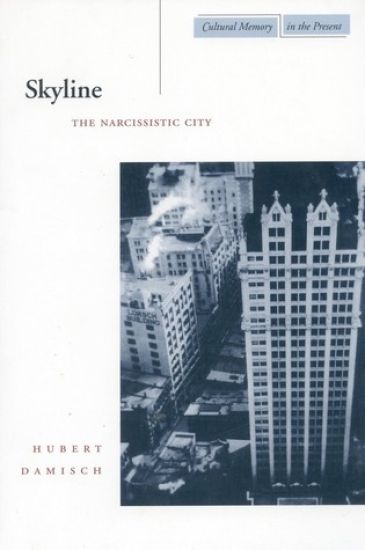
One of today's foremost art historians and critics presents a strikingly original view of architecture and the city through the twin lenses of cultural theory and psychoanalysis. Hubert Damisch—whose work on the history of perspective, the notion of imitation, and the question of representation has emerged as the most important body of critical thought on painting since, perhaps, Meyer Shapiro's collected essays—here engages a subject that has been of continuing interest to him over the last thirty years. In the field of architecture, this book has been awaited for a long time; in the fields of art history and cultural studies, it will be welcomed as a powerful argument for utilizing in an urban context interpretive approaches developed for the analysis of spatial and visual phenomena. Though architecture has served since Descartes as a structural analogy for philosophical discourse and has played a similar role in literature, contemporary studies on architecture have tended to be very specialized, with little regard for their accessibility to scholars in the humanities and social sciences. This book, however, with its solid grounding in architecture and urban theory and its profoundly humanistic approach, will prove deeply rewarding to specialist and generalist alike. The book engages a wide range of subjects, including reconstructions of the Egyptian labyrinth, architectural museums, European visions of New World cities, the great spaces and national parks of the American West, and landscape gardening in the United States. These subjects work together to develop a unique way of looking at the city and its architecture, the landscape and its spaces.
A Theory of /Cloud/

A Theory of /Cloud/

Hubert Damisch

Stanford University Press
2002
sidottu
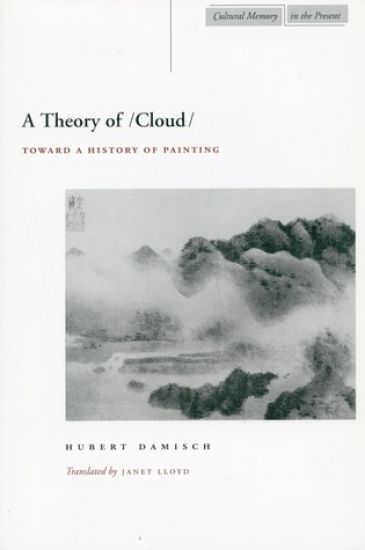
This is the first in a series of books in which one of the most influential of contemporary art theorists revised from within the conceptions underlying the history of art. The author's basic idea is that the rigor of linear perspective cannot encompass all of visual experience and that it could be said to generate an oppositional factor with which it interacts dialectically: the cloud. On a literal level, this could be represented by the absence of the sky, as in Brunelleschi's legendary first experiments with panels using perspective. Or it could be the vaporous swathes that Correggio uses to mediate between the viewer on earth and the heavenly prospect in his frescoed domes at Parma. Insofar as the cloud is a semiotic operator, interacting with the linear order of perspective, it also becomes a dynamic agent facilitating the creation of new types of pictorial space. (Damisch puts the signifer cloud between slashes to indicate that he deals with clouds as signs instead of realistic elements.) This way of looking at the history of painting is especially fruitful for the Renaissance and Baroque periods, but it is also valuable for looking at such junctures as the nineteenth century. For example, Damisch invokes Ruskin and Turner, who carry out both in theory and in practice a revision of the conditions of appearances of the cloud as a landscape feature. Even for the twentieth century, he has illuminating things to say about how his reading of cloud applies to the painters Leger and Batthus. In short, Damisch achieves a brilliant and systematic demonstration of a concept of semiotic interaction that touches some of the most crucial features of the Western art tradition.
A Theory of /Cloud/

A Theory of /Cloud/

Hubert Damisch

Stanford University Press
2002
pokkari
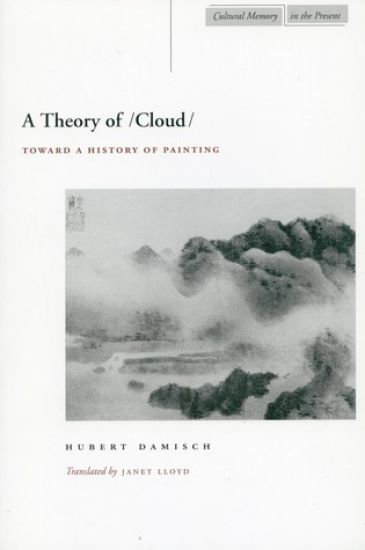
This is the first in a series of books in which one of the most influential of contemporary art theorists revised from within the conceptions underlying the history of art. The author's basic idea is that the rigor of linear perspective cannot encompass all of visual experience and that it could be said to generate an oppositional factor with which it interacts dialectically: the cloud. On a literal level, this could be represented by the absence of the sky, as in Brunelleschi's legendary first experiments with panels using perspective. Or it could be the vaporous swathes that Correggio uses to mediate between the viewer on earth and the heavenly prospect in his frescoed domes at Parma. Insofar as the cloud is a semiotic operator, interacting with the linear order of perspective, it also becomes a dynamic agent facilitating the creation of new types of pictorial space. (Damisch puts the signifer cloud between slashes to indicate that he deals with clouds as signs instead of realistic elements.) This way of looking at the history of painting is especially fruitful for the Renaissance and Baroque periods, but it is also valuable for looking at such junctures as the nineteenth century. For example, Damisch invokes Ruskin and Turner, who carry out both in theory and in practice a revision of the conditions of appearances of the cloud as a landscape feature. Even for the twentieth century, he has illuminating things to say about how his reading of cloud applies to the painters Leger and Batthus. In short, Damisch achieves a brilliant and systematic demonstration of a concept of semiotic interaction that touches some of the most crucial features of the Western art tradition.
A Childhood Memory by Piero Della Francesca

A Childhood Memory by Piero Della Francesca

Hubert Damisch

Stanford University Press
2007
sidottu
Piero della Francesca's Madonna del Parto, a celebrated fifteenth-century Tuscan fresco in which the Virgin gestures to her partially open dress and her pregnant womb, is highly unusual in its iconography. Hubert Damisch undertakes an anthropological and historical analysis of an artwork he constructs as a childhood dream of one of humanity's oldest preoccupations, the mysteries of our origins, of our conception and birth. At once parodying and paying homage to Freud's seminal essay on Leonardo da Vinci, Damisch uses Piero's enigmatic painting to narrate our archaic memories. He shows that we must return to Freud because work in psychoanalysis and art has not solved the problem of what is being analyzed: in the triangle of author, work, and audience, where is the psychoanalytic component located?
A Childhood Memory by Piero Della Francesca

A Childhood Memory by Piero Della Francesca

Hubert Damisch

Stanford University Press
2007
pokkari
Piero della Francesca's Madonna del Parto, a celebrated fifteenth-century Tuscan fresco in which the Virgin gestures to her partially open dress and her pregnant womb, is highly unusual in its iconography. Hubert Damisch undertakes an anthropological and historical analysis of an artwork he constructs as a childhood dream of one of humanity's oldest preoccupations, the mysteries of our origins, of our conception and birth. At once parodying and paying homage to Freud's seminal essay on Leonardo da Vinci, Damisch uses Piero's enigmatic painting to narrate our archaic memories. He shows that we must return to Freud because work in psychoanalysis and art has not solved the problem of what is being analyzed: in the triangle of author, work, and audience, where is the psychoanalytic component located?