Kirjojen hintavertailu. Mukana 11 699 587 kirjaa ja 12 kauppaa.

Kirjahaku

Etsi kirjoja tekijän nimen, kirjan nimen tai ISBN:n perusteella.

6 kirjaa tekijältä Hubert J. M. Hermans

Inner Democracy

Inner Democracy

Hubert J. M. Hermans

Oxford University Press Inc
2020
sidottu
Inner Democracy: Empowering the Mind Against a Polarizing Society investigates the psychological backgrounds of contemporary societal problems such as hate speech, authoritarianism, and divisive forms of identity politics, and how we can counter such destructive forces. The book argues that a democratic society needs citizens who do more than just express their preference for free elections, freedom of speech, and respect of constitutional rights. Rather, democracy is vital only if it is deeply rooted in the hearts, minds, and selves of its participants. In the field of tension created by societal power clashes and absolute truth pretensions, the book investigates how opposition, cooperation, and participation work as innovative forces in a democratic self. Democracy is understood as a personal learning process and as a dialogical play between thought and counter-thought, between imagination and counter-imagination, and between emotion and reason. Written for social scientists, teachers, journalists, and parents who are interested in the facilitation of democracy in a wide variety of situations, this book proposes inner democracy as an antidote against the widespread polarization in our society.
Between Dreaming and Recognition Seeking

Between Dreaming and Recognition Seeking

Hubert J. M. Hermans

University Press of America
2012
nidottu
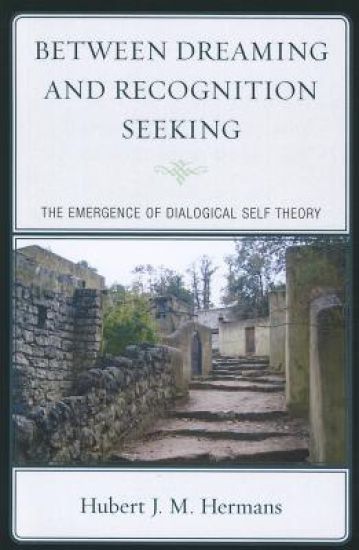
How can an internationally recognized theory contribute towards the enrichment of your own life? In Between Dreaming and Recognition Seeking, Hubert J. M. Hermans, the creator of Dialogical Self Theory, applies this theory to his own life and explains how readers can do the same. He describes several destabilizing events from throughout his lifetime and investigates how they changed his own self. Hermans discusses such events as the breakdown of his self-esteem at school, the experience of falling in love as a “revolution” in his self, the experience of “paradise lost,” and the tensions from living in the border zone of a traditional, modern, and post-modern self. Through a series of thought-provoking questions, Hermans invites readers to explore the long-term meaning of significant events in their own lives. Between Dreaming and Recognition Seeking provides an accessible way to learn about Dialogical Self Theory and how it can be used for one’s self-development.
Entering the Moral Middle Ground

Entering the Moral Middle Ground

Hubert J. M. Hermans

Cambridge University Press
2024
pokkari
Many social and political groups consider each other as enemies rather than opponents with whom one can openly disagree. By introducing the concept of a moral middle ground, this book aims to overcome the perceived separation between good and bad, highlighting the possibility that human actions are permissible, understandable, and even valuable. To elucidate the nature of the moral middle ground and its psychological potentials, the author uses his theoretical framework, Dialogical Self Theory (DST). On the basis of these ideas, he portrays a variety of phenomena, including healthy selfishness, black humor, white lies, hypocrisy and the world views of some historical figures. He then demonstrates how the moral middle ground contributes to the development of a human and ecological identity. As a result, students and researchers in various disciplines, including psychology, literary studies, moral philosophy, political science, history, sociology, theology and cultural anthropology, will benefit from this book.
Entering the Moral Middle Ground

Entering the Moral Middle Ground

Hubert J. M. Hermans

Cambridge University Press
2024
sidottu
Many social and political groups consider each other as enemies rather than opponents with whom one can openly disagree. By introducing the concept of a moral middle ground, this book aims to overcome the perceived separation between good and bad, highlighting the possibility that human actions are permissible, understandable, and even valuable. To elucidate the nature of the moral middle ground and its psychological potentials, the author uses his theoretical framework, Dialogical Self Theory (DST). On the basis of these ideas, he portrays a variety of phenomena, including healthy selfishness, black humor, white lies, hypocrisy and the world views of some historical figures. He then demonstrates how the moral middle ground contributes to the development of a human and ecological identity. As a result, students and researchers in various disciplines, including psychology, literary studies, moral philosophy, political science, history, sociology, theology and cultural anthropology, will benefit from this book.
Liberation in the Face of Uncertainty

Liberation in the Face of Uncertainty

Hubert J. M. Hermans

Cambridge University Press
2022
sidottu
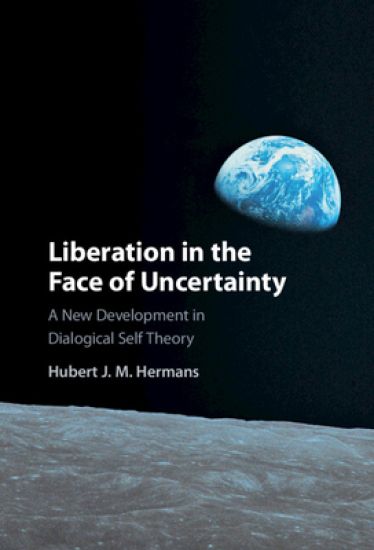
In this volume, Dialogical Self Theory is innovatively presented as a guide to help elucidate some of the most pressing problems of our time as they emerge at the interface of self and society. As a bridging framework at the interface of the social sciences and philosophy, Dialogical Self Theory provides a broad view of problem areas that place us in a field of tension between liberation and social imprisonment. With climate change and the coronavirus pandemic serving as wake-up calls, the book focuses on the experience of uncertainty, the disenchantment of the world, the pursuit of happiness, and the cultural limitations of the Western self-ideal. Now more than ever we need to rethink the relationship between self, other, and the natural environment, and this book uses Dialogical Self Theory to explore actual and potential responses of the self to these urgent challenges.
Liberation in the Face of Uncertainty

Liberation in the Face of Uncertainty

Hubert J. M. Hermans

Cambridge University Press
2023
pokkari
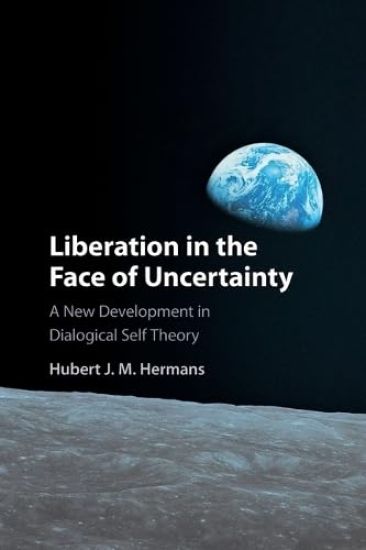
In this volume, Dialogical Self Theory is innovatively presented as a guide to help elucidate some of the most pressing problems of our time as they emerge at the interface of self and society. As a bridging framework at the interface of the social sciences and philosophy, Dialogical Self Theory provides a broad view of problem areas that place us in a field of tension between liberation and social imprisonment. With climate change and the coronavirus pandemic serving as wake-up calls, the book focuses on the experience of uncertainty, the disenchantment of the world, the pursuit of happiness, and the cultural limitations of the Western self-ideal. Now more than ever we need to rethink the relationship between self, other, and the natural environment, and this book uses Dialogical Self Theory to explore actual and potential responses of the self to these urgent challenges.