Kirjojen hintavertailu. Mukana 11 627 373 kirjaa ja 12 kauppaa.

Kirjahaku

Etsi kirjoja tekijän nimen, kirjan nimen tai ISBN:n perusteella.

10 kirjaa tekijältä Hugh Sockett

Moral Thought in Educational Practice
This book demonstrates how pervasive moral thought can be in educational thought and practice. By analyzing research on the moral and intellectual qualities in curriculum, as well as the integration of personhood and citizenship development in classroom work, this book demonstrates the primacy of the moral in various educational settings. With an additional emphasis on morality as it pertains to teaching as a vocation, Moral Thought in Educational Practice examines the objectives of teacher education and offers an account of moral purposes within the knowledge base for teaching.
Knowledge and Virtue in Teaching and Learning
The challenge this book addresses is to demonstrate how, in teaching content knowledge, the development of intellectual and moral dispositions as virtues is not merely a good idea, or peripheral to that content, but deeply embedded in the logic of searching for knowledge and truth. It offers a powerful example of how philosophy of education can be brought to bear on real problems of educational research and practice – pointing the reader to re-envision what it means to educate children (and how we might prepare teachers to take on such a role) by developing the person, instead of simply knowledge and skills. Connected intimately to the practice of teaching and teacher education, the book sets forth an alternative theory of education where the developing person is at the center of education set in a moral space and a political order. To this end, a framework of public and personal knowledge forms the content, to which personal dispositions are integral, not peripheral. The book’s pedagogy is invitational, welcoming its readers as companions in inquiry and thought about the moral aspects of what we teach as knowledge.
Knowledge and Virtue in Teaching and Learning
The challenge this book addresses is to demonstrate how, in teaching content knowledge, the development of intellectual and moral dispositions as virtues is not merely a good idea, or peripheral to that content, but deeply embedded in the logic of searching for knowledge and truth. It offers a powerful example of how philosophy of education can be brought to bear on real problems of educational research and practice – pointing the reader to re-envision what it means to educate children (and how we might prepare teachers to take on such a role) by developing the person, instead of simply knowledge and skills. Connected intimately to the practice of teaching and teacher education, the book sets forth an alternative theory of education where the developing person is at the center of education set in a moral space and a political order. To this end, a framework of public and personal knowledge forms the content, to which personal dispositions are integral, not peripheral. The book’s pedagogy is invitational, welcoming its readers as companions in inquiry and thought about the moral aspects of what we teach as knowledge.
Moral Thought in Educational Practice
This book demonstrates how pervasive moral thought can be in educational thought and practice. By analyzing research on the moral and intellectual qualities in curriculum, as well as the integration of personhood and citizenship development in classroom work, this book demonstrates the primacy of the moral in various educational settings. With an additional emphasis on morality as it pertains to teaching as a vocation, Moral Thought in Educational Practice examines the objectives of teacher education and offers an account of moral purposes within the knowledge base for teaching.
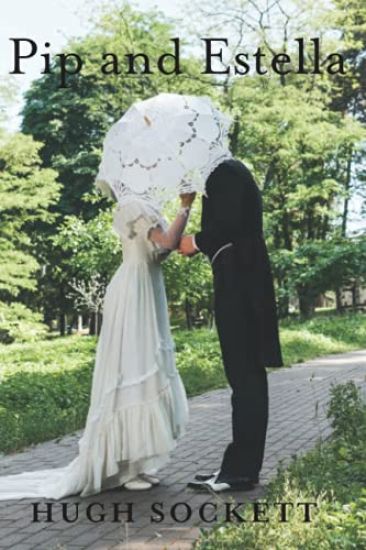
Pip and Estella

Pip and Estella

Hugh Sockett

Waterside Productions
2021
pokkari
Pip and Estella is a sequel to Great Expectations continuing themes of shame, guilt, love, religion, war, murder and the wealth gap, developed within historical events and a quasi-feminist stance. Pip becomes a lawyer recruited by Jaggers, whose Will creates a Trust for the Relief and Education of the Poor. Estella is dramatically reconciled with her natural mother Molly, Jaggers' servant. Estella confronts Miss Havisham's legacy with Molly's help, exposing Estella's passionate love for Pip, and they marry after his first wife's death in childbirth. Pip's namesake 'Young' Pip is converted to Primitive Methodism and is wounded in the Crimean War. Equally varied are the fortunes of Dickens' other central characters (Mr. Jaggers, Joe and Biddy Gargery, John Wemmick) and such new characters as Beatrice Pocket 'Old' Pip's first wife; Susanna Urchadan, Young Pip's wife, and Hamish Macdonald, a new young lawyer.
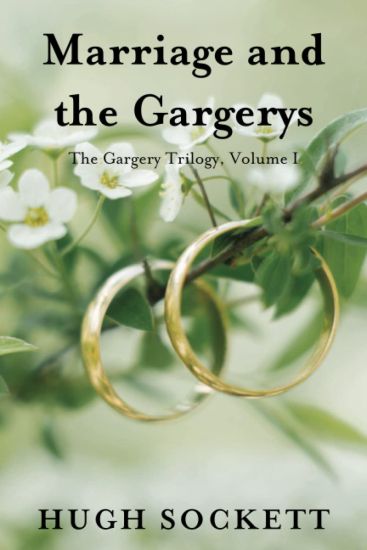
Marriage and the Gargerys

Marriage and the Gargerys

Hugh Sockett

Waterside Productions
2022
pokkari
Marriage and the Gargerys is the first volume of The Gargery Trilogy. It follows The Estella Trilogy where the fortunes of Pip and Estella, their lives, loves, friendships and families were explored from 1840 to 1878, as a sequel to Dickens' Great Expectations. The Gargery family of 1894 are the direct descendants of the blacksmith Joe and his wife Biddy and comprise Pip and his adult children Malcolm and Hannah. Pip's first wife Susanna died of yellow fever and he later marries his earlier love Harriet, but this second marriage is received with truculent hostility by Hannah, though accepted by Malcolm. Marriage brings such tribulations and blessings, and as an estate designed 'for the procreation of children', the physical burden rests on women, and indeed Hannah experiences difficulties in pregnancy that terrify Pip as he lost his eldest son to diphtheria and he cannot countenance the loss of another child. Parental failures can bring a fragile marriage to the point of break down. Grief determined one hasty marriage, for Margaret was previously engaged to Simon's twin who drowned. Margaret later blames herself for fostering too much independence in her murdered adolescent daughter Frederica, an event which snaps the bonds of trust with her husband Simon. Yet marriages can grapple successfully with physical infirmity. Malcolm loses an eye on the North-West Frontier and his friend Tom Hesketh has a leg amputated there. Hannah has medical training so is fascinated by Tom's wounds and marries him, though such disabilities anticipate marital strains with the challenge of a prosthetic leg, and for Clara, the questionable benefit of a glass eye. Family obligations are fostered in marriage too. Albert Pirrip, Old Pip's son, accepts responsibility for his mother-in-law Nellie as she loses her mind. Margaret is counselled by Simon's mother Honora.Yet for some marriage is not a matter of romantic love, but the preservation of wealth. An Indian Princess explains to Alec McPherson her lover that the purpose of marriage is wealth preservation and the production of heirs, so neither of their marriages need interfere with their passions and mutual enjoyment, a view not limited to Indian royalty. However such wealth is unknown to the vast majority of married people. A deserted wife who murdered her three starving children becomes a charge of infanticide before Hamish Macdonald, now a High Court Judge whose marriage to Mary is impeccable. Poverty is also widespread for dirt-poor couples in Ireland where Malcolm's wife Clara inherits a large plantation which she sells it to the Jaggers Trust for a pound after the main house is burnt down by a Protestant gang. Clara and the Trust seek to bring the tenants, often married with large families, out of their condition. Pip's temporary management of this Irish venture frightens and depresses Harriet, a man's work often being a source of marriage tension. She hates the idea of another mission, dislikes Ireland and its people intensely, and is rightly fearful of the dangers to her husband. After several months building trust, Pip himself is wounded in an incident in which his tenant colleague is assassinated outside the Plantation Lodge, the point at which the first novel in the Trilogy ends. Underpinning all relationships, not merely marriage, are matters of conscience which is explored in the second volume of the Gargery Trilogy, Conscience and the Gargerys.
Conscience and the Gargerys

Conscience and the Gargerys

Hugh Sockett

Waterside Productions
2022
pokkari
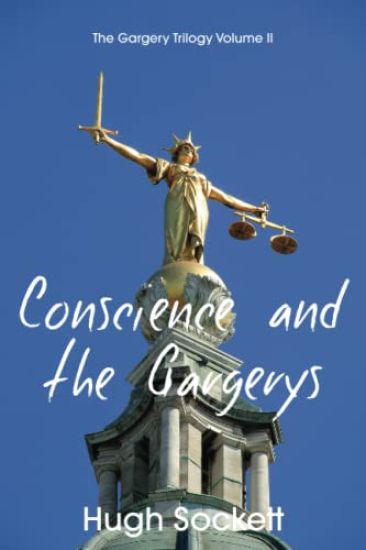
Human beings feel the burdens of conscience and its challenges to their personal and professional duties and responsibilities. Pip was wounded at the Trust's Irish estate in an incident where his co-worker was murdered; he feels the force of the religious obligation to continue work there. Members of the Trust struggle with their collective conscience with their ownership of the estate the subject of confused discussion, a dismal meeting with Irish MPs, and the assignment of Tom and Hannah (Pip's daughter) for an analysis conducted against the background of Home Rule and the cultural hatreds in 1896. Albert Pirrip, Estella's stepson becomes a man without conscience. His youthful infidelity snapped his relationship with Elizabeth Fitzroy, now happily married with children to Timothy Egerton, a senior diplomat posted to London for a top-secret mission. Albert learns that Timothy has committed suicide in his office and decides to go to the funeral as a mark of respect. Elizabeth shares her distress with him, though Albert wants to revive their former relationship. He has become a person who sees the world through contracts and manipulations, despising the philanthropic impulse of the Trust. His marriage flounders when his wife Victoria confronts him about Elizabeth. Thereafter he consorts with prostitutes after his wife's rejections, and he contracts syphilis. Unable to face the depredations of the disease, his wife's anger and the loss of his children's love, he commits suicide, Pip's son, Captain Malcolm Gargery, is in a liaison role at Port Elizabeth, South Africa as the Boer War gets under way. He shadows Emily Hobhouse in her famous enquiries into conditions in the concentration camps established for women and children. This convinces him that Kitchener's army has no conscience and he cannot be a part of it. Mr. Justice Hamish Macdonald, also struggles, but with conflicts between law and justice, on the execution of a mentally disturbed man, a case of bigamy and police methods of enquiry. Elizabeth consults her friend's husband Sir Clarence Smythe MP on Timothy's suicide. Foreign Secretary Lord Salisbury allows Clarence to be informed that Timothy was in fact poisoned which has surprising ramifications. Clarence presents himself as a lover to Elizabeth which she deftly rejects and he sees that infidelity would test his conscience. She is also importuned by the Prince of Wales when she goes to the Palace to receive her husband's posthumous award but she refuses. Tragedies leave parents with pangs of conscience, even where they deserve no blame. A magnificent elm tree at Numquam House is uprooted in a gale killing two of Victoria's nephews. This catastrophe brings Victoria into closer contact with John Eustace, the widowed young Vicar of All Hallows, but Pip's religious fervor is stimulated by the accident and the history of Numquam House as a center of tragedy. His visit to comfort the dead children's parents leads to a theological dispute but a later reconciliation between Vicar John and ex-Methodist preacher Pip. However, the status of women continues to be controversial in the upbringing of children, sexuality and the suffrage. In 1899 suffragism was a regular conversation at dinner parties, but for women the question of militancy in the face of male intransigence raised complex questions of conscience. Queen Victoria's death in January 1901 might perhaps be a turning-point.
Politics and the Gargerys

Politics and the Gargerys

Hugh Sockett

Waterside Productions
2023
pokkari
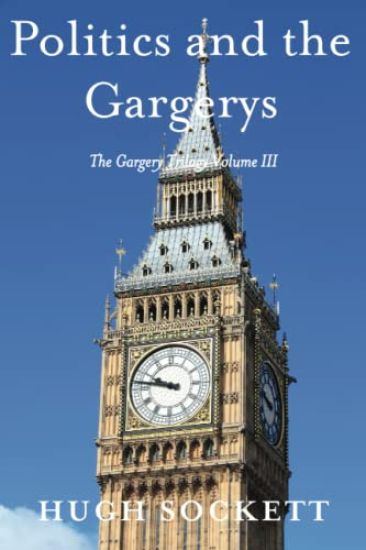
Malcolm Gargery and his friend Tom Hesketh, now married to Pip's daughter Hannah, become deeply involved in national politics by campaigning to become MPs, and both are elected to Parliament in 1906. Political ambition demands continuing reflection on ability, motive and experience. Ability is a given for these men and both find motive not in individual gain, but in a commitment to service enhanced individually by Malcolm's time investigating conditions in the British concentration camps during the Boer War and Tom's work on the Trust's estate in Ireland. Experience is still to be gained in a fraught environment. For the Coronation of Edward VII in 1902 marked the beginning of an era of immense political turbulence. Unions had begun to reshape management-labor relations, especially in the mines, with strike action a major weapon. The demand for votes for women was yet to reach a crescendo, dogged by internal disputes over militancy. With the Liberals' crushing electoral victory in 1906, the power exercised by the House of Lords would become a constitutional crisis. Abroad, the shock of Japan's naval victory over Russia prompted questions about how to sustain the dominance of the British navy at sea, and the conduct of foreign policy in the aftermath of the Boer War. And then there was Ireland. Paths for men to influence politics are familiar, but for women in this era, every endeavor is set within their second-class status as citizens. In the face of male intransigence, militancy becomes the central argument in the suffragist movement and its supporters. Meantime women can pursue public causes, as did Florence Nightingale. Angharad Llewellyn, married first to the love child of Abel Magwitch, the old convict, uses her wealth to help families of miners following the many calamitous pit disasters, especially in South Wales. The experiences of women in this final book of the Gargery Trilogy find a strange illustration in the authority of a woman in a s ance as a spiritualist medium, which gained some popularity after the Queen sought to engage with the spirit of her dead husband. Consensual divorce was not legally possible, leading to bizarre fake adulteries gleaned from a night in a hotel for the man, but legal separation often meant release and freedom for a woman. How women were brought up was especially critical in their lives. Illustrated here is the striking contrast between a grandmother who when young was the cause of a lynching in the American South and her grand-daughter encouraged by her mother to explore physical love before marriage. As this book is about politics, a few of the major actors of the time appear including David Lloyd George, Augustine Birrell, Winston Churchill, The Marquis of Salisbury, Arthur Balfour and Emily Hobhouse, and Dr. Hutchinson in the Rye by-election. Their expression of political or social views here are representative of their recorded opinions, and, in the case of Lloyd George, his reputation as a philanderer. This was also an era of inventions, but only gradual medical progress: The King's coronation was delayed by his having the first operation for appendicitis. The automobile arrived just in time for large cities like London to find out how to deal with the burgeoning need for mechanical transport, rather than feeding 50,000 horses, and clearing their manure off the highways. Trains were in general reliable but were subject to inexperience leading to numerous accidents with many fatalities. Yet there in the midst of the hustle and bustle of dramatic social change are the descendants of that wonderful character Dickens portrayed for our admiration - Joe Gargery, the country blacksmith. He would have had difficulty in imagining the complex lives of his son and his grandchildren and the breadth of their social circle and experiences, although he would have considered much of their experiences as a lark.