Kirjojen hintavertailu. Mukana 12 016 292 kirjaa ja 12 kauppaa.

Kirjahaku

Etsi kirjoja tekijän nimen, kirjan nimen tai ISBN:n perusteella.

85 kirjaa tekijältä Hui Wang

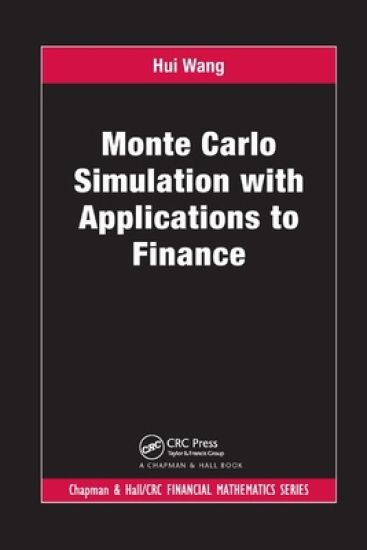
Monte Carlo Simulation with Applications to Finance
Developed from the author’s course on Monte Carlo simulation at Brown University, Monte Carlo Simulation with Applications to Finance provides a self-contained introduction to Monte Carlo methods in financial engineering. It is suitable for advanced undergraduate and graduate students taking a one-semester course or for practitioners in the financial industry.The author first presents the necessary mathematical tools for simulation, arbitrary free option pricing, and the basic implementation of Monte Carlo schemes. He then describes variance reduction techniques, including control variates, stratification, conditioning, importance sampling, and cross-entropy. The text concludes with stochastic calculus and the simulation of diffusion processes. Only requiring some familiarity with probability and statistics, the book keeps much of the mathematics at an informal level and avoids technical measure-theoretic jargon to provide a practical understanding of the basics. It includes a large number of examples as well as MATLAB® coding exercises that are designed in a progressive manner so that no prior experience with MATLAB is needed.
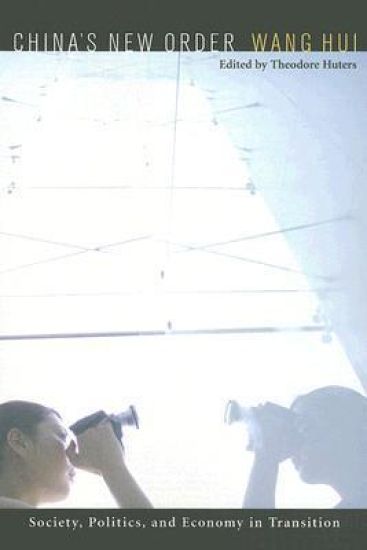
China’s New Order

China’s New Order

Hui Wang

Harvard University Press
2006
nidottu
As the world is drawn together with increasing force, our long-standing isolation from—and baffling ignorance of—China is ever more perilous. This book offers a powerful analysis of China and the transformations it has undertaken since 1989.Wang Hui is unique in China’s intellectual world for his ability to synthesize an insider’s knowledge of economics, politics, civilization, and Western critical theory. A participant in the Tiananmen Square movement, he is also the editor of the most important intellectual journal in contemporary China. He has a grasp and vision that go beyond contemporary debates to allow him to connect the events of 1989 with a long view of Chinese history. Wang Hui argues that the features of contemporary China are elements of the new global order as a whole in which considerations of economic growth and development have trumped every other concern, particularly those of democracy and social justice. At its heart this book represents an impassioned plea for economic and social justice and an indictment of the corruption caused by the explosion of “market extremism.”As Wang Hui observes, terms like “free” and “unregulated” are largely ideological constructs masking the intervention of highly manipulative, coercive governmental actions on behalf of economic policies that favor a particular scheme of capitalist acquisition—something that must be distinguished from truly free markets. He sees new openings toward social, political, and economic democracy in China as the only agencies by which the unstable conditions thus engendered can be remedied.
The Rise of Modern Chinese Thought

The Rise of Modern Chinese Thought

Hui Wang

HARVARD UNIVERSITY PRESS
2023
sidottu
"Brilliantly reveals a China that has always been lively and pluralist in its political thought...His analysis has immense relevance for China today." –Rana Mitter, Foreign AffairsThe definitive history of China’s philosophical confrontation with modernity, available for the first time in English.What does it mean for China to be modern, or for modernity to be Chinese? How is the notion of historical rupture—a fundamental distinction between tradition and modernity—compatible or not with the history of Chinese thought?These questions animate The Rise of Modern Chinese Thought, a sprawling intellectual history considered one of the most significant achievements of modern Chinese scholarship, available here in English for the first time. Wang Hui traces the seventh-century origins of three key ideas—“principle” (li), “things” (wu), and “propensity” (shi)—and analyzes their continual evolution up to the beginning of the twentieth century. Confucian scholars grappled with the problem of linking transcendental law to the material world, thought to action—a goal that Wang argues became outdated as China’s socioeconomic conditions were radically transformed during the Song Dynasty. Wang shows how the epistemic shifts of that time period produced a new intellectual framework that has proven both durable and malleable, influencing generations of philosophers and even China’s transformation from empire to nation-state in the early twentieth century. In a new preface, Wang also reflects on responses to his book since its original publication in Chinese.With theoretical rigor and uncommon insight into the roots of contemporary political commitments, Wang delivers a masterpiece of scholarship that is overdue in translation. Through deep readings of key figures and classical texts, The Rise of Modern Chinese Thought provides an account of Chinese philosophy and history that will transform our understanding of the modern not only in China but around the world.
China from Empire to Nation-State

China from Empire to Nation-State

Hui Wang

Harvard University Press
2014
sidottu
This translation of the Introduction to Wang Hui’s Rise of Modern Chinese Thought (2004) makes part of his four-volume masterwork available to English readers for the first time. A leading public intellectual in China, Wang charts the historical currents that have shaped Chinese modernity from the Song Dynasty to the present day, and along the way challenges the West to rethink some of its most basic assumptions about what it means to be modern.China from Empire to Nation-State exposes oversimplifications and distortions implicit in Western critiques of Chinese history, which long held that China was culturally resistant to modernization, only able to join the community of modern nations when the Qing Empire finally collapsed in 1912. Noting that Western ideas have failed to take into account the diversity of Chinese experience, Wang recovers important strains of premodern thought. Chinese thinkers theorized politics in ways that do not line up neatly with political thought in the West—for example, the notion of a “Heavenly Principle” that governed everything from the ordering of the cosmos to the structure of society and rationality itself. Often dismissed as evidence of imperial China’s irredeemably backward culture, many Neo-Confucian concepts reemerged in twentieth-century Chinese political discourse, as thinkers and activists from across the ideological spectrum appealed to ancient precedents and principles in support of their political and cultural agendas. Wang thus enables us to see how many aspects of premodern thought contributed to a distinctly Chinese vision of modernity.
The Politics of Imagining Asia

The Politics of Imagining Asia

Hui Wang

Harvard University Press
2011
sidottu
In this bold, provocative collection, Wang Hui confronts some of the major issues concerning modern China and the status quo of contemporary Chinese thought.The book’s overarching theme is the possibility of an alternative modernity that does not rely on imported conceptions of Chinese history and its legacy. Wang Hui argues that current models, based largely on Western notions of empire and the nation-state, fail to account for the richness and diversity of pre-modern Chinese historical practice. At the same time, he refrains from offering an exclusively Chinese perspective and placing China in an intellectual ghetto. Navigating terrain on regional language and politics, he draws on China’s unique past to expose the inadequacies of European-born standards for assessing modern China’s evolution. He takes issue particularly with the way in which nation-state logic has dominated politically charged concerns like Chinese language standardization and “The Tibetan Question.” His stance is critical—and often controversial—but he locates hope in the kinds of complex, multifaceted arrangements that defined China and much of Asia for centuries.The Politics of Imagining Asia challenges us not only to re-examine our theories of “Asia” but to reconsider what “Europe” means as well. As Theodore Huters writes in his introduction, “Wang Hui’s concerns extend beyond China and Asia to an ambition to rethink world history as a whole.”
Monte Carlo Simulation with Applications to Finance
Developed from the author’s course on Monte Carlo simulation at Brown University, Monte Carlo Simulation with Applications to Finance provides a self-contained introduction to Monte Carlo methods in financial engineering. It is suitable for advanced undergraduate and graduate students taking a one-semester course or for practitioners in the financial industry.The author first presents the necessary mathematical tools for simulation, arbitrary free option pricing, and the basic implementation of Monte Carlo schemes. He then describes variance reduction techniques, including control variates, stratification, conditioning, importance sampling, and cross-entropy. The text concludes with stochastic calculus and the simulation of diffusion processes. Only requiring some familiarity with probability and statistics, the book keeps much of the mathematics at an informal level and avoids technical measure-theoretic jargon to provide a practical understanding of the basics. It includes a large number of examples as well as MATLAB® coding exercises that are designed in a progressive manner so that no prior experience with MATLAB is needed.
Advanced Matrix Converters

Advanced Matrix Converters

Hui Wang

Springer International Publishing AG
2025
sidottu
Advanced Matrix Converters: Topology, Modulation, and Control is a comprehensive guide for readers interested in developing advanced direct AC-AC converters, commonly known as matrix converters (MCs). These MCs offer an all-silicon and environmentally friendly solution that has garnered increasing attention in recent years due to their ability to eliminate bulky passive components and improve the converters' power density, conversion efficiency, and reliability. This book covers the principles of topology construction, advanced modulation strategies, application areas, and control methods. It includes topics such as efficient AC-AC conversion, multi-level conversion, and high-performance adjustable speed drives. It is an essential resource for researchers, engineers, and designers who must select the most appropriate new topologies and control methods for specific applications.
Subjektivitaet und Objektivitaet in der Rechtsanwendung
Das Problem der Subjektivitat und Objektivitat ist eine der zentralen Fragen der Rechtstheorie und Rechtsphilosophie. Diese Arbeit hat zum Ziel, die der Rechtsanwendung inharente Subjektivitat aufzuzeigen, und die Transformation von der Subjektivitat zur Objektivitat auf ein diskurstheoretisches Fundament zu analysieren. In traditionellen positivistischen sowie nichtpositivistischen Untersuchungen werden die subjektiven Elemente des Rechts vernachlassigt. Eine reine Objektivitat ist unerreichbar und die Subjektivitat ist unvermeidbar. Durch die Entwicklung eines komplexen Modells der Rechtsanwendung und die Begrundung der Notwendigkeit des Richtigkeitsanspruchs wird ein UEbergang von der subjektiven zur objektiven Rechtsanwendung geschaffen.
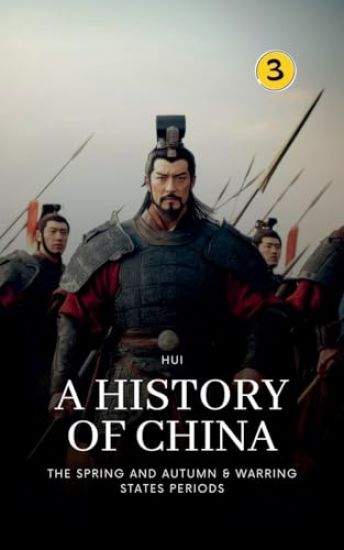
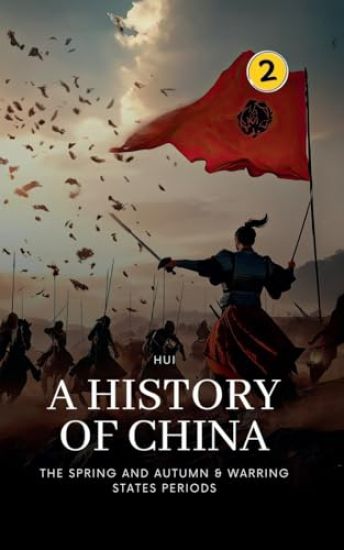
The Spring and Autumn & Warring States Periods
"The Spring and Autumn & Warring States Periods, PART TWO" takes you deep into one of the most extraordinary periods in Chinese history, where legendary figures clashed and kingdoms rose or fell by the stroke of a pen or the swing of a sword. Discover the bold reforms of Shang Yang, the artful diplomacy of Su Qin, and the cunning strategies of Zhang Yi. Their brilliance shaped the destinies of states like Qin and Wei, while Sun Bin and Pang Juan's tactical genius inspired generations of military thinkers. Gui Gu Zi, the enigmatic master of strategy, and L Buwei, the ambitious merchant-turned-statesman, add intrigue to a world driven by power and opportunity.This book also brings the kings of the era vividly to life. Meet King Wu Ling of Zhao, who revolutionized his military with nomadic tactics; King Hui Wen of Qin, who laid the foundations of an empire; and King Zhao Xiang of Qin, whose leadership propelled Qin toward dominance. The narrative culminates with King Zheng of Qin, better known as Qin Shi Huang, the unifier who swept through the six warring states to forge the first Chinese empire. Alongside these rulers, L Buwei's audacious rise and influence serve as a testament to how individuals could shape the fate of nations.Through gripping storytelling, this book explores alliances, betrayals, and the extraordinary vision that redefined the course of history. Packed with tales of reformers, tacticians, and warrior kings.
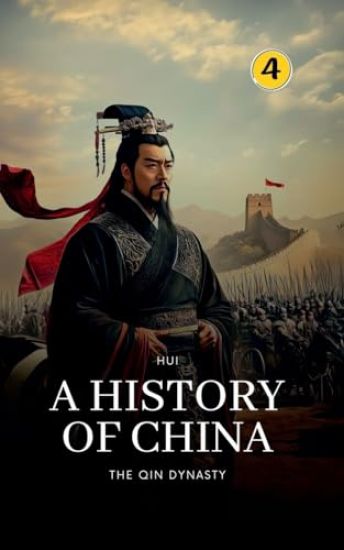
The Qin Dynasty

The Qin Dynasty

Hui Wang

Hui Wang
2025
pokkari
"The Qin Dynasty: A History of China" takes you on a journey through one of the most dramatic chapters in Chinese history. From the unification of the warring states to the iron rule of Qin Shi Huang, this book dives deep into the empire that set the foundation for China's future. The First Emperor built a centralized government, enforced strict laws, and undertook grand projects like the Great Wall and his massive underground mausoleum. But his rule was also marked by fear-the infamous Burning of Books and Burying of Scholars, heavy taxation, and forced labor that pushed people to their limits. When Qin Shi Huang passed away, his successors struggled to hold the empire together, and cracks began to show.As unrest spread, a single spark ignited a rebellion that would shake the empire to its core. Chen Sheng and Wu Guang, two common soldiers, defied orders and rose up, setting off a wave of uprisings across the land. The once-unbreakable Qin Dynasty faced challenge after challenge, as ambitious warlords seized the opportunity to fight for power. Among them, two figures stood out-Liu Bang, a clever and adaptable leader with a commoner's background, and Xiang Yu, a fearsome warrior whose strength was unmatched. Their rivalry would turn into a fierce battle for control over China, each determined to claim victory in their own way.Through shifting alliances, brilliant strategies, and brutal clashes, the struggle between these two giants shaped the fate of an empire. As cities fell and armies clashed, their contrasting styles of leadership and personal ambitions drove them toward an inevitable showdown. Would brute force or cunning strategy decide the future of China? As tensions rose, betrayal lurked in the shadows, and the tide of war could change in an instant.Packed with gripping stories, unforgettable characters, and key moments that shaped Chinese history, this book brings the Qin Dynasty's rise and fall to life in vivid detail. If you want to explore the ambition, power, and conflicts that defined an era, turn the page and step into a world where empires are built-and destroyed-by the choices of a few.
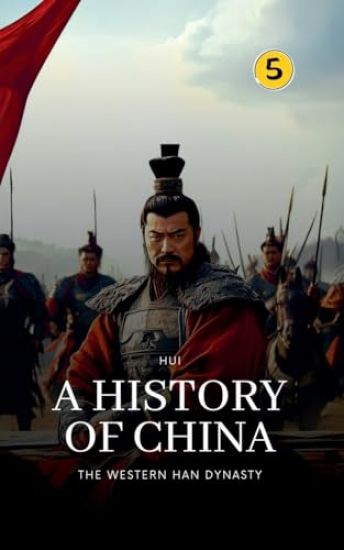
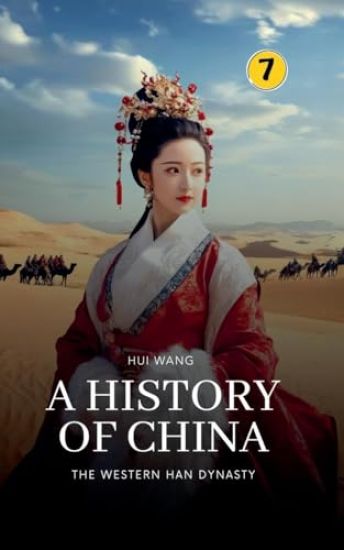
The Western Han Dynasty

The Western Han Dynasty

Hui Wang

Hui Wang
2025
pokkari
The Western Han Dynasty: A History of China, PART ONE takes you on a captivating journey through one of China's most remarkable dynasties, where ambition, strategy, and power struggles shaped an empire that lasted for centuries. This book doesn't just recount historical events-it immerses you in the dramatic stories of emperors, generals, and advisors who made crucial decisions that altered the course of history. From the gripping Rise of the Han Dynasty to the cunning tactics behind the Trap at Baideng Mountain, you'll feel the tension of ancient battles and the weight of imperial decisions that built a foundation for modern China.As you turn the pages, you'll witness the rise and fall of influential figures like Han Xin, whose brilliant military mind ultimately led to his tragic downfall. The political stage comes alive with the Elimination of the Non-Liu Kings and the Ascension of Emperor Hui, giving you a front-row seat to the internal conflicts that tested the dynasty's strength. The book also shines a light on pivotal reforms, such as Emperor Wen's Way of Ruling and the bold strategies of Emperor Wu, whose vision extended beyond his time and left an enduring mark on Chinese governance and culture.But this journey isn't just about wars and politics. Step into the private lives of historical figures as you follow the captivating tale of Wei Zifu's entrance into the palace and the personal struggles of Wei Qing and Huo Qubing. Discover how General Zhou Ya Fu's decisive actions crushed a rebellion and how The Brilliant Mind of Jia Yi influenced the dynasty's direction with innovative ideas. Each chapter reveals a new layer of the Western Han Dynasty's fascinating history, offering a rich, engaging experience for both history lovers and curious readers alike.
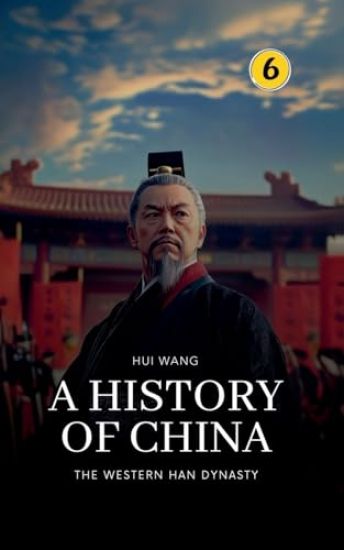
The Western Han Dynasty

The Western Han Dynasty

Hui Wang

Hui Wang
2025
pokkari
The Western Han Dynasty: A History of China, PART TWO brings you into an empire built on ambition, war, and power struggles. At the heart of it all was Emperor Wu of Han, a ruler who refused to settle for anything less than absolute dominance. He wasn't just expanding borders-he was pushing the limits of what an empire could achieve. His rule saw China grow stronger than ever, but every conquest came with a cost. The battles weren't just fought on the frontiers; they were waged within the palace walls, in whispered conspiracies, in the rise and fall of those who dared to stand beside him.To crush the Xiongnu, Emperor Wu relied on two extraordinary generals: Wei Qing and Huo Qubing. Wei Qing, once a servant, became the empire's greatest commander, a man who led the Han army deep into enemy territory, turning the tide of war. His nephew, Huo Qubing, was even more ruthless-a young prodigy who fought like a man possessed, winning victories that seemed impossible. But war alone didn't decide the fate of an empire. In the palace, Empress Wei Zifu, once an unknown court singer, became one of the most powerful women in history. Her rise was tied to her brother's military success, but in a court where loyalty was just another bargaining chip, she knew that power could slip away as quickly as it came.Beyond the battlefield and the throne room, others played their own roles in shaping history. Zhang Tang, the emperor's enforcer, kept order with fear and punishment. Sima Qian, the historian, believed the truth was worth any price-even his own suffering. Meanwhile, the Witchcraft Calamity turned paranoia into policy, as Emperor Wu saw enemies in every shadow, leading to a wave of purges that shook the empire. Accusations of sorcery brought down some of the most powerful figures in the court, proving that even those closest to the emperor could be destroyed overnight.But no ruler lasts forever. As Emperor Wu's reign neared its end, the cracks in his empire became impossible to ignore. His successor, Liu He, was on the throne for just 27 days before being cast aside as unfit to rule. The once-powerful Huo family, who had served the empire so faithfully, found themselves caught in the deadly game of politics, their influence fading as quickly as it had risen. Could the empire hold itself together, or was it destined to collapse under the weight of its own ambition?Then came Emperor Xuan of Han, a ruler with an unexpected past. Born as a commoner, he rose to power against all odds, offering the empire a second chance at stability. But the question remained-could he undo decades of war, betrayal, and political strife? Or had the Han Dynasty already reached its peak?
The Western Han Dynasty

The Western Han Dynasty

Hui Wang

Hui Wang
2025
pokkari
The Western Han Dynasty: A History of China, PART THREE takes you on a journey through ambition, betrayal, war, and the struggle for power. This book brings to life the rulers, rebels, and visionaries who shaped one of China's most fascinating dynasties-from Emperor Yuan's reign to the collapse and rebirth of Han under Liu Xiu. Inside the imperial palace, love and power were deeply intertwined. Emperor Yuan's court saw the rise of influential figures, including the legendary Zhao Feiyan, who went from a dancer to an empress, and the controversial "Cut-Sleeve Emperor," whose personal life left a lasting mark on history. But beneath the surface of luxury and grandeur, political schemes brewed. The ambitious Wang Mang climbed his way to the top, carefully positioning himself as a savior of the empire-until he shocked the world by usurping the throne. His so-called "doomed reforms" would ultimately lead to chaos, rebellion, and his dramatic downfall. Beyond the palace, battles were fought not only with swords but also with diplomacy. In one of the most daring military campaigns, General Chen Tang declared, "No matter how far, justice will be served," proving that Han's influence stretched far beyond its borders. Meanwhile, far from the battlefield, one woman made history not with weapons, but with wisdom-Wang Zhaojun. Chosen as a bride for the Xiongnu chieftain, she left behind the comforts of the imperial court to forge peace between two great civilizations. Her journey beyond the Great Wall was more than a political move; it was a sacrifice that would change the fate of China's northern frontier for generations. As the empire teetered on the edge of collapse, one man watched and waited-Liu Xiu. With patience and intelligence, he built his power step by step, refusing to rush into battle until the time was right. As Wang Mang's rule fell apart and war engulfed the empire, Liu Xiu led a rebellion that would restore the Han Dynasty. His story is one of resilience, strategy, and unwavering determination-a fitting climax to this era of transformation. This is more than just history; it is a saga of emperors and generals, scholars and concubines, visionaries and traitors. If you love stories of power struggles, unexpected twists, and legendary figures, this book will take you deep into the rise, fall, and rebirth of the Western Han Dynasty.
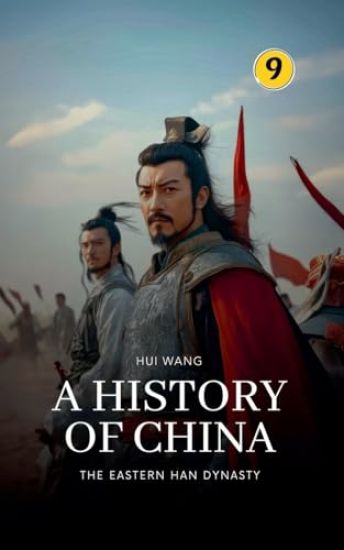
The Eastern Han Dynasty

The Eastern Han Dynasty

Hui Wang

Hui Wang
2025
pokkari
The Eastern Han Dynasty: A History of China, PART ONE takes you on an unforgettable journey through one of China's most dramatic and transformative periods. The mighty Han Empire, once fractured by war and rebellion, finds a new leader in Liu Xiu. But claiming the throne is just the beginning-his true challenge is rebuilding an empire that has been torn apart.At first, Liu Xiu is just another noble caught in the chaos. But when opportunity knocks, he rises to the occasion. Through sheer intelligence, military brilliance, and strategic alliances, he defeats his rivals one by one, becoming Emperor Guangwu of Han. Establishing his capital in Luoyang, he starts the long process of restoring order, but new threats are never far behind. The Chimei Army, a powerful rebel force, refuses to back down. Their submission marks a major victory, but it's not the last challenge the emperor will face. The Three Rebellions erupt across the land, each threatening to undo everything he's built.As Liu Xiu fights to secure his rule, personal loyalties are tested. Wei Xiao, once a trusted officer, struggles between staying loyal and seizing power for himself. Meanwhile, the empire's expansion continues-Longyou is conquered, and all eyes turn to Shu, a region rich in resources and political intrigue. But war isn't just about swords and soldiers. Great leaders emerge, like General Ma Yuan, whose military genius and legacy shape the future of China. His battles and strategies become legendary, but even the strongest warriors must eventually step aside.With the foundation of the new Han government laid, the work of rebuilding begins. The loyal ministers of Han's revival play a crucial role in stabilizing the empire, while internal conflicts force tough decisions-one of them being the unexpected moment when the crown prince steps down. The imperial family's influence grows stronger, with the Yin Family becoming a powerful force behind the throne.Yet history doesn't stop with Liu Xiu. As time passes, a new emperor must prove himself. Emperor Ming, determined to secure his rule, faces his own battles. His reign brings new policies, shifting alliances, and challenges that threaten to shake the empire once more. But Han is no longer confined to its borders. The legendary Ban Chao embarks on an ambitious journey to the Western Regions, pushing the empire's influence further than ever before. His efforts pave the way for the rise of another fearless figure-the Conqueror of the Western Regions, whose campaigns extend Han's power deep into lands unknown.This is not just a book about history-it's a gripping tale of ambition, war, loyalty, and betrayal. From epic battles to political mind games, from military legends to the power struggles inside the imperial court, this book brings the Eastern Han Dynasty to life like never before. If you love stories of strategy, war, and empire-building, this is a journey you won't want to miss. Step into the world of the Eastern Han and experience the rise of a dynasty that changed China forever.
The Eastern Han Dynasty

The Eastern Han Dynasty

Hui Wang

Hui Wang
2025
pokkari
The Eastern Han Dynasty: A History of China, PART TWO takes you on a thrilling ride through one of China's most dramatic and chaotic eras. This book pulls you right into the palace, where figures like Empress Dou plot and scheme to secure power, even using poison and false charges to remove rivals. You'll watch the rise and fall of powerful families like the Dous and the Liang clan, who used their ties to the throne to control the empire - but always at a heavy cost.You'll follow brave officials like Yuan An, Yue Hui, and Cai Yong, who risked everything to speak the truth and challenge corruption. These weren't dry, stiff scholars - they were real people caught in a deadly game of politics, facing off against terrifying figures like Liang Ji and the infamous Ten Regular Attendants, the emperor's most corrupt and dangerous eunuchs.This book doesn't just tell you about emperors and generals; it shines a light on the students, rebels, and farmers, too. You'll see how the National Academy students stood up to the powerful, how the Yellow Turban Rebellion shook the empire, and how even everyday folk got tangled in the madness, whether they were sucked into fake "filial" shows or forced to pay crushing taxes to fund the emperor's endless luxuries.You'll walk through lavish palace gardens, secret court meetings, bloody battlefields, and fake street markets set up inside the palace for the emperor's entertainment. From wild feasts to puppet rulers, from political assassinations to daring military campaigns, the Eastern Han was packed with stories that read like the best kind of historical drama - because they were real.
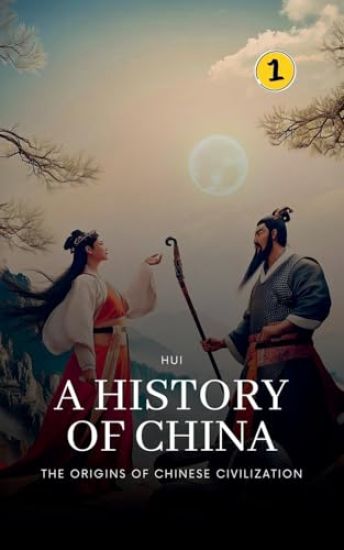
The Origins of Chinese Civilization
"Origins of Chinese Civilization: A History of China" by Hui Wang takes you on a journey through China's ancient past, told in a way that feels like you're listening to an elder recounting myths around a campfire. The book starts with Fuxi, the first leader, whose inventions like the Eight Trigrams and fishing nets shaped early Chinese culture. The story moves through key figures like N wa, who patched the sky and shaped humanity from clay, and the Yan Emperor, who pioneered agriculture and medicine. Finally, the legendary Yellow Emperor, known as a creator of civilization, brings the narrative into a more organized and developed era. The legends are filled with fascinating myths-like Fuxi's miraculous birth from a footprint, or N wa molding people from earth, and the rise of agriculture through Emperor Yan's curiosity about plants. The author doesn't simply recite the historical figures but adds warmth, humor, and a sense of connection, making it easy to see why these stories have endured for thousands of years. It's not just about dates and events; it's about people trying to live better, inventing things that changed their daily lives, and facing challenges with creativity and resilience. This book is perfect for those who want to explore Chinese history not through dry facts but with lively storytelling that brings ancient China to life.