Kirjojen hintavertailu. Mukana 11 699 587 kirjaa ja 12 kauppaa.

Kirjahaku

Etsi kirjoja tekijän nimen, kirjan nimen tai ISBN:n perusteella.

12 kirjaa tekijältä Iain Chambers

Popular Culture

Popular Culture

Iain Chambers

Routledge
1986
nidottu
Chambers approaches the details and textures of popular culture through a series of histories which show how it becomes continually remade as each of us defines our own urban space.
Migrancy, Culture, Identity

Migrancy, Culture, Identity

Iain Chambers

Routledge
1993
sidottu
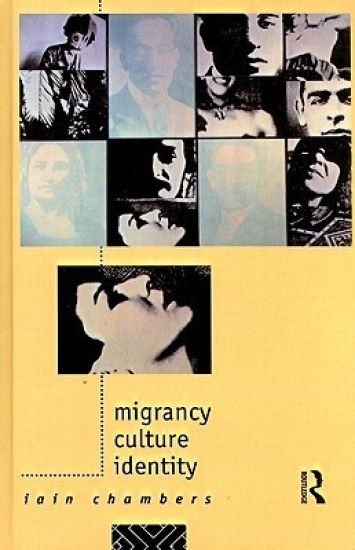
In Migrancy, Culture, Identity, Iain Chambers unravels how our sense of place and identity is realised as we move through myriad languages, worlds and histories. The author explores the uncharted impact of cultural diversity on today's world, from the 'realistic' eye of the painter to the 'scientific' approach of the cultural anthropologist or the critical distance of the historian; from the computer screen to the Walkman and 'World Music'. Migrancy, Culture and Identity takes us on a journey into the disturbance and dislocation of culture and identity that faces all of us to explore how migration, marginality and homelessness have disrupted the West's faith in linear progress and rational thinking, undermining our knowledge, history and cultural identity.
Migrancy, Culture, Identity

Migrancy, Culture, Identity

Iain Chambers

Routledge
1993
nidottu
In Migrancy, Culture, Identity, Iain Chambers unravels how our sense of place and identity is realised as we move through myriad languages, worlds and histories. The author explores the uncharted impact of cultural diversity on today's world, from the 'realistic' eye of the painter to the 'scientific' approach of the cultural anthropologist or the critical distance of the historian; from the computer screen to the Walkman and 'World Music'. Migrancy, Culture and Identity takes us on a journey into the disturbance and dislocation of culture and identity that faces all of us to explore how migration, marginality and homelessness have disrupted the West's faith in linear progress and rational thinking, undermining our knowledge, history and cultural identity.
Culture after Humanism

Culture after Humanism

Iain Chambers

Routledge
2001
sidottu
Culture After Humanism asks what happens to the authority of traditional western modes of thought in the wake of postmodernist theories of language and identity. Drawing on examples from music, architecture, literature, philosophy and art, Iain Chambers investigates moments of tension, interruptions which transform our perception of the world and test the limits of language, art and technology.
Culture after Humanism

Culture after Humanism

Iain Chambers

Routledge
2001
nidottu
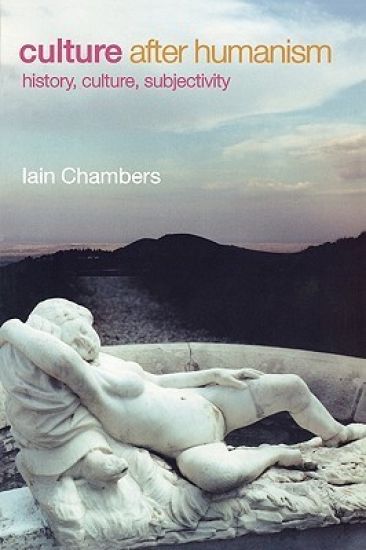
Culture After Humanism asks what happens to the authority of traditional western modes of thought in the wake of postmodernist theories of language and identity. Drawing on examples from music, architecture, literature, philosophy and art, Iain Chambers investigates moments of tension, interruptions which transform our perception of the world and test the limits of language, art and technology.
Border Dialogues (Routledge Revivals)
First published in 1990, Border Dialogues explores some of the territories of contemporary culture, philosophy and criticism. It touches on arguments surrounding Nietzsche and Italian ‘weak thought’, the mysteries of being ‘British’, and with more immediate concerns such as computers, fashion, gender and ethnicity. The chapters explore how such different strands are joined together, and how this can lead to a reassessment of contemporary cultural criticism. This innovative and interesting reissue will be of particular interest to students of critical theory, cultural studies, radical philosophy and deconstruction.
Border Dialogues (Routledge Revivals)
First published in 1990, Border Dialogues explores some of the territories of contemporary culture, philosophy and criticism. It touches on arguments surrounding Nietzsche and Italian ‘weak thought’, the mysteries of being ‘British’, and with more immediate concerns such as computers, fashion, gender and ethnicity. The chapters explore how such different strands are joined together, and how this can lead to a reassessment of contemporary cultural criticism. This innovative and interesting reissue will be of particular interest to students of critical theory, cultural studies, radical philosophy and deconstruction.
Mediterranean Crossings

Mediterranean Crossings

Iain Chambers

Duke University Press
2008
sidottu
The cultural theorist Iain Chambers is known for his historically grounded, philosophically informed, and politically pointed inquiries into issues of identity, alterity, and migration, and the challenge postcolonial studies poses to conventional Western thought. With Mediterranean Crossings, he challenges insufficient prevailing characterizations of the Mediterranean by offering a vibrant interdisciplinary and intercultural interpretation of the region’s culture and history. The “Mediterranean” as a concept entered the European lexicon only in the early nineteenth century. As an object of study, it is the product of modern geographical, political, and historical classifications. Chambers contends that the region’s fundamentally fluid, hybrid nature has long been obscured by the categories and strictures imposed by European discourse and government.In evocative and erudite prose, Chambers renders the Mediterranean a mutable space, profoundly marked by the linguistic, literary, culinary, musical, and intellectual dissemination of Arab, Jewish, Turkish, and Latin cultures. He brings to light histories of Mediterranean crossings-of people, goods, melodies, thought-that are rarely part of orthodox understandings. Chambers writes in a style that reflects the fluidity of the exchanges that have formed the region; he segues between major historical events and local daily routines, backwards and forwards in time, and from one part of the Mediterranean to another. A sea of endlessly overlapping cultural and historical currents, the Mediterranean exceeds the immediate constraints of nationalism and inflexible identity. It offers scholars an opportunity to rethink the past and present and to imagine a future beyond the confines of Western humanistic thought.
Mediterranean Crossings

Mediterranean Crossings

Iain Chambers

Duke University Press
2008
pokkari
The cultural theorist Iain Chambers is known for his historically grounded, philosophically informed, and politically pointed inquiries into issues of identity, alterity, and migration, and the challenge postcolonial studies poses to conventional Western thought. With Mediterranean Crossings, he challenges insufficient prevailing characterizations of the Mediterranean by offering a vibrant interdisciplinary and intercultural interpretation of the region’s culture and history. The “Mediterranean” as a concept entered the European lexicon only in the early nineteenth century. As an object of study, it is the product of modern geographical, political, and historical classifications. Chambers contends that the region’s fundamentally fluid, hybrid nature has long been obscured by the categories and strictures imposed by European discourse and government.In evocative and erudite prose, Chambers renders the Mediterranean a mutable space, profoundly marked by the linguistic, literary, culinary, musical, and intellectual dissemination of Arab, Jewish, Turkish, and Latin cultures. He brings to light histories of Mediterranean crossings-of people, goods, melodies, thought-that are rarely part of orthodox understandings. Chambers writes in a style that reflects the fluidity of the exchanges that have formed the region; he segues between major historical events and local daily routines, backwards and forwards in time, and from one part of the Mediterranean to another. A sea of endlessly overlapping cultural and historical currents, the Mediterranean exceeds the immediate constraints of nationalism and inflexible identity. It offers scholars an opportunity to rethink the past and present and to imagine a future beyond the confines of Western humanistic thought.
Popular Culture

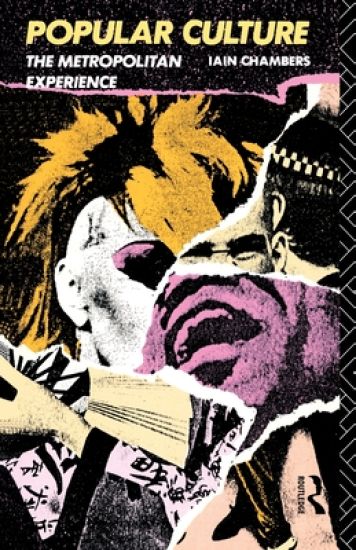
Popular Culture

Iain Chambers

Routledge
2016
sidottu
Iain Chambers approaches the often overlooked details and textures of popular culture through a series of histories which show how it becomes continually remade as each of us defines our own urban space.
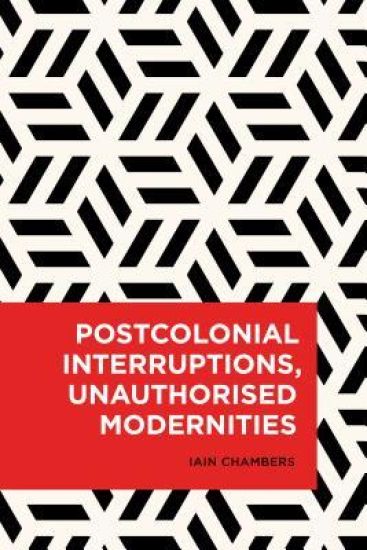
Postcolonial Interruptions, Unauthorised Modernities
Postcolonial Interruptions, Unauthorised Modernities is a ground-breaking work that revaluates the cultural and political understandings of the world today from the perspective of the south. Largely located in the Mediterranean, and in understandings of a ‘southern question’ that extends beyond local and national confines, the arguments and perspectives proposed seek to explore the historical formation and political configurations of a multiple modernity. Drawing upon the interdisciplinary lines of thought developed within cultural and postcolonial studies, the work develops a concept of heritage beyond the concerns and obsessions of the Anglo-American world. It offers a counter-hegemony construction of the figure of the migrant and ‘other’ as a disruptive force in the construction of the idea of the West. It proposes a rethinking of the geo-political economies of knowledge and power, lived and viewed from elsewhere. This accessibility written book should be of interest to anyone interested in the construction of modernity and the future of postcolonial studies.
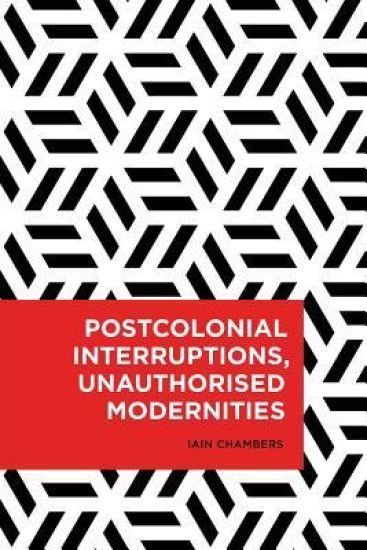
Postcolonial Interruptions, Unauthorised Modernities
Postcolonial Interruptions, Unauthorised Modernities is a ground-breaking work that revaluates the cultural and political understandings of the world today from the perspective of the south. Largely located in the Mediterranean, and in understandings of a ‘southern question’ that extends beyond local and national confines, the arguments and perspectives proposed seek to explore the historical formation and political configurations of a multiple modernity. Drawing upon the interdisciplinary lines of thought developed within cultural and postcolonial studies, the work develops a concept of heritage beyond the concerns and obsessions of the Anglo-American world. It offers a counter-hegemony construction of the figure of the migrant and ‘other’ as a disruptive force in the construction of the idea of the West. It proposes a rethinking of the geo-political economies of knowledge and power, lived and viewed from elsewhere. This accessibility written book should be of interest to anyone interested in the construction of modernity and the future of postcolonial studies.