Kirjojen hintavertailu. Mukana 12 083 983 kirjaa ja 12 kauppaa.

Kirjahaku

Etsi kirjoja tekijän nimen, kirjan nimen tai ISBN:n perusteella.

6 kirjaa tekijältä Iain D. Thomson

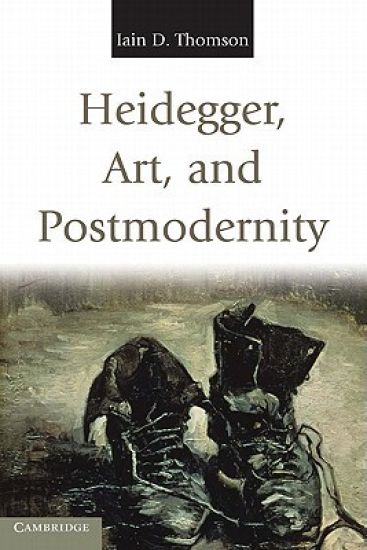
Heidegger, Art, and Postmodernity

Heidegger, Art, and Postmodernity

Iain D. Thomson

Cambridge University Press
2011
pokkari
Heidegger, Art, and Postmodernity offers a radical new interpretation of Heidegger's later philosophy, developing his argument that art can help lead humanity beyond the nihilistic ontotheology of the modern age. Providing pathbreaking readings of Heidegger's 'The Origin of the Work of Art' and his notoriously difficult Contributions to Philosophy (From Enowning), this book explains precisely what postmodernity meant for Heidegger, the greatest philosophical critic of modernity, and what it could still mean for us today. Exploring these issues, Iain D. Thomson examines several postmodern works of art, including music, literature, painting and even comic books, from a post-Heideggerian perspective. Clearly written and accessible, this book will help readers gain a deeper understanding of Heidegger and his relation to postmodern theory, popular culture and art.

Rethinking Death in and after Heidegger

Rethinking Death in and after Heidegger

Iain D. Thomson

Cambridge University Press
2026
nidottu
Iain D. Thomson is renowned for radically rethinking Heidegger's views on metaphysics, technology, education, art, and history, and in this book, he presents a compelling rereading of Heidegger's important and influential understanding of existential death. Thomson lucidly explains how Heidegger's phenomenology of existential death led directly to the insights which forced him to abandon Being and Time's guiding pursuit of a fundamental ontology, and thus how his early, pro-metaphysical work gave way to his later efforts to do justice to being in its real phenomenological richness and complexity. He also examines and clarifies the often abstruse responses to Heidegger's rethinking of death in Levinas, Derrida, Agamben, Beauvoir, and others, explaining the enduring significance of this work for ongoing efforts to think clearly about death, mortality, education, and politics. The result is a powerful and illuminating study of Heidegger's understanding of existential death and its enduring importance for philosophy and life.
Rethinking Death in and after Heidegger

Rethinking Death in and after Heidegger

Iain D. Thomson

Cambridge University Press
2024
sidottu
Iain D. Thomson is renowned for radically rethinking Heidegger's views on metaphysics, technology, education, art, and history, and in this book, he presents a compelling rereading of Heidegger's important and influential understanding of existential death. Thomson lucidly explains how Heidegger's phenomenology of existential death led directly to the insights which forced him to abandon Being and Time's guiding pursuit of a fundamental ontology, and thus how his early, pro-metaphysical work gave way to his later efforts to do justice to being in its real phenomenological richness and complexity. He also examines and clarifies the often abstruse responses to Heidegger's rethinking of death in Levinas, Derrida, Agamben, Beauvoir, and others, explaining the enduring significance of this work for ongoing efforts to think clearly about death, mortality, education, and politics. The result is a powerful and illuminating study of Heidegger's understanding of existential death and its enduring importance for philosophy and life.
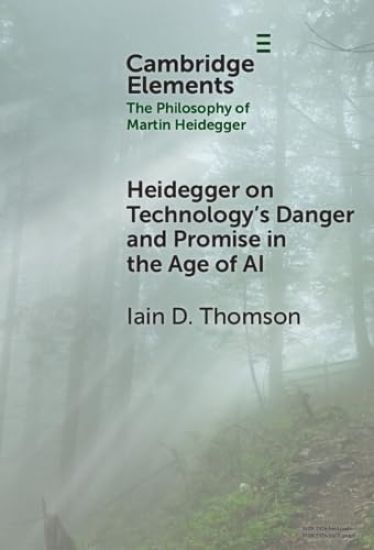
Heidegger on Technology's Danger and Promise in the Age of AI

Heidegger on Technology's Danger and Promise in the Age of AI

Iain D. Thomson

Cambridge University Press
2025
sidottu
How exactly is technology transforming us and our worlds, and what (if anything) can and should we do about it? Heidegger already felt this philosophical question concerning technology pressing in on him in 1951, and his thought-full and deliberately provocative response is still worth pondering today. What light does his thinking cast not just on the nuclear technology of the atomic age but also on more contemporary technologies such as genome engineering, synthetic biology, and the latest advances in information technology, so-called “generative AIs” like ChatGPT? These are some of the questions this book addresses, situating the latest controversial technologies in the light of Heidegger's influential understanding of technology as an historical mode of ontological disclosure. In this way, we seek to take the measure of Heidegger's ontological understanding of technology as a constellation of intelligibility with an important philosophical heritage and a dangerous but still promising future.
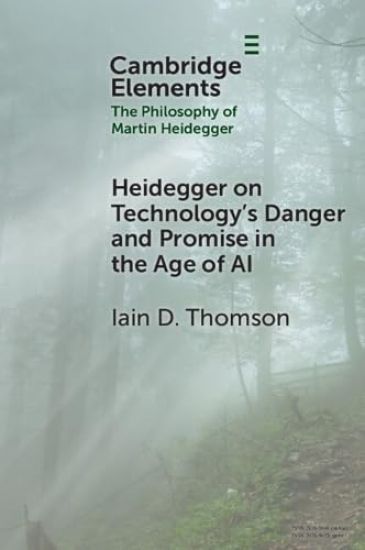
Heidegger on Technology's Danger and Promise in the Age of AI

Heidegger on Technology's Danger and Promise in the Age of AI

Iain D. Thomson

Cambridge University Press
2025
pokkari
How exactly is technology transforming us and our worlds, and what (if anything) can and should we do about it? Heidegger already felt this philosophical question concerning technology pressing in on him in 1951, and his thought-full and deliberately provocative response is still worth pondering today. What light does his thinking cast not just on the nuclear technology of the atomic age but also on more contemporary technologies such as genome engineering, synthetic biology, and the latest advances in information technology, so-called “generative AIs” like ChatGPT? These are some of the questions this book addresses, situating the latest controversial technologies in the light of Heidegger's influential understanding of technology as an historical mode of ontological disclosure. In this way, we seek to take the measure of Heidegger's ontological understanding of technology as a constellation of intelligibility with an important philosophical heritage and a dangerous but still promising future.
Heidegger, Art, and Postmodernity

Heidegger, Art, and Postmodernity

Iain D. Thomson

Cambridge University Press
2011
sidottu
Heidegger, Art, and Postmodernity offers a radical new interpretation of Heidegger's later philosophy, developing his argument that art can help lead humanity beyond the nihilistic ontotheology of the modern age. Providing pathbreaking readings of Heidegger's 'The Origin of the Work of Art' and his notoriously difficult Contributions to Philosophy (From Enowning), this book explains precisely what postmodernity meant for Heidegger, the greatest philosophical critic of modernity, and what it could still mean for us today. Exploring these issues, Iain D. Thomson examines several postmodern works of art, including music, literature, painting and even comic books, from a post-Heideggerian perspective. Clearly written and accessible, this book will help readers gain a deeper understanding of Heidegger and his relation to postmodern theory, popular culture and art.