Kirjojen hintavertailu. Mukana 11 446 934 kirjaa ja 12 kauppaa.

Kirjahaku

Etsi kirjoja tekijän nimen, kirjan nimen tai ISBN:n perusteella.

5 kirjaa tekijältä Iain Whyte

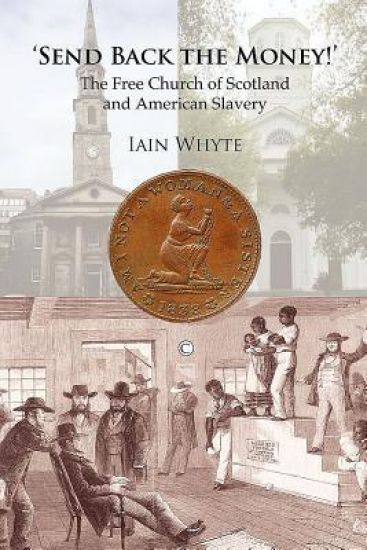
Send Back the Money!

Send Back the Money!

Iain Whyte

James Clarke Co Ltd
2012
nidottu
'Send Back the Money!' is a thorough and gripping examination of a fascinating and forgotten aspect of Scottish and American relations and Church history. A seminal period of Abolition activity is exposed by Iain Whyte through a study of the fiery 'Send back the Money!' campaign named after 'the hue and cry of the day' that encapsulated the argument that divided families, communities, and the Free Church itself. This examination of the Free Church's involvement with American Presbyterianism in the nineteenth century reveals the ethical furore caused by a Church wishing to emancipate itself from the religious and civil domination supported by the established religion of the state. The Free Church therefore found an affinity with those oppressed elsewhere, but subsequently found itself financially supported by the Southern slave states of America. Whyte sensitively handles this inherent contradiction in the political, ecclesiastical, and theological institutions, while informing the reader of the roles of charismatic characters such as Robert Burns, Thomas Chalmers and Frederick Douglass. These key individuals shaped contemporary culture with action, great oratory, and rhetoric. The author adroitly draws parallels from the twentieth century onwards, bringing the reader to a fuller understanding of the historic and topical issues within global Christianity, and the contentious topic of slavery. 'Send back the Money!' throws light upon nineteenth-century culture, British and American Abolitionists, and ecclesiastical politics, and is written in a clear and engaging style.
Tools of Control or Seeds of Liberation?

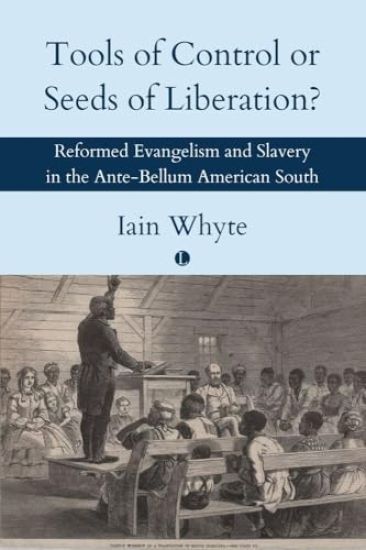
Tools of Control or Seeds of Liberation?

Iain Whyte

JAMES CLARKE CO LTD
2025
nidottu
Examining the history of slavery in the American South, it is impossible to separate the interpretations of Christianity from the arguments and counter-arguments surrounding liberation. In Tools of Control or Seeds of Liberation, Iain Whyte considers how this intertwining of ideologies impacted enslaved people and their relationship to religion. Tracing the legacy of the reformed tradition from its enthusiasm for 'instruction for all', to the weakening of views on injustice by slave-holding Christians, Whyte explores in detail the dilemmas, compromises, and self-interest of many Reformed Christians. He considers the essential incompatibility of faith in Jesus with the support of slavery, and how the movement for abolition in the mid-eighteenth century focussed Christians on this question. In the second half of this book, Whyte concentrates on the voices of enslaved people, recording first-hand experiences of religion and its connection to slavery, exploring how remarkable women such as Harriet Tubman and Sojourner Truth liberated themselves, and returning to Scotland with Frederick Douglass to consider the Scottish protestant reaction. Whyte's detailed study considers the intertwining of religion and slavery from every angle, and ultimately explores how Christianity could provide the seeds of liberation.
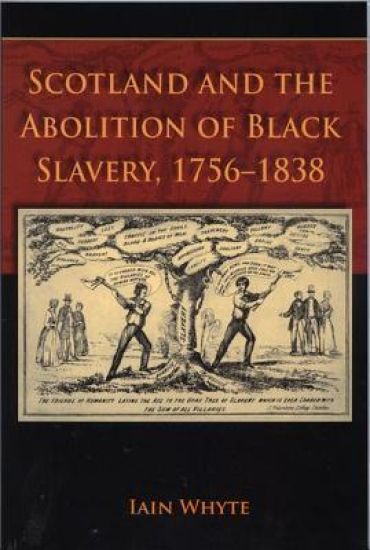
Scotland and the Abolition of Black Slavery, 1756-1838

Scotland and the Abolition of Black Slavery, 1756-1838

Iain Whyte

Edinburgh University Press
2006
sidottu
Although much has been written about Scottish involvement in slavery, the contribution of Scots to the abolition of black slavery has not yet been sufficiently recognised. This book starts with a Virginian slave seeking his freedomin Scotland in 1756 and ends with the abolition of the apprenticeship scheme in the West Indian colonies in 1838. Contemporary documents and periodicals reveal a groundswell of revulsion to what was described as "the horrible traffik in humans". Petitions to Parliament came from remote islands in Shetland as well as from large public meetings in cities. In a land steeped in religion, ministers and church leaders took the lead in giving theological support to the cause of abolition. The contributions of five London Scots who were pivotal to the campaign throughout Britain are set against opposition to abolition from many Scots with commercial interests in the slave trade and the sugar plantations. Missionaries and miners, trades guilds and lawyers all played their parts in challenging slavery. Many of their struggles and frustrations are detailed for the first time in an assessment of the unique contribution made by Scotland and the Scots to the destruction of an institution whose effects are still with us today.
Scotland and the Abolition of Black Slavery, 1756-1838

Scotland and the Abolition of Black Slavery, 1756-1838

Iain Whyte

Edinburgh University Press
2006
nidottu
Although much has been written about Scottish involvement in slavery, the contribution of Scots to the abolition of black slavery has not yet been sufficiently recognised. This book starts with a Virginian slave seeking his freedomin Scotland in 1756 and ends with the abolition of the apprenticeship scheme in the West Indian colonies in 1838. Contemporary documents and periodicals reveal a groundswell of revulsion to what was described as "the horrible traffik in humans". Petitions to Parliament came from remote islands in Shetland as well as from large public meetings in cities. In a land steeped in religion, ministers and church leaders took the lead in giving theological support to the cause of abolition. The contributions of five London Scots who were pivotal to the campaign throughout Britain are set against opposition to abolition from many Scots with commercial interests in the slave trade and the sugar plantations. Missionaries and miners, trades guilds and lawyers all played their parts in challenging slavery. Many of their struggles and frustrations are detailed for the first time in an assessment of the unique contribution made by Scotland and the Scots to the destruction of an institution whose effects are still with us today.
Zachary Macaulay 1768-1838

Zachary Macaulay 1768-1838

Iain Whyte

Liverpool University Press
2011
sidottu
In 1833 Thomas Fowell Buxton, the parliamentary successor to William Wilberforce, proposed a toast to ‘the anti-slavery tutor of us all. - Mr. Macaulay.’ Yet Zachary Macaulay’s considerable contribution to the ending of slavery in the British Empire has received scant recognition by historians. This book seeks to fill that gap, focussing on his involvement with slavery and anti-slavery but also examining the people and events that influenced him in his life’s work. It traces his Scottish roots and his torrid account of years as a young overseer on a Jamaican plantation. His accidental stumbling into the anti-slavery circle through a family marriage led to formative years in the government of the free colony of Sierra Leone dealing with settlers, slave traders, local chiefs and a French invasion. His return to Britain in 1799 began nearly forty years of research, writing, and reporting in the long campaign to get rid of what he described as ‘this foul stain on the nation.’ James Stephen rated him as the most feared and hated foe of slave interests. His weaknesses and failures are explored alongside his unswerving commitment to the cause to which he gave his energy, sacrificed his business interests, and saw as a natural result of his strong religious faith. This book is a result of extensive research of Macaulay’s own prolific writings and seeks to illustrate the man behind them, his passions and his prejudices, his steely resolve and his personal shyness, above all his willingness to work unremittingly in the background, generating the power to drive the engine of anti-slavery to victory.