Kirjojen hintavertailu. Mukana 12 038 584 kirjaa ja 12 kauppaa.

Kirjahaku

Etsi kirjoja tekijän nimen, kirjan nimen tai ISBN:n perusteella.

12 kirjaa tekijältä Ian Angus

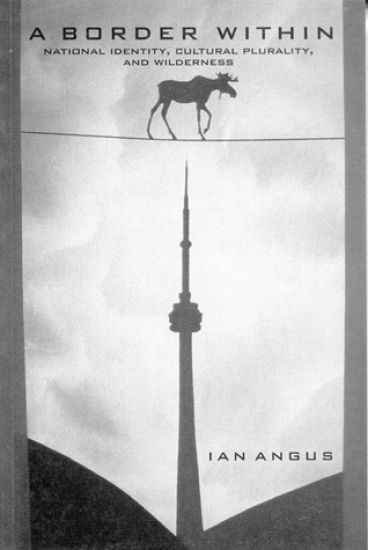
A Border Within

A Border Within

Ian Angus

McGill-Queen's University Press
1997
nidottu
The border is the governing metaphor of the book. Angus argues that English Canadian identity revolves around maintaining a border between Canada and the United States, and suggests that the border between countries can also be seen as a border between self and Other, between humanity and nature. Multiculturalism and the ecology movement's rethinking of the relation between humanity and nature suggest that English Canadian social and political philosophy is oriented toward sustaining a border between self and Other, in order to preserve what is one's own while maintaining and respecting the Other. Angus argues that contemporary public discourse is hampered both by the tribalizing devolution of the politics of identity and the globalizing forces of corporate political economy. Addressing this impasse requires a new understanding of the politics of identity in English Canada and the creation of a theory of Canadian social identity as postcolonial, particularist, and pluralist.
Identity and Justice

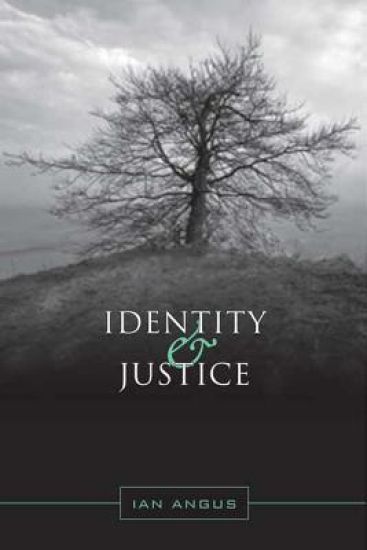
Identity and Justice

Ian Angus

University of Toronto Press
2008
sidottu
In this provocative study of the task of English-Canadian philosophy, Ian Angus contends that English Canada harbours a secret and unofficial dream of self-rule that is revealed through critiques of empire. Looking at the main tensions between local dwelling and the globalized market, Identity and Justice shows how contemporary society's reactions to technological advances and a world market economy have produced increasingly isolated individuals and prevented the emergence of a coherent community based on a universalizing philosophy. Stressing the importance of regionalism and postcolonial understandings, Angus argues that Canada requires a philosophy of independent parts through a conception of universality that subordinates rulership to a negotiation between diverse communities. Through discussion of the work of prominent Canadian thinkers, notably Harold Innis, John Porter, George Grant, and Marshall McLuhan, Angus identifies and explores key themes that define the distinctiveness of English Canada, primarily those related to power and empire, dominant and innovative modes of perception and thought, transportation, communication, community, ethnicity, and collective action. A penetrating examination of some of Canada's national myths and the phenomenology of locality in the twenty-first century, Identity and Justice is a groundbreaking critique and recovery of English Canadian social and political thought.
Facing the Anthropocene

Facing the Anthropocene

Ian Angus

Monthly Review Press,U.S.
2016
pokkari
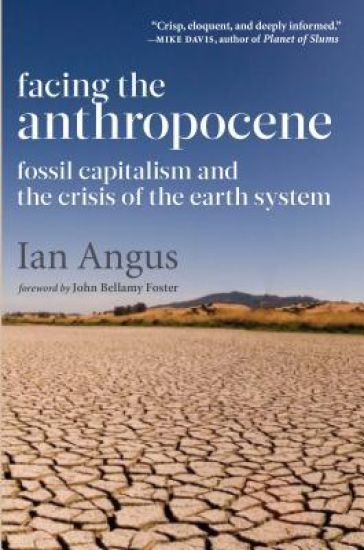
Science tells us that a new and dangerous stage in planetary evolution has begun the Anthropocene, a time of rising temperatures, extreme weather, rising oceans, and mass species extinctions. Humanity faces not just more pollution or warmer weather, but a crisis of the Earth System. If business as usual continues, this century will be marked by rapid deterioration of our physical, social, and economic environment. Large parts of Earth will become uninhabitable, and civilization itself will be threatened. Facing the Anthropocene shows what has caused this planetary emergency, and what we must do to meet the challenge.Bridging the gap between Earth System science and ecological Marxism, Ian Angus examines not only the latest scientific findings about the physical causes and consequences of the Anthropocene transition, but also the social and economic trends that underlie the crisis. Cogent and compellingly written, Facing the Anthropocene offers a unique synthesis of natural and social science that illustrates how capitalism's inexorable drive for growth, powered by the rapid burning of fossil fuels that took millions of years to form, has driven our world to the brink of disaster.Survival in the Anthropocene, Angus argues, requires radical social change, replacing fossil capitalism with a new, ecosocialist civilization. "
Facing the Anthropocene

Facing the Anthropocene

Ian Angus

Monthly Review Press,U.S.
2016
sidottu
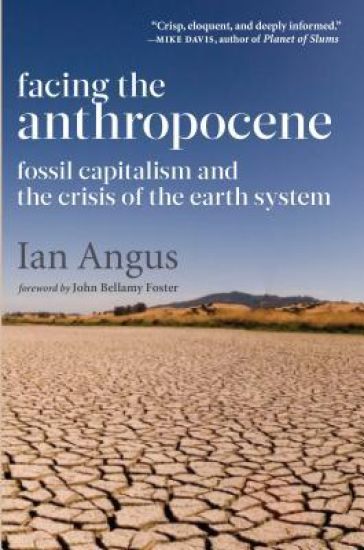
Science tells us that a new and dangerous stage in planetary evolution has begun the Anthropocene, a time of rising temperatures, extreme weather, rising oceans, and mass species extinctions. Humanity faces not just more pollution or warmer weather, but a crisis of the Earth System. If business as usual continues, this century will be marked by rapid deterioration of our physical, social, and economic environment. Large parts of Earth will become uninhabitable, and civilization itself will be threatened. Facing the Anthropocene shows what has caused this planetary emergency, and what we must do to meet the challenge.Bridging the gap between Earth System science and ecological Marxism, Ian Angus examines not only the latest scientific findings about the physical causes and consequences of the Anthropocene transition, but also the social and economic trends that underlie the crisis. Cogent and compellingly written, Facing the Anthropocene offers a unique synthesis of natural and social science that illustrates how capitalism's inexorable drive for growth, powered by the rapid burning of fossil fuels that took millions of years to form, has driven our world to the brink of disaster.Survival in the Anthropocene, Angus argues, requires radical social change, replacing fossil capitalism with a new, ecosocialist civilization. "
A Redder Shade of Green

A Redder Shade of Green

Ian Angus

Monthly Review Press,U.S.
2017
nidottu
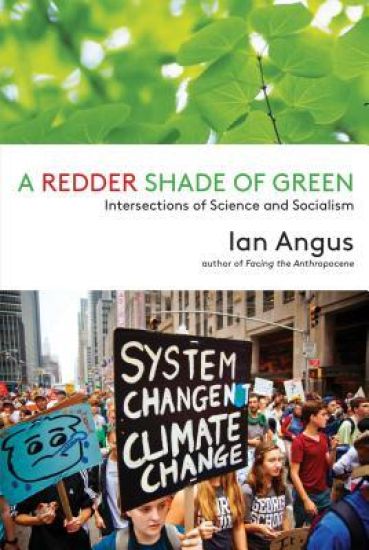
A socialist response to the looming ecological crisis As the Anthropocene advances, people across the red-green political spectrum seek to understand and halt our deepening ecological crisis. Environmentalists, scientists, and eco-socialists share concerns about the misuse and overuse of natural resources, but often differ on explanations and solutions. Some blame environmental disasters on overpopulation. Others wonder if Darwin's evolutionary theories disprove Marx's revolutionary views, or if capitalist history contradicts Anthropocene science. Some ask if all this worry about climate change and the ecosystem might lead to a "catastrophism" that weakens efforts to heal the planet. Ian Angus responds to these concerns in A Redder Shade of Green, with a fresh, insightful clarity, bringing socialist values to science, and scientific rigor to socialism. He challenges not only mainstream green thought, but also radicals who misuse or misrepresent environmental science. Angus's argument that confronting environmental destruction requires both cutting-edge scientific research and a Marxist understanding of capitalism makes this book an essential resource in the fight to prevent environmental destruction in the 21st century.
A Redder Shade of Green

A Redder Shade of Green

Ian Angus

Monthly Review Press,U.S.
2017
sidottu
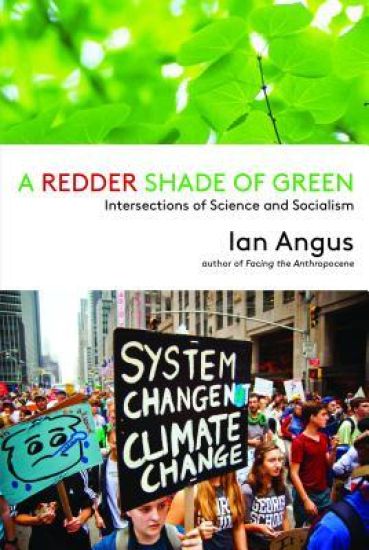
A socialist response to the looming ecological crisisAs the Anthropocene advances, people across the red-green political spectrum seek to understand and halt our deepening ecological crisis. Environmentalists, scientists, and eco-socialists share concerns about the misuse and overuse of natural resources, but often differ on explanations and solutions. Some blame environmental disasters on overpopulation. Others wonder if Darwin s evolutionary theories disprove Marx s revolutionary views, or if capitalist history contradicts Anthropocene science. Some ask if all this worry about climate change and the ecosystem might lead to a catastrophism that weakens efforts to heal the planet.Ian Angus responds to these concerns inA Redder Shade of Green, with a fresh, insightful clarity, bringing socialist values to science, and scientific rigor to socialism. He challenges not only mainstream green thought, but also radicals who misuse or misrepresent environmental science. Angus s argument that confronting environmental destruction requires both cutting-edge scientific research and a Marxist understanding of capitalism makes this book an essential resource in the fight to prevent environmental destruction in the 21st century."
The War Against the Commons

The War Against the Commons

Ian Angus

MONTHLY REVIEW PRESS,U.S.
2023
pokkari
A unique historical account of poor peoples' self-defence strategies in the face of the plunder of their lands and labor For five centuries, the development of capitalism has been inextricably connected to the expropriation of working people from the land they depended on for subsistence. Through ruling class assaults known as enclosures or clearances, shared common land became privately-owned capital, and peasant farmers became propertyless laborers who could only survive by working for the owners of land or capital. As Ian Angus documents in The War Against the Commons, mass opposition to dispossession has never ceased. His dramatic account provides new insights into an opposition that ranged from stubborn non-compliance to open rebellion, including eyewitness accounts of campaigns in which thousands of protestors tore down fences and restored common access to pastures and forests. Such movements, he shows, led to the Diggers' call for a new society based on shared ownership and use of the land, an appeal that was more sophisticated and radical than anything else written before the 1800s. Contrary to many accounts that treat the reorganization of agriculture as a purely domestic matter, Angus shows that there were close connections between the enclosures in Britain and imperial expansion. The consolidation of some of the largest estates in England and Scotland was directly financed by the forced labor of African slaves and the colonial plunder of India. This unique historical account of ruling class robbery and poor peoples' resistance offers answers to key questions about the history of capitalism. Was enclosure a "necessary evil" that enabled economic growth? What role did deliberate promotion of hunger play in the creation of the working class? How did Marx and Engels view the separation of workers from the land, and how does resistance to enclosure continue in the 21st century?
The War Against the Commons

The War Against the Commons

Ian Angus

MONTHLY REVIEW PRESS,U.S.
2023
sidottu
A unique historical account of poor peoples' self-defence strategies in the face of the plunder of their lands and labor For five centuries, the development of capitalism has been inextricably connected to the expropriation of working people from the land they depended on for subsistence. Through ruling class assaults known as enclosures or clearances, shared common land became privately-owned capital, and peasant farmers became propertyless laborers who could only survive by working for the owners of land or capital. As Ian Angus documents in The War Against the Commons, mass opposition to dispossession has never ceased. His dramatic account provides new insights into an opposition that ranged from stubborn non-compliance to open rebellion, including eyewitness accounts of campaigns in which thousands of protestors tore down fences and restored common access to pastures and forests. Such movements, he shows, led to the Diggers' call for a new society based on shared ownership and use of the land, an appeal that was more sophisticated and radical than anything else written before the 1800s. Contrary to many accounts that treat the reorganization of agriculture as a purely domestic matter, Angus shows that there were close connections between the enclosures in Britain and imperial expansion. The consolidation of some of the largest estates in England and Scotland was directly financed by the forced labor of African slaves and the colonial plunder of India. This unique historical account of ruling class robbery and poor peoples' resistance offers answers to key questions about the history of capitalism. Was enclosure a "necessary evil" that enabled economic growth? What role did deliberate promotion of hunger play in the creation of the working class? How did Marx and Engels view the separation of workers from the land, and how does resistance to enclosure continue in the 21st century?
(Dis) Figurations

(Dis) Figurations

Ian Angus

Verso Books
2000
nidottu
There has been, over the last decades, a deep crisis in the models which, for a long time, have been central metaphors governing thought and research in the social sciences. The main symptom in this paradigmatic shift has been the increasing centrality of the 'discourse' approach in social theory. It is Ian Angus's aim here to explore thoroughly the philosophical implications of this shift. He does so by combining serious philosophical reflection with an analysis of the media, which draws on both the phenomenological tradition and the political concerns of the Frankfurt School, post-Marxism and radical democracy. Ranging over the work of Heidegger, Gramsci, Husserl, Levinas, McLuhan and many others, (Dis)figurations is not merely an analytic enterprise however; it is a comprehensive attempt at rethinking the whole project of a critical philosophy.
The Undiscovered Country

The Undiscovered Country

Ian Angus

AU Press
2013
pokkari
In this sequence of essays, Ian Angus engages with themes of identity,power, and the nation as they emerge in contemporary English Canadianphilosophical thought, seeking to prepare the groundwork for a criticaltheory of neoliberal globalization. The essays are organized into threeparts. The opening part offers a nuanced critique of the Hegelianconfidence and progressivism that has come to dominate Canadianintellectual life. Through an analysis of the work of several prominentCanadian thinkers, among them Charles Taylor and C. B. Macpherson,Angus suggests that Hegelian frames of reference are inadequate,failing as they do to accommodate the fact of English Canada'scontinuing indebtedness to empire. The second part focuses on nationalidentity and political culture, including the role of Canadian studiesas a discipline, adapting its critical method to Canadian politicalculture. The first two parts culminate in the positive articulation, inPart 3, of author's own conception, one that is at once moreutopian and more tragic than that of the first two parts. Here, Angusdevelops the concept of locative thought—the thinking of a peoplewho have undergone dispossession, "of a people seeking its placeand therefore of a people that has not yet found its place."