Kirjojen hintavertailu. Mukana 11 342 296 kirjaa ja 12 kauppaa.

Kirjahaku

Etsi kirjoja tekijän nimen, kirjan nimen tai ISBN:n perusteella.

64 kirjaa tekijältä Ian Baxter

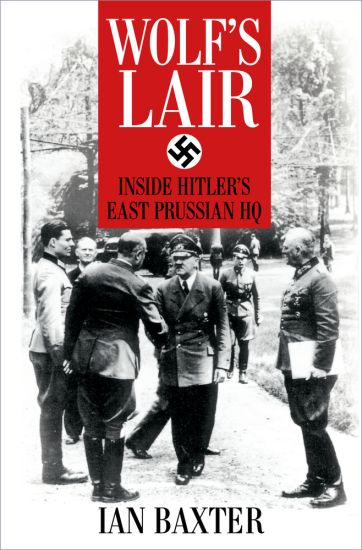
Wolf's Lair

Wolf's Lair

Ian Baxter

The History Press Ltd
2021
nidottu
The Wolf's Lair was the most important German command post building during the Second World War. Orders sent from these secret headquarters would play a massive part in the outcome of the War.Ian Baxter looks in to the inner workings of Hitler's headquarters, highlighting the decisions that were made and analysing how they came about. Baxter not only utilises published works, unpublished records, military documents and archives on the subject, but also digs deep into the contemporary writings of Hitler's closest personal staff, seeking to disentangle the truth through letters written by wives, friends, adjutants, private secretaries, physicians, and of course his military staff.Baxter extensively examines life within the Fuhrerhauptquartiere, where from behind closed doors, inside the claustrophobic atmosphere of the bunkers Hitler planned and gossiped with his associates. However, as defeat loomed, Hitler surrounded himself not with his intimate circle of friends, but what he considered were illiterate soldiers. Baxter shows how Hitler's contempt for his war staff grew. It describes, during the onset of the traumatic German military reverses in Russia, how Hitler stood unbowed in the face of the enemy, and how he tried to infuse determination into his generals and friends, despite his rapid deterioration in health.
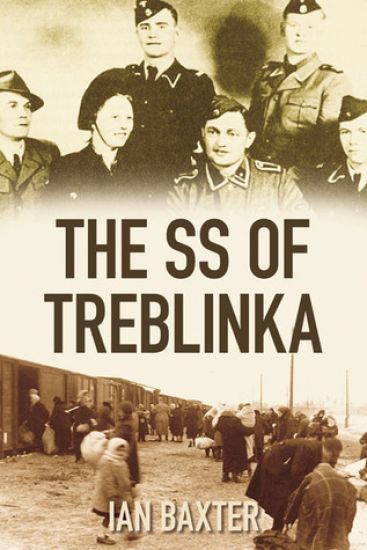
The SS of Treblinka

The SS of Treblinka

Ian Baxter

The History Press Ltd
2010
nidottu
In January 1942 senior officials of the Nazi regime met to discuss the ‘final solution to the Jewish question’, at a gathering that became known as the Wannsee Conference. As part of the resulting Operation Reinhard, camps were built with one aim in mind, not to imprison the Jews, but to kill them. By the time the extermination camp of Treblinka was made fully operational in July 1942, the SS had built a killing factory capable of despatching hundreds of thousands of people which could be run by only a handful of guards. But who were these men who ran Treblinka, many of whom had volunteered for the job? Were they ordinary people following terrible orders, or were they monsters? In The SS of Treblinka, Ian Baxter reveals the true natures of the men who during the camp’s short operation, murdered some 850,000 Jews. Some of them appeared outwardly to have been kind family men who then inflicted terrible cruelties on those in their power, while a few were afterwards spoken about with affection and gratitude by survivors. Using official documents, trial transcripts and private correspondence, he describes how these men lived day to day, inured to scenes of tragedy, eating and drinking the provisions their victims had brought with them under the delusion that they would be resettled, and what they thought of the thousands of people who arrived at the rail station positioned only metres from the gas chambers, whose bodies they would oversee being burned within the hour.
German Motorcycles at War, 1939–1945

German Motorcycles at War, 1939–1945

Ian Baxter

PEN SWORD BOOKS LTD
2024
nidottu
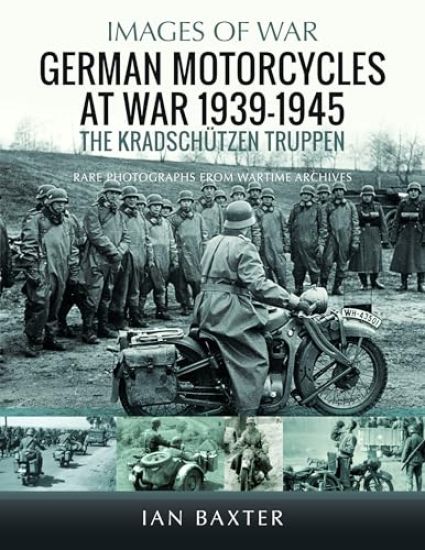
The success of fast-moving Blitzkrieg tactics by the Nazi war machine depended on high mobility. With their on- and off-road capabilities, motorcycles became an important component of the Nazi war machine’s arsenal making a particularly significant impact in French and Russian campaigns. The motorcycles were used in a variety of roles including patrolling, intelligence gathering, and police duties in occupied Europe. Motorcyclists could be found in every unit of an infantry and Panzer division including headquarters which had a motorcycle messenger platoon. Their versatility also enabled them to survey enemy positions until coming under fire before reporting back with vital intelligence relating to enemy locations and strengths. The German industry produced wide range of motor-bikes for military use. By 1938 some 200,000 motorcycles were produced in Germany and occupied territories. The principal makes included BMW, DKW, NSU, Triumph, Victoria, and Zundapp. Sidecar combinations, often mounted with an MG34/42 machine gun, also made the bike a very effective weapon. By describing in words and contemporary images the role of the German motorcycle and motorcyclists during the Second World War, this Images of War book fills an overlooked gap in coverage of Nazi military capability. It emphasizes that the German military perfected the use of motorcycles and employed them more widely than any other army.
German Self-Propelled Anti-Tank and Anti-Aircraft Guns, 1939-1945
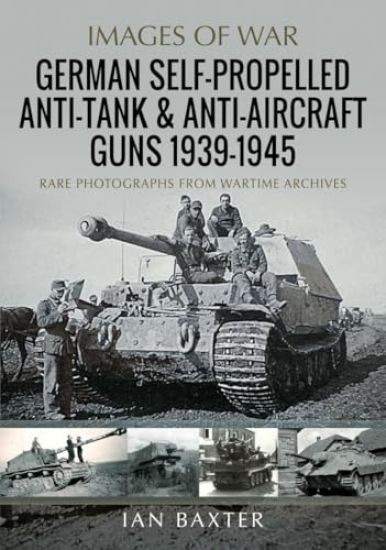
Self-propelled anti-tank and anti-aircraft vehicles were a key element of the Nazi Army during the Second World War. Anti-tank weapons assumed great importance from the outbreak of war as combatants developed ever more effective armoured vehicles and tactics. Some were little more than stopgap solutions, such as mounting the weapons on a tracked vehicle to give enhanced mobility, while others were more sophisticated designs. Examples of the development of tank destroyer technology throughout the war are the Marders, Jagdpanzer 38, and Nashorn. In order to provide much needed fire power, vehicles like the 5-ton Sd.Kfz.6 halftrack mounted Soviet 76.2mm field guns. The Marder series played a key role supporting armoured operations with their anti-tank guns. Anti-aircraft firepower was vital to give protection to troops from increasingly potent Allied ground-attack. The Germans also mounted anti-aircraft guns onboard halftracks such as the Sd.Kfz.10/5 and 10/4 armed with 2cm Flak guns, the medium Sd.Kfz.7/1 halftrack mounting 2cm flak guns, including quadruple flak guns on certain modified vehicles. Later in the war there was the Flakpanzer 38 (t) with a 2cm flak gun, an Sd.Kfz.6/2 Flak halftrack, and the Flakpanzer IV `Wirbelwind` with a rotating flak gun turret armed with quadruple 2cm flak guns. In true Images of War style the authoritative text is superbly supported by well captioned contemporary images.
Himmler's Slave Labour Camps

Himmler's Slave Labour Camps

Ian Baxter

PEN SWORD BOOKS LTD
2025
nidottu
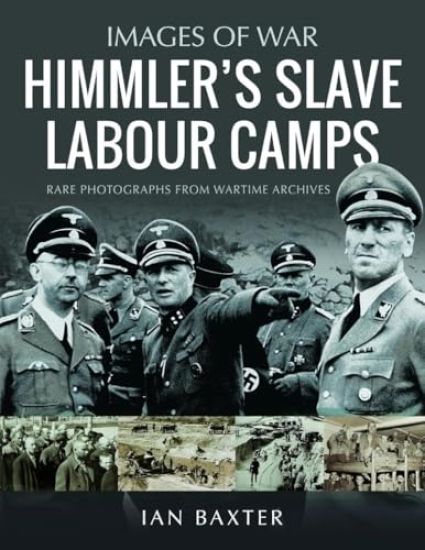
Shortly after their rise to power, the Nazis established specific Arbeitslager (labour camps) which housed Ostarbeiter (eastern workers), Fremdarbeiter (foreign workers) and other forced labourers who were rounded up and brought in from the east. These were distinct from the SS-run concentration camps. The use of forced labour grew significantly in 1937 due to rearmament requirements and again after the outbreak of war The invasion of the Soviet Union in June 1941 further heightened demands for labour and the availability of new workers in areas under Nazi occupation. Vast numbers were deported to forced labour camps, where they worked either producing war materials or on construction projects. As in the Nazis’ view, inmates were slaves pure and simple and replaceable with others, there was a complete disregard for the health of prisoners. Required to work long hours with little or no time for rest or breaks they were subject to insufficiencies of food, equipment, medicine and clothing. As a result of these conditions and brutal treatment, death rates were shockingly high. By 1945, more than fourteen million people had been exploited in the network of hundreds of forced labour camps that stretched across Nazi-occupied Europe. In true Images of War series style, this superbly illustrated book graphically describes the growth of the slave camp system and the conditions inflicted on the luckless labour force.
Hitler’s Order Police 1936–1942

Hitler’s Order Police 1936–1942

Ian Baxter

PEN SWORD BOOKS LTD
2025
nidottu
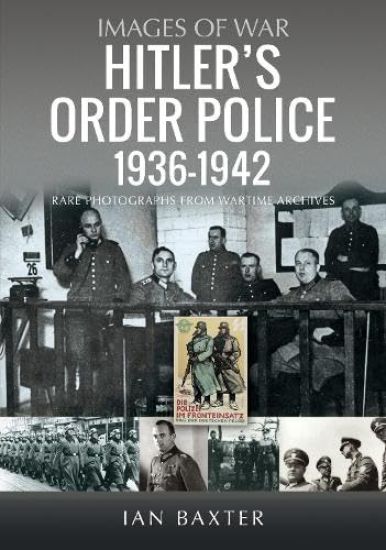
The Ordnungspolizei or Order Police was one of the main apparatus for the security of Nazi Germany. During the 1930s, Heinrich Himmler, Head of the SS, along with the Commander-in-Chief of the Order Police, Kurt Daluege, totally reconstructed the police force of the Weimar Republic into a number of strong militarized formations. Those that served in this new police force were more than ready to carry out any order that the Nazi's required of them including persecution of Jews and anyone deemed inferior to the regime. In fact, in 1938, police units participated in the annexation of Austria and the occupation of Czechoslovakia. A year later when Germany invaded Poland, the role of the police changed forever. Police units were deployed alongside the German military including the special murder squads of the Einsatzgruppen. In Poland, Order Police were transformed into militarized police battalions and participated in combat operations which included carrying out security duties behind enemy lines. These duties were often sinister and alongside some Wehrmacht, Waffen-SS and Einsatzgruppen, the police battalions engaged in the systematic murder and annihilation of Poles and Jews. Following the conquest of Poland the Nazi leadership created a massive recruitment drive conscripting more than 95,000 men in their thirties. Another 26,000 younger men were also recruited and indoctrinated into Nazi ideology and trained for combat. These new recruits would now take part not only in military operations but would be an integral part of the Holocaust, responsible for mass murders and guarding some of the Jewish ghettos. They would also assist in the destruction of the ghettos and helping in the transport of Jews to concentration camps. During the summer of 1941 these Police units were involved in mass killings of Babi Yar, Rumbula and Stanislaviv. Yet after the war, many of the Order Policemen claimed never to have been involved in Nazi crimes.
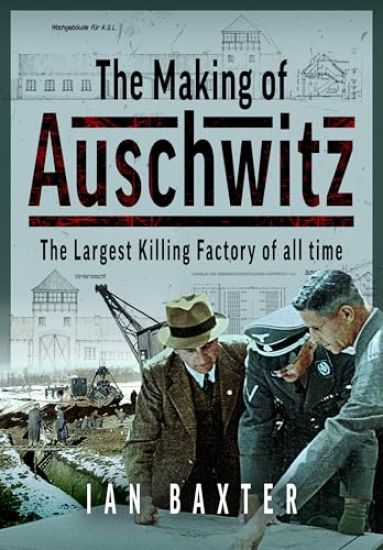
The Making of Auschwitz

The Making of Auschwitz

Ian Baxter

PEN SWORD BOOKS LTD
2025
sidottu
Commemorating 80 years since the liberation of Auschwitz-Birkenau, this book tells the story of the camp’s construction and its evolution into the largest mass murder factory of all time. Using hundreds of captured German documents and architectural plans, the book is a unique historical source of how the architects came to plan and accomplish the horror we now call Auschwitz. Drawing on key documents from the Building Office archive, this in-depth study uses plans, letters, telegrams, worksite labour reports and minutes of meetings. It reveals how the SS needed civilian knowledge to install electrical, sewage and heating systems, and build chimneys and other structures. It explains how various outside contractors were involved in cooperating in genocide and shows just how eager they were to produce goods for the SS for financial reward. Just after the construction had begun on Birkenau in 1941, architectural plans were presented to include new crematoria and gas chambers. By the summer of 1943 Birkenau had been transformed into a murder camp but building and planning to further extend the site continued. In November 1944 Himmler gave the order to halt and dismantle the extermination facilities to conceal their murderous activities. When the Red Army arrived on 27 January 1945, most of the camp was still intact. Although the SS had incinerated the camps’ archives they forgot to destroy the construction archive, which was kept in another building. As a result, the Russians found many of the technical drawings including construction blueprints that clearly detailed the extermination facilities. With detailed captions and text together with a plethora of rare photographs, the book is an important study into those that masterminded the murder of over 1 million people.
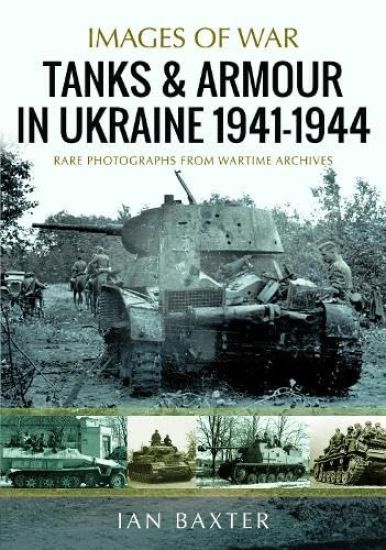
Tanks and Armour in Ukraine 1941–1944

Tanks and Armour in Ukraine 1941–1944

Ian Baxter

PEN SWORD BOOKS LTD
2025
nidottu
When the German war machine launched its attack against the Soviet Union on 22 June 1941, Adolf Hitler had given priority first to the capture of Ukraine, which was against the advice of his generals. In order to secure Ukraine quickly and effectively the German Army Group South entrusted its powerful Panzer Group 1 to lead the spearhead through the country. It included the III, XIV and XLVIII Army Corps (motorized) with five Panzer divisions and four motorized divisions (two of them SS) equipped with 799 tanks. Unlike their enemy, German armoured units had effective command, control, communication, and a massive supply of ammunition and support formations coupled with considerable combat experience and extensive training. What followed in the heartlands of the Ukraine was a series of powerful wide-sweeping, deep penetrating armoured attacks toward the Dnieper River. Places like Dubno, Brody, Kiev, Crimea and Kharkov saw heavy armoured fighting. This book in the Images of War series is a highly illustrated record of German tanks and armour that fought in the Ukraine between 1941 and 1944. It describes how these deadly machines fought and supported the infantry on the battlefield. It depicts how these formidable weapons were adapted and up-gunned to face the ever-increasing enemy threat. With rare and often unpublished photographs this book provides a unique insight into German armour in the Ukraine from its early triumphant days in 1941 and 1942 to its slow and painful retreat in 1944.
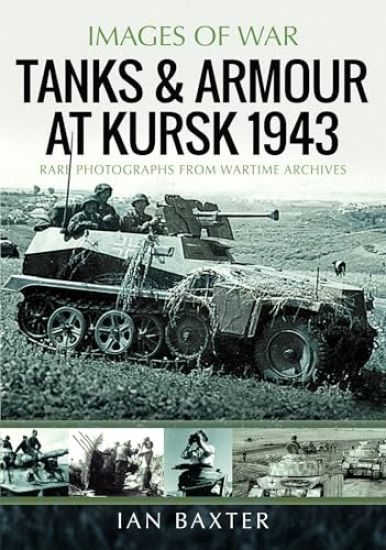
Tanks and Armour at Kursk 1943

Tanks and Armour at Kursk 1943

Ian Baxter

PEN SWORD BOOKS LTD
2026
nidottu
In the summer of 1943, Hitler set his sights on a decisive blow that he believed would turn the tide of war on the Eastern Front. That blow would be dealt at Kursk – site of a huge Soviet salient measuring some 120 miles wide and 75 miles deep, and the stage for what would become the largest tank battle in history. Fuelled by confidence in his elite Panzerwaffe and Waffen-SS divisions, Hitler launched Operation Citadel, unaware that the Red Army was not only prepared, but vastly superior in numbers, firepower, and defensive depth – they outnumbered their opponents by approximately 2.5 to 1. What followed was a brutal clash of steel and strategy, where German ambition collided with Soviet resilience. Tanks and Armour at Kursk 1943 presents a vivid and richly illustrated account of the German armoured forces that spearheaded this historic assault. With in-depth analysis, detailed captions and a wealth of rare and unpublished photographs, this book brings to life the machines, units, and men behind the last great German offensive on the Eastern Front.
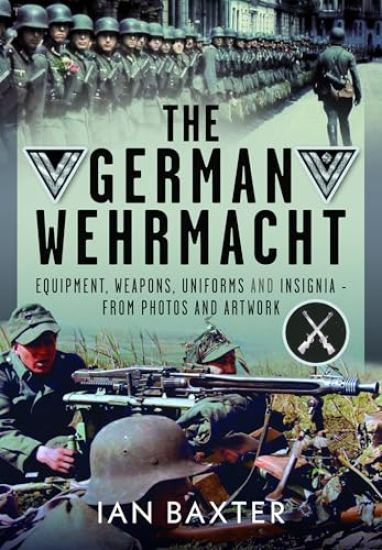
The German Wehrmacht

The German Wehrmacht

Ian Baxter

PEN SWORD BOOKS LTD
2025
sidottu
The German Wehrmacht: Equipment, Weapons, Uniforms and Insignia offers a highly illustrated record of the German soldier in the Second World War. Starting with the early victories in Poland in 1939 and concluding with the desperate final defences of 1945, this volume provides an in-depth visual exploration of the uniforms and insignia worn by the Wehrmacht at that time. Featuring over 300 rare and previously unpublished photographs, 50 of which are presented in full colour, this book showcases the full range of attire worn by German troops. From standard service dress and winter camouflage to armoured crew uniforms and protective gear, the volume covers it all, including headgear, rank insignia and battlefield equipment. Every image is accompanied by a detailed caption, bringing to life the appearance of soldiers of all ranks from privates and NCOs to generals, infantrymen, mountain troops, tank crews and assault gun operators. Beyond the visual documentation, the book offers a detailed analysis of how the German army meticulously developed its fighting force into a formidable war machine. It explores how different branches of the military were equipped across various theatres of war, from Europe and Russia to North Africa. Whether you're a military historian, collector or enthusiast, The German Wehrmacht provides a unique and comprehensive look at the clothing, equipment and insignia that defined one of history’s most formidable fighting forces.
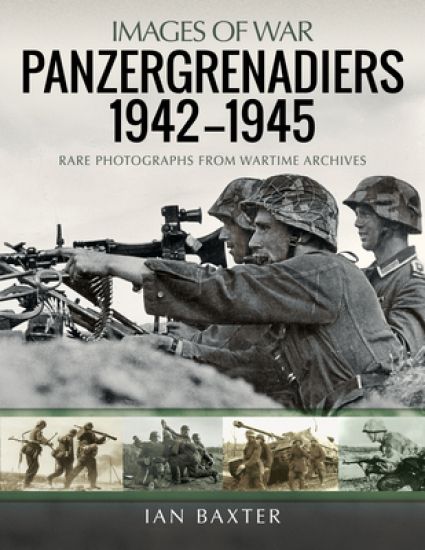
Panzergrenadiers 1942-1945

Panzergrenadiers 1942-1945

Ian Baxter

Pen Sword Military
2021
nidottu
The term Panzergrenadier was introduced in 1942 and applied equally to the infantry component of Wehrmacht, Luftwaffe and later Waffen-SS Panzergrenadiere divisions. As this classic new Images of War book describes, these elite divisions fought as mechanized infantry and escort for and in close cooperation with panzers and other armoured fighting vehicles. Trained to fight both mounted and on foot, their priority was to maintain the fast momentum of armoured troops on the battlefield. Using a wealth of rare, often unpublished, photographs with detailed captions and text, the author charts the fighting record of the Wehrmacht and Luftwaffe Panzergrenadiertruppe units. This includes their initial successes on the Eastern Front. But as defeat approached, they were forced on the defensive on all fronts including the bitter fighting in Italy and the Western Front. As well as describing their many actions, the book details the vehicles and weapons used and main personalities.
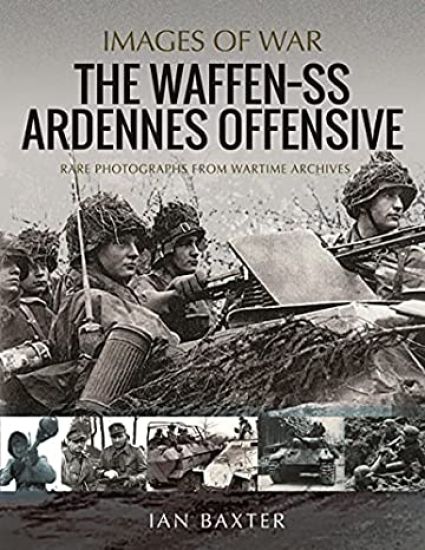
The Waffen SS Ardennes Offensive

The Waffen SS Ardennes Offensive

Ian Baxter

PEN SWORD BOOKS LTD
2022
nidottu
In late 1944 under extreme pressure on both the Eastern and Western fronts, Hitler realized he needed to force the Allies into negotiating a truce thereby saving Germany from total defeat. Using the Christmas period to enhance the vital element of surprise, he ordered a devastating attack through the rugged and mountainous Ardenne region with the key Allied port of Antwerp as the objective. This book, with its extensive text and rare and unpublished photographs with detailed captions, tells the story of the Waffen-SS offensive, known as `Wacht am Rhein` (Watch on the Rhine). These formidable SS armoured units with supporting Wehrmacht divisions initially achieved dramatic success making full use of the harsh winter conditions and terrain. Gradually the Allies regained the upper hand on the attackers who were increasingly suffering from lack of reinforcements and resupplies. After defeat at the pivotal battle of Bastonge, remaining Waffen-SS units withdrew and were transferred back to the Eastern Front. As described in this classic Images of War book, the Fuhrer's gamble so nearly paid off and the ruthless fighting spirit of the elite Waffen-SS divisions caused the Allied command serious concern.
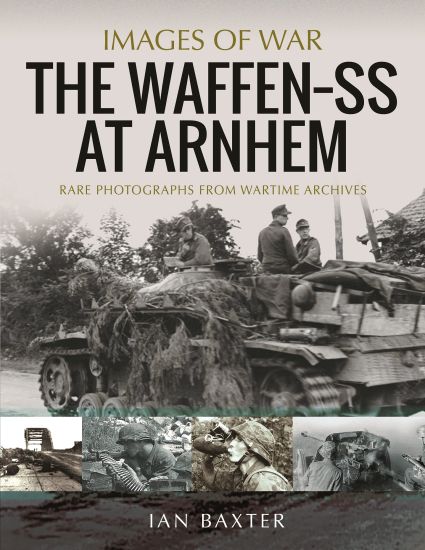
The Waffen SS at Arnhem

The Waffen SS at Arnhem

Ian Baxter

PEN SWORD BOOKS LTD
2022
nidottu
The 1944 Arnhem airborne operation, immortalized by the film A Bridge Too Far, will forever be remembered as a great British feat of arms. British and Polish paratroopers displayed outstanding courage and tenacity in a desperate last stand situation. And yet, as this book describes, the plan was fatally flawed as the 9th and 10th SS Panzer Divisions were recuperating and concealed nearby. What followed was a bloody battle of attrition the result of which was arguably inevitable. Drawing on rare and unpublished photographs, this Images of War series work reveals the historical combat record of the `Hohenstaufen` and `Frundsberg` divisions. It describes the intensity of the fighting in and around Arnhem between these elite SS and supporting units against a lightly armed yet equally determined enemy. In spite of the war being only months away from its end and the defeat increasingly certain, the SS soldier remained fanatically motivated. This superbly illustrated book with its well-researched text and full captions captures the drama of that historic battle for a bridge over the Rhine.
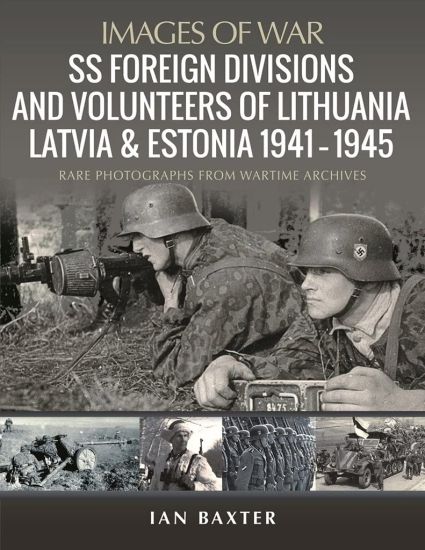
SS Foreign Divisions & Volunteers of Lithuania, Latvia and Estonia, 1941 1945
Drawing on a superb collection of rare and unpublished photographs SS Foreign Divisions & Volunteers of Lithuania, Latvia and Estonia 1942 - 1945 describes how the occupying Nazis recruited Lithuanian, Latvian and Estonian conscripts into the Waffen-SS. Unlike her Latvian neighbour, Lithuania had no plans to provide Germany with a National Legion. Although volunteers came forward, the majority did not. This was not the case for Latvia and Estonia, which undertook huge recruitment programmes, and thousands of men were drafted into their own foreign legion of Waffen-SS Grenadier divisions. After intensive training, these divisions saw action on the Eastern front, around Leningrad, in the Ukraine, before vicious defensive operations as the Red Army smashed its way through the Baltic States in 1944\. Even in the last dying weeks of the war, what was left of the Baltic soldiers of the 15th, 19th and 20th Waffen-SS Grenadier Divisions, continued to fight alongside their Wehrmacht and Waffen-SS counterparts until they were either destroyed or surrendered. The story of these divisions is graphically told with detailed captions and text together with many contemporary images in true Images of War style.
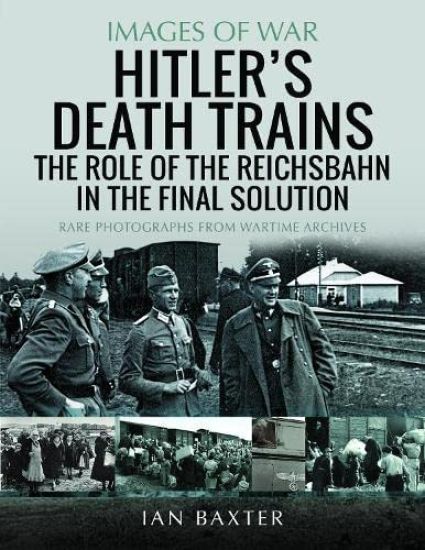
Hitler's Death Trains: The Role of the Reichsbahn in the Final Solution
Literature highlighting the horrors of the Holocaust has concentrated on the incarceration of Jews and others deemed hostile to Hitler's Reich in ghettoes and their fate in the death camps. Little coverage has been given to the role played by the Deutche Reichsbahn (German National Railway). In fact, the success of the Final Solution' was dependent on the efficient utilization of the vast train network of Germany and the Nazi occupied territories. Without this it would have been impossible for Hitler's henchmen to transport their victims in sufficient number to the extermination camps such as Auschwitz. While conditions on the trains were invariably inhuman, many Jews were forced to fund their own deportations through deposits paid to the SS towards The resettlement to work in the East' programme. Although these death trains' competed for valuable track space with Nazi war effort requirement, the importance of the extermination programme perversely prevailed. The conclusion of this well researched and highly illustrated book is that without the Reichsbahn, the industrial murder of millions of Jews, Roma and other undesirables' would not have been possible on the scale that was so tragically achieved
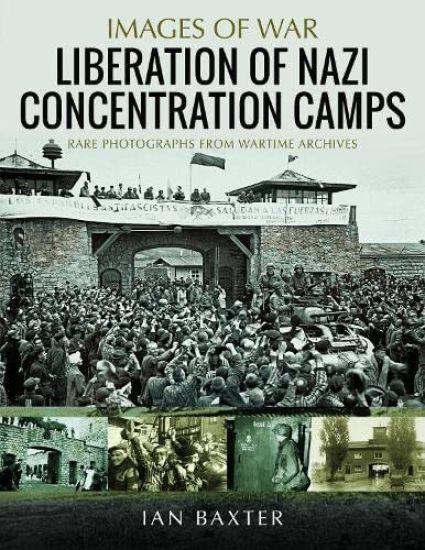
Liberation of Nazi Concentration Camps

Liberation of Nazi Concentration Camps

Ian Baxter

PEN SWORD BOOKS LTD
2023
nidottu
As the Allies closed in on Hitler's Germany the horror and scale of the Final Solution and concentration camps became all too apparent. This latest Images of War book provides the reader a truly disturbing insight into the Nazi's brutal regime of wholesale murder, torture and starvation. While the Germans attempted to hide the evidence by demolishing much of the camps' infrastructure, the pace of the Soviets' advance through Poland meant that the gas chambers at Majdenak near Lublin were captured intact. Auschwitz had received over a million deportees yet when liberated in January 1945 only a few thousand prisoners were there as the vast majority of surviving prisoners had been sent on forced death marches to more westerly camps such as Ravensbruch and Buchenwald. Condition in these camps deteriorated further due to overcrowding and the spread of deadly diseases. In every camp shocking scenes of death and starvation were encountered. When British troops reached Bergen-Belsen in April 1945, there were some 10,000 unburied dead in addition to the mass graves, in addition to 60,000 starving and sick inmates in utterly appalling conditions. The words and images in this disturbing book are a timely reminder of man's inhumanity to his fellows and that such behaviour should never be repeated.
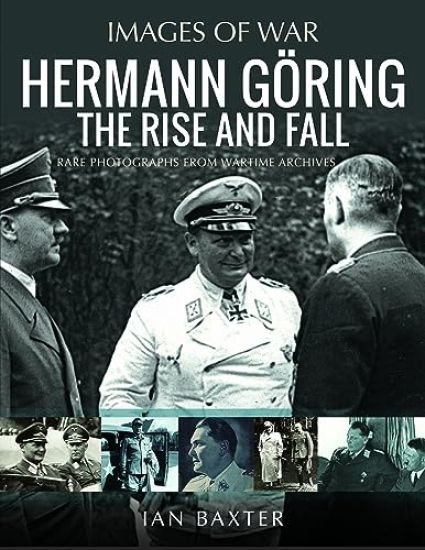
Hermann Göring: The Rise and Fall

Hermann Göring: The Rise and Fall

Ian Baxter

PEN SWORD BOOKS LTD
2024
nidottu
A former Great War fighter pilot, Hermann Göring became, at his height, the second most powerful Nazi. Ambitious and ruthless, in addition to being a primary architect of the Third Reich state police and Gestapo, his numerous appointments included Commander-in-Chief of the Luftwaffe, Director of the Four Year Plan and playing a leading role in the Final Solution to the ‘Jewish Question’. By the outbreak of the war in 1939, he was acknowledged as Hitler’s successor and in 1940 was given the special rank of Marshal of the Empire and senior to all field marshals through the German armed services. Due to being held responsible for a number of military disasters, Göring’s pre-eminent position declined as the war dragged on to the point where he was expelled from the Party for ‘illegally attempting to seize control of the State’. Captured by the Allies, he was found guilty at Nuremberg of being a leading war aggressor and advocate of the persecution of Jews and other races. He cheated the hangman by committing suicide. The career of this leading Nazi is admirably described here in words and copious images.
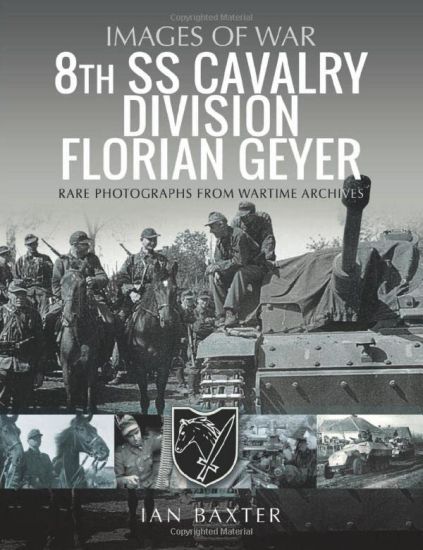
8th SS Cavalry Division Florian Geyer

8th SS Cavalry Division Florian Geyer

Ian Baxter

PEN SWORD BOOKS LTD
2023
nidottu
Formed in 1942 8th SS Cavalry Division Florian Geyer was soon deployed to the Eastern Front where Hitler's ambition to conquer Russia was stalling badly. In common with other SS units the Division was responsible for razing towns and villages, poisoning wells and genocide often against unarmed civilians. This scorched earth policy was aimed at hindering the Red Army's advance. After moving South, the Division took part in the retreat from the Dnieper River before operating in Hungary and Croatia. The end came when trapped in Budapest by Soviet and Romanian forces, the Division was destroyed in December 1944\. By the end of the siege only 800 of the 30,000 men in the SS Corps reached German lines. Using many startling contemporary images, this latest book in the Author's SS Division series vividly illustrates the horror of warfare on the Eastern Front.
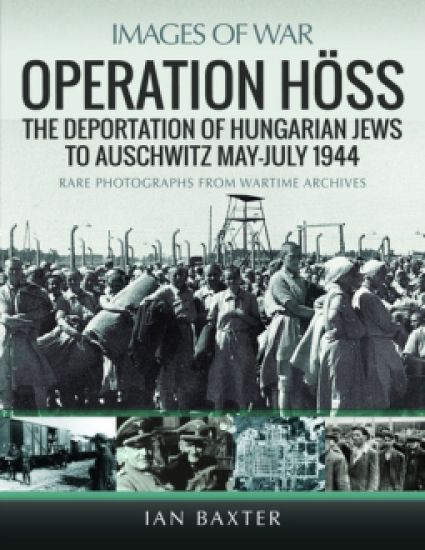
Operation Hoss

Operation Hoss

Ian Baxter

PEN SWORD BOOKS LTD
2022
nidottu
Operation Hoss or Aktion Hoss was the codename for the mass deportation of Hungarian Jews and their murder in the gas chambers of Birkenau extermination camp. Between 14 May and 9 July 1944, 420,000 Jews were sent to Auschwitz from Hungary, or about 12,000 per day. On arrival some twenty-five percent were selected for forced labour while the remainder were immediately gassed. The name of this atrocity came from Rudolf Hoss, who returned as the commandant of Auschwitz to increase the killing capacity and ensure the smooth running of the operation. The specially built railway line into Birkenau from Auschwitz made transports to the camp more efficient enabling the SS to increase the daily killing capacity. After the war, SS Adolf Eichmann, who had organized the deportations from Hungary, boasted that Operation Hoss was `an achievement never matched before or since`. This shocking book tells the story of this inhuman venture from its conception and planning, and though to the bitter, tragic end.
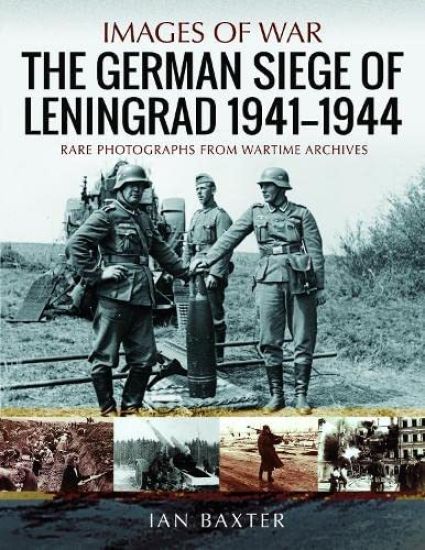
The German Siege of Leningrad, 1941 1944

The German Siege of Leningrad, 1941 1944

Ian Baxter

PEN SWORD BOOKS LTD
2023
nidottu
The historic 872 day siege of Leningrad by German Army Group North began in earnest on 8 September 1941 and was not lifted until 27 January 1944\. During this period the Red Army made numerous desperate attempts to break the blockade, which the Nazis and their Spanish and Finnish allies doggedly resisted. Eventually, due to overwhelming enemy pressure, Hitler's forces were compelled to retreat, but not before looting and destroying numerous historic palaces and landmarks and looting their priceless art collections. The bitter and prolonged fighting often under appalling climatic conditions resulted in many thousands of casualties for both sides from direct action and constant indirect artillery and air attack. Arguably most shocking was the loss of life due to the systematic starvation of the civilian population trapped inside and the intentional destruction of its buildings. Drawing on a superb collection of rare and unpublished photographs with detailed captions and explanatory text, this dramatic book vividly portrays every aspect of the siege which has the dubious claim of being arguably the most costly in human and material terms of any in recent military history.