Kirjojen hintavertailu. Mukana 11 244 527 kirjaa ja 12 kauppaa.

Kirjahaku

Etsi kirjoja tekijän nimen, kirjan nimen tai ISBN:n perusteella.

16 kirjaa tekijältä Ian Buchanan

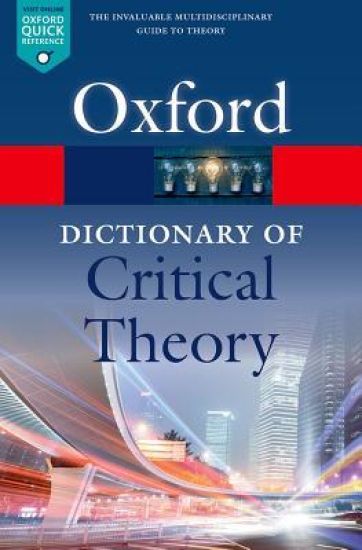
A Dictionary of Critical Theory

A Dictionary of Critical Theory

Ian Buchanan

Oxford University Press
2018
nidottu
Containing over 750 in-depth entries, this is the most wide-ranging and up-to-date dictionary of critical theory available. This authoritative guide covers the whole range of critical theory, including the Frankfurt school, cultural materialism, cultural studies, gender studies, film studies, literary theory, hermeneutics, historical materialism, and socio-political critical theory. Entries clearly explain complex theoretical discourses such as Marxism, psychoanalysis, structuralism, deconstruction, and postmodernism. There are biographies of hundreds of important figures in the field, with feature entries for those who have heavily influenced areas of the discipline, such as Derrida and Deleuze. This new edition of the dictionary has been updated to extend coverage of diaspora, race and postcolonial theory, including key authors such as C. L. R. James and Paul Gilroy, and of queer and sexuality studies, including notable figures such as Eve Kosofsky Sedgwick. Fully revised to keep up to date with this diverse field, this new edition expands the coverage to include entries such as hyperobject and transgender. Entries are fully cross-referenced and many contain further reading suggestions. Covering all aspects of critical theory from globalization and race studies, to queer theory and feminism, this multidisciplinary A-Z is essential for students in the humanities and social sciences.
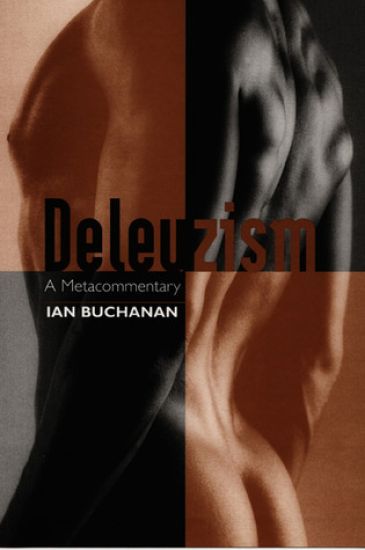
Deleuzism: A Metacommentary

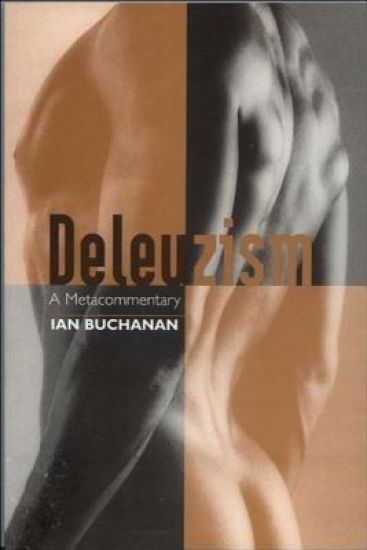
Deleuzism: A Metacommentary

Ian Buchanan

Edinburgh University Press
2000
nidottu
Deleuzism: A Metacommentary is an engaging and provocative treatment of the principal features of Gilles Deleuze's philosophy and their applicability to cultural studies. Deleuze was a philosopher who offered sharp critiques of - as well as radical alternatives to - psychoanalysis, semiotics, all forms of structuralism and all forms of expressionism. While Deleuze was not a dialectician, as readers of him we must be. The conviction that Deleuze was doing something radically new in his work has accompanied a corresponding anxiety as to how to read it. In this rigorous and lucid work, Ian Buchanan takes up the challenge ofanswering the questions: how should we read Deleuze? And, how should we read with Deleuze? Buchanan shows us how Deleuze's philosophy works. He offers a clear delineation of Deleuze's way of thought, one that is inseparable from a conception of philosophy as a way of living. Buchanan ranges over the entire Deleuzian corpus engaging with elemental concepts in Deleuze - 'the dark precursor', 'desire', 'flow' 'nomad', 'the image', 'betrayal', 'becoming-woman'- and shows that despite Deleuze's self-declared moratorium against dialectics he was in a number of important respects a dialectician. Offering concrete Deleuzian readings of literary works such as Wuthering Heights, films such as Blade Runner, architectural structures such as the Bonaventure Hotel and popular cultural practices, including 80s pop music, Buchanan demonstrates the effectiveness of Deleuzian analysis for interdisciplinary cultural critique. Deleuzism is a work that will engage all those with an interest in the twentieth century's most radical and original philosopher.
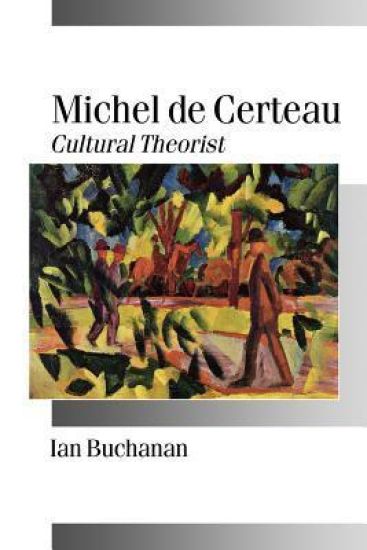
Michel de Certeau

Michel de Certeau

Ian Buchanan

SAGE Publications Inc
2000
sidottu
de Certeau is often considered to be the theorist of everyday life par excellence. This book provides an unrivalled critical introduction to de Certeau's work and influence and looks at his key ideas and asks how should we try to understand him in relation to theories of modern culture and society. Ian Buchanan demonstrates how de Certeau was influenced by Lacan, Merleau-Ponty and Greimas and the meaning of de Certeau's notions of `strategy', `tactics', `place' and `space' are clearly described. The book argues that de Certeau died before developing the full import of his work for the study of culture and convincingly, it tries to complete or imagine the directions that de Certeau's work would have taken, had he lived.
Michel de Certeau

Michel de Certeau

Ian Buchanan

SAGE Publications Inc
2000
nidottu
de Certeau is often considered to be the theorist of everyday life par excellence. This book provides an unrivalled critical introduction to de Certeau's work and influence and looks at his key ideas and asks how should we try to understand him in relation to theories of modern culture and society. Ian Buchanan demonstrates how de Certeau was influenced by Lacan, Merleau-Ponty and Greimas and the meaning of de Certeau's notions of `strategy', `tactics', `place' and `space' are clearly described. The book argues that de Certeau died before developing the full import of his work for the study of culture and convincingly, it tries to complete or imagine the directions that de Certeau's work would have taken, had he lived.
Deleuzism

Deleuzism

Ian Buchanan

Duke University Press
2000
sidottu
The conviction that Gilles Deleuze is doing something radical in his work has been accompanied by a corresponding anxiety as to how to read it. In this rigorous and lucid work, Ian Buchanan takes up the challenge by answering the following questions: How should we read Deleuze? How should we read with Deleuze? To show us how Deleuze’s philosophy works, Buchanan begins with Melville’s notion that “a great book is always the inverse of another book that could only be written in the soul, with silence and blood.” Buchanan demonstrates that the figure of two books-one written in ink and the other written in blood-lies at the center of Deleuze’s hermeneutics and that a special relation must be established in order to read the second book from the first. This relation is Deleuzism. By explicating elemental concepts in Deleuze-desire, flow, the nomad-Buchanan finds that, despite Deleuze’s self-declared moratorium on dialectics, he was in several important respects a dialectician. In essays that address the “prehistory” of Deleuze’s philosophy, his methodology, and the utopic dimensions of his thought, Buchanan extracts an apparatus of social critique that arises from the philosopher’s utopian impulse. Deleuzism is a work that will engage all those with an interest in the twentieth-century’s most original philosopher.
Deleuzism

Deleuzism

Ian Buchanan

Duke University Press
2000
pokkari
The conviction that Gilles Deleuze is doing something radical in his work has been accompanied by a corresponding anxiety as to how to read it. In this rigorous and lucid work, Ian Buchanan takes up the challenge by answering the following questions: How should we read Deleuze? How should we read with Deleuze? To show us how Deleuze’s philosophy works, Buchanan begins with Melville’s notion that “a great book is always the inverse of another book that could only be written in the soul, with silence and blood.” Buchanan demonstrates that the figure of two books-one written in ink and the other written in blood-lies at the center of Deleuze’s hermeneutics and that a special relation must be established in order to read the second book from the first. This relation is Deleuzism. By explicating elemental concepts in Deleuze-desire, flow, the nomad-Buchanan finds that, despite Deleuze’s self-declared moratorium on dialectics, he was in several important respects a dialectician. In essays that address the “prehistory” of Deleuze’s philosophy, his methodology, and the utopic dimensions of his thought, Buchanan extracts an apparatus of social critique that arises from the philosopher’s utopian impulse. Deleuzism is a work that will engage all those with an interest in the twentieth-century’s most original philosopher.
Fredric Jameson: Live Theory

Fredric Jameson: Live Theory

Ian Buchanan

BLOOMSBURY PUBLISHING PLC
2006
sidottu
Widely regarded as one of America's most important cultural theorists, Fredric Jameson has been at the forefront of the field of literary and cultural studies since the early 1970s. Author of The Political Unconscious: Narrative as a Socially Symbolic Act and Postmodernism, or, the Cultural Logic of Late Capitalism, Jameson is without doubt one of the leading intellectuals of our time. Fredric Jameson: Live Theory offers an invaluable and highly accessible introduction to the work of this important thinker. Ian Buchanan explores and illuminates how Jameson forms his concepts and how they operate, providing a fascinating account of Jameson's important and ongoing contributions to Critical Theory. The book provides a clear sense of his overall project and the marvellous productivity of his thinking. Motivated by a desire to inaugurate social change by illuminating the obstacles standing in its way, the aim of Jameson's work is to dishabituate us from the comfortable feeling that modern life is enhanced by the global grip of capitalism. The book concludes with a new interview with Jameson himself, in which he discusses the key themes and issues in his work and future directions for the Jamesonian project. Thematically organised, clear and accessible, Fredric Jameson: Live Theory is a key resource for anyone studying this pioneering thinker.
Fredric Jameson: Live Theory

Fredric Jameson: Live Theory

Ian Buchanan

Continuum International Publishing Group Ltd.
2006
nidottu
Widely regarded as one of America's most important cultural theorists, Fredric Jameson has been at the forefront of the field of literary and cultural studies since the early 1970s. Author of "The Political Unconscious: Narrative as a Socially Symbolic Act and Postmodernism or, the Cultural Logic of Late Capitalism", Jameson is without doubt one of the leading intellectuals of our time. "Fredric Jameson: Live Theory" offers an invaluable and highly accessible introduction to the work of this important thinker. Ian Buchanan explores and illuminates how Jameson forms his concepts and how they operate, providing a fascinating account of Jameson's important and ongoing contributions to Critical Theory. The book provides a clear sense of his overall project and the marvellous productivity of his thinking. Motivated by a desire to inaugurate social change by illuminating the obstacles standing in its way, the aim of Jameson's work is to dishabituate us from the comfortable feeling that modern life is enhanced by the global grip of capitalism. The book concludes with a new interview with Jameson himself, in which he discusses the key themes and issues in his work and future directions for the Jamesonian project. Thematically organised, clear and accessible, "Fredric Jameson: Live Theory" is a key resource for anyone studying this pioneering thinker.
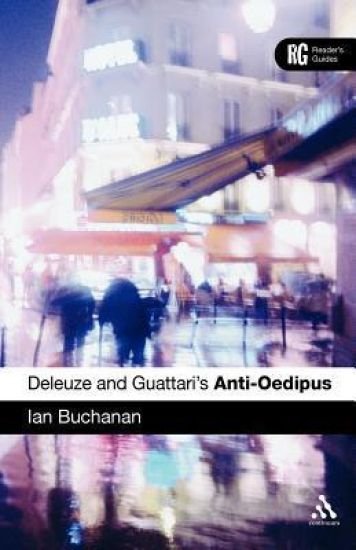
Deleuze and Guattari's 'Anti-Oedipus'

Deleuze and Guattari's 'Anti-Oedipus'

Ian Buchanan

Continuum International Publishing Group Ltd.
2008
sidottu
Gilles Deleuze and Flix Guattaris Anti-Oedipus is the first part of a two volume project entitled Capitalism and Schizophrenia. Challenging the twin orthodoxies of Lacanian psychoanalysis and Althusserian Marxism, Anti-Oedipus is an important and exciting, yet challenging piece of philosophical writing. Ian Buchanans Readers Guide to Anti-Oedipus is the ideal companion to one of the twentieth-centurys most influential philosophical works. It provides informed and accessible guidance on: Philosophical and historical context Key themes Reading the text Reception and influence Further reading
Deleuze and Guattari's 'Anti-Oedipus'

Deleuze and Guattari's 'Anti-Oedipus'

Ian Buchanan

Continuum International Publishing Group Ltd.
2008
nidottu
Gilles Deleuze and Flix Guattaris Anti-Oedipus is the first part of a two volume project entitled Capitalism and Schizophrenia. Challenging the twin orthodoxies of Lacanian psychoanalysis and Althusserian Marxism, Anti-Oedipus is an important and exciting, yet challenging piece of philosophical writing. Ian Buchanans Readers Guide to Anti-Oedipus is the ideal companion to one of the twentieth-centurys most influential philosophical works. It provides informed and accessible guidance on: Philosophical and historical context Key themes Reading the text Reception and influence Further reading
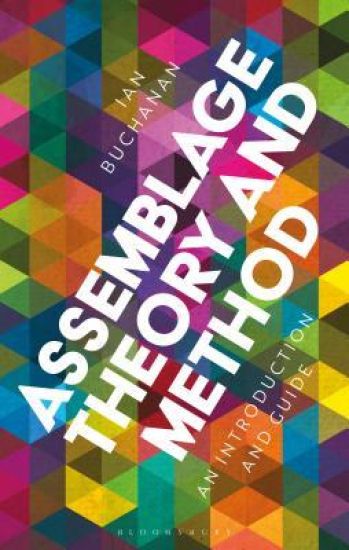
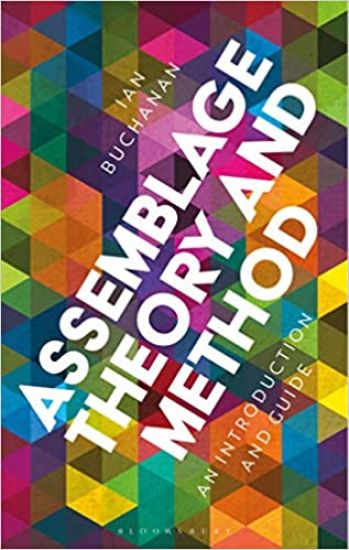
Assemblage Theory and Method

Assemblage Theory and Method

Ian Buchanan

Bloomsbury Academic
2020
sidottu
What do we mean by 'assemblage' in contemporary theory? The constant and seemingly limitless expansion of the concept’s range of applications begs the question, if any and every kind of collection of things is an assemblage, then what advantage is there is in using this term and not some other term, or indeed no term at all? What makes an assemblage an assemblage, and not some other kind of collection of things? This book advances beyond this impasse and offers practical help in thinking about and using assemblage theory for contemporary cultural and social research, in order to:- Answer the question: what is an assemblage?- Explain why assemblage theory is necessary- Provide clear instructions on how to use assemblage theoryIan Buchanan maps the beginnings of a brand new field within the humanities.
Assemblage Theory and Method

Assemblage Theory and Method

Ian Buchanan

Bloomsbury Academic
2020
nidottu
What do we mean by 'assemblage' in contemporary theory? The constant and seemingly limitless expansion of the concept’s range of applications begs the question, if any and every kind of collection of things is an assemblage, then what advantage is there is in using this term and not some other term, or indeed no term at all? What makes an assemblage an assemblage, and not some other kind of collection of things? This book advances beyond this impasse and offers practical help in thinking about and using assemblage theory for contemporary cultural and social research, in order to:- Answer the question: what is an assemblage?- Explain why assemblage theory is necessary- Provide clear instructions on how to use assemblage theoryIan Buchanan maps the beginnings of a brand new field within the humanities.
Assemblage Theory and Affect

Assemblage Theory and Affect

Ian Buchanan

BLOOMSBURY PUBLISHING PLC
2026
sidottu
Gilles Deleuze considered 'assemblage' theory to be his most significant contribution to philosophy. It is a complex and nuanced concept and one that is central to how Deleuze and Guattari constructed their theoretical work. In Assemblage Theory and Affect Ian Buchanan continues his project of demystifying this key theory and introducing its primary qualities. Buchanan argues that assemblage theory, as conceived by Deleuze and Guattari, is primarily about desire. And, further to that, there is no greater manifestation of desire than 'affect'. Indeed, in order to understand assemblage you also need to understand affect and vice versa. In this first introduction to how assemblage and affect impact, shape and require each other, Buchanan outlines the meaning of both concepts for contemporary philosophy, art, cultural and critical theory and politics. In applying these theories to real life practices and experiences, the concepts are given clarity and force. An original, lucid and inventive work by one of the foremost Deleuzian thinkers in the world, Assemblage Theory and Affect proposes new avenues for thinking about the contemporary world.
Assemblage Theory and Affect

Assemblage Theory and Affect

Ian Buchanan

BLOOMSBURY PUBLISHING PLC
2026
nidottu
Gilles Deleuze considered 'assemblage' theory to be his most significant contribution to philosophy. It is a complex and nuanced concept and one that is central to how Deleuze and Guattari constructed their theoretical work. In Assemblage Theory and Affect Ian Buchanan continues his project of demystifying this key theory and introducing its primary qualities. Buchanan argues that assemblage theory, as conceived by Deleuze and Guattari, is primarily about desire. And, further to that, there is no greater manifestation of desire than 'affect'. Indeed, in order to understand assemblage you also need to understand affect and vice versa. In this first introduction to how assemblage and affect impact, shape and require each other, Buchanan outlines the meaning of both concepts for contemporary philosophy, art, cultural and critical theory and politics. In applying these theories to real life practices and experiences, the concepts are given clarity and force. An original, lucid and inventive work by one of the foremost Deleuzian thinkers in the world, Assemblage Theory and Affect proposes new avenues for thinking about the contemporary world.
The Incomplete Project of Schizoanalysis

The Incomplete Project of Schizoanalysis

Ian Buchanan

Edinburgh University Press
2021
sidottu
'If all we do is bring to light what we already know, then what is the point of what we are doing?'This has been Ian Buchanan's guiding motto throughout his academic career and continues to inform his reading of Deleuze and Guattari. In these twenty essays written over a twenty- year period Buchanan shines a light on the experimental nature of the work of Deleuze and Guattari. He shows it to be constitutively incomplete as their project was an attempt to understand our contemporary situation which is constantly changing and can therefore never be understood in a complete way.Clustered around five main themes Method, Film, Space, Analysis and Assemblages the book will appeal to experts as well as those new to Deleuze and Guattari working across literary criticism, film studies, cultural studies, political theory and philosophy.
The Incomplete Project of Schizoanalysis

The Incomplete Project of Schizoanalysis

Ian Buchanan

Edinburgh University Press
2021
nidottu
'If all we do is bring to light what we already know, then what is the point of what we are doing?'This has been Ian Buchanan's guiding motto throughout his academic career and continues to inform his reading of Deleuze and Guattari. In these twenty essays written over a twenty- year period Buchanan shines a light on the experimental nature of the work of Deleuze and Guattari. He shows it to be constitutively incomplete as their project was an attempt to understand our contemporary situation which is constantly changing and can therefore never be understood in a complete way.Clustered around five main themes Method, Film, Space, Analysis and Assemblages the book will appeal to experts as well as those new to Deleuze and Guattari working across literary criticism, film studies, cultural studies, political theory and philosophy.