Kirjojen hintavertailu. Mukana 11 717 486 kirjaa ja 12 kauppaa.

Kirjahaku

Etsi kirjoja tekijän nimen, kirjan nimen tai ISBN:n perusteella.

4 kirjaa tekijältä Ian C. Storey

Eupolis, Poet of Old Comedy

Eupolis, Poet of Old Comedy

Ian C. Storey

Oxford University Press
2003
sidottu
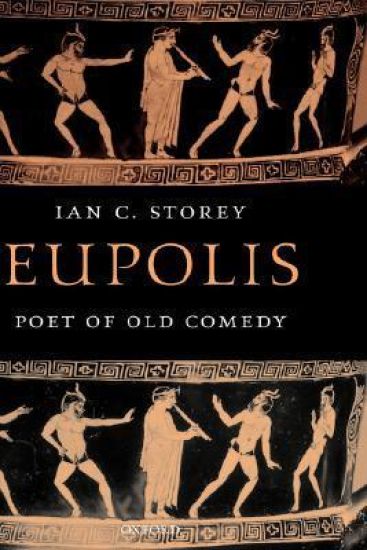
Eupolis (fl. 429-411 BC) was one of the best-attested and most important of Aristophanes' rivals. No complete work by this lost master has survived, but of his fourteen plays we have 500 fragments. These include 120 lines of his best-known comedy, Demoi (The Demes), which were discovered and published in 1911. Even in fragmentary form, Eupolis' plays shed interesting light on the whole range of issues - political, poetic, and dramatic - that make Aristophanes so perennially fascinating. There has, however, been no substantial survey in English until now. As well as providing a new translation of all the remaining fragments and a separate essay on each lost play, Ian C. Storey discusses Eupolis' career, redates the plays, examines how Eupolis was known in the ancient world, explores his relationship with Aristophanes (as both rival and collaborator), and delineates the distinct nature of the comedy that this prizewinning poet created.
Euripides: Suppliant Women

Euripides: Suppliant Women

Ian C. Storey

Bristol Classical Press
2008
nidottu
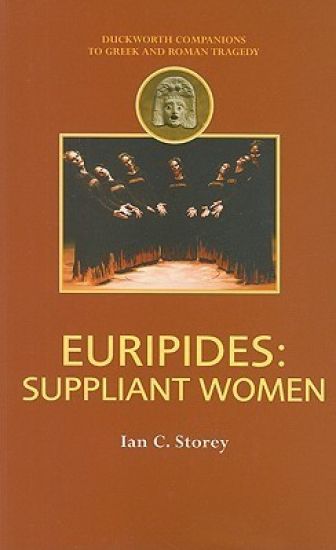
Euripides' "Suppliant Women" is an unfairly neglected master work by the most controversial of the three great tragedians of Ancient Greece. It dramatises the story of one of the proudest moments in Athenian mythical history: the intervention of Theseus in support of international law to force the burial of the Argives who were killed during their attack on Thebes. But Euripides adds new characters to the story and presents the myth in a different and sometimes ambiguous light. A sense of uncertainty and undercutting pervades this play, which dramatises the sufferings of the innocent in war and then at the end foretells more war. As well as presenting a scene-by-scene analysis, this book will discuss the date and background of the play, whether people and events from contemporary Athens can be glimpsed in the drama; the problems of staging, and finally the story in later tradition.
Aristophanes: Peace

Aristophanes: Peace

Ian C. Storey

Bloomsbury Academic
2019
nidottu
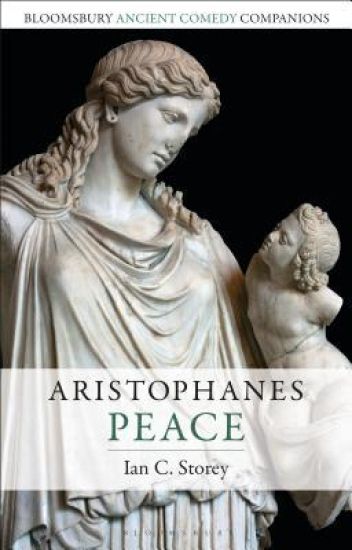
This is the first volume dedicated to Aristophanes' comedy Peace that analyses the play for a student audience and assumes no knowledge of Greek. It launches a much-needed new series of books each discussing a comedy that survives from the ancient world. Six chapters highlight the play’s context, themes, staging and legacy including its response to contemporary wartime politics and the possible staging options for flying. It is ideal for students, but helpful also for scholars wanting a quick introduction to the play.Peace was first performed in 421 BC, perhaps only days before the signing of a peace treaty that ended ten years of fighting between Athens and Sparta (the Archidamian War). Aristophanes celebrates this prospect with an imaginative fantasy involving his hero's flight on a gigantic dung-beetle to Olympus, the rescue of the goddess Peace from her imprisonment in a cave, and her return to a Greece weary of ten years of war. Like most of the poet's comedies, this play is heavy on fantasy and imagination, light on formal structure, being an exuberant farce that champions the opponents of War and celebrates the delights of the return to country life with its smells, food and drink, its many pleasures and none of the complications that war brings in its wake.
Aristophanes: Peace

Aristophanes: Peace

Ian C. Storey

Bloomsbury Academic
2019
sidottu
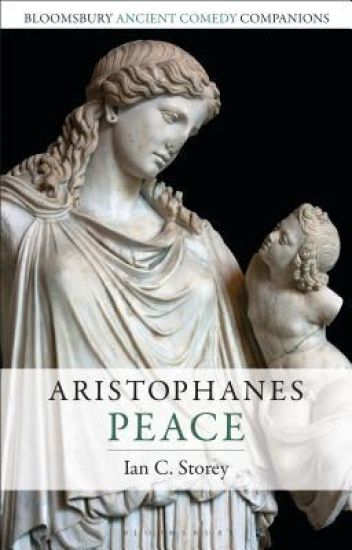
This is the first volume dedicated to Aristophanes' comedy Peace that analyses the play for a student audience and assumes no knowledge of Greek. It launches a much-needed new series of books each discussing a comedy that survives from the ancient world. Six chapters highlight the play’s context, themes, staging and legacy including its response to contemporary wartime politics and the possible staging options for flying. It is ideal for students, but helpful also for scholars wanting a quick introduction to the play.Peace was first performed in 421 BC, perhaps only days before the signing of a peace treaty that ended ten years of fighting between Athens and Sparta (the Archidamian War). Aristophanes celebrates this prospect with an imaginative fantasy involving his hero's flight on a gigantic dung-beetle to Olympus, the rescue of the goddess Peace from her imprisonment in a cave, and her return to a Greece weary of ten years of war. Like most of the poet's comedies, this play is heavy on fantasy and imagination, light on formal structure, being an exuberant farce that champions the opponents of War and celebrates the delights of the return to country life with its smells, food and drink, its many pleasures and none of the complications that war brings in its wake.