Kirjojen hintavertailu. Mukana 12 016 292 kirjaa ja 12 kauppaa.

Kirjahaku

Etsi kirjoja tekijän nimen, kirjan nimen tai ISBN:n perusteella.

25 kirjaa tekijältä Ian Clark

Nuclear Diplomacy and the Special Relationship
The full inside story The full and fascinating inside story of Anglo-American nuclear relations from 1957 to 1962 is told for the first time in this book. This period saw the creation of a close and exclusive relationship of nuclear collaboration between Britain and the United States, with an agreement on atomic co-operation, the establishment of the facilities for US nuclear submarines in the UK, and the sale of US missiles, including Thor and Polaris for the British strategic submarine force. Revelations from formerly top secret documents Ian Clark's detailed analysis of newly declassified official documents reveals that, while special, the Anglo-American nuclear partnership was not without tension and rivalry. Prime Minister Harold Macmillan sought to combine interdependence--which reduced costs--with national policies on nuclear strategy, NATO, nuclear co-operation with France, and nuclear testing; the result was conflict with US administrations. Dr Clark examines such critical issues as British nuclear targeting of the Soviet Union and co-ordination with US nuclear war plans, cancellation of the Blue Streak missile, the bargain over Skybolt and the Holy Loch base, the diplomacy of the Skybolt crisis in 1962, and British ambitions for Polaris. The frank revelations contained in the formerly top secret British and American documents from the period enable him to offer fundamentally new and sometimes controversial interpretations of events in this dramatic period.
Waging War

Waging War

Ian Clark

Oxford University Press
2015
sidottu
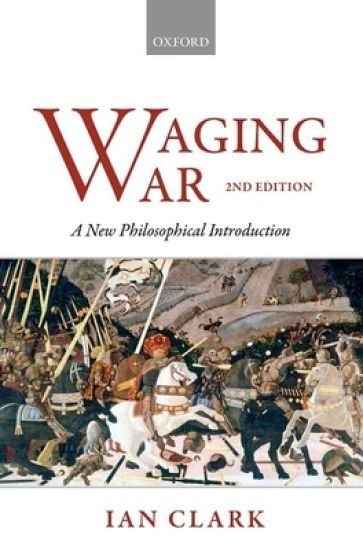
There is now a major new interest in ethical issues about warfare emerging from the wars in Iraq and Afghanistan, conflict in Syria and Libya, the war on terror, and the introduction of new weapon systems, such as unmanned drones. In this re-written version of the author's classic text, Waging War, Ian Clark asks probing questions about how we think about war, the changes it is undergoing, and what exactly it is we wage when we wage war. Waging War argues that much of what passes for ethical debate is actually a set of disagreements about what counts as war or not. This philosophical introduction provides a critical review of the various different ways in which the ethical debates are already framed, the questions that arise from these debates, and seeks to bring greater clarity and precision to the important moral arguments about political violence.
Waging War

Waging War

Ian Clark

Oxford University Press
2015
nidottu
There is now a major new interest in ethical issues about warfare emerging from the wars in Iraq and Afghanistan, conflict in Syria and Libya, the war on terror, and the introduction of new weapon systems, such as unmanned drones. In this re-written version of the author's classic text, Waging War, Ian Clark asks probing questions about how we think about war, the changes it is undergoing, and what exactly it is we wage when we wage war. Waging War argues that much of what passes for ethical debate is actually a set of disagreements about what counts as war or not. This philosophical introduction provides a critical review of the various different ways in which the ethical debates are already framed, the questions that arise from these debates, and seeks to bring greater clarity and precision to the important moral arguments about political violence.
The Post-Cold War Order

The Post-Cold War Order

Ian Clark

Oxford University Press
2001
nidottu
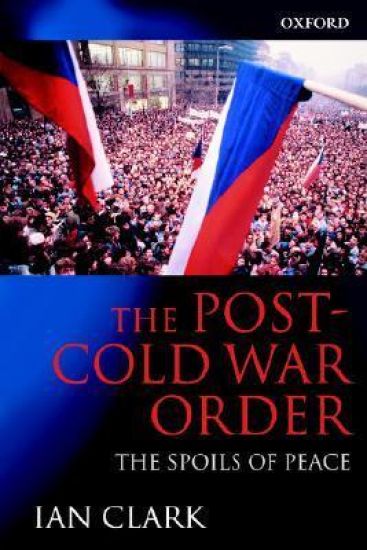
What changed with the end of the Cold War? This book traces the main effects on Europe, Pacific Asia, the Middle East, and arms control. It considers the major developments in the global economy, patterns of security, and liberal human rights, providing the first comprehensive overview of the nature of the post-Cold War order. It argues that this order should be understood as a kind of peace settlement. How harsh was it, and what were its main provisions? Following a clear structure, Clark brings a clear historical perspective to bear on the existing debates about the post-Cold War order, looking at detailed studies of the settlement in Europe and other regions to explore the nature of the 'peace'. He develops a fresh way of looking at the global economy, international security, and the agenda of liberalism and human rights - all as aspects of the peace set in place at the end of the Cold War.
Globalization and Fragmentation

Globalization and Fragmentation

Ian Clark

Oxford University Press
1997
nidottu
As we approach the end of the twentieth century, there is widespread interest in globalization which is thought to be shaping our lives technologically, economically, culturally, and in terms of changing political identities. Ian Clark takes globalizationand its opposite, fragmentation as the organizing themes for a grand retrospective of twentieth-century international history. Challenging the presentation of globalization as a pre-ordained, technology-driven, and irreversible process, he argues that both globalization and fragmentation have ebbed and flowed throughout the century, governed by its great formative events: westernization, the two World Wars, the depression, and the rise and fall of the cold war. Globalization and Fragmentation offers a succinct, original critique of the century's international developments. It sets out a challenging analysis of globalization as a process reflecting political relations both between and within states, and brings together the historical and theoretical study of international relations.
Globalization and International Relations Theory

Globalization and International Relations Theory

Ian Clark

Oxford University Press
1999
nidottu
Globalization has become a key social-scientific concept of the 1990s. It makes a variety of contested claims: that, as the world shrinks, territory and distance have become less important; that there are no longer separate national economies; and that all humanity is now exposed to similar technological, economic, social, and cultural pressures. Above all, it tends to call into question the continuing relevance of the state. As such, it appears to challenge directly most of the assumptions that lie at the heart of IR theory. However, rather than see globalization as something which makes traditional IR theory redundant, this book argues for a fruitful engagement between the two. It uses its distinctive account of globalization to address a wide range of issues in IR theory: sovereignty, the state's role in economic management and security provision, the nature of community and the viability of democracy. Its basic argument is that globalization does not spell the end of the state. On the contrary, globalization is itself as much a reflection of changes in state practice that have already taken place. This clearly written and accessible account of the theoretical debates about globalization will be of use to students and academics across a range of disciplines, in particular those on globalization, IR theory, and IPE courses.
Legitimacy in International Society

Legitimacy in International Society

Ian Clark

Oxford University Press
2007
nidottu
The word 'legitimacy' is seldom far from the lips of practitioners of international affairs. The legitimacy of recent events - such as the wars in Kosovo and Iraq, the post-September 11 war on terror, and instances of humanitarian intervention - have been endlessly debated by publics around the globe. And yet the academic discipline of IR has largely neglected this concept. This book encourages us to take legitimacy seriously, both as a facet of international behaviour with practical consequences, and as a theoretical concept necessary for understanding that behaviour. It offers a comprehensive historical and theoretical account of international legitimacy. It argues that the development of principles of legitimacy lie at the heart of what is meant by an international society, and in so doing fills a notable void in English school accounts of the subject. Part I provides a historical survey of the evolution of the practice of legitimacy from the 'age of discovery' at the end of the 15th century. It explores how issues of legitimacy were interwoven with the great peace settlements of modern history - in 1648, 1713, 1815, 1919, and 1945. It offers a revisionist reading of the significance of Westphalia - not as the origin of a modern doctrine of sovereignty - but as a seminal stage in the development of an international society based on shared principles of legitimacy. All of the historical chapters demonstrate how the twin dimensions of legitimacy - principles of rightful membership and of rightful conduct - have been thought about and developed in differing contexts. Part II then provides a trenchant analysis of legitimacy in contemporary international society. Deploying a number of short case studies, drawn mainly from the wars against Iraq in 1991 and 2003, and the Kosovo war of 1999, it sets out a theoretical account of the relationship between legitimacy, on the one hand, and consensus, norms, and equilibrium, on the other. This is the most sustained attempt to make sense of legitimacy in an IR context. Its conclusion, in the end, is that legitimacy matters, but in a complex way. Legitimacy is not to be discovered simply by straightforward application of other norms, such as legality and morality. Instead, legitimacy is an inherently political condition. What determines its attainability or not is as much the general political condition of international society at any one moment, as the conformity of its specific actions to set normative principles.
Legitimacy in International Society

Legitimacy in International Society

Ian Clark

Oxford University Press
2005
sidottu
The word 'legitimacy' is seldom far from the lips of practitioners of international affairs. The legitimacy of recent events - such as the wars in Kosovo and Iraq, the post-September 11 war on terror, and instances of humanitarian intervention - have been endlessly debated by publics around the globe. And yet the academic discipline of IR has largely neglected this concept. This book encourages us to take legitimacy seriously, both as a facet of international behaviour with practical consequences, and as a theoretical concept necessary for understanding that behaviour. It offers a comprehensive historical and theoretical account of international legitimacy. It argues that the development of principles of legitimacy lie at the heart of what is meant by an international society, and in so doing fills a notable void in English school accounts of the subject. Part I provides a historical survey of the evolution of the practice of legitimacy from the 'age of discovery' at the end of the 15th century. It explores how issues of legitimacy were interwoven with the great peace settlements of modern history - in 1648, 1713, 1815, 1919, and 1945. It offers a revisionist reading of the significance of Westphalia - not as the origin of a modern doctrine of sovereignty - but as a seminal stage in the development of an international society based on shared principles of legitimacy. All of the historical chapters demonstrate how the twin dimensions of legitimacy - principles of rightful membership and of rightful conduct - have been thought about and developed in differing contexts. Part II then provides a trenchant analysis of legitimacy in contemporary international society. Deploying a number of short case studies, drawn mainly from the wars against Iraq in 1991 and 2003, and the Kosovo war of 1999, it sets out a theoretical account of the relationship between legitimacy, on the one hand, and consensus, norms, and equilibrium, on the other. This is the most sustained attempt to make sense of legitimacy in an IR context. Its conclusion, in the end, is that legitimacy matters, but in a complex way. Legitimacy is not to be discovered simply by straightforward application of other norms, such as legality and morality. Instead, legitimacy is an inherently political condition. What determines its attainability or not is as much the general political condition of international society at any one moment, as the conformity of its specific actions to set normative principles.
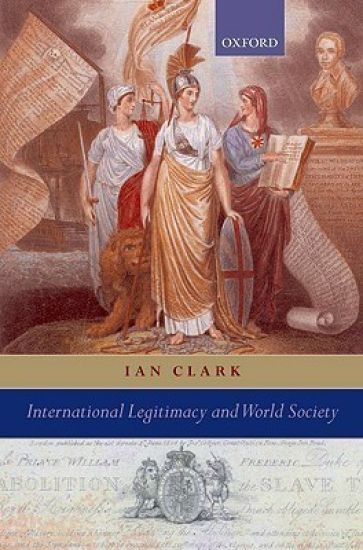
International Legitimacy and World Society

International Legitimacy and World Society

Ian Clark

Oxford University Press
2007
sidottu
The conventional view of international society is that it is interested only in co-existence and order amongst states. This creates a puzzle. When the historical record is examined, we discover that international society has repeatedly signed up to normative principles that go well beyond this purpose. When it has done so, it has built new normative constraints into international legitimacy, and this is most conspicuously so when it has espoused broadly humanitarian principles. This suggests that the norms adopted by international society might be encouraged from the distinct constituency of world society. The book traces a series of historical case studies which issued in international affirmation of such principles: slave-trade abolition in 1815; the public conscience in 1899; social justice (but not racial equality) in 1919; human rights in 1945; and democracy as the only acceptable form of state in 1990. In each case, evidence is presented of world-society actors (transnational movements, advocacy networks, and INGOs) making the political running in support of a new principle, often in alliance with a leading state. At the same time, world society has mounted a normative case, and this can be seen as a degree of normative integration between international and world society. Each of the cases tells a fascinating story in its own right. Collectively, they contribute to the growing IR literature on the role of norms, and especially that written from a broadly English School or constructivist perspective. The book thereby puts some real historical flesh on the concept of world society, while forcing us to reconsider traditional views about the 'essential' nature of international society.
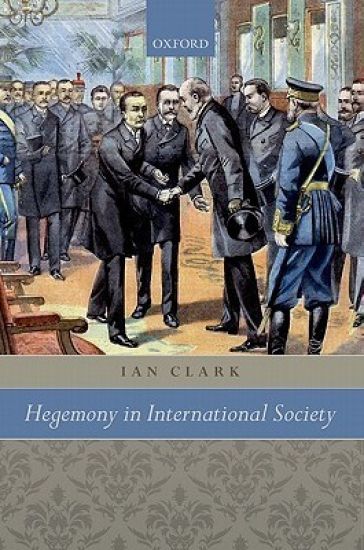
Hegemony in International Society

Hegemony in International Society

Ian Clark

Oxford University Press
2011
sidottu
Can international legitimacy operate even in a deformed balance of power, and when there is only one dominant state? Conventionally, hegemony has been perceived as a threat to international society. But how then is international order to be maintained, if this still requires a managerial role on the part of the great powers? IR theory has not taken that problem sufficiently seriously. This study makes a sharp distinction between primacy, denoting merely a form of material power, and hegemony, understood as a legitimate practice, and as giving rise to a form of social power. Adopting an English School approach, the author suggests hegemony be considered as one potential institution of international society, and hence as one possible mechanism of international order. The book reviews some relevant historical cases (the Concert of Europe, Pax Britannica and Pax Americana) and argues that, instead of one model of hegemony, these represent several different variants: importantly, each displays its own distinctive legitimacy dynamics. Once these are appreciated, they can help us identify the possible institutional forms of hegemony in contemporary international society. This is done through three cases, examining in turn US policy on the UN Security Council, in East Asia, and on climate change. The overall argument challenges the limited post-Cold War debate about primacy, and the equally simplistic projections about the future distribution of power to which it gives rise. In doing so, it offers a major re-thinking of the concept of hegemony in international relations.
The Vulnerable in International Society

The Vulnerable in International Society

Ian Clark

Oxford University Press
2013
sidottu
Who are the vulnerable, and what makes them so? Through an innovative application of English School theory, this book suggests that people are vulnerable not only to natural risks, but also to the workings of international society. This replicates the approach of those studies of natural disasters that now commonly present a social vulnerability analysis, showing how people are differentially exposed by their social location. Could international society have similar effects? This question is explored through the cases of political violence, climate change, human movement, and global health. These cases provide rich detail on how, through its social practices of the vulnerable, international society constructs the vulnerable in its own terms, and sets up regimes of protection that prioritize some forms at the expense of others. What this demonstrates above all is that, even if only a 'practical' association, international society inevitably has moral consequences in the way it influences the relative distribution of harm. As a result, these four pressing policy issues now present themselves as fundamentally moral problems. Revising the arguments of E. H. Carr, the author points out the essentially contested normative nature of international order. However, instead of as a moral clash between revisionist and status quo powers, as Carr had suggested, the problem is instead one about the contested nature of vulnerability, insofar as vulnerability is an expression of power relations, but also gives rise to a moral claim. By providing a holistic treatment in this way, the book makes practical sense of the vulnerable, while also seeking to make moral sense of international society.
The Vulnerable in International Society

The Vulnerable in International Society

Ian Clark

Oxford University Press
2013
nidottu
Who are the vulnerable, and what makes them so? Through an innovative application of English School theory, this book suggests that people are vulnerable not only to natural risks, but also to the workings of international society. This replicates the approach of those studies of natural disasters that now commonly present a social vulnerability analysis, showing how people are differentially exposed by their social location. Could international society have similar effects? This question is explored through the cases of political violence, climate change, human movement, and global health. These cases provide rich detail on how, through its social practices of the vulnerable, international society constructs the vulnerable in its own terms, and sets up regimes of protection that prioritize some forms at the expense of others. What this demonstrates above all is that, even if only a 'practical' association, international society inevitably has moral consequences in the way it influences the relative distribution of harm. As a result, these four pressing policy issues now present themselves as fundamentally moral problems. Revising the arguments of E. H. Carr, the author points out the essentially contested normative nature of international order. However, instead of as a moral clash between revisionist and status quo powers, as Carr had suggested, the problem is instead one about the contested nature of vulnerability, insofar as vulnerability is an expression of power relations, but also gives rise to a moral claim. By providing a holistic treatment in this way, the book makes practical sense of the vulnerable, while also seeking to make moral sense of international society.
Nuclear Past, Nuclear Present
The controversial atomic bombings of Hiroshima and Nagasaki in 1945 represent the only occasions when atomic weapons have been employed in war, yet surprisingly little attention has been paid to the relationship between the bombings and the course of subsequent nuclear strategy. Dr. Clark contends that the August 1945 experience was crucially forma
Nuclear Past, Nuclear Present
This book provides detailed reconstruction of atomic bombings of Hiroshima and Nagasaki in 1945 to shed new light upon a set of influential assumptions about the moral acceptability of using nuclear weapons, the rationality of nuclear decision making, and the controllability of nuclear operations.
Governance, The State, Regulation and Industrial Relations
This book examines the legacy of economic and political aims and objectives formulated by the British government during, and immediately after the second world war. It examines contemporary patterns of regulation by the state, and reform in the industrial relations system as factors of these historically embedded influences. This book makes an important contribution to the history and theory of British post-war economics.
The Hierarchy of States

The Hierarchy of States

Ian Clark

Cambridge University Press
1989
sidottu
The hierarchy of states presents Ian Clark’s Reform and resistance in the international order, a well-established text on international relations first published in 1980, in a completely revised form. Combining a detailed examination of theory with a full account of historical developments, Dr Clark analyses the nature of international order - the hierarchical state system - and its potential for reform. The theory of international order is explored tracing two traditions of thought epitomised in the writings of Kant and Rousseau, whilst in a historical survey Dr Clark covers the main attempts to implement international order since 1815 and includes such aspects as concert diplomacy, alliance systems, international organisations as well as such informal understandings as nuclear deterrence, crisis management and spheres of influence. This revised edition contains two new chapters - one on international/world order issues and the other on ‘macro’ changes between 1815 and 1990. Dr Clark has updated his discussion on the course of superpower relations and most of the material on the post-1945 period is introduced in this edition for the first time.
The Hierarchy of States

The Hierarchy of States

Ian Clark

Cambridge University Press
1989
pokkari
The hierarchy of states presents Ian Clark’s Reform and resistance in the international order, a well-established text on international relations first published in 1980, in a completely revised form. Combining a detailed examination of theory with a full account of historical developments, Dr Clark analyses the nature of international order - the hierarchical state system - and its potential for reform. The theory of international order is explored tracing two traditions of thought epitomised in the writings of Kant and Rousseau, whilst in a historical survey Dr Clark covers the main attempts to implement international order since 1815 and includes such aspects as concert diplomacy, alliance systems, international organisations as well as such informal understandings as nuclear deterrence, crisis management and spheres of influence. This revised edition contains two new chapters - one on international/world order issues and the other on ‘macro’ changes between 1815 and 1990. Dr Clark has updated his discussion on the course of superpower relations and most of the material on the post-1945 period is introduced in this edition for the first time.
Groundwater Geochemistry and Isotopes

Groundwater Geochemistry and Isotopes

Ian Clark

TAYLOR FRANCIS LTD
2026
sidottu
Groundwater Geochemistry and Isotopes provides a practical and theoretical understanding of geochemistry and environmental isotopes in hydrogeology with applications in both natural groundwater and in contaminated settings. This text teaches the thermodynamic basis and principal reactions involving the major ions, gases and isotopes during groundwater recharge, weathering, and redox evolution. This second edition brings additional case studies and new developments in the practical use of isotopes and geochemistry in understanding groundwater origin, evolution and anthropogenic impacts. Additional solved problems and example calculations are available as a free e-manual by request ([email protected]). The new edition develops the fundamentals of environmental isotopes and geochemistry and provides approaches for consultants and practitioners as well as undergraduates to address problems in natural and contaminant hydrogeology. Covers the basics of solutes, gases and isotopes in water, and concentration-activity relationships and reactions Describes tracing the water cycle, weathering, and the geochemical evolution of water quality Explores dating groundwater as young as a few years to over hundreds of millions of years Includes clear figures and calculations to enhance comprehension Uses case studies to demonstrate the integration of geochemistry and isotopes for contaminated groundwater
Groundwater Geochemistry and Isotopes
Understand the Environmental Processes That Control Groundwater QualityThe integration of environmental isotopes with geochemical studies is now recognized as a routine approach to solving problems of natural and contaminated groundwater quality. Advanced sampling and analytical methods are readily accessible and affordable, providing abundant geochemical and isotope data for high spatial resolution and high frequency time series. Groundwater Geochemistry and Isotopes provides the theoretical understanding and interpretive methods and contains a useful chapter presenting the basics of sampling and analysis.This text teaches the thermodynamic basis and principal reactions involving the major ions, gases and isotopes during groundwater recharge, weathering and redox evolution. Subsequent chapters apply these principles in hands-on training for dating young groundwaters with tritium and helium and ancient systems with radiocarbon, radiohalides and noble gases, and for tracing reactions of the major contaminants of concern in groundwaters. Covers the basics of solutes, gases and isotopes in water, and concentration-activity relationships and reactionsDescribes tracing the water cycle, weathering, and the geochemical evolution of water qualityExplores dating groundwater as young as a few years to over hundreds of millions of yearsUses case studies to demonstrate the application of geochemistry and isotopes for contaminated groundwatersAccessible to consultants and practitioners as well as undergraduates, Groundwater Geochemistry and Isotopes presents the basics of environmental isotopes and geochemistry, and provides you with a full understanding of their use in natural and contaminated groundwater.