Kirjojen hintavertailu. Mukana 11 342 296 kirjaa ja 12 kauppaa.

Kirjahaku

Etsi kirjoja tekijän nimen, kirjan nimen tai ISBN:n perusteella.

8 kirjaa tekijältä Ian Duncan

Modern Romance and Transformations of the Novel

Modern Romance and Transformations of the Novel

Ian Duncan

Cambridge University Press
2005
pokkari
Modern Romance examines the relationship between the revival of romance form and the ascendancy of the novel in British literary culture, from 1760 to 1850. The revival of romance as the literary embodiment of a national cultural identity provided a metaphor for the 'authenticity' of the novel itself, set against the changing formations of modern life. The material conditions, cultural status and formal repertoire of prose fiction were given a canonical transformation, leading to the form's nineteenth-century heyday, in Scott's Waverley novels. Ian Duncan's illuminating and innovative study begins with the first identification of modern prose fiction with romance form in the late eighteenth-century Gothic novel, and moves through Scott's highly influential dialectical blend of romance and history, to his relations with his successor in the role of national author, Charles Dickens.
Modern Romance and Transformations of the Novel

Modern Romance and Transformations of the Novel

Ian Duncan

Cambridge University Press
1992
sidottu
Modern Romance examines the relationship between the revival of romance form and the ascendancy of the novel in British literary culture, from 1760 to 1850. The revival of romance as the literary embodiment of a national cultural identity provided a metaphor for the ‘authenticity’ of the novel itself, set against the changing formations of modern life. The material conditions, cultural status and formal repertoire of prose fiction were given a canonical transformation, leading to the form’s nineteenth-century heyday, in Scott’s Waverley novels. Ian Duncan’s illuminating and innovative study begins with the first identification of modern prose fiction with romance form in the late eighteenth-century Gothic novel, and moves through Scott’s highly influential dialectical blend of romance and history, to his relations with his successor in the role of national author, Charles Dickens.
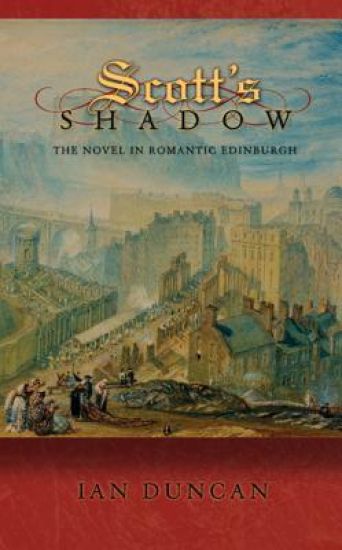
Scott's Shadow

Scott's Shadow

Ian Duncan

Princeton University Press
2016
pokkari
Scott's Shadow is the first comprehensive account of the flowering of Scottish fiction between 1802 and 1832, when post-Enlightenment Edinburgh rivaled London as a center for literary and cultural innovation. Ian Duncan shows how Walter Scott became the central figure in these developments, and how he helped redefine the novel as the principal modern genre for the representation of national historical life. Duncan traces the rise of a cultural nationalist ideology and the ascendancy of Scott's Waverley novels in the years after Waterloo. He argues that the key to Scott's achievement and its unprecedented impact was the actualization of a realist aesthetic of fiction, one that offered a socializing model of the imagination as first theorized by Scottish philosopher and historian David Hume. This aesthetic, Duncan contends, provides a powerful novelistic alternative to the Kantian-Coleridgean account of the imagination that has been taken as normative for British Romanticism since the early twentieth century. Duncan goes on to examine in detail how other Scottish writers inspired by Scott's innovations--James Hogg and John Galt in particular--produced in their own novels and tales rival accounts of regional, national, and imperial history. Scott's Shadow illuminates a major but neglected episode of British Romanticism as well as a pivotal moment in the history and development of the novel.
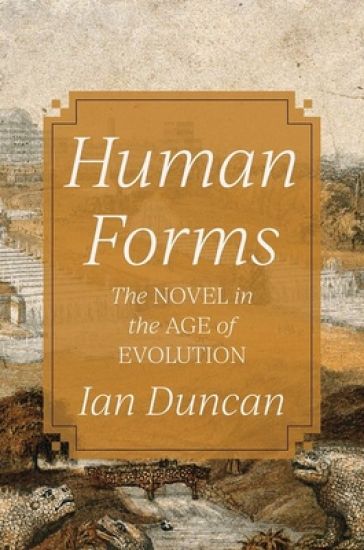
Human Forms

Human Forms

Ian Duncan

PRINCETON UNIVERSITY PRESS
2019
sidottu
A major rethinking of the European novel and its relationship to early evolutionary scienceThe 120 years between Henry Fielding's Tom Jones (1749) and George Eliot's Middlemarch (1871) marked both the rise of the novel and the shift from the presumption of a stable, universal human nature to one that changes over time. In Human Forms, Ian Duncan reorients our understanding of the novel's formation during its cultural ascendancy, arguing that fiction produced new knowledge in a period characterized by the interplay between literary and scientific discourses—even as the two were separating into distinct domains.Duncan focuses on several crisis points: the contentious formation of a natural history of the human species in the late Enlightenment; the emergence of new genres such as the Romantic bildungsroman; historical novels by Walter Scott and Victor Hugo that confronted the dissolution of the idea of a fixed human nature; Charles Dickens's transformist aesthetic and its challenge to Victorian realism; and George Eliot's reckoning with the nineteenth-century revolutions in the human and natural sciences. Modeling the modern scientific conception of a developmental human nature, the novel became a major experimental instrument for managing the new set of divisions—between nature and history, individual and species, human and biological life—that replaced the ancient schism between animal body and immortal soul.The first book to explore the interaction of European fiction with "the natural history of man" from the late Enlightenment through the mid-Victorian era, Human Forms sets a new standard for work on natural history and the novel.
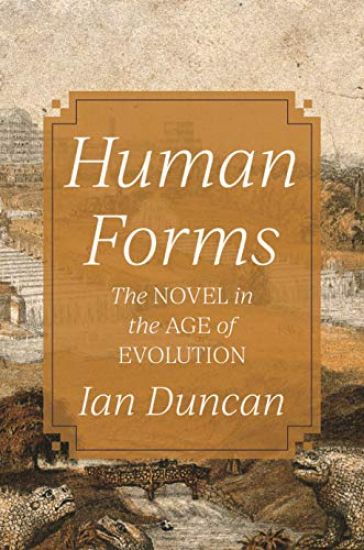
Human Forms

Human Forms

Ian Duncan

PRINCETON UNIVERSITY PRESS
2024
pokkari
A major rethinking of the European novel and its relationship to early evolutionary scienceThe 120 years between Henry Fielding's Tom Jones (1749) and George Eliot's Middlemarch (1871) marked both the rise of the novel and the shift from the presumption of a stable, universal human nature to one that changes over time. In Human Forms, Ian Duncan reorients our understanding of the novel's formation during its cultural ascendancy, arguing that fiction produced new knowledge in a period characterized by the interplay between literary and scientific discourses—even as the two were separating into distinct domains.Duncan focuses on several crisis points: the contentious formation of a natural history of the human species in the late Enlightenment; the emergence of new genres such as the Romantic bildungsroman; historical novels by Walter Scott and Victor Hugo that confronted the dissolution of the idea of a fixed human nature; Charles Dickens's transformist aesthetic and its challenge to Victorian realism; and George Eliot's reckoning with the nineteenth-century revolutions in the human and natural sciences. Modeling the modern scientific conception of a developmental human nature, the novel became a major experimental instrument for managing the new set of divisions—between nature and history, individual and species, human and biological life—that replaced the ancient schism between animal body and immortal soul.The first book to explore the interaction of European fiction with "the natural history of man" from the late Enlightenment through the mid-Victorian era, Human Forms sets a new standard for work on natural history and the novel.
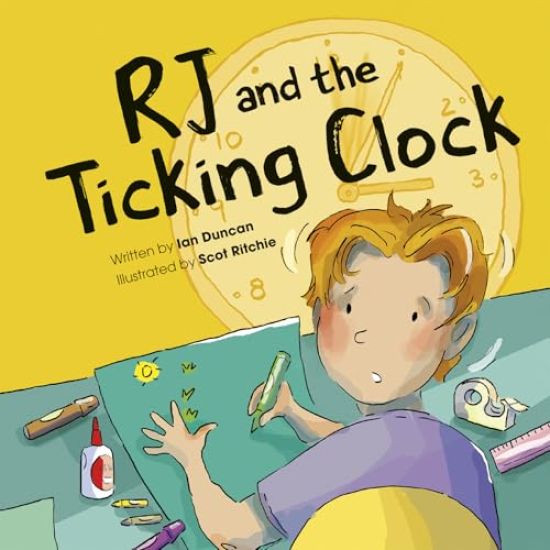
Rj and the Ticking Clock

Rj and the Ticking Clock

Ian Duncan

Owlkids
2025
sidottu
A boy races against the clock to make Father's Day cards for his two dads RJ is panicking His teacher has given the class 30 minutes to finish their Father's Day cards. RJ has done the math, and he knows he won't have enough time to make two perfect cards for his two perfect dads. Time ticks by, and while the other kids have no trouble finishing their cards, the more RJ tries to focus and get the job done, the more overwhelmed and distracted he feels. RJ manages to finish one card, and just when he decides that this will have to do, his teacher and classmates surprise him. They used their extra time to create a second card for him. So, when his dads pick him up at the end of the day, RJ greets them joyfully and gives each of them their own handmade card. Charming illustrations bring a common craft-making scenario to life in this story that touches on anxiety, time management, and perfectionism in a relatable way.