Kirjojen hintavertailu. Mukana 11 364 964 kirjaa ja 12 kauppaa.

Kirjahaku

Etsi kirjoja tekijän nimen, kirjan nimen tai ISBN:n perusteella.

3 kirjaa tekijältä Ian E. Mackenzie

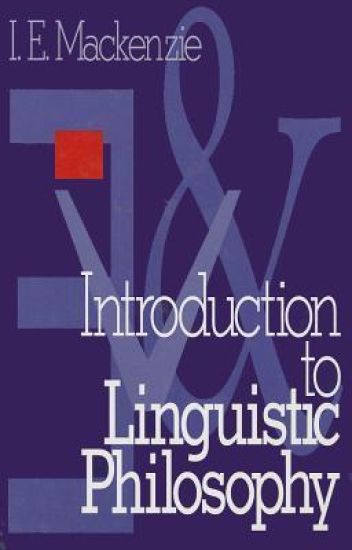
Introduction to Linguistic Philosophy

Introduction to Linguistic Philosophy

Ian E. Mackenzie

SAGE Publications Inc
1997
sidottu
This auspicious new volume is designed for linguists who are interested in the deeper issues of their science. Introduction to Linguistic Philosophy lays a solid foundation of linguistic philosophy presenting theories of leading linguistic analysts such as Frege, Russell, Wittgenstein, Carnap, and Quine. I. E. MackenzieÆs exploration into these theories equips readers for advanced work on most topics in semantics and the study of language. The structure of this book reflects the fact that the philosophical study of language is not systematic, but centers on aspects of language that are considered to be of fundamental conceptual significance. Therefore, this book need not be read in any specific order. Whenever a chapter presupposes an understanding of something that is explained elsewhere in the book, a specific cross-reference is given. MackenzieÆs approach to the philosophy of language stresses the importance of observing how language is used rather than the assuming that it conforms to a pre-existing logical structure. In addition to dealing with foundational issues, such as truth, meaning, and the nature of language, this book explores specific linguistic phenomenaùdescriptions, names, non-extesional contexts and quantificationùwhich have attracted considerable philosophical attention. Introduction to Linguistic Philosophy is a student-centered resource that is recommended for students in linguistics, communication, and philosophy.
Introduction to Linguistic Philosophy

Introduction to Linguistic Philosophy

Ian E. Mackenzie

SAGE Publications Inc
1997
nidottu
This auspicious new volume is designed for linguists who are interested in the deeper issues of their science. Introduction to Linguistic Philosophy lays a solid foundation of linguistic philosophy presenting theories of leading linguistic analysts such as Frege, Russell, Wittgenstein, Carnap, and Quine. I. E. MackenzieÆs exploration into these theories equips readers for advanced work on most topics in semantics and the study of language. The structure of this book reflects the fact that the philosophical study of language is not systematic, but centers on aspects of language that are considered to be of fundamental conceptual significance. Therefore, this book need not be read in any specific order. Whenever a chapter presupposes an understanding of something that is explained elsewhere in the book, a specific cross-reference is given. MackenzieÆs approach to the philosophy of language stresses the importance of observing how language is used rather than the assuming that it conforms to a pre-existing logical structure. In addition to dealing with foundational issues, such as truth, meaning, and the nature of language, this book explores specific linguistic phenomenaùdescriptions, names, non-extesional contexts and quantificationùwhich have attracted considerable philosophical attention. Introduction to Linguistic Philosophy is a student-centered resource that is recommended for students in linguistics, communication, and philosophy.
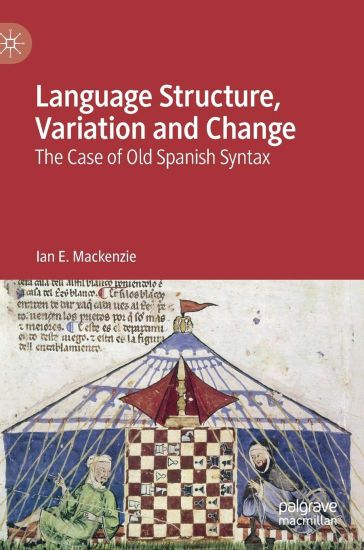
Language Structure, Variation and Change

Language Structure, Variation and Change

Ian E. Mackenzie

Springer Nature Switzerland AG
2019
sidottu
This book offers an original account of the dynamics of syntactic change and the evolving structure of Old Spanish that combines rigorous manuscript-based investigation, quantitative analysis and a syntactic approach grounded in Minimalist thinking. Its analysis of both successful and failed changes demonstrates the degree of unpredictability caused by the interaction of competing factors and will shed fresh light on the assumed unidirectionality of linguistic change. Importantly, it reveals that Old Spanish and modern Spanish are more similar to one another than is usually supposed and demonstrates that many of the differences between the two varieties are quantitative rather than qualitative. This theoretically sophisticated examination of historical corpora will provide an invaluable resource for students and scholars of Old and modern Spanish, historical linguistics, sociolinguistics and syntax.