Kirjojen hintavertailu. Mukana 11 468 044 kirjaa ja 12 kauppaa.

Kirjahaku

Etsi kirjoja tekijän nimen, kirjan nimen tai ISBN:n perusteella.

22 kirjaa tekijältä Ian Fletcher

Insolvency in Private International Law: Supplement to Second Edition
This supplement to the second edition of Insolvency in Private International Law covers the key developments in case law and legislation in the subject up to October 2006, and is an essential purchase for all who have already bought the main work. It includes the full text of the Cross-Border Insolvency Regulations 2006, along with commentary on the regulations. The supplement also includes the text of Council Regulation 694/2006, amending EC Regulation 1346/2000 on insolvency proceedings, and references to key developments in case law, including Eurofood IFSC Ltd, Daisytek ISA, and Cambridge Gas Transport Corp v Official Committe of Unsecured Creditors of Navigator Holdings plc. The commentary on case developments links back to the relevant paragraph in the main work. The main work deals with the problems generated by those cases of insolvency (either of an individual or of a company) where the presence of contacts with more than one system of law brings into operation the principles and methods of private international law (also known as conflict of laws). Part I of the main work is mainly devoted to an examination of the body of rules and practice that has evolved in England during the course of the past two-and-a-half centuries, and surveys the current state of the law derived from a blend of statutory and case authorities. Contrasting approaches under a selection of foreign systems - principally Australia, Canada, France and the USA - are examined by way of comparison. There are up to date accounts of the circumstances under which insolvency proceedings can be opened in respect of debtors which are not primarily based in England, and of the grounds on which English courts will recognise foreign insolvency proceedings and give assistance to the foreign representative of the debtor's estate. Part II of the main work explores the progress towards the creation of international arrangements to co-ordinate and rationalise the conduct of insolvency proceedings which have cross-border features, particularly where the debtor is capable of being subjected to concurrent proceedings in two or more jurisdictions. Central to the developments described in detail in this Part are the EC Regulation on Insolvency Proceedings, in force throughout the UK since May 2002, and the UNCITRAL Model Law on Cross-Border Insolvency, which was due for enactment in the UK. The main work of the second edition and the supplement are also available as a set (ISBN 9780199214952: £160)

Free Trade Doesn't Work, 2011 Edition: What Should Replace It and Why

Free Trade Doesn't Work, 2011 Edition: What Should Replace It and Why

Ian Fletcher

Coalition for a Prosperous America
2011
nidottu
"The only way to save our economy is for the U.S. to counter with trade and industrial policies designed to correct the defects of free trade. Ian Fletcher's Free Trade Doesn't Work is the best guide to develop such policies." -Ernest Hollings, U.S. senator from South Carolina, 1966-2005."Uniformly insightful, often brilliant, and remarkably readable. Obama's team should read it - and soon."-George C. Lodge, professor emeritus, Harvard Business School " If people will listen, Fletcher's informed voice will help turn the country toward a more promising future."-William Greider, author of Come Home, America: The Rise and Fall (and Redeeming Promise) of Our Country. " This book is an excellent introduction to these realities and what can be done about them." -Dan DiMicco, Chairman and CEO, Nucor Steel Corporation; author of Steeling America's Future: a CEO's Call to Arms. " This book will be an essential guide to the emerging debate over the wisdom of 'free trade' as a sound policy." -Patrick A. Mulloy, Commissioner, U.S.-China Economic and Security Review Commission; former Assistant Secretary of Commerce. "Ian Fletcher has laid out a powerful critique of so-called 'free trade' theory." -John J. Sweeney, former President, AFL-CIO; author, America Needs a Raise. "A very powerful, passionate, and convincing critique of free trade in an accessible and engaging manner." -Ha-Joon Chang, Cambridge University, author, Kicking away the Ladder. "Up-to-date, comprehensive and very readable." -Jeff Faux, Distinguished Fellow, Economic Policy Institute; author, The Global Class War. "A devastating and powerful indictment of free trade economics." -Gavin Fridell, author, Fair Trade Coffee. This book is aimed at ordinary concerned citizens. It examines why free trade is slowly bleeding America's economy to death and what can be done. It explains why the economics free traders use is false, and what kind of economics justifies protectionism instead. It is critical of the current establishment, but from a bipartisan point of view, so it should satisfy progressives, conservatives, and everyone in between. See www.freetradedoesntwork.com for more information.
Robert Craufurd: The Man and the Myth

Robert Craufurd: The Man and the Myth

Ian Fletcher

Pen Sword Military
2021
sidottu
To most students of the Peninsular War the name Robert Craufurd evokes images of a battle-hardened martinet, flogging his men across Portugal and Spain, driving them hard and generally taking a tough stance against anything and everything that did not meet with his own strict disciplinarian code. But that is only a partial picture of this most complex character, and it is the other side of Craufurd's personality that is revealed in this, the first full-length biography to be written in the last hundred years. Craufurd's letters to his wife are published here for the first time, and they show that he was a far more interesting and varied man in his private life than he appeared to be on campaign. Ian Fletcher follows Craufurd's controversial career from India, Ireland and South America to the Iberian Peninsula where he achieved immortality as one of Wellington's finest generals.
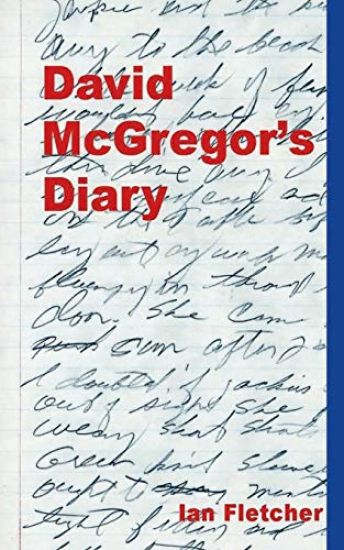
David McGregor's Diary

David McGregor's Diary

Ian Fletcher

Independently Published
2019
nidottu
A writer buys an old executive desk for his office. While sorting through its contents, he finds a diary written forty years ago by a man who had a torrid affair with a woman who was his wife's best friend. This journal provides a candid and touching window into one family's life almost two generations ago. The reader will be intrigued by this captivating and erotic account of a most passionate love affair and its unexpected finale.
Fortresses of the Peninsular War 1808–14

Fortresses of the Peninsular War 1808–14

Ian Fletcher

Osprey Publishing
2003
nidottu
The major fortresses of the Iberian peninsular controlled the most important routes in and out of the country. Although all these fortifications had existed prior to the French invasion, they were considerably renovated and updated according to the principles of French military engineering laid down by the great engineer Vauban. This renovation included the adding of ravelins, bastions, curtains, counterscarps and all the other defensive features of the period. This title examines these fortifications, their design, development and strategic importance. It also deals with the various attempts, both successful and otherwise, that were made to besiege and storm them, some of the bloodiest and most savage encounters of the Peninsular War.
Salamanca 1812

Salamanca 1812

Ian Fletcher

Osprey Publishing
1997
nidottu
Salamanca was the most decisive battle of the entire Peninsular War. This detailed, illustrated volume recounts its progression, alongside full-colour maps and illustrations.Wellington smashed Marmont's French Army and his pursuit of its shattered remnants led to the famous cavalry charge of the King's German Legion at Garcia Hernandez. There would be two more years of sieges and hard fighting before the Iron Duke crossed the Pyrenees into France but from Salamanca the British and their Portuguese and Spanish allies always had the upper hand.Ian Fletcher examines this important battle in detail and also discusses the campaign which led up to it.
Vittoria 1813

Vittoria 1813

Ian Fletcher

Osprey Publishing
1998
nidottu
Despite Wellington's success against Marmont's army at Salamanca in July, the year of 1812 ended in bitter disappointment for the British. After occupying Madrid Wellington's troops were repulsed at Burgos. The subsequent retreat in October and November 1812 was accompanied by all the miseries that had characterised Sir John Moore's famous retreat to Corunna in the winter of 1808-09. Those soldiers who endured both declared that the retreated from Burgos was by far the worse. Discipline collapsed and the starving soldiers looted what they could. With the army once again concentrated around Ciudad Rodrigo, Wellington issued his infamous memorandum concerning the conduct of his officers. By the spring of 1813 the army had recovered and been reinforced from England. On 20 May Wellington advanced once again into Spain. Turning in his saddle he exclaimed, 'Farewell Portugal, for I shall never see thee again'. He would never return. In a series of brilliant manoeuvres he threw the French onto the defensive on all fronts. His troops converged at Vittoria, 90,000 men and 90 guns attacking in 4 mutually supporting columns. Joseph's centre gave way and both his flanks were turned. As Wellington's left column neared the Bayonne road, the French line of communication, Joseph's army broke and fled towards Pamplona. The French lost 7,000 men and 143 guns, while Joseph's treasury of $5 million and huge amounts of loot were taken. Any hopes the French had of maintaining their position in the Peninsular were crushed forever. Napoleon replaced Joseph with Marshal Soult but he could do little. On 7 October 1813 the British crossed the Bidassoa at Funterrabia and set foot on the 'sacred soil' of Napoleon's France. Ian Fletcher details the course of this campaign, the pinnacle of Wellington's achievement in the Peninsular, from the initial invasion in May to the final crushing victory at Vittoria and the advance into France
Badajoz 1812

Badajoz 1812

Ian Fletcher

Osprey Publishing
1999
nidottu
Badajoz 1812 analyses the storming of Badajoz, which involved Wellington's infantry in some of the most savage hand-to hand fighting of the whole Peninsular War.At appalling cost in a nightmare assault during the night of the 6 April 1812, Wellington's soldiers hacked their way over the bodies of their dead and wounded and through the huge medieval walls of the town. These were held with great tenacity, skill and courage by a resolute French and German garrison.Having stormed the town the battle-crazed army went berserk and the horrors of the sacking which followed, as much as the sublime courage of the attackers, have passed into legend.
Galloping at Everything

Galloping at Everything

Ian Fletcher

Spellmount Publishers Ltd
1999
sidottu
This text concerns itself with the performance of the much-maligned British Cavalry in the Peninsular War and at the Battle of Waterloo. The author reveals that their bad reputation is founded on but a few misadventures, and that greater credit should be given to this regiment.
A Desperate Business

A Desperate Business

Ian Fletcher

Spellmount Publishers Ltd
2000
sidottu
Not just another story of the Waterloo Campaign of 1815, 'A Desperate Business' concentrates solely on the British Army, beginning with the mustering of the army following Napoleon's escape from Elba, through to the build up to the campaign, to the battles of Quatre Bras and Waterloo, and continues through to the advance to and occupation of Paris.
The Waters of Oblivion

The Waters of Oblivion

Ian Fletcher

Spellmount Publishers Ltd
2007
nidottu
On 7th July 1807, Lieutenant-General John Whitelocke contemplated the terms of a surrender document to which he was about to put his name. It was the final act in Britain's disastrous attempt to add the colony of the Rio de la Plata to the possessions of His Britannic Majesty King George III. This book attempts to tell the story of this campaign.
Galloping at Everything

Galloping at Everything

Ian Fletcher

Spellmount Publishers Ltd
2008
nidottu
The poor discipline demonstrated by the British cavalry commanded by general Slade at Maguilla in 1812 prompted the Duke of Wellington's famous remark that British cavalry officers were in the habit of galloping at everything. This work rehabilitates the reputation of the British cavalry in the Peninsula and at Waterloo.