Kirjojen hintavertailu. Mukana 11 410 669 kirjaa ja 12 kauppaa.

Kirjahaku

Etsi kirjoja tekijän nimen, kirjan nimen tai ISBN:n perusteella.

5 kirjaa tekijältä Ian Forrest

The Detection of Heresy in Late Medieval England
Heresy was the most feared crime in the medieval moral universe. It was seen as a social disease capable of poisoning the body politic and shattering the unity of the church. The study of heresy in late medieval England has, to date, focused largely on the heretics. In consequence, we know very little about how this crime was defined by the churchmen who passed authoritative judgement on it. By examining the drafting, publicizing, and implementing of new laws against heresy in the fourteenth and fifteenth centuries, using published and unpublished judicial records, this book presents the first general study of inquisition in medieval England. In it Ian Forrest argues that because heresy was a problem simultaneously national and local, detection relied upon collaboration between rulers and the ruled. While involvement in detection brought local society into contact with the apparatus of government, uneducated laymen still had to be kept at arm's length, because judgements about heresy were deemed too subtle and important to be left to them. Detection required bishops and inquisitors to balance reported suspicions against canonical proof, and threats to public safety against the rights of the suspect and the deficiencies of human justice. At present, the character and significance of heresy in late medieval England is the subject of much debate. Ian Forrest believes that this debate has to be informed by a greater awareness of the legal and social contexts within which heresy took on its many real and imagined attributes.
Trustworthy Men

Trustworthy Men

Ian Forrest

PRINCETON UNIVERSITY PRESS
2018
sidottu
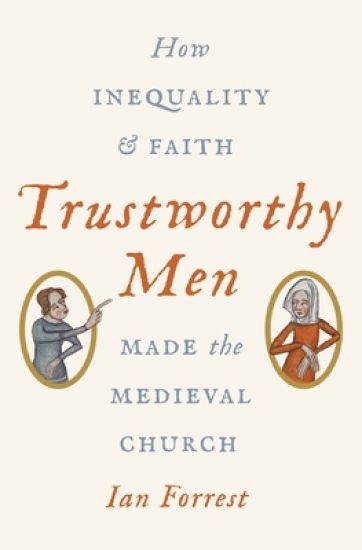
The medieval church was founded on and governed by concepts of faith and trust--but not in the way that is popularly assumed. Offering a radical new interpretation of the institutional church and its social consequences in England, Ian Forrest argues that between 1200 and 1500 the ability of bishops to govern depended on the cooperation of local people known as trustworthy men and shows how the combination of inequality and faith helped make the medieval church.Trustworthy men (in Latin, viri fidedigni) were jurors, informants, and witnesses who represented their parishes when bishops needed local knowledge or reliable collaborators. Their importance in church courts, at inquests, and during visitations grew enormously between the thirteenth and fifteenth centuries. The church had to trust these men, and this trust rested on the complex and deep-rooted cultures of faith that underpinned promises and obligations, personal reputation and identity, and belief in God. But trust also had a dark side. For the church to discriminate between the trustworthy and untrustworthy was not to identify the most honest Christians but to find people whose status ensured their word would not be contradicted. This meant men rather than women, and—usually—the wealthier tenants and property holders in each parish.Trustworthy Men illustrates the ways in which the English church relied on and deepened inequalities within late medieval society, and how trust and faith were manipulated for political ends.
Trustworthy Men

Trustworthy Men

Ian Forrest

Princeton University Press
2020
pokkari
The medieval church was founded on and governed by concepts of faith and trust--but not in the way that is popularly assumed. Offering a radical new interpretation of the institutional church and its social consequences in England, Ian Forrest argues that between 1200 and 1500 the ability of bishops to govern depended on the cooperation of local people known as trustworthy men and shows how the combination of inequality and faith helped make the medieval church.Trustworthy men (in Latin, viri fidedigni) were jurors, informants, and witnesses who represented their parishes when bishops needed local knowledge or reliable collaborators. Their importance in church courts, at inquests, and during visitations grew enormously between the thirteenth and fifteenth centuries. The church had to trust these men, and this trust rested on the complex and deep-rooted cultures of faith that underpinned promises and obligations, personal reputation and identity, and belief in God. But trust also had a dark side. For the church to discriminate between the trustworthy and untrustworthy was not to identify the most honest Christians but to find people whose status ensured their word would not be contradicted. This meant men rather than women, and—usually—the wealthier tenants and property holders in each parish.Trustworthy Men illustrates the ways in which the English church relied on and deepened inequalities within late medieval society, and how trust and faith were manipulated for political ends.
The Visitation of Hereford Diocese in 1397

The Visitation of Hereford Diocese in 1397

Ian Forrest

BOYDELL BREWER LTD
2023
pokkari
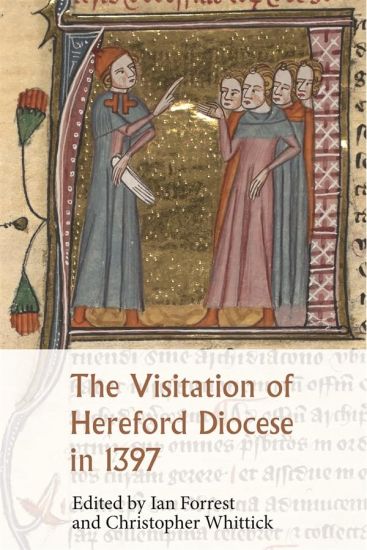
Text with facing English translation provides fascinating insights into medieval religious life. JOINT WINNER: 2023 BRITISH RECORD ASSOCIATION HARLEY PRIZE In 1397 the bishop of Hereford toured his diocese asking questions about its churches and people. The answers he received were written into a slim paper book, which survives in the cathedral archives today. This important medieval document offers unparalleled insight into social life, sexual behaviour, religious belief and practice, and gender relations during a period of religious and political turmoil, revealing how the clergy were disciplined, how English- and Welsh-speakers interacted, and how the congregation experienced worship. It is also a major early source for Welsh naming practices, and a treasure trove of information about local churches and parishes before the Reformation. This volume provides a complete scholarly edition, accompanied by a full facing-page translation, introduction and notes; it will be invaluable for experienced researchers and students alike.
Gender and Authority in the Late Medieval Church

Gender and Authority in the Late Medieval Church

Ian Forrest

CORNELL UNIVERSITY PRESS
2025
sidottu
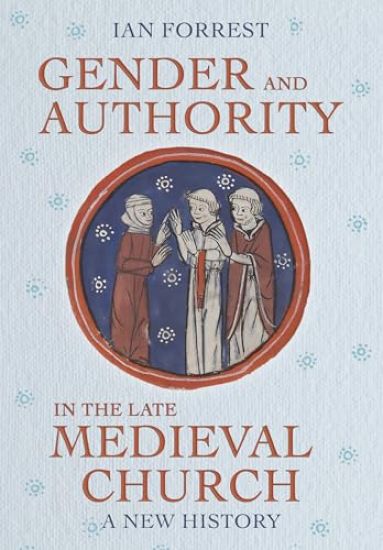
Gender and Authority in the Late Medieval Church asks a deceptively simple question: How did the governance of the medieval institutional church remain exclusively male, despite plentiful evidence of women being as capable and devout as men? The remarkable endurance of an all-male clergy is an important element of medieval church government—one that is frequently taken for granted in the historiography—and is connected to another overlooked feature of episcopal authority: the strategies that bishops used to secure the compliance of a relatively autonomous clergy. As Ian Forrest shows, bishops kept their clergy in check through normative standards of masculinity that necessarily disqualified women from leadership roles. Everywhere in the medieval church were women who had the capacity, the resources, and often the ambition to take part in governance, from abbesses to priests' servants, mothers, sisters, and unofficial wives. Bringing together evidence of female activity at the margins of the institutional church, Forrest argues that the male monopoly on formal power was haunted by female capability and aspiration at every turn. Drawing on case studies from the English diocesan clergy between the mid-thirteenth and early sixteenth centuries, he explores how women's involvement in governance was rendered unthinkable through the very discursive strategies that bishops used to control their male clergy. In doing so, Gender and Authority in the Late Medieval Church tells an integrated history that explains how both the exclusion of women and the inclusion of men underpin a rigidly gendered system of religious governance.