Kirjojen hintavertailu. Mukana 11 342 296 kirjaa ja 12 kauppaa.

Kirjahaku

Etsi kirjoja tekijän nimen, kirjan nimen tai ISBN:n perusteella.

20 kirjaa tekijältä Ian Gordon

Superman

Superman

Ian Gordon

Rutgers University Press
2017
nidottu
After debuting in 1938, Superman soon became an American icon. But why has he maintained his iconic status for nearly 80 years? And how can he still be an American icon when the country itself has undergone so much change?Superman: Persistence of an American Icon examines the many iterations of the character in comic books, comic strips, radio series, movie serials, feature films, television shows, animation, toys, and collectibles over the past eight decades. Demonstrating how Superman’s iconic popularity cannot be attributed to any single creator or text, comics expert Ian Gordon embarks on a deeper consideration of cultural mythmaking as a collective and dynamic process. He also outlines the often contentious relationships between the various parties who have contributed to the Superman mythos, including corporate executives, comics writers, artists, nostalgic commentators, and collectors. Armed with an encyclopedic knowledge of Superman’s appearances in comics and other media, Gordon also digs into comics archives to reveal the prominent role that fans have played in remembering, interpreting, and reimagining Superman’s iconography. Gordon considers how comics, film, and TV producers have taken advantage of fan engagement and nostalgia when selling Superman products. Investigating a character who is equally an icon of American culture, fan culture, and consumer culture, Superman thus offers a provocative analysis of mythmaking in the modern era.
Superman

Superman

Ian Gordon

Rutgers University Press
2017
sidottu
After debuting in 1938, Superman soon became an American icon. But why has he maintained his iconic status for nearly 80 years? And how can he still be an American icon when the country itself has undergone so much change?Superman: Persistence of an American Icon examines the many iterations of the character in comic books, comic strips, radio series, movie serials, feature films, television shows, animation, toys, and collectibles over the past eight decades. Demonstrating how Superman’s iconic popularity cannot be attributed to any single creator or text, comics expert Ian Gordon embarks on a deeper consideration of cultural mythmaking as a collective and dynamic process. He also outlines the often contentious relationships between the various parties who have contributed to the Superman mythos, including corporate executives, comics writers, artists, nostalgic commentators, and collectors. Armed with an encyclopedic knowledge of Superman’s appearances in comics and other media, Gordon also digs into comics archives to reveal the prominent role that fans have played in remembering, interpreting, and reimagining Superman’s iconography. Gordon considers how comics, film, and TV producers have taken advantage of fan engagement and nostalgia when selling Superman products. Investigating a character who is equally an icon of American culture, fan culture, and consumer culture, Superman thus offers a provocative analysis of mythmaking in the modern era.
Controlled Reproduction in Farm Animals Series, Volume 1
This book is the first in a set of four providing a series on controlled reproduction in farm animals. The aim of the series is to provide a general review of the literature dealing with the different ways in which reproduction in the major farm mammals can be controlled and manipulated. The four volumes are effectively an expanded and new edition of a previous work, Controlled Breeding in Farm Animals (Pergamon Press, 1983). However, the literature on this subject has expanded so rapidly since the time of the earlier volume, that it is now thought appropriate to published it in four separate volumes. Buffaloes, goats, deer and camelids have been added to the species covered by the series compared to the previous book. All volumes provide comprehensive reference lists and are fully up-to-date. This first volume focuses on cattle and buffaloes. It will appeal to reproductive physiologists and workers in animal production, animal breeding and veterinary medicine.
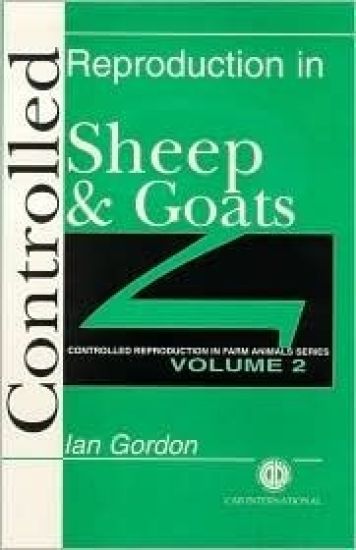
Controlled Reproduction in Farm Animals Series, Volume 2
This book is the second in a set of four providing a series on controlled reproduction in farm animals. The aim of the series is to provide a general review of the literature dealing with the different ways in which reproduction in the major farm mammals can be controlled and manipulated. The four volumes are effectively an expanded and new edition of a previous work, Controlled Breeding in Farm Animals (Pergamon Press, 1983). However, the literature on this subject has expanded so rapidly since the time of the earlier volume, that it is now thought appropriate to publish it in four separate volumes. Buffaloes, goats, deer and camelids have been added to the species covered by the series compared to the previous book. All volumes provide comprehensive reference lists and are fully up-to-date. This second volume focuses on sheep and goats. It will appeal to reproductive physiologists and workers in animal production, animal breeding and veterinary medicine.
Controlled Reproduction in Farm Animals Series, Volume 3
This book is the third in a set of four providing a series on controlled reproduction in farm animals. The aim of the series is to provide a general review of the literature dealing with the different ways in which reproduction in the major farm mammals can be controlled and manipulated. The four volumes are effectively an expanded and new edition of a previous work, Controlled Breeding in Farm Animals (Pergamon Press, 1983). However, the literature on this subject has expanded so rapidly since the time of the earlier volume, that it is now thought appropriate to publish it in four separate volumes. Buffaloes, goats, deer and camelids have been added to the species covered by the series compared to the previous book. All volumes provide comprehensive reference lists and are fully up-to-date. This third volume focuses on pigs. It will appeal to reproductive physiologists and workers in animal production, animal breeding and veterinary medicine.
Controlled Reproduction in Farm Animals Series, Volume 4
This book is the final one in a set of four providing a series on controlled reproduction in farm animals. The aim of the series is to provide a general review of the literature dealing with the different ways in which reproduction in the major farm mammals can be controlled and manipulated. The four volumes are effectively an expanded and new edition of a previous work, Controlled Breeding in Farm Animals (Pergamon Press, 1983). However, the literature on this subject has expanded so rapidly since the time of the earlier volume, that it is now thought appropriate to publish it in four separate volumes. Buffaloes, goats, deer and camelids have been added to the species covered by the series compared to the previous book. All volumes provide comprehensive reference lists and are fully up-to-date. This final volume focuses on horses, deer and camelids (camels, llamas and alpacas). All of these animals are attracting increasing attention for either leisure pursuits, meat or fibre production. The book will appeal to reproductive physiologists and workers in animal production, animal breeding and veterinary medicine.
Laboratory Production of Cattle Embryos
With 3000 new references added since the first edition, this book gives the information necessary to produce embryos totally through in vitro techniques. It shows the commercial applications of embryo and oocyte research. Cattle remain at the forefront of many new developments in reproductive technology and what can be done for the cow today will later be applicable to other farm livestock and perhaps humans. This new edition reviews the considerable advances and issues in embryo production technology, based on reports since the first edition in 1994. This is a must have volume for those who own the first edition, and in itself an incredibly informative text.
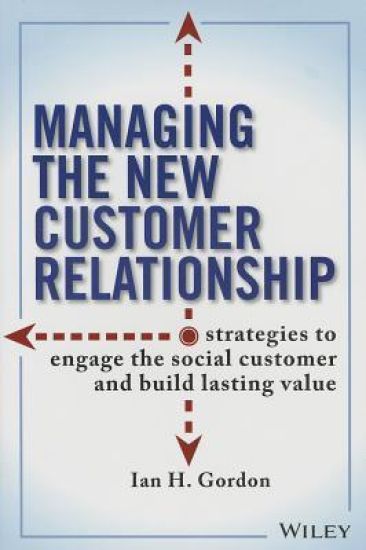
Managing the New Customer Relationship

Managing the New Customer Relationship

Ian Gordon

John Wiley Sons Inc
2013
sidottu
Praise for MANAGING THE NEW CUSTOMER RELATIONSHIP “Gordon delivers an impressive synthesis of the newest methods for engaging customers in relationships that last. No organization today can succeed without the mastery of customer relationship management strategy fundamentals. But to win in the decades ahead, you must also understand and capitalize on the rapidly evolving social computing, mobility and customer analytics technologies described in this book. Checklists, self-assessments and graphical frameworks deliver pragmatic value for the practicing manager.” — William Band, Vice-President, Principal Analyst, Forrester Research Inc., Cambridge, MA “A very comprehensive and practical book on managing relationships with existing customers in the age of social media! I particularly enjoyed reading chapters on teaching customers new behaviors, which were illustrated by excellent case studies.” — Jagdish N. Sheth, Ph.D. , Charles H. Kellstadt Professor of Marketing, Emory University, Atlanta, GA “The strategic breadth and depth of this book is impressive as Gordon explores the new customer and how to plan and manage the new customer relationship. I found his review of strategies, techniques and technologies for social, mobile, mass customization and customer analytics to be particularly insightful. Gordon urges marketers to live and breathe one-through-one marketing and to master social engagement techniques. The checklists, cases and examples make the content grounded and actionable. This is an important, current and detailed book to which every organization should pay close attention to improve customer relationships and create shareholder value.” — Marcus Ruebsam, Vice-President, Line-of-Business Marketing Solutions, SAP AG, Walldorf, Germany “There are many books on CRM, but I recommend this one because Gordon’s book does what others do not. He considers CRM strategy and evolves it to recognize a new customer, one who is always connected, socially available and influential. The book doesn’t just discuss many point solutions for specific marketing challenges; it integrates technology with strategy, people, process and customer analytics to develop relationships continuously. This book is a broad and deep exploration of CRM, providing practical, fact-based perspectives that every company can use to validate and rethink their customer and stakeholder relationships.” — Helmuth Cepeda, Small, Medium and Distribution Director, Microsoft Mexico, Mexico City, Mexico Marketing has changed fundamentally in the last few years and has become an entirely new discipline, one that focuses on a new customer and a new relationship, framed by new principles, strategies, processes, roles and tactics. Individual customers are economically targeted and served, and treated as segments of one rather than members of a target market. Word of mouth and recommendations are vital as customers influence one another more than a company can do within its own advertising or customer dialogs. Today’s customer is always online, accessible and connected. Now marketing is not only direct and customer-specific but a continuous process by which companies seek to engage customers and be progressively more relevant, attractive and valuable. This is the era of a new customer relationship—an individual relationship that is social, mobile and local, influenced by peers and shaped by cognitive, behavioural and social psychological principles. New techniques, processes and technologies transform what it means to implement marketing strategy and achieve improved business results. The new customer relationship requires that even those companies that have embraced customer relationship management ought to reassess their customer management. Now every marketing decision, whether online or in the physical world, whether of a technological nature, whether it affects customer experience, communications, dialogs, teaching or organizational memory, every decision should be seen through a single lens focused on the individual customers who matter most. Managing the New Customer Relationship provides a strategic and practical guide to help companies attract, develop, sustain and build more valuable relationships by: Expanding upon existing customer relationship management theories, concepts and methods to make these considerations more useful, strategic and contemporaryRecognizing the profound importance of social media and how to plan customer engagement in the social context of each customerExploring new technologies that offer new opportunities for engaging customers, including mobile, local, the cloud and customer analyticsDemonstrating how to develop customer-specific understanding, predict what customers will want next, and how to manage each individual customer, andOffering perspectives to help the organization endure by focusing a chain of relationships on the end customer and creating meaning for stakeholders that can make relationships more intense and robust. Managing the New Customer Relationship is for organizations of all sizes in all industries, for private- and public-sector organizations and not-for-profits. In short, every organization can apply the new principles, strategies, techniques and technologies discussed here to recognize important marketplace changes, plan to improve relationship and financial results and capture new shareholder value from new customer relationships.
Kid Comic Strips

Kid Comic Strips

Ian Gordon

Palgrave Pivot
2016
sidottu
This book looks at the humor that artists and editors believed would have appeal in four different countries. Ian Gordon explains how similar humor played out in comic strips across different cultures and humor styles. By examining Skippy and Ginger Meggs, the book shows a good deal of similarities between American and Australian humor while establishing some distinct differences. In examining the French translation of Perry Winkle, the book explores questions of language and culture. By shifting focus to a later period and looking at the American and British comics entitled Dennis the Menace, two very different comics bearing the same name, Kid Comic Strips details both differences in culture and traditions and the importance of the type of reader imagined by the artist.
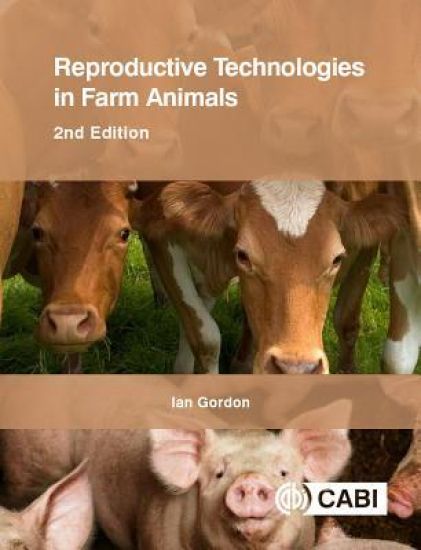
Reproductive Technologies in Farm Animals
Building on the successful structure of the first edition, the second edition of Reproductive Technologies in Farm Animals has been totally updated and revised to provide an up to date account of the key techniques employed in manipulating reproduction in farm animals, including beef and dairy cattle, pigs, sheep, goats, buffaloes, camelids, horses and poultry. A classic introductory text to the subject, the book is based on a comprehensive review of the current literature. It: - outlines different agricultural systems and explores the ethical implications of modern farming methods; - details the many new developments, including the commercial application of sexed semen and large-scale application of in vitro produced cattle embryos; - provides a valuable synopsis of current and future reproductive technologies, such as cloning and the production of transgenic animals. This text remains key reading for students in animal science, agriculture, veterinary medicine and biology, and veterinary practitioners and farmers who wish to keep updated on developments in techniques that may be useful in their daily practice.