Kirjojen hintavertailu. Mukana 11 627 220 kirjaa ja 12 kauppaa.

Kirjahaku

Etsi kirjoja tekijän nimen, kirjan nimen tai ISBN:n perusteella.

43 kirjaa tekijältä Ian Graham

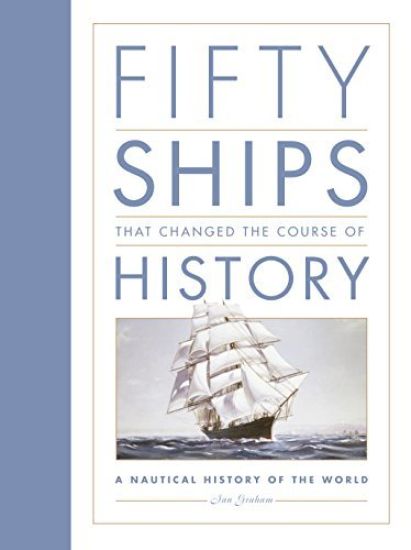
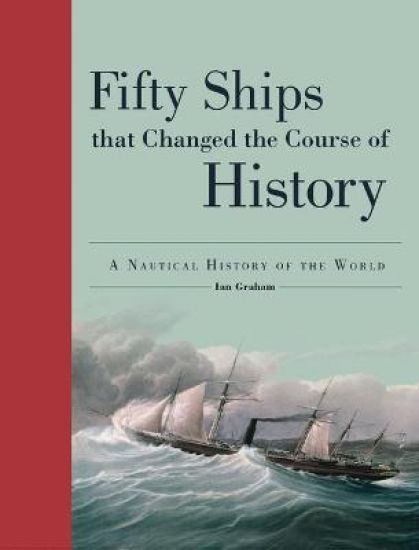
Fifty Ships That Changed the Course of History: A Nautical History of the World
"This is a beautiful book, replete with illustrations, photos, diagrams, and maps. The text balances technicality with storytelling, scholarly analysis with entertainment. It's a sweeping, fascinating look at barges, battleships, caravels, dhows, submarines, and more, placing them all in context with the battles, countries, discoveries, inventions, and people that surrounded them. Readers interested in history of any kind will enjoy this highly accessible book." -- Publishers Weekly From an ancient funeral ship to the Rainbow Warrior -- war, trade, science and pleasure on the open seas. Fifty Ships that Changed the Course of History is a beautiful guide to 50 water vessels that played a key role in world history and had a great impact on human civilization. The book presents the ships chronologically, beginning with Pharaoh Khufu's solar barge from about 2566 BCE. The chapter includes a photograph of the reconstructed ship, discovered in 1954 near the Great Pyramid. Religious beliefs held that in the afterlife the pharaoh would need a ship to sail the cosmic waters of the sky with the sun god, Ra. The book closes with another sun-seeking ship 4,000 years later. The epitome of an ocean cruise ship, the MS Allure of the Seas is the biggest passenger ship ever built. An Oasis-class cruise ship, it is a destination in itself, complete with a Central Park-like oasis, 18 decks, 5,492 passengers, and a crew of 2,384. Between these landmark vessels is a variety of ships used for all of mankind's needs, from hunters searching for food, traders with goods to barter and warriors bent on conquest, to explorers longing to see what lay beyond the horizon. Over time, the first small primitive watercraft evolved into bigger seagoing vessels, shaping our history, culture and civilization along the way. This attractive reference provides an innovative perspective on maritime and world history. It is an excellent selection for all collections.
The Path of the Hawk

The Path of the Hawk

Ian Graham

Orbit
2016
pokkari
The Hawks are the Pilgrim Church's elite regiment, soldiers entrusted with missions far beyond the scope of the conventional army. Blessed Master Helligraine - one of the Church's highest ranking, most beloved holy men - was abducted one year ago, his corpse found rotting in a river. When evidence emerges that Helligraine is still alive and being held against his will, three Hawks are dispatched to bring him home. But Helligraine's past - and present - is not what it seems, and two nations are drawn into a conflict whose seeds were sown millennia ago.
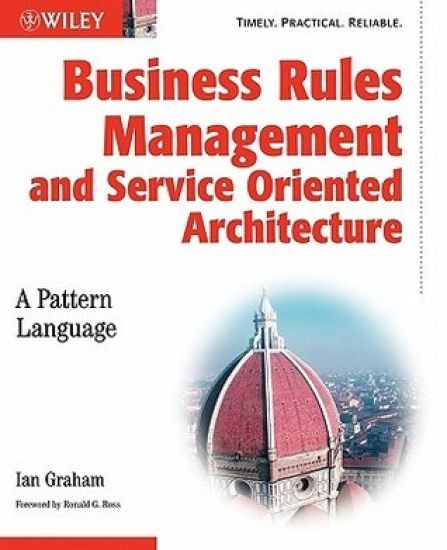
Business Rules Management and Service Oriented Architecture
Business rules management system (BRMS) is a software tools that work alongside enterprise IT applications. It enables enterprises to automate decision-making processes typically consisting of separate business rules authoring and rules execution applications. This proposed title brings together the following key ideas in modern enterprise system development best practice. The need for service-oriented architecture (SOA).How the former depends on component-based development (CBD).Database-centred approaches to business rules (inc. GUIDES).Knowledge-based approaches to business rules.Using patterns to design and develop business rules management systems Ian Graham is an industry consultant with over 20 years. He is recognized internationally as an authority on business modelling, object-oriented software development methods and expert systems. He has a significant public presence, being associated with both UK and international professional organizations, and is frequently quoted in the IT and financial press.
Fifty Ships that Changed the Course of History

Fifty Ships that Changed the Course of History

Ian Graham

The History Press Ltd
2016
sidottu
From the Stone Age to the present day, no technology has had a more profound impact on mankind than watercraft. Boats and ships made possible the settlement and conquest of new worlds. They determined the victors of history-changing wars and aided the spread of new philosophies, technologies and religions. Even today, virtually everything we purchase and consume depends on seaborne trade. 'Ships that Changed History' is more than just a delight for lovers of the sea – it’s a virtual history of the world told through the boats and ships that influenced how and where people lived, the ideas they exchanged and how they won and lost the battles that set the course of later generations and millennia. Beautifully illustrated with art and photographs, it is a guide to how men and women went to sea in every age and place.
Alfred Maudslay and the Maya

Alfred Maudslay and the Maya

Ian Graham

University of Oklahoma Press
2002
sidottu
In this fascinating biography, the first ever published about Alfred Maudslay (1850-1931), Ian Graham describes this extraordinary Englishman and his pioneering investigations of the ancient Maya ruins.Maudslay, the grandson of a famous English inventor and engineer, spent his formative adult years in the South Seas as a junior official in Great Britain's Colonial Office. Despite his exotic experiences, he did not find his true vocation until the age of thirty-one, when he arrived in Guatemala.Maudslay played a crucial role in exploring and documenting the monuments and architecture of the ancient Maya ruins at Palengue Copán, Chichén Itzá, and other sites previously unknown. His photographs and plaster casts have proven to be invaluable in the deciphering of Maya hieroglyphics. Personal resources allowed him to undertake fieldwork at a time when no institution provided such support. He made plaster casts of large stone monuments, accurate maps of sites, and painstaking recordings of inscriptions. His Biologia Centrali-Americana, a multivolume compendium of photographs, drawings, plans, and text published almost a century ago, remains an essential foundation for Maya studies. Perhaps Maudslay's greatest legacy is magnificent collection of glass-negative photographs, many of which are reproduced in this book.
Alfred Maudslay and the Maya

Alfred Maudslay and the Maya

Ian Graham

University of Oklahoma Press
2020
nidottu
In this fascinating biography, the first ever published about Alfred Maudslay (1850-1931), Ian Graham describes this extraordinary Englishman and his pioneering investigations of the ancient Maya ruins.Maudslay, the grandson of a famous English inventor and engineer, spent his formative adult years in the South Seas as a junior official in Great Britain's Colonial Office. Despite his exotic experiences, he did not find his true vocation until the age of thirty-one, when he arrived in Guatemala.Maudslay played a crucial role in exploring and documenting the monuments and architecture of the ancient Maya ruins at Palengue CopÁn, ChichÉn ItzÁ, and other sites previously unknown. His photographs and plaster casts have proven to be invaluable in the deciphering of Maya hieroglyphics. Personal resources allowed him to undertake fieldwork at a time when no institution provided such support. He made plaster casts of large stone monuments, accurate maps of sites, and painstaking recordings of inscriptions. His Biologia Centrali-Americana, a multivolume compendium of photographs, drawings, plans, and text published almost a century ago, remains an essential foundation for Maya studies. Perhaps Maudslay's greatest legacy is magnificent collection of glass-negative photographs, many of which are reproduced in this book.
The Road to Ruins

The Road to Ruins

Ian Graham

University of New Mexico Press
2012
nidottu
For anyone who ever wanted to be an archaeologist, Ian Graham could be a hero. This lively memoir chronicles Graham's career as the ""last explorer"" and a fierce advocate for the protection and preservation of Maya sites and monuments across Mexico, Guatemala, and Belize. It is also full of adventure and high society, for the self-deprecating Graham traveled to remote lands such as Afghanistan in wonderful company. He tells entertaining stories about his encounters with a host of notables beginning with Rudyard Kipling, a family friend from Graham's childhood.Born in 1923 into an aristocratic family descended from Oliver Cromwell, Ian Graham was educated at Winchester, Cambridge, and Trinity College, Dublin. His career in Mesoamerican archaeology can be said to have begun in 1959 when he turned south in his Rolls Royce and began traveling through the Maya lowlands photographing ruins. He has worked as an artist, cartographer, and photographer, and has mapped and documented inscriptions at hundreds of Maya sites, persevering under rugged field conditions. Graham is best known as the founding director of the Corpus of Maya Hieroglyphic Inscriptions Program at the Peabody Museum of Archaeology and Ethnology, Harvard University. He was awarded a MacArthur Foundation ""genius grant"" in 1981, and he remained the Maya Corpus program director until his retirement in 2004.Graham's careful recordings of Maya inscriptions are often credited with making the deciphering of Maya hieroglyphics possible. But it is the romance of his work and the graceful conversational style of his writing that make this autobiography must reading not just for Mayanists but for anyone with a taste for the adventure of archaeology.
Volume 9

Volume 9

Ian Graham

Peabody Museum of Archaeology Ethnology,U.S.
2006
nidottu
This is the fourth of five anticipated volumes on the Classic Maya monuments of Tonina, which lies east of the town of Ocosingo in Chiapas, Mexico. The volume describes and illustrates thirty-six sequentially numbered sculptures, representing most of the remaining unpublished and largely intact sculptures at the site.
Corpus of Maya Hieroglyphic Inscriptions, Volume 1: Introduction

Corpus of Maya Hieroglyphic Inscriptions, Volume 1: Introduction

Ian Graham

Peabody Museum of Archaeology Ethnology,U.S.
1985
nidottu
For more than 25 years the Peabody Museum has been publishing "The Corpus of Maya Hieroglyphic Inscriptions" under the editorial and artistic direction of Mayanist Ian Graham. The goal of this unique series of folio volumes is to document in photographs and detailed line drawings all known Maya inscriptions and their associated figurative art. When complete, the "Corpus" will have published the inscriptions from over 200 sites and 2,000 monuments. The series has been instrumental in the remarkable success of the ongoing process of deciphering Maya writing, making available hundreds of texts to epigraphers working around the world. Each volume in the series consists of three fascicles, which examine an individual site or group of neighboring sites and include maps of site location and plans indicating the placement monuments within each site. Each inscription is reproduced in its entirety in both photographs and line drawings. The text of each volume presents descriptive information about the sites and monuments and their associated artifacts. Volume I includes a Spanish translation of the Introduction text and six appendices: sources of sculpture and their codes; list of abbreviations and symbols used in the "Corpus" series; table of "tun"-endings between 8.1.15.0.0 and 10.9.3.0.0; a complete Calendar Round in tabular form, giving the position of "tun"-endings between 8.1.15.0.0 and 10.9.3.0.0; a method for the quick computation of Calendar Round position, by John S. Justeson; and Moon Age tables, by Lawrence Roys.
Volume 2

Volume 2

Ian Graham

Peabody Museum of Archaeology Ethnology,U.S.
1980
nidottu
The goal of the Corpus of Maya Hieroglyphic Inscriptions is to document in photographs and detailed line drawings all known Maya inscriptions and their associated figurative art. When complete, the Corpus will have published the inscriptions from over 200 sites and 2,000 monuments. The series has been instrumental in the remarkable success of the ongoing process of deciphering Maya writing, making available hundreds of texts to epigraphers working around the world.Volume 2, Part 3 also includes the site Yaltutu.
Volume 3

Volume 3

Ian Graham

Peabody Museum of Archaeology Ethnology,U.S.
1979
nidottu
The goal of the Corpus of Maya Hieroglyphic Inscriptions is to document in photographs and detailed line drawings all known Maya inscriptions and their associated figurative art. When complete, the Corpus will have published the inscriptions from over 200 sites and 2,000 monuments. The series has been instrumental in the remarkable success of the ongoing process of deciphering Maya writing, making available hundreds of texts to epigraphers working around the world.
Volume 5

Volume 5

Ian Graham

Peabody Museum of Archaeology Ethnology,U.S.
1987
nidottu
The goal of the Corpus of Maya Hieroglyphic Inscriptions is to document in photographs and detailed line drawings all known Maya inscriptions and their associated figurative art. When complete, the Corpus will have published the inscriptions from over 200 sites and 2,000 monuments. The series has been instrumental in the remarkable success of the ongoing process of deciphering Maya writing, making available hundreds of texts to epigraphers working around the world.
Volume 4

Volume 4

Ian Graham

Peabody Museum of Archaeology Ethnology,U.S.
1993
nidottu
The goal of the Corpus of Maya Hieroglyphic Inscriptions is to document in photographs and detailed line drawings all known Maya inscriptions and their associated figurative art. When complete, the Corpus will have published the inscriptions from over 200 sites and 2,000 monuments. The series has been instrumental in the remarkable success of the ongoing process of deciphering Maya writing, making available hundreds of texts to epigraphers working around the world.
Volume 7

Volume 7

Ian Graham

Peabody Museum of Archaeology Ethnology,U.S.
1996
nidottu
For more than 25 years the Peabody Museum has been publishing "The Corpus of Maya Hieroglyphic Inscriptions" under the editorial and artistic direction of Mayanist Ian Graham. The goal of this unique series of folio volumes is to document in photographs and detailed line drawings all known Maya inscriptions and their associated figurative art. When complete, the "Corpus" will have published the inscriptions from over 200 sites and 2,000 monuments. The series has been instrumental in the remarkable success of the ongoing process of deciphering Maya writing, making available hundreds of texts to epigraphers working around the world.Each volume in the series consists of three fascicles, which examine an individual site or group of neighboring sites and include maps of site location and plans indicating the placement monuments within each site. Each inscription is reproduced in its entirety in both photographs and line drawings. The text of each volume presents descriptive information about the sites and monuments and their associated artifacts.
From Crude Oil to Fast Food

From Crude Oil to Fast Food

Ian Graham

Capstone Global Library Ltd
2016
pokkari
This book shows how the energy in crude oil is used to make a fast food snack. It explains how crude oil was formed, how it is obtained and how it is used in the food industry, the science behind cooking and the effects of heat on food, the processes of packaging and preserving food, and finally how fast food is prepared.