Kirjojen hintavertailu. Mukana 11 342 296 kirjaa ja 12 kauppaa.

Kirjahaku

Etsi kirjoja tekijän nimen, kirjan nimen tai ISBN:n perusteella.

15 kirjaa tekijältä Ian James

Paul Virilio

Paul Virilio

Ian James

Routledge
2007
sidottu
Paul Virilio is a challenging and original thinker whose work on technology, state power and war is increasingly relevant today. Exploring Virilio's main texts from their political and historical contexts, and case studies from contemporary culture and media in order to explain his philosophical concepts, Ian James introduces the key themes in Virlio's work, including:speedvirtualizationwarpoliticsart.As technological and scientific innovations continue to set the agenda for the present and future development of culture, communications, international economy, military intervention and diverse forms of political organization, Virilio's unique theoretical and critical insights are of enormous value and importance for anyone wishing to understand the nature of modern culture and society.
Paul Virilio

Paul Virilio

Ian James

Routledge
2007
nidottu
Paul Virilio is a challenging and original thinker whose work on technology, state power and war is increasingly relevant today. Exploring Virilio's main texts from their political and historical contexts, and case studies from contemporary culture and media in order to explain his philosophical concepts, Ian James introduces the key themes in Virlio's work, including:speedvirtualizationwarpoliticsart.As technological and scientific innovations continue to set the agenda for the present and future development of culture, communications, international economy, military intervention and diverse forms of political organization, Virilio's unique theoretical and critical insights are of enormous value and importance for anyone wishing to understand the nature of modern culture and society.

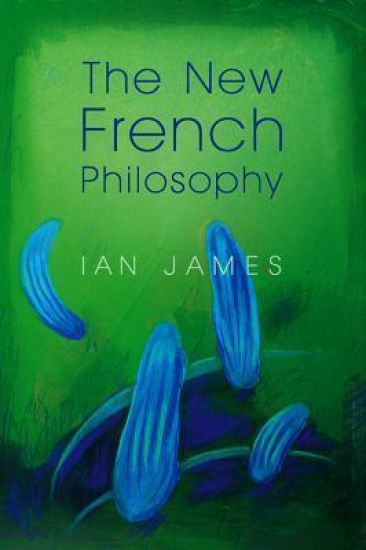
The New French Philosophy

The New French Philosophy

Ian James

Polity Press
2012
sidottu
This book gives a critical assessment of key developments in contemporary French philosophy, highlighting the diverse ways in which recent French thought has moved beyond the philosophical positions and arguments which have been widely associated with the terms 'post-structuralism' and 'postmodernism'. These developments are assessed through a close comparative reading of the work of seven contemporary thinkers: Jean-Luc Marion, Jean-Luc Nancy, Bernard Stiegler, Catherine Malabou, Jacques Rancière, Alain Badiou and François Laruelle. The book situates the writing of each philosopher in relation to earlier traditions of French thought. In differing ways, these philosophers decisively distance themselves from the linguistic paradigm which dominated so much twentieth-century thought in order to rethink philosophical conceptions of materiality, worldliness, shared embodied existence and human agency or subjectivity. They thereby open the way for a radical renewal of the claims, possibilities and transformative power of philosophical thinking itself. This book will be an indispensable text for students of philosophy and for anyone interested in current developments in philosophy and social thought.
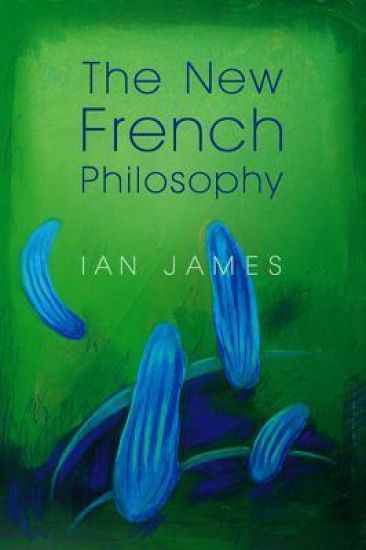
The New French Philosophy

The New French Philosophy

Ian James

Polity Press
2012
nidottu
This book gives a critical assessment of key developments in contemporary French philosophy, highlighting the diverse ways in which recent French thought has moved beyond the philosophical positions and arguments which have been widely associated with the terms 'post-structuralism' and 'postmodernism'. These developments are assessed through a close comparative reading of the work of seven contemporary thinkers: Jean-Luc Marion, Jean-Luc Nancy, Bernard Stiegler, Catherine Malabou, Jacques Rancière, Alain Badiou and François Laruelle. The book situates the writing of each philosopher in relation to earlier traditions of French thought. In differing ways, these philosophers decisively distance themselves from the linguistic paradigm which dominated so much twentieth-century thought in order to rethink philosophical conceptions of materiality, worldliness, shared embodied existence and human agency or subjectivity. They thereby open the way for a radical renewal of the claims, possibilities and transformative power of philosophical thinking itself. This book will be an indispensable text for students of philosophy and for anyone interested in current developments in philosophy and social thought.
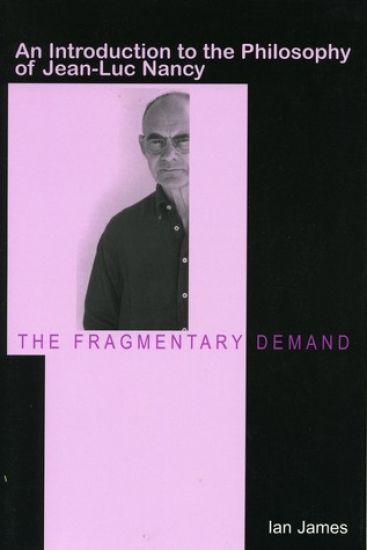
The Fragmentary Demand

The Fragmentary Demand

Ian James

Stanford University Press
2005
sidottu
This introduction to the philosophy of Jean-Luc Nancy gives an overview of his philosophical thought to date and situates it within the broader context of contemporary French and European thinking. The book examines Nancy's philosophy in relation to five specific areas: his account of subjectivity; his understanding of space and spatiality; his thinking about the body and embodiment; his political thought; and his contribution to contemporary aesthetics. In each case it shows the way in which Nancy develops or moves beyond some of the key concerns associated with phenomenology, post-structuralism, and what could broadly be termed the "post-modern."
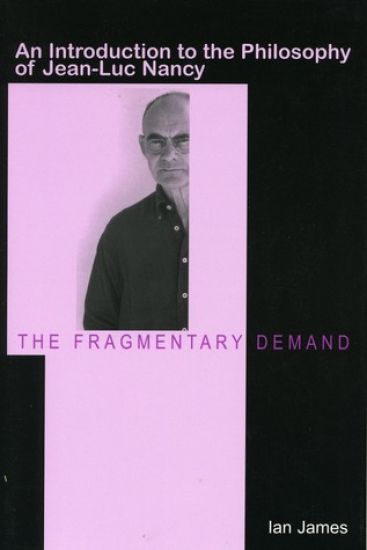
The Fragmentary Demand

The Fragmentary Demand

Ian James

Stanford University Press
2005
pokkari
This introduction to the philosophy of Jean-Luc Nancy gives an overview of his philosophical thought to date and situates it within the broader context of contemporary French and European thinking. The book examines Nancy's philosophy in relation to five specific areas: his account of subjectivity; his understanding of space and spatiality; his thinking about the body and embodiment; his political thought; and his contribution to contemporary aesthetics. In each case it shows the way in which Nancy develops or moves beyond some of the key concerns associated with phenomenology, post-structuralism, and what could broadly be termed the "post-modern."
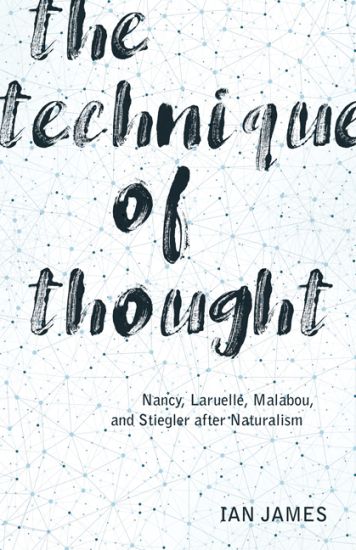
The Technique of Thought

The Technique of Thought

Ian James

University of Minnesota Press
2019
sidottu
Interrogating the work of four contemporary French philosophers to rethink philosophy’s relationship to science and science’s relationship to realityThe Technique of Thought explores the relationship between philosophy and science as articulated in the work of four contemporary French thinkers-Jean-Luc Nancy, FranÇois Laruelle, Catherine Malabou, and Bernard Stiegler. Situating their writings within both contemporary scientific debates and the philosophy of science, Ian James elaborates a philosophical naturalism that is notably distinct from the Anglo-American tradition. The naturalism James proposes also diverges decisively from the ways in which continental philosophy has previously engaged with the sciences. He explores the technical procedures and discursive methods used by each of the four thinkers as distinct “techniques of thought” that approach scientific understanding and knowledge experimentally. Moving beyond debates about the constructed nature of scientific knowledge, The Technique of Thought argues for a strong, variably configured, and entirely novel scientific realism. By bringing together post-phenomenological perspectives concerning individual or collective consciousness and first-person qualitative experience with science’s focus on objective and third-person quantitative knowledge, James tracks the emergence of a new image of the sciences and of scientific practice. Stripped of aspirations toward total mastery of the universe or a “grand theory of everything,” this renewed scientific worldview, along with the simultaneous reconfiguration of philosophy’s relationship to science, opens up new ways of interrogating immanent reality.
The Technique of Thought

The Technique of Thought

Ian James

University of Minnesota Press
2019
nidottu
Interrogating the work of four contemporary French philosophers to rethink philosophy’s relationship to science and science’s relationship to realityThe Technique of Thought explores the relationship between philosophy and science as articulated in the work of four contemporary French thinkers-Jean-Luc Nancy, FranÇois Laruelle, Catherine Malabou, and Bernard Stiegler. Situating their writings within both contemporary scientific debates and the philosophy of science, Ian James elaborates a philosophical naturalism that is notably distinct from the Anglo-American tradition. The naturalism James proposes also diverges decisively from the ways in which continental philosophy has previously engaged with the sciences. He explores the technical procedures and discursive methods used by each of the four thinkers as distinct “techniques of thought” that approach scientific understanding and knowledge experimentally. Moving beyond debates about the constructed nature of scientific knowledge, The Technique of Thought argues for a strong, variably configured, and entirely novel scientific realism. By bringing together post-phenomenological perspectives concerning individual or collective consciousness and first-person qualitative experience with science’s focus on objective and third-person quantitative knowledge, James tracks the emergence of a new image of the sciences and of scientific practice. Stripped of aspirations toward total mastery of the universe or a “grand theory of everything,” this renewed scientific worldview, along with the simultaneous reconfiguration of philosophy’s relationship to science, opens up new ways of interrogating immanent reality.
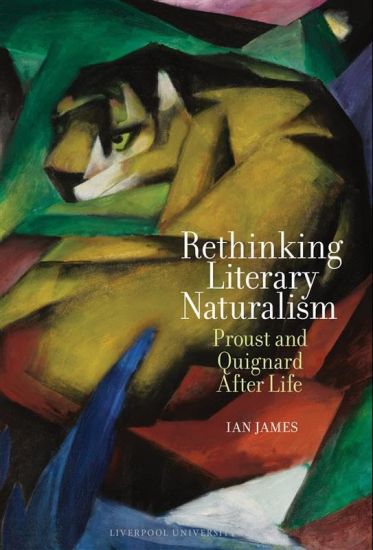
Rethinking Literary Naturalism

Rethinking Literary Naturalism

Ian James

LIVERPOOL UNIVERSITY PRESS
2025
sidottu
This book gives original readings of Proust and Quignard to elaborate a novel theory of literary naturalism. Drawing on contemporary biological perspectives, the book argues that, despite their opposition to traditional naturalism, both understand human experience, meaning-making, and creativity as being immanent to, and as emerging from, shared biological life. Rethinking Literary Naturalism reads contemporary biosemiotic theory, Proust, and Quignard alongside each other in the context of a shared genealogy that leads back into nineteenth-century philosophical and literary visions of natural life that are inherited from German Romanticism and Idealism. Here biological theory and forms of literary practice are recast as distinct techniques of thought that aim to situate themselves in relation to biological life. Each in its own way is shown to adopt an interpretative posture that ‘steps back’ into the immanence of sense and meaning that is constitutive of qualitatively lived existence. Each produces a different kind of knowledge (scientific, literary, literary-philosophical) of shared biological life that can be understood as distinctive variations of a saying ‘after life’. The novel literary naturalism that is rethought here can be understood as ‘post-dicative’ and as being entirely distinct from that of Émile Zola, Maupassant, or the Goncourt brothers.