Kirjojen hintavertailu. Mukana 11 342 296 kirjaa ja 12 kauppaa.

Kirjahaku

Etsi kirjoja tekijän nimen, kirjan nimen tai ISBN:n perusteella.

26 kirjaa tekijältä Ian Knight

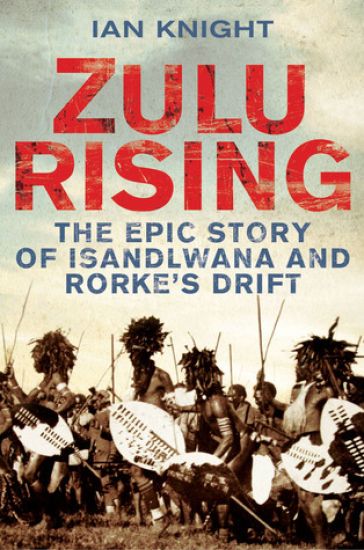
Zulu Rising

Zulu Rising

Ian Knight

Pan Books
2011
pokkari
'A definitive account of one of the most dramatic encounters in the whole history of Empire . . . [a] tour de force' The Daily Mail'Ian Knight manages to expose many of the Victorian myths while still capturing the kind of epic excitement that makes Zulu so stirring. It is a first class work of military history, not least for its evocative and extensive use of Zulu sources' Sunday TimesThe battle of iSandlwana was the single most destructive incident in the 150-year history of the British colonisation of South Africa. In one bloody day over 800 British troops, 500 of their allies and at least 2000 Zulus were killed in a staggering defeat for the British empire. The consequences of the battle echoed brutally across the following decades as Britain took ruthless revenge on the Zulu people.In Zulu Rising Ian Knight shows that the brutality of the battle was the result of an inevitable clash between two aggressive warrior traditions. He gives full weight to the Zulu experience and explores the reality of the fighting through the eyes of men who took part on both sides, looking into the human heart of this savage conflict. Based on new research, including previously unpublished material, Zulu oral history, and new archaeological evidence from the battlefield, this is the definitive account of a battle that has shaped the political fortunes of the Zulu people to this day.'This new history by Ian Knight is thorough and definitive. Knight uses first-hand sources, both Zulu and British, with admirable even-handedness, to examine the bloody clash between two different warrior traditions' Sunday Telegraph
The Zulus

The Zulus

Ian Knight

Osprey Publishing
1989
nidottu
'A very remarkable people, the Zulu', the British Prime Minister, Benjamin Disraeli, said on hearing of a fresh disaster in the war of 1879, 'They defeat our generals; they convert our bishops; they have settled the fate of a great European dynasty'. Remarkable indeed, to have taken on the full might of the British Empire at its height, and won, if not the war, at least some of the battles. This book explains who the Zulus were, and how they achieved the fame as warriors which they enjoy to this day.
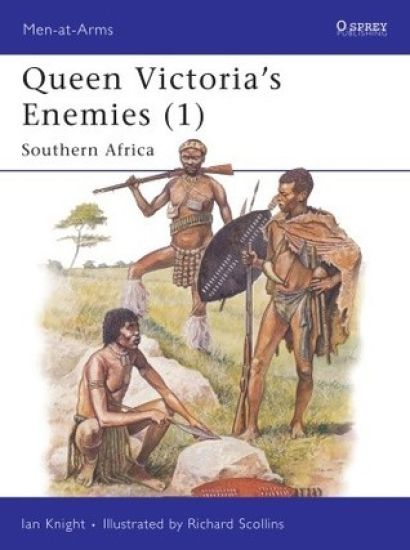
Queen Victoria's Enemies (1)

Queen Victoria's Enemies (1)

Ian Knight

Osprey Publishing
1989
nidottu
When Queen Victoria acceded to the British throne in 1837, British troops had recently concluded a war in southern Africa against the Xhosa people, and the seeds were already sown for a clash with the Boers. When she died in January 1901 Britain was fighting the Boers in one of the longest and costliest of the imperial colonial wars. This book details the history of Britain's numerous conflicts with the people of southern Africa, namely the Xhosa, Basotho, Tswana and Boers. Numerous illustrations, including rare photographs and colour plates, detail the dress, weaponry and organization of Victoria's enemies in the late 19th century.
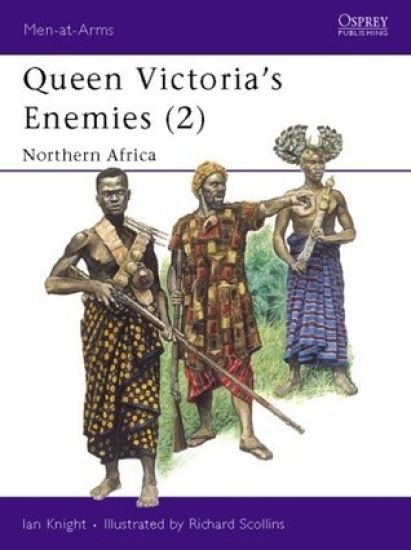
Queen Victoria's Enemies (2)

Queen Victoria's Enemies (2)

Ian Knight

Osprey Publishing
1989
nidottu
The British Army in Queen Victoria's reign fought a series of regional campaigns against various African groups with complex military traditions well-suited to their environment. In many instances, the outcome of the ensuing fighting was by no means one-sided. This book focuses on the large-scale wars in northern Africa in which British regular troops were engaged throughout the 19th century, including those in Abyssinia, Asante, Egypt and the Sudan. Containing a number of rare contemporary photographs and eight colour plates, the book charts the history of these campaigns and describes the African groups against which they were waged.
Queen Victoria's Enemies (3)

Queen Victoria's Enemies (3)

Ian Knight

Osprey Publishing
1990
nidottu
By the time Queen Victoria came to the throne, India – some 1,600,000 square miles, ranging from soaring mountains to deserts and jungle swamps, populated by 400,000,000 people with a kaleidoscope of different cultures and religions – was firmly in the grip of a handful of British East India Company administrators, either ruling directly or through Indian nominees. However, the Company's search for a policy in western India embroiled it in a string of military campaigns, including one of the worst disasters ever to befall a British army. Ian Knight's fascinating text examines the absorbing, dramatic and brutal history of the Company's exploits against Victoria's Indian enemies.
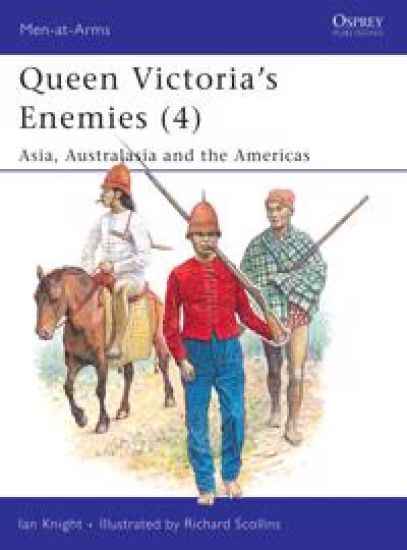
Queen Victoria's Enemies (4)

Queen Victoria's Enemies (4)

Ian Knight

Osprey Publishing
1990
nidottu
Due to the spread of British strategic and commercial interests during the Victorian period, the British military was called upon to serve in theatres across the world. Some of the fighting was severe; it took nearly 30 years of intermittent warfare to suppress Maori opposition to settler expansion in New Zealand. In other areas it amounted to little more than skirmishing, as in Brooke's campaign against the pirates of Borneo and the Jamaican revolt of 1865. This book details these various 'small wars' and examines the qualities of the disparate peoples who opposed the spread of the British Empire.
Boer Guerrilla vs British Mounted Soldier

Boer Guerrilla vs British Mounted Soldier

Ian Knight

Osprey Publishing
2017
nidottu
Waged across an inhospitable terrain which varied from open African savannah to broken mountain country and arid semi-desert, the Anglo-Boer wars of 1880–81 and 1899–1902 pitted the British Army and its allies against the Boers’ commandos.The nature of warfare across these campaigns was shaped by the realities of the terrain and by Boer fighting techniques. Independent and individualistic, the Boers were not professional soldiers but a civilian militia who were bound by the terms of the ‘Commando system’ to come together to protect their community against an outside threat. By contrast the British Army was a full-time professional body with an established military ethos, but its over-dependence on conventional infantry tactics led to a string of Boer victories. This fully illustrated study examines the evolving nature of Boer military techniques, and contrasts them with the British experience, charting the development of effective British mounted tactics from the first faltering steps of 1881 through to the final successes of 1902.
Australian Bushrangers 1788–1880

Australian Bushrangers 1788–1880

Ian Knight

Osprey Publishing
2019
nidottu
The first 'bushrangers' or frontier outlaws were escaped or time-expired convicts, who took to the wilderness – 'the bush' – in New South Wales and on the island of Tasmania. Initially, the only Crown forces available were redcoats from the small, scattered garrisons, but by 1825 the problem of outlawry led to the formation of the first Mounted Police from these soldiers. The gold strikes of the 1860s attracted a new group of men who preferred to get rich by the gun rather than the shovel. The roads, and later railways, that linked the mines with the cities offered many tempting targets and were preyed upon by the bushrangers. This 1860s generation boasted many famous outlaws who passed into legend for their boldness. The last outbreak came in Victoria in 1880, when the notorious Kelly Gang staged several hold-ups and deliberately ambushed the pursuing police. Their last stand at Glenrowan has become a legendary episode in Australian history. Fully illustrated with some rare period photographs, this is the fascinating story of Australia’s most infamous outlaws and the men tasked with tracking them down.
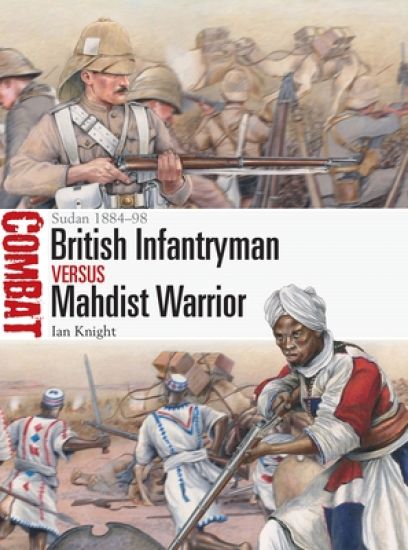
British Infantryman vs Mahdist Warrior

British Infantryman vs Mahdist Warrior

Ian Knight

Osprey Publishing
2021
nidottu
In the early 1880s, Britain intervened in independent Egypt and seized control of the Suez Canal. British forces were soon deployed to Egypt’s southern colony, the Sudan, where they confronted a determined and capable foe amid some of the world’s most inhospitable terrain. In 1881 an Islamic fundamentalist revolt had broken out in the Sudan, led by a religious teacher named Muhammad Ahmad bin Abd Allah, who proclaimed himself al-Mahdi, ‘The Guided One’. In 1884, Mahdist forces besieged the Sudanese capital of Khartoum; Colonel Charles Gordon was sent to the city with orders to evacuate British personnel, but refused to leave. Although the British despatched a relief column to rescue Gordon, the Mahdists stormed Khartoum in January 1885 and he was killed. British troops abandoned much of the Sudan, but renewed their efforts to reconquer it in the late 1890s, in a bloody campaign that would decide the region’s fate for generations. Written by leading expert Ian Knight, this fully illustrated study examines the evolving forces, weapons and tactics employed by both sides in the Sudan, notably at the battles of Abu Klea (16–18 January 1885), Tofrek (22 March 1885) and Atbara (8 April 1898).
Blood River 1838

Blood River 1838

Ian Knight

BLOOMSBURY PUBLISHING PLC
2024
nidottu
A myth-shattering study of the first clash between the Zulu kingdom and European interlopers and its dramatic effects on Boer and Zulu alike. By the 1830s, the Zulu kingdom was consolidating its power as the strongest African polity in the south-east, but was under growing pressure from British traders and hunters on the coast, and descendants of the early Dutch settlers at the Cape – the Boers. In 1837, the vanguard of the Boers' Great Trek migration reached the borders of Zulu territory, causing alarm. When the Boer leader Piet Retief and his followers were massacred in cold blood, war broke out. Although the initial Boer counter-attacks were defeated by the Zulus, in December 1838 a new Trekker offensive resulted in a nation-defining clash between Boer and Zulu at the battle of Blood River. In this ground-breaking and carefully balanced new work, containing stunning artwork and detailed maps, Ian Knight explores what has long been a controversial and partisan topic in South African history, placing the Zulus more squarely in this part of their history. Among the topics covered are the 1836 Boer/Ndebele conflict, the imbalance in technique and weaponry, the reasons why the British settlers allied themselves with the Boer Trekkers, and why the war was a key turning point in the use of traditional Zulu military techniques. This work also reveals that a Boer victory at Blood River was by no means a foregone conclusion.
Companion to the Anglo-Zulu War

Companion to the Anglo-Zulu War

Ian Knight

Pen Sword Military
2021
nidottu
The Anglo-Zulu War was a defining episode in British imperial history, and it is still a subject of intense interest. The Zulu victory at Isandlwana, the heroic British defence of Rorke's Drift and the eventual British triumph are among the most closely researched events of the colonial era. In this historical companion, Ian Knight, one of the foremost authorities on the war and the Zulu kingdom, provides an essential reference guide to a short, bloody campaign that had an enduring impact on the history of Britain and southern Africa. He gives succinct summaries of the issues, events, armies and individuals involved. His work is an invaluable resource for anyone who is interested in the history of the period, in the operations of the British army in southern Africa, and in the Zulu kingdom.
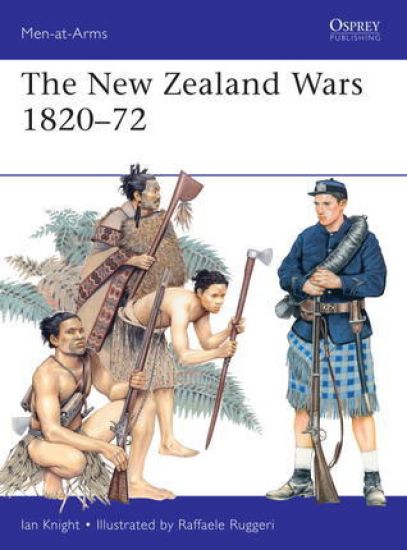
The New Zealand Wars 1820–72

The New Zealand Wars 1820–72

Ian Knight

Osprey Publishing
2013
nidottu
Between 1845 and 1872, various groups of Maori were involved in a series of wars of resistance against British settlers. The Maori had a fierce and long-established warrior tradition and subduing them took a lengthy British Army commitment, only surpassed in the Victorian period by that on the North-West Frontier of India. Warfare had been endemic in pre-colonial New Zealand and Maori groups maintained fortified villages or pas. The small early British coastal settlements were tolerated, and in the 1820s a chief named Hongi Hika travelled to Britain with a missionary and returned laden with gifts. He promptly exchanged these for muskets, and began an aggressive 15-year expansion. By the 1860s many Maori had acquired firearms and had perfected their bush-warfare tactics. In the last phase of the wars a religious movement, Pai Maarire (‘Hau Hau’), inspired remarkable guerrilla leaders such as Te Kooti Arikirangi to renewed resistance. This final phase saw a reduction in British Army forces. European victory was not total, but led to a negotiated peace that preserved some of the Maori people’s territories and freedoms.
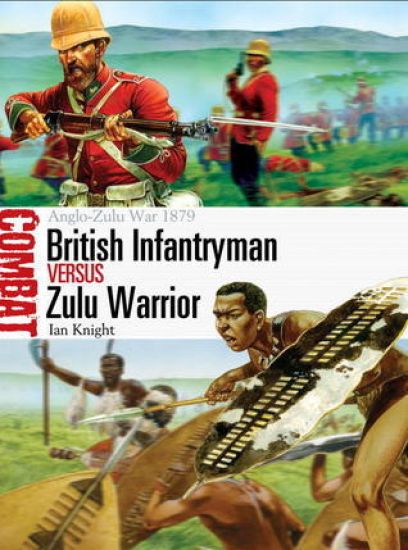
British Infantryman vs Zulu Warrior

British Infantryman vs Zulu Warrior

Ian Knight

Osprey Publishing
2013
nidottu
The short but savage Anglo-Zulu War of 1879 pitched well-equipped but complacent British soldiers into combat with the Zulu, one of history’s finest fighting forces.The clashes between these two different armies prompted tactical innovation on both sides, as the British and their Zulu opponents sought to find the optimal combination of mobility, protection and firepower. This engrossing study traces the changing face of infantry combat in the Anglo-Zulu War. Three major engagements are detailed: the Zulu ambush at Nyezane, repulsed by the British using their established tactics; the shocking defeat and massacre of outmanoeuvred British forces in savage close-quarter fighting at iSandlwana; and the British victory at Khambula following their adoption of more condensed firing lines and prepared positions.A noted authority on this epic confrontation examines three pivotal clashes from the infantryman’s perspective on both sides to shed new light on the nature of colonial warfare ‘at the sharp end’.
Isandlwana 1879

Isandlwana 1879

Ian Knight

Osprey Publishing
2002
nidottu
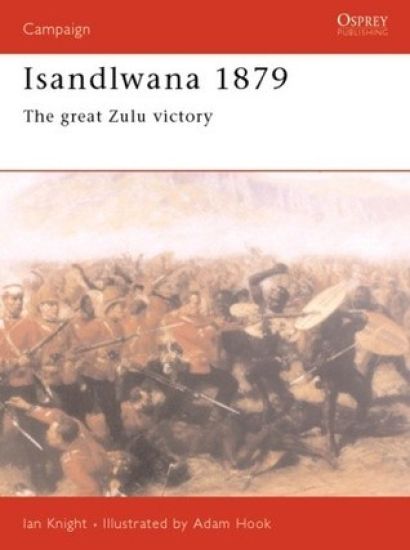
On 20 January 1879, the Centre Column of the British invasion force under the British Commander in Chief Lord Chelmsford, reached Isandlwana. Chelmsford's spies suggested a Zulu army was on its way to attack, so on 21 January he took a strong force of auxiliaries into the hills to scout them, leaving some 1700 white and native troops at camp. This action was futile as the main Zulu army of 24,000 men had moved across his front and was marching towards Isandlwana. This title employs new research to describe the formidable battle in greater detail, providing a brand new interpretation of the course of the action.
The Zulu War 1879

The Zulu War 1879

Ian Knight

Osprey Publishing
2003
nidottu
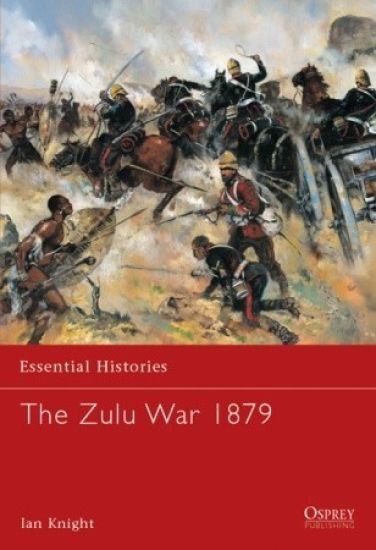
The Zulu War of 1879 remains one of the best known British colonial wars and included two battles whose names reverberate through history. At Isandlwana the Zulus inflicted a crushing defeat on the British; the gallant British defence at Rorke's Drift followed and re-established British prestige. Yet as this book shows, there was more to the war than this. Six months of brutal fighting followed, until the Zulu kingdom was broken up, its king imprisoned and the whole structure of the Zulu state destroyed. Years of intemecine strife followed, until the British finally annexed Zululand as a colonial possession.
Boer Commando 1876–1902

Boer Commando 1876–1902

Ian Knight

Osprey Publishing
2004
nidottu
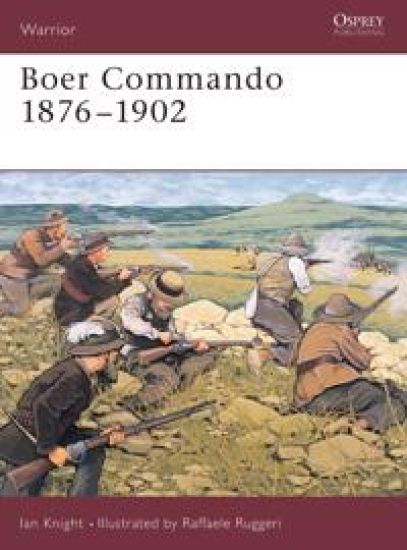
The Boer lifestyle of hunting for sport and profit honed the skills of field-craft, horsemanship and marksmanship, making them a formidable force in the field and well suited to guerrilla operations. This book describes the life and combat experiences of a typical Boer in this key period. Using meticulously researched analysis and comment, and the experiences of a composite character, Johannes de Bruyn, a revealing portrait of Boer life and military operations is drawn. The action at Laing's Neck, Majuba, the Zulu Civil War (where Boers fought for adventure and financial reward above all and the Second Anglo-Boer War are covered in this packed and informative treatment.
British Fortifications in Zululand 1879

British Fortifications in Zululand 1879

Ian Knight

Osprey Publishing
2005
nidottu
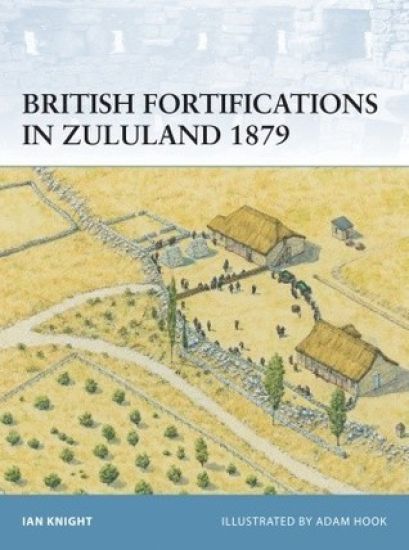
Throughout the Anglo-Zulu wars, the British fortified almost every position they occupied in Zululand, from permanent column depots to temporary halts on the lines of communication. This book explores the extensive fortifications constructed around posts such as Eshowe, Fort Pearson and Fort Chelmsford, as well as the lives of the garrisons who manned these sites. These forts were built to defend against infantry attacks of overwhelming numbers, as opposed to artillery bombardment or mining, and the text, illustrations and photographs describe their distinctive style and construction. Field and temporary fortifications are also covered, making this a packed and informative reference work, and bringing new life to this popular subject.
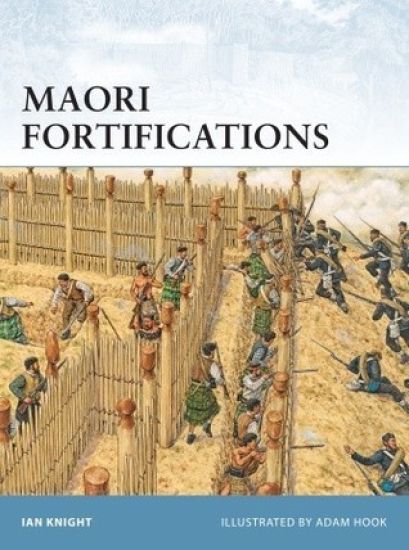
Maori Fortifications

Maori Fortifications

Ian Knight

Osprey Publishing
2009
nidottu
The Maori people of New Zealand were experienced field engineers and it was common practice to protect villages with surrounding entrenchments and wooden palisades, known as pas. However, it was not until 1845, with the first fighting between the Maori and the British, that it became clear just how strong and sophisticated the Maori fortifications were. For the best part of 20 years, the Maori held off the dominant and technologically superior British forces, by adapting and developing their defences in response to new British assaults. This book explores the evolution and design of Maori fortifications, and charts the course of a conflict that would ultimately see the British break the Maori pas, leading to a bitter guerrilla bush war.