Kirjojen hintavertailu. Mukana 12 072 750 kirjaa ja 12 kauppaa.

Kirjahaku

Etsi kirjoja tekijän nimen, kirjan nimen tai ISBN:n perusteella.

10 kirjaa tekijältä Ian Reader

Pilgrimage

Pilgrimage

Ian Reader

Oxford University Press
2015
nidottu
Pilgrimage is found in most religious cultures, with large numbers of sites - from globally renowned places to regional shrines - flourishing historically and in the modern day. Pilgrimage centres around the world, including Mecca in Saudi Arabia, Guadalupe in Mexico, Lourdes in France, Santiago de Compostela in Spain, Haridwar in India, and Shikoku in Japan, attract millions of pilgrims annually, while a flourishing 'spiritual tourism' industry has grown to promote the practice. In the present day, new pilgrimage locations, including 'secular' ones with no official affiliation, such as Graceland, Elvis Presley's house, continue to emerge across the world. In this Very Short Introduction Ian Reader explores the factors that affect how pilgrimage has changed over time, from contemporary international developments, such as mass transportation to changing social attitudes reflected in the motives of pilgrims through the ages. He demonstrates the social and international aspects of pilgrimage, showing how it has become a way of expressing social identity and cultural heritage, as well as being entwined with themes of entertainment and tourism. Reader explores the key issues and themes of pilgrimage through history to the present, looking at its various forms, how people take part, what is learnt from the journeys, and why pilgrimage remains popular in an increasingly secular age. ABOUT THE SERIES: The Very Short Introductions series from Oxford University Press contains hundreds of titles in almost every subject area. These pocket-sized books are the perfect way to get ahead in a new subject quickly. Our expert authors combine facts, analysis, perspective, new ideas, and enthusiasm to make interesting and challenging topics highly readable.

Pilgrimage in the Marketplace

Pilgrimage in the Marketplace

Ian Reader

Routledge
2013
sidottu
The study of pilgrimage often centres itself around miracles and spontaneous populist activities. While some of these activities and stories may play an important role in the emergence of potential pilgrimage sites and in helping create wider interest in them, this book demonstrates that the dynamics of the marketplace, including marketing and promotional activities by priests and secular interest groups, create the very consumerist markets through which pilgrimages become established and successful – and through which the ‘sacred’ as a category can be sustained. By drawing on examples from several contexts, including Japan, India, China, Vietnam, Europe, and the Muslim world, author Ian Reader evaluates how pilgrimages may be invented, shaped, and promoted by various interest groups. In so doing he draws attention to the competitive nature of the pilgrimage market, revealing that there are rivalries, borrowed ideas, and alliances with commercial and civil agencies to promote pilgrimages. The importance of consumerism is demonstrated, both in terms of consumer goods/souvenirs and pilgrimage site selection, rather than the usual depictions of consumerism as tawdry disjunctions on the ‘sacred.’ As such this book reorients studies of pilgrimage by highlighting not just the pilgrims who so often dominate the literature, but also the various other interest groups and agencies without whom pilgrimage as a phenomenon would not exist.
Religious Violence in Contemporary Japan
The Tokyo subway attack in March 1995 was just one of a series of criminal activities including murder, kidnapping, extortion, and the illegal manufacture of arms and drugs carried out by the Japanese new religious movement Aum Shinrikyo, under the guidance of its leader Asahara Shoko. Reader looks at Aum's claims about itself and asks, why did a religious movement ostensibly focussed on yoga, meditation, asceticism and the pursuit of enlightenment become involved in violent activities?Reader discusses Aum's spiritual roots, placing it in the context of contemporary Japanese religious patterns. Asahara's teaching are examined from his earliest public pronouncements through to his sermons at the time of the attack, and statements he has made in court. In analysing how Aum not only manufactured nerve gases but constructed its own internal doctrinal justifications for using them Reader focuses on the formation of what made all this possible: Aum's internal thought-world, and on how this was developed. Reader argues that despite the horrors of this particular case, Aum should not be seen as unique, nor as solely a political or criminal terror group. Rather it can best be analysed within the context of religious violence, as an extreme example of a religious movement that has created friction with the wider world that escalated into violence.
Religious Violence in Contemporary Japan
The Tokyo subway attack in March 1995 was just one of a series of criminal activities including murder, kidnapping, extortion, and the illegal manufacture of arms and drugs carried out by the Japanese new religious movement Aum Shinrikyo, under the guidance of its leader Asahara Shoko. Reader looks at Aum's claims about itself and asks, why did a religious movement ostensibly focussed on yoga, meditation, asceticism and the pursuit of enlightenment become involved in violent activities?Reader discusses Aum's spiritual roots, placing it in the context of contemporary Japanese religious patterns. Asahara's teaching are examined from his earliest public pronouncements through to his sermons at the time of the attack, and statements he has made in court. In analysing how Aum not only manufactured nerve gases but constructed its own internal doctrinal justifications for using them Reader focuses on the formation of what made all this possible: Aum's internal thought-world, and on how this was developed. Reader argues that despite the horrors of this particular case, Aum should not be seen as unique, nor as solely a political or criminal terror group. Rather it can best be analysed within the context of religious violence, as an extreme example of a religious movement that has created friction with the wider world that escalated into violence.
Making Pilgrimages

Making Pilgrimages

Ian Reader

University of Hawai'i Press
2004
nidottu
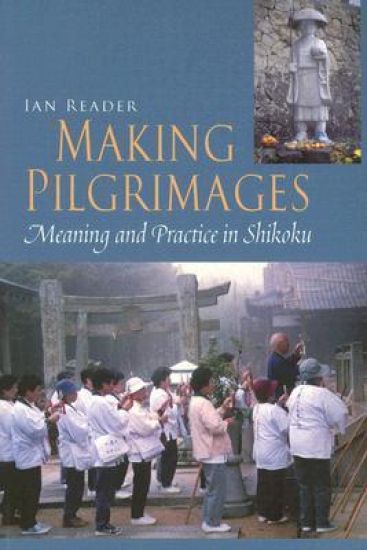
This study involves a fourteen-hundred-kilometre-long pilgrimage around Japan’s fourth largest island, Shikoku. In travelling the circuit of the eighty-eight Buddhist temples that make up the route, pilgrims make their journey together with Kôbô Daishi (774–835), the holy miracle-working figure who is at the heart of the pilgrimage.Once seen as a marginal practice, recent media portrayal of the pilgrimage as a symbol of Japanese cultural heritage has greatly increased the number of participants, both Japanese and foreign. In this absorbing look at the nature of the pilgrimage, Ian Reader examines contemporary practices and beliefs in the context of historical development, taking into account theoretical considerations of pilgrimage as a mode of activity and revealing how pilgrimages such as Shikoku may change in nature over the centuries.This rich ethnographic work covers a wide range of pilgrimage activity and behaviour, drawing on accounts of pilgrims travelling by traditional means on foot as well as those taking advantage of the new package bus tours, and exploring the pilgrimage’s role in the everyday lives of participants and the people of Shikoku alike. It discusses the various ways in which the pilgrimage is made and the forces that have shaped it in the past and in the present, including history and legend, the island’s landscape and residents, the narratives and actions of the pilgrims and the priests who run the temples, regional authorities, and commercial tour operators and bus companies.In studying the Shikoku pilgrimage from anthropological, historical, and sociological perspectives, Reader shows in vivid detail the ambivalence and complexity of pilgrimage as a phenomenon that is simultaneously local, national, and international and both marginal and integral to the lives of its participants. Critically astute yet highly accessible, Making Pilgrimages will be welcomed by those with an interest in anthropology, religious studies, and Japanese studies, and will be essential for anyone contemplating making the pilgrimage themselves.
Pilgrimage in the Marketplace

Pilgrimage in the Marketplace

Ian Reader

Routledge
2015
nidottu
The study of pilgrimage often centres itself around miracles and spontaneous populist activities. While some of these activities and stories may play an important role in the emergence of potential pilgrimage sites and in helping create wider interest in them, this book demonstrates that the dynamics of the marketplace, including marketing and promotional activities by priests and secular interest groups, create the very consumerist markets through which pilgrimages become established and successful – and through which the ‘sacred’ as a category can be sustained. By drawing on examples from several contexts, including Japan, India, China, Vietnam, Europe, and the Muslim world, author Ian Reader evaluates how pilgrimages may be invented, shaped, and promoted by various interest groups. In so doing he draws attention to the competitive nature of the pilgrimage market, revealing that there are rivalries, borrowed ideas, and alliances with commercial and civil agencies to promote pilgrimages. The importance of consumerism is demonstrated, both in terms of consumer goods/souvenirs and pilgrimage site selection, rather than the usual depictions of consumerism as tawdry disjunctions on the ‘sacred.’ As such this book reorients studies of pilgrimage by highlighting not just the pilgrims who so often dominate the literature, but also the various other interest groups and agencies without whom pilgrimage as a phenomenon would not exist.
Religion and Tourism in Japan

Religion and Tourism in Japan

Ian Reader

BLOOMSBURY PUBLISHING PLC
2023
sidottu
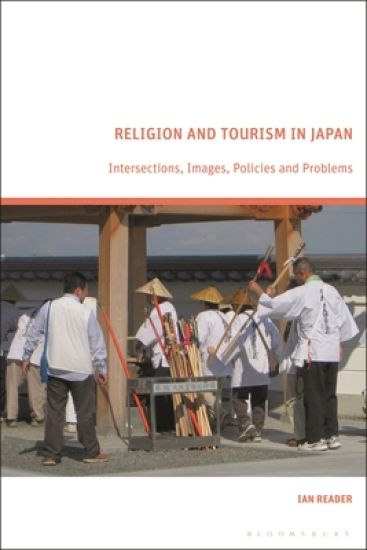
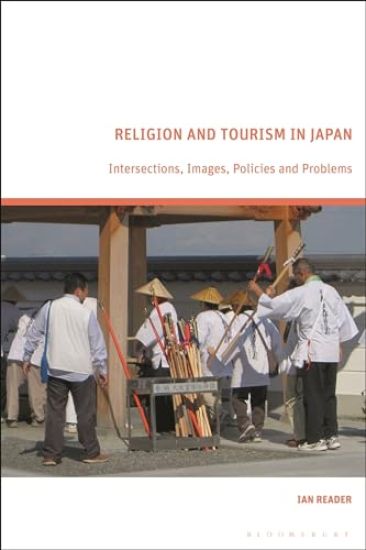
In this study, Ian Reader presents new insights into the relationship between religion and tourism more generally and into the contemporary religious situation in Japan. He counteracts scholarship that claims tourism increases religious activity, shows that tourism is a factor in increasing secularization in Japan and draws attention to the role of the state in such contexts.Although the Japanese constitution prohibits the state from promoting religion, this book shows how state agencies nonetheless encourage people to visit religious sites, by presenting them as manifestations of a shared heritage, in ways that distance them from ‘religion’. Reader examines theoretical understandings of religion and tourism and presents case studies of famed pilgrimage routes and temples. He shows how Zen monasteries are now ‘tourist brands’ and pilgrimages are the focus of TV entertainment programmes, portrayed as opportunities to eat sweets.Examining the nationalistic rhetoric of nostalgia and unique heritage that underpins the promotion of religious sites, Reader also considers why priests acquiesce in such matters.
Religion and Tourism in Japan

Religion and Tourism in Japan

Ian Reader

BLOOMSBURY PUBLISHING PLC
2025
nidottu
In this study, Ian Reader presents new insights into the relationship between religion and tourism more generally and into the contemporary religious situation in Japan. He counteracts scholarship that claims tourism increases religious activity, shows that tourism is a factor in increasing secularization in Japan and draws attention to the role of the state in such contexts.Although the Japanese constitution prohibits the state from promoting religion, this book shows how state agencies nonetheless encourage people to visit religious sites, by presenting them as manifestations of a shared heritage, in ways that distance them from ‘religion’. Reader examines theoretical understandings of religion and tourism and presents case studies of famed pilgrimage routes and temples. He shows how Zen monasteries are now ‘tourist brands’ and pilgrimages are the focus of TV entertainment programmes, portrayed as opportunities to eat sweets.Examining the nationalistic rhetoric of nostalgia and unique heritage that underpins the promotion of religious sites, Reader also considers why priests acquiesce in such matters.
Shinto - Simple Guides

Shinto - Simple Guides

Ian Reader

Kuperard
2006
nidottu
"Simple Guides Shinto" provides a concise and accessible introduction to Shinto. Written without bias, this guide presents engaging descriptions of the key concepts, beliefs and practices. Pocket sized and presented in an accessible format with clearly organised topics, enabling you to quickly grasp the essence of Shinto. This guide is a reliable point of reference for further exploration and discovery.
A Poisonous Cocktail?

A Poisonous Cocktail?

Ian Reader

NIAS Press
1996
nidottu
This highly acclaimed study describes Aum Shinrikyo's history, examines the various conflicts it was involved in, and discusses the contents of Asahara's sermons and prophecies. Reader suggests that the Aum case is not unique but similar to other cases of religious violence.The March 1995 gas attack on the Tokyo subway system killed 12 people and injured thousands. Massive police raids and the subsequent investigation linked this attack (plus a variety of other criminal activities including murders) to Aum Shinrikyo, a small religious movement whose leader, Asahara Shoko, had prophesied that Armageddon was at hand.Many questions have been raised by the Aum affair. What were Aum's spiritual roots and the focus of Asahara's teaching? Why did a religious movement ostensibly focused on yoga, meditation, asceticism and the pursuit of enlightenment become involved in violent activities? What factors brought Aum into conflict with society at large, caused it to believe it was the victim of a huge conspiracy to destroy it, and impelled it to experiment with making nerve gasses, build weapons and form its own 'alternative government'?Ian Reader examines these questions by describing Aum's history, examining the various conflicts it was involved in, and discussing the contents of Asahara's sermons and prophesies. In so doing, he points to a combination of factors which together took Aum down a path of violence. Suggesting that the Aum case is not unique, he shows how it displays similarities with other cases of violence and conflict among religious and political movements in Japan and elsewhere.