Kirjojen hintavertailu. Mukana 12 016 292 kirjaa ja 12 kauppaa.

Kirjahaku

Etsi kirjoja tekijän nimen, kirjan nimen tai ISBN:n perusteella.

10 kirjaa tekijältä Ian Talbot

Pakistan: A New History

Pakistan: A New History

Ian Talbot

Oxford University Press
2015
nidottu
If Pakistan is to preserve all that is good about its country--the generosity and hospitality of its people, the dynamism of its youth--it must face the deterioration of its social and political institutions. Sidestepping easy headlines to identify Pakistan's true dangers, this volume revisits the major turning points and trends of Pakistani history over the past six decades, focusing on the increasing entrenchment of Pakistan's army in its political and economic arenas; the complex role of Islam in public life; the tensions between central and local identities and democratic impulses; and the effect of geopolitical influences on domestic policy and development. While Ian Talbot's study centres on Pakistan's many failures--the collapse of stable governance, the drop in positive political and economic development, and, most of all, the unrealised goal of securing a separate Muslim state--his book unequivocally affirms the country's potential for a positive reawakening. These failures were not preordained, Talbot argues, and such a fatalistic reading does not respect the complexity of historical events, individual actors, and the state's own rich resources. While he acknowledges grave crises still lie ahead for Pakistan, Talbot's sensitive historical approach makes it clear that favourable opportunities still remain for Pakistan, in which the state has a chance to reclaim its priorities and institutions and reestablish political and economic sustainability.
A History of Modern South Asia

A History of Modern South Asia

Ian Talbot

Yale University Press
2016
pokkari
Noted historian Ian Talbot has written a new history of modern South Asia that considers the Indian Subcontinent in regional rather than in solely national terms. A leading expert on the Partition of 1947, Talbot focuses here on the combined history of India, Pakistan, and Bangladesh since 1757 and specifically on the impact of external influences on the local peoples and cultures. This text explores the region’s colonial and postcolonial past, and the cultural and economic Indian reaction to the years of British authority, thus viewing the transformation of modern South Asia through the lens of a wider world.
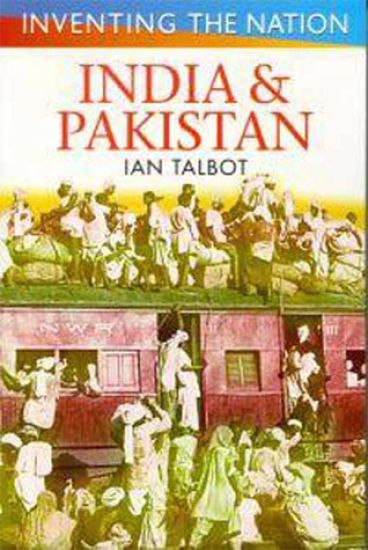
India and Pakistan

India and Pakistan

Ian Talbot

Hodder Arnold
2000
nidottu
The rise of ethnic and religious conflicts in the post-Cold War era has reawakened consideration of the future of nationalism and the nation state. The Indian subcontinent with its myriad ethnic, religious and linguistic divides provides a focus for examination of the interplay between nationalism, religion and ethnicity. The region's growing violence and instability is in part a result of this process, sharpened by social inequalities and the struggle to control scarce resources. 'India and Pakistan' provides an historical understanding of the chequered process of nation-building in the subcontinent. In particular, Talbot examines the role of 'parochial' allegiances and the impact of contemporary processes of economic and cultural globalisation on nationalist and localist allegiances. And, in introducing the increasingly important role of overseas South Asian communities in the political mobilization of the homeland, the student is shown the complexities of South Asian society and the effects of its relationship with the state on the process of nation-building in India and Pakistan.
The History of British Diplomacy in Pakistan
This book is the first account of the British diplomatic mission in Pakistan from its foundation at the end of the Raj in 1947 to the ‘War on Terror’.Drawing on original documents and interviews with participants, this book highlights key events and personalities as well as the influence and perspectives of individual diplomats previously not explored. The book demonstrates that the period witnessed immense changes in Britain’s standing in the world and in the international history of South Asia to show that Britain maintained a diplomatic influence out of proportion to its economic and military strength. The author suggests that Britain’s impact stemmed from colonial-era ties of influence with bureaucrats, politicians and army heads which were sustained by the growth of a Pakistani Diaspora in Britain. Additionally, the book illustrates that America’s relationship with Pakistan was transactional as opposed to Britain’s, which was based on ties of sentiment as, from the mid-1950s, the United States was more able than Britain to give Pakistan the financial, military and diplomatic support it desired.A unique and timely analysis of the British diplomatic mission in Pakistan in the decades after independence, this book will be of interest to academics working in the fields of South Asian History and Politics, International Relations, British and American Diplomacy and Security Studies, Cold War Politics and History and Area Studies.
The History of British Diplomacy in Pakistan
This book is the first account of the British diplomatic mission in Pakistan from its foundation at the end of the Raj in 1947 to the ‘War on Terror’.Drawing on original documents and interviews with participants, this book highlights key events and personalities as well as the influence and perspectives of individual diplomats previously not explored. The book demonstrates that the period witnessed immense changes in Britain’s standing in the world and in the international history of South Asia to show that Britain maintained a diplomatic influence out of proportion to its economic and military strength. The author suggests that Britain’s impact stemmed from colonial-era ties of influence with bureaucrats, politicians and army heads which were sustained by the growth of a Pakistani Diaspora in Britain. Additionally, the book illustrates that America’s relationship with Pakistan was transactional as opposed to Britain’s, which was based on ties of sentiment as, from the mid-1950s, the United States was more able than Britain to give Pakistan the financial, military and diplomatic support it desired.A unique and timely analysis of the British diplomatic mission in Pakistan in the decades after independence, this book will be of interest to academics working in the fields of South Asian History and Politics, International Relations, British and American Diplomacy and Security Studies, Cold War Politics and History and Area Studies.
Engaging Pakistan

Engaging Pakistan

Ian Talbot

TAYLOR FRANCIS LTD
2025
sidottu
Engaging Pakistan examines the role of British and American Public Diplomacy in Pakistan. It focuses on case studies located in two periods (1955-64 and 2008-12) during which there was both intense public diplomacy activity and increasing public hostility particularly towards the US. Putting forth this juxtaposition of the two periods, the study provides an opportunity for a fine grain analysis to contribute to wider theoretical and comparative studies of public diplomacy as well as provide valuable empirical material.The author argues that limitations in the effectiveness of public diplomacy arise whenever foreign audiences perceive that a state’s foreign policy actions are illegitimate and inconsistent with its publicly proclaimed values. US unreliability in the 1960s and unilateralism four decades later undermined its soft power, despite the successes of individual public diplomacy initiatives. Anti-Americanism in Pakistan is usually linked with the aftermath of 9/11, but the volume will reveal that public mistrust stretched as far back as the 1960s. The Pakistan public trusted Britain far more, so that even when unpopular policies were adopted, there was not such a steep decline in its standing. Despite less funding, UK public diplomacy initiatives operated in a more favourable environment than that of the US. The book focuses on five main areas of public diplomacy activities that generate soft power; namely, communication/ information activities; educational exchanges and assistance; volunteering; cultural performances and exhibitions; high profile visitors’ public engagement. These activities are examined in case studies from either a single time frame or covering both periods.A pioneering study of British and American Public Diplomacy in Pakistan in the early Cold War and later post 9/11 eras, this book will be of interest to researchers on Modern South Asia, international relations, public diplomacy, and diplomatic history, as well as those interested in wider subjects ranging from cold war studies to sports history.
Pakistan

Pakistan

Ian Talbot

C Hurst Co Publishers Ltd
2015
nidottu
If Pakistan is to preserve all that is good about its country - the generosity and hospitality of its people, the dynamism of its youth - it must face the deterioration of its social and political institutions. Sidestepping easy headlines to identify Pakistan's true dangers, this volume revisits the major turning points and trends of Pakistani history over the past six decades, focusing on the increasing entrenchment of Pakistan's army in its political and economic arenas; the complex role of Islam in public life; the tensions between central and local identities and democratic impulses; and the effect of geopolitical influences on domestic policy and development. While Ian Talbot's study centres on Pakistan's many failures - the collapse of stable governance, the drop in positive political and economic development, and, most of all, the unrealised goal of securing a separate Muslim state - his book unequivocally affirms the country's potential for a positive reawakening. These failures were not preordained, Talbot argues, and such a fatalistic reading does not respect the complexity of historical events, individual actors, and the state's own rich resources. While he acknowledges grave crises still lie ahead for Pakistan, Talbot's sensitive historical approach makes it clear that favourable opportunities still remain for Pakistan, in which the state has a chance to reclaim its priorities and institutions and re-establish political and economic sustainability.
Pakistan

Pakistan

Ian Talbot

C Hurst Co Publishers Ltd
2009
nidottu
This book fills the need for a broad, historically sophisticated understanding of Pakistan, a country which is understood by many in the West only in terms of stereotypes-the fanatical, authoritarian and reactionary 'other' which is unfavourably compared to a tolerant, democratic and progressive India. Pakistan is in reality a complex plural society which although greatly shaped by the colonial inheritance and circumstances of its birth, is also experiencing rapid change. Talbot's approach breaks down stereotypes and assists in answering the vexed question of why democracy has succeeded in India, while Pakistan has been subject to long periods of authoritarianism during its five decades of existence. He brings the story of Pakistan right up to date and discusses the rise of jihadi militancy, the assassination of Benazir Bhutto and the resilience of its people in the face of military dictatorship and economic hardship.