Kirjojen hintavertailu. Mukana 11 518 949 kirjaa ja 12 kauppaa.

Kirjahaku

Etsi kirjoja tekijän nimen, kirjan nimen tai ISBN:n perusteella.

6 kirjaa tekijältä Ian W. Hamley

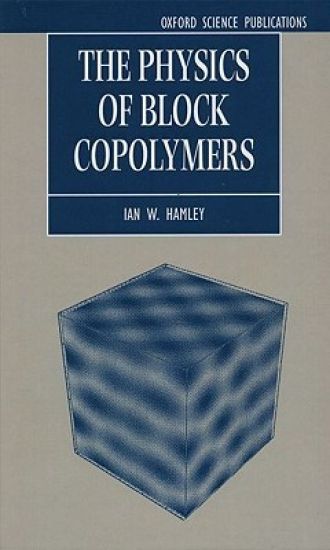
The Physics of Block Copolymers

The Physics of Block Copolymers

Ian W. Hamley

Oxford University Press
1998
sidottu
This comprehensive and systematic text is the first of its kind to deal with the fundamental physics underlying the remarkable structural and dynamical properties of block copolymers. It provides the polymer scientist and technologist with a firm grounding in the principles underlying the wide applications of these important materials. It also highlights the intrinsically fascinating properties of block copolymers, such as nanoscale self-assembly in bulk and two-dimensions. The first text of its kind on the subject since the mid-1980s, this book stands alone - previous texts have focused on the chemical and material properties of block copolymers. During the last decade, there have been major developments in the field, and these experimental and theoretical advances are discussed in depth. Topics covered include: the thermodynamics and dynamics of block copolymer melts, block copolymers in dilute, semidilute and concentrated solutions, the structure of crystalline block copolymers and block copolymers in blends with other polymers. This informative book is essential to the polymer physics and materials science researcher in industry and academia, and postgraduates in related fields. Final year undergraduate students in chemistry, physics and materials science will also find this book useful as a reference text.
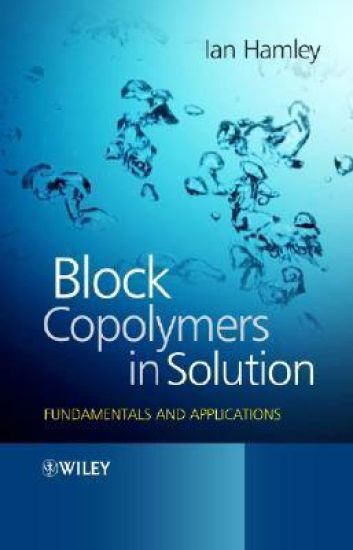
Block Copolymers in Solution

Block Copolymers in Solution

Ian W. Hamley

John Wiley Sons Inc
2005
sidottu
This unique text discusses the solution self-assembly of block copolymers and covers all aspects from basic physical chemistry to applications in soft nanotechnology. Recent advances have enabled the preparation of new materials with novel self-assembling structures, functionality and responsiveness and there have also been concomitant advances in theory and modelling. The present text covers the principles of self-assembly in both dilute and concentrated solution, for example micellization and mesophase formation, etc., in chapters 2 and 3 respectively. Chapter 4 covers polyelectrolyte block copolymers - these materials are attracting significant attention from researchers and a solid basis for understanding their physical chemistry is emerging, and this is discussed. The next chapter discusses adsorption of block copolymers from solution at liquid and solid interfaces. The concluding chapter presents a discussion of selected applications, focussing on several important new concepts. The book is aimed at researchers in polymer science as well as industrial scientists involved in the polymer and coatings industries. It will also be of interest to scientists working in soft matter self-assembly and self-organizing polymers.
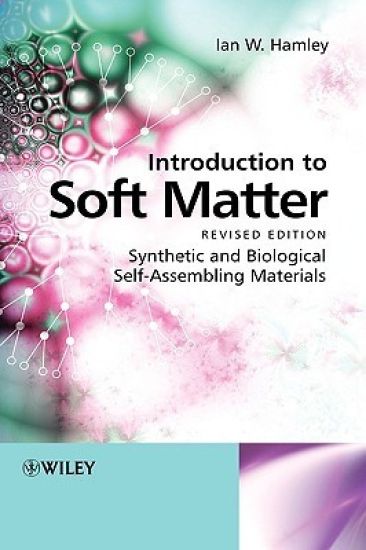
Introduction to Soft Matter

Introduction to Soft Matter

Ian W. Hamley

John Wiley Sons Inc
2007
sidottu
This book provides an introduction to this exciting and relatively new subject with chapters covering natural and synthetic polymers, colloids, surfactants and liquid crystals highlighting the many and varied applications of these materials. Written by an expert in the field, this book will be an essential reference for people working in both industry and academia and will aid in understanding of this increasingly popular topic. Contains a new chapter on biological soft matter Newly edited and updated chapters including updated coverage of recent aspects of polymer science. Contain problems at the end of each chapter to facilitate understanding
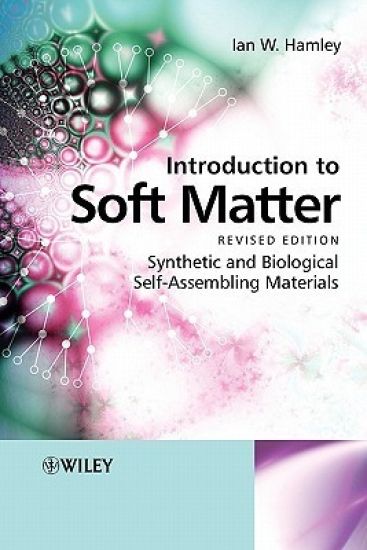
Introduction to Soft Matter

Introduction to Soft Matter

Ian W. Hamley

John Wiley Sons Inc
2007
nidottu
This book provides an introduction to this exciting and relatively new subject with chapters covering natural and synthetic polymers, colloids, surfactants and liquid crystals highlighting the many and varied applications of these materials. Written by an expert in the field, this book will be an essential reference for people working in both industry and academia and will aid in understanding of this increasingly popular topic. Contains a new chapter on biological soft matter Newly edited and updated chapters including updated coverage of recent aspects of polymer science. Contain problems at the end of each chapter to facilitate understanding
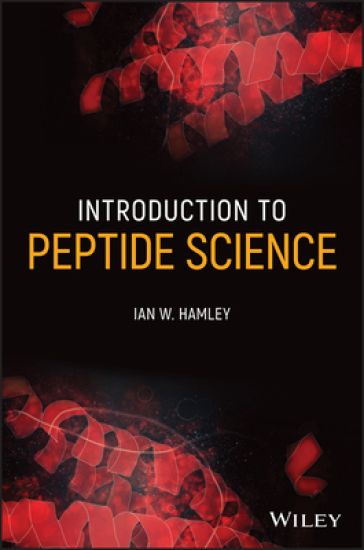
Introduction to Peptide Science

Introduction to Peptide Science

Ian W. Hamley

Wiley-Blackwell
2020
nidottu
Provides an interdisciplinary introduction to peptide science, covering their properties and synthesis, as well as many contemporary applications Peptides are biomolecules comprised of amino acids which play an important role in modulating many physiological processes in our body. This book presents an interdisciplinary approach and general introduction to peptide science, covering contemporary topics including their applicability in therapeutics, peptide hormones, amyloid structures, self-assembled structures, hydrogels, and peptide conjugates including lipopeptides and polymer-peptide conjugates. In addition, it discusses basic properties and synthesis clearly and concisely. Taking a logical approach to the subject, Introduction to Peptide Science gives readers the fundamental knowledge that is required to understand the cutting-edge material which comes later in the book. It offers readers in-depth chapter coverage of the basic properties of peptides; synthesis; amyloid and peptide aggregate structures; antimicrobial peptides and cell-penetrating peptides; and peptide therapeutics and peptide hormones. Introduces readers to peptide science, including synthesis and propertiesProvides unique content covering properties, synthesis, self-assembly, aggregation, and applicationsSummarizes contemporary topics in an accessible fashion including applications in therapeutics, peptide hormones, amyloid structures, self-assembled structures, hydrogels, and peptide conjugates including lipopeptidesPresented at an introductory level for the benefit of students and researchers who are new to the subject Introduction to Peptide Science is an ideal text for undergraduate students of chemistry, biochemistry, and other related biological subjects, and will be a valuable resource for postgraduate students and researchers involved in peptide science and its applications.
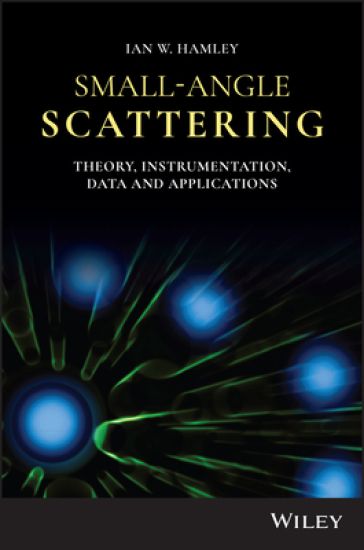
Small-Angle Scattering

Small-Angle Scattering

Ian W. Hamley

Wiley-Blackwell
2021
sidottu
SMALL-ANGLE SCATTERING A comprehensive and timely volume covering contemporary research, practical techniques, and theoretical approaches to SAXS and SANSSmall-Angle Scattering: Theory, Instrumentation, Data, and Applications provides authoritative coverage of both small-angle X-ray scattering (SAXS), small-angle neutron scattering (SANS) and grazing incidence small-angle scattering (GISAS) including GISAXS and GISANS. This single-volume resource offers readers an up-to-date view of the state of the field, including the theoretical foundations, experimental methods, and practical applications of small-angle scattering (SAS) techniques including laboratory and synchrotron SAXS and reactor/spallation SANS.Organized into six chapters, the text first describes basic theory, instrumentation, and data analysis. The following chapters contain in-depth discussion on various applications of SAXS and SANS and GISAXS and GISANS, and on specific techniques for investigating structure and order in soft materials, biomolecules, and inorganic and magnetic materials. Author Ian Hamley draws from his more than thirty years’ experience working with many systems, instruments, and types of small-angle scattering experiments across most European facilities to present the most complete introduction to the field available. This book:Presents uniquely broad coverage of practical and theoretical approaches to SAXS and SANSIncludes practical information on instrumentation and data analysisOffers useful examples and an accessible and concise presentation of topicsCovers new developments in the techniques of SAXS and SANS, including GISAXS and GISANSSmall-Angle Scattering: Theory, Instrumentation, Data, and Applications is a valuable source of detailed information for researchers and postgraduate students in the field, as well as other researchers using X-ray and neutron scattering to investigate soft materials, other nanostructured materials and biomolecules such as proteins.