Kirjojen hintavertailu. Mukana 11 342 296 kirjaa ja 12 kauppaa.

Kirjahaku

Etsi kirjoja tekijän nimen, kirjan nimen tai ISBN:n perusteella.

9 kirjaa tekijältä Ilham Dilman

Existentialist Critiques of Cartesianism

Existentialist Critiques of Cartesianism

Ilham Dilman

Barnes Noble Books-Imports, Div of Rowman Littlefield Pubs., Inc
1993
sidottu
This book is a discussion of Heidegger's, Sartre's and Marcel's rejection of Cartesian epistemology, the scepticism to which it leads and its objectivist conception of human existence. It compares this rejection with Wittgenstein's rejection of these conceptions of man, his relation to the knowledge of what belongs to the world in which he lives. It concentrates on the existentialist critiques of consciousness as a substance and of the self as such a substance, of each person's body as something external to which he is causally related, and of others as at best indirectly accessible to us. It discusses Sartre's positive views on these questions and the way he falls into a form of solipsism himself. It then considers Sartre's rejection of determinism and his conception of freedom as our capacity for choice. In a concluding chapter the book sketches a non-objectivist account of the self, its development, its 'bad faith', its capacity to emerge from it, and its knowledge of itself, free from the objections considered earlier. It then considers some new objections directed at its own account. Contents: Man in the World; Man's Way of Being: Existential Dualism; The Personal Dimension: Emotions and Value Judgements; Sartre and our Identity as Individuals; Mind and Body: Rejection of Cartesian Dualism; Sartre on the Self and the Other: Rejection of Cartesian Solipsism; Human Separateness and the Possibility of Communion: Marcel's Rejection of Sartrean Solipsism; Sartre: Freedom as Something to which Man is Condemned; Self, Self-Knowledge and Self-Change: A Non-Objectivist View and its Defense.
Free Will

Free Will

Ilham Dilman

Routledge
1999
sidottu
What is the place of human free will in our lives if all our actions are the result of some other cause? Does our processing unconscious beliefs or desires make us less free? Is our free will necessarily restricted if we do not choose our own beliefs? The debate between free will and its opposing doctrine, determinism, is one of the key issues in philosophy. Free Will: An historical and philosophical introduction provides a comprehensive introduction to this highly important question and examines the contributions made by sixteen of the most outstanding thinkers from the time of early Greece to the twentieth century:*Homer *Sophocles *Platto *Aristotle *St Augustine *St Thomas Aquinas *Descaartes *Spinoza *Hume *Kant *Schopehauer *Freud *Sartre *Weil *Wittgenstein *Moore Ilham Dilman brings together all the dimensions of the problem of free will with examples from literature, ethics and psychoanalysis. Drawing out valuable insights from both sides of the free will-determinism divide, and he provides an accessible and highly readable introduction to this perennial problem.
Free Will

Free Will

Ilham Dilman

Routledge
1999
nidottu
What is the place of human free will in our lives if all our actions are the result of some other cause? Does our processing unconscious beliefs or desires make us less free? Is our free will necessarily restricted if we do not choose our own beliefs? The debate between free will and its opposing doctrine, determinism, is one of the key issues in philosophy. Free Will: An historical and philosophical introduction provides a comprehensive introduction to this highly important question and examines the contributions made by sixteen of the most outstanding thinkers from the time of early Greece to the twentieth century:*Homer *Sophocles *Platto *Aristotle *St Augustine *St Thomas Aquinas *Descaartes *Spinoza *Hume *Kant *Schopehauer *Freud *Sartre *Weil *Wittgenstein *Moore Ilham Dilman brings together all the dimensions of the problem of free will with examples from literature, ethics and psychoanalysis. Drawing out valuable insights from both sides of the free will-determinism divide, and he provides an accessible and highly readable introduction to this perennial problem.
The Self, the Soul and the Psychology of Good and Evil
The way an individual's psychology is intertwined with their morality is the subject of this fascinating book from the pen of the late Ilham Dilman. Dilman convincingly argues that evil, though it cannot be reduced to psychological terms (it is a moral concept) is explicable in terms of an individual person's psychology. Goodness, by contrast, comes from the person and not their psychology. Philosophers the world over will want to read this book and see how Dilman skilfully defends his arguments.
The Self, the Soul and the Psychology of Good and Evil
The way an individual's psychology is intertwined with their morality is the subject of this fascinating book from the pen of the late Ilham Dilman. Dilman convincingly argues that evil, though it cannot be reduced to psychological terms (it is a moral concept) is explicable in terms of an individual person's psychology. Goodness, by contrast, comes from the person and not their psychology. Philosophers the world over will want to read this book and see how Dilman skilfully defends his arguments.
Raskolnikov's Rebirth

Raskolnikov's Rebirth

Ilham Dilman

Open Court Publishing Co ,U.S.
2000
pokkari
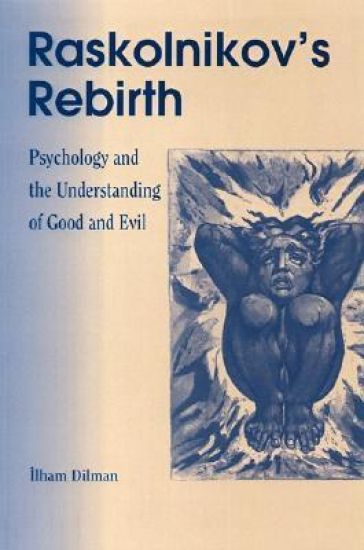
Author Ilham Dilman explains why a "thoughtful psychology," encompassing the varied modes of being experienced by humans, is the best tool for investigating the nature of good and evil. To illustrate, he employs Raskolnikov, Dostoyevsky's axe-murdering protagonist in Crime and Punishment, following his alienation from goodness, his return to it, and finally, his ethical rebirth.
Philosophy as Criticism

Philosophy as Criticism

Ilham Dilman

Continuum Publishing Corporation
2011
nidottu
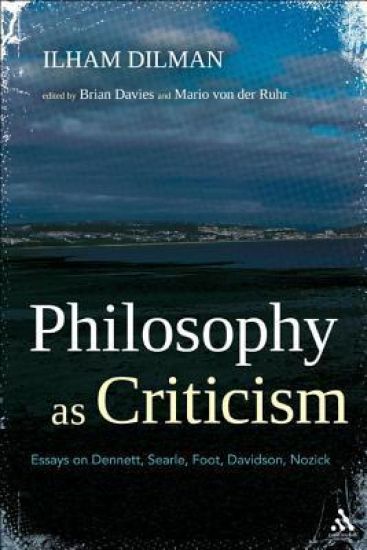
In this, his final book, noted philosopher Ilham Dilman offers sharp critiques of his major contemporaries. "Philosophy of Criticism" is both the final word from a celebrated philosopher on his distinguished career and an attempt, through critiques of his major contemporaries, to explore the future of philosophy. Born in Turkey, Ilham Dilman spent the majority of his working life teaching philosophy in the United States and Great Britain and published widely in moral philosophy and psychology, most notably on Wittgenstein and Freud. After an autobiographical introduction, in which Dilman reflects on how he came to become a philosopher, he moves, chapter by chapter, into an incisive critique of key contemporary thinkers and movements in philosophy. Dilman asks us to review afresh the contributions of Dennett, Searle, Foot, Davidson and Nozick to the modern debate. The result is a vital and urgent engagement with the core questions of philosophy and a re-instatement of the centrality of criticism in philosophy.
Philosophy as Criticism

Philosophy as Criticism

Ilham Dilman

Continuum Publishing Corporation
2011
sidottu
In this, his final book, noted philosopher Ilham Dilman offers sharp critiques of his major contemporaries. "Philosophy of Criticism" is both the final word from a celebrated philosopher on his distinguished career and an attempt, through critiques of his major contemporaries, to explore the future of philosophy. Born in Turkey, Ilham Dilman spent the majority of his working life teaching philosophy in the United States and Great Britain and published widely in moral philosophy and psychology, most notably on Wittgenstein and Freud. After an autobiographical introduction, in which Dilman reflects on how he came to become a philosopher, he moves, chapter by chapter, into an incisive critique of key contemporary thinkers and movements in philosophy. Dilman asks us to review afresh the contributions of Dennett, Searle, Foot, Davidson and Nozick to the modern debate. The result is a vital and urgent engagement with the core questions of philosophy and a re-instatement of the centrality of criticism in philosophy.