Kirjojen hintavertailu. Mukana 12 016 292 kirjaa ja 12 kauppaa.

Kirjahaku

Etsi kirjoja tekijän nimen, kirjan nimen tai ISBN:n perusteella.

24 kirjaa tekijältä Ilo

Women Workers in Multinational Enterprises in Developing Countries
Does work in multinational enterprises give women in developing countries an opportunity to free themselves from the restrictions of existing social structures? Information from 30 developing countries is analysed to provide examples of the situation of women workers in multinational enterprises in the Third World today with respect to wages, hours and conditions of work, fringe benefis, labour relations and quality of life. This report has been prepared jointly by the United Nations Centre on Transnational Corporations and the Bureau of Multinational Enterprises of the International Labour Office.
Conciliation in Industrial Disputes

Conciliation in Industrial Disputes

Ilo

International Labour Office
1988
nidottu
This guide has been prepared with a view to helping developing countries in their effort to promote the orderly settlement of industrial disputes through conciliation. Its aim is to meet the needs not only of professional or full-time conciliators but also of industrial relations officers, labour officers or labour inspectors, if conciliation is among their duties, by suggesting forms of behaviour, approaches and attitudes that will enable them to carry out their functions more effectively. The guide is intended to be of use to conciliators working in different countries and under different national conditions, and is based on contribution prepared by high-level mediators and conciliators from the United Kingdom and the United States as well as on information derived by the ILO from the findings of a number of regional seminars and from more immediate sources. The book is primarily designed for use as teaching material for the training of newly appointed conciliators and as a guide for working conciliators who have not had previous training.
Protection of Workers Against Noise and Vibration in the Working Environment
Among the many factors that contribute to the deterioration of the working environment, noise and vibration have an important place. This code of practice, adopted at a meeting of experts convened by the ILO, sets out the principles that should be followed for the control of workplace noise and vibration, and contains the information required for the establishment of control programmes for individual plants. The latest impression of the code incorporates modifications resulting from the adoption of IEC and ISO standards and relevant extracts from recently published ILO codes of practice.
Building Work

Building Work

Ilo

International Labour Office
1979
nidottu
Prevention of accidents and occupational diseases requires an exact knowledge of the sequence of causes, for only then can the necessary preventive measures be correctly chosen and fully applied. Owning to the constantly changing conditions as well as the great variety of equipment and processes in building operations the nature of accidents varies much more than might be supposed.
Accident Prevention

Accident Prevention

Ilo

International Labour Office
1986
nidottu
Accident prevention. A workers' education manual. 2nd (revised) edition Workers are becoming more and more aware of the role that they, and the management, can play in reducing the number of occupational accidents. The 14 chapters in the manual are full of examples and practical advice and lend themselves both to group work and to individual study. They cover the basic principles of accident prevention, the causes and effects of accidents, and the reporting of accidents and keeping of records for statistical purposes. The role of the trade union is shown to be particularly important, for example in the setting up of safety committees and in training workers. This new edition of the manual has been revised to take full account of recent developments in accident prevention work.
Improved Village Technology for Women's Activities
This manual is based on field work undertaken in the project countries (Ghana and Sierra Leone), and benefited additionally from the results of a field visit to Senegal. Its special features are: (a) the target audience consists of government institutions, rural extension services, financial institutions, women's small-scale processing enterprises and manufacturing firms; (b) it focuses on four important processing activities - of cassava, vegetable oil, coconut and fish - undertaken by rural women in West Africa; (c) it covers the range of technologies available in the subregion; (d) it makes a quantitative comparison of the performance of both traditional and improved technologies and provides information on the advantages and disadvantages of each; (e) it describes the basic design features of improved and traditional tools and equipment, materials and parts required for their fabrication; and (f) it provides a list of suppliers of such equipment. The practical value of the manual is enhanced by the inclusion of information on practical possibilities for the utilization of agricultural wastes and the by-products of women's processing activities.
Solar Drying

Solar Drying

Ilo

International Labour Office
1986
nidottu
This training manual is the outcome of an ILO regional project on the development and application of appropriate food-processing technologies. During the project, extension workers from four developing Arab countries were trained in techniques of sun and solar drying. The manual provides clear and detailed information on the basic theory and practice of sun and solar drying of various food products (fish, fruit, vegetables and grains). It discusses the type of information needed to determine whether solar drying is feasible and appropriate in particular cases, and, with an explanation of how the sun's energy can be harnessed, outlines basic drying theory. Several different types of dryers - cabinet, tent, paddy, hybrid - are described and some guidance is given on their construction. Information is also provided on the preparation of the raw materials before they are dried and on packaging techniques for the dried product. It is hoped that agronomists, technologists and rural development trainers will use the information to encourage farmers and rural artisans to adopt these food-processing techniques.
Economic and Social Effects of Multinational Enterprises in Export Processing Zones
One of the most remarkable structural changes which took place in the world economy in the 1970s and the first half of the 1980s is undoubtedly the growth of export processing zones (EPZs) in the developing countries and areas: employment in these zones grew from around 50,000 in 1970 to over 1.3 million by 1986. Judging from the current plans for new EPZs in over a dozen countries and the expansion plans for existing zones, it would seem that employment in EPZs could continue to grow rapidly in the next few years. The phenomenon of EPZs and the role of multinational enterprises in them have been the subject of heated debate. This monograph sheds light on the multinationals' contribution to employment generation, export earnings, technology transfer and the development of linkages with the local economy. These are measured against the initial cost of the incentive package for establishing and maintaining the zones. Questions related to working conditions and labour relations are also highlighted.The book confronts a number of widely held assumptions with the available facts and figures, and points to the possible evolution of EPZs in the economies of newly industrializing countries. It envisages the emergence of the "export processing country" and a more open and competitive approach to industrial development.
Maximum Weights in Load Lifting and Carrying

Maximum Weights in Load Lifting and Carrying

Ilo

International Labour Office
1988
nidottu
International comparisons of statutory provisions and standards on limitations of weights at the workplace are difficult to obtain. Information on these subjects may be of great interest to government departments and to employers' and workers' organizations. The purpose of this book is to present a summary of legislation and practice adopted in various ILO member States concerning the limitations of weight in manual lifting and carrying loads. It provides details of general provisions and specific maximum weight provisions in tabular form, as well as a chapter comparing working practices in different countries.
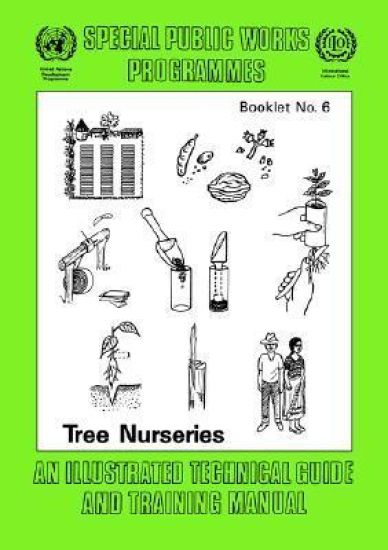
Tree Nurseries

Tree Nurseries

Ilo

International Labour Office
1993
nidottu
This guide contains all the basic information needed to set up and successfully run nurseries relying on manual work. It focuses on the production of containerised seedlings as the method most commonly used in the ILO's Special Public Works Programme (SPWP) and other non-industrial tree planting in developing countries. This booklet should be considered a starting point upon which the nursery workers' and managers' experience can and must built, through careful observation. The best guide to nurseries is the experience of the people running them.
Safety in the Use of Mineral and Synthetic Fibres
As the production and use of mineral and syunthetic fibres is rapidly expanding, it is vital that safe working practices should be introduced. The working document for, and report of, a meeting of experts set up by the ILO to study the question are contained in this book, which discusses man-made mineral fibres, natural mineral fibres other than asbestos, and synthetic organic fibres. The meeting defined certain preventive measures based on adopting safe working methods, controlling the working environment and the exposure of workers to mineral and synthetic fibres, and monitoring the health of workers.
Current Approaches to Collective Bargaining

Current Approaches to Collective Bargaining

Ilo

International Labour Office
1989
nidottu
An ILO Symposium on Collective Bargaining in Industrialized Market Economy Countries (Geneva, 2-6 November 1987) Industrial relations in industrialized market economies are currently evolving in a particularly difficult context. Economic constraints, technological progress and changes, not only in the composition of the labour force but also in the attitudes of workers, have caused workers' and employers' organizations to take a fresh look at their role in the process of collective bargaining. A symposium convened by the ILO in November 1987 provided a forum in which participants from government, employer, worker and academic circles, together with observers from a number of international bodies, could exchange views on recent trends and problems in collective bargaining. Papers by the ILO highlighting significant issues and a selection of the documents submitted by the participants in English are contained in this volume.