Kirjojen hintavertailu. Mukana 12 083 983 kirjaa ja 12 kauppaa.

Kirjahaku

Etsi kirjoja tekijän nimen, kirjan nimen tai ISBN:n perusteella.

17 kirjaa tekijältä Ira Katznelson

Marxism and the City

Marxism and the City

Ira Katznelson

Clarendon Press
1993
nidottu
Defeated in the East and discredited in the West, Marxism has broken down as an ideology and as a guide to governance. But, for all its flaws, it remains an important tool for understanding and raising questions about key aspects of modern life. In Marxism and the City Ira Katznelson critically assesses the scholarship on cities that has developed within Marxism in the past quarter century to show how some of the most important weaknesses in Marxism as a social theory can be remedied by forcing it to engage seriously with cities and spatial concerns. He argues that such a Marxism still has a significant contribution to make to the discussion of such historical questions as the transition from feudalism to a world composed of capitalist economies and nation-states and the acquiescence of the western working classes to capitalism. Professor Katznelson demonstrates how a Marxism that embraces complexity and is open to engagement with other social-theoretical traditions can illuminate our understanding of cities and of the patterns of class and group formation that have characterized urban life in the West.
City Trenches

City Trenches

Ira Katznelson

University of Chicago Press
1982
nidottu
In City Trenches, Ira Katznelson looks at an important phenomenon of the sixties—the resurgence of community activism—and explains its sources, challenges, and failure. Katznelson argues that the American working class perceives workplace politics and community politics as separate and distinct spheres, a perception that defeats attempts to address grievances or raise demands that break the rules of local politics or of bread-and-butter unionism. He supports his thesis with an absorbing case study of Washington Heights-Inwood, a multiethnic working-class community in Manhattan.
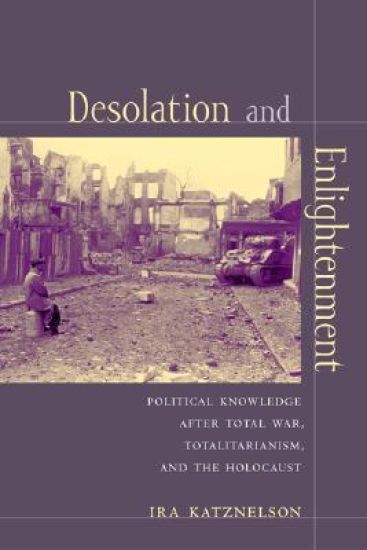
Desolation and Enlightenment

Desolation and Enlightenment

Ira Katznelson

Columbia University Press
2003
sidottu
During and especially after the Second World War, a group of leading scholars who had been perilously close to the war's devastation joined others fortunate enough to have been protected by distance in an effort to redefine and reinvigorate Western liberal ideals for a radically new age. Treating evil as an analytical category, they sought to discover the sources of twentieth-century horror and the potentialities of the modern state in the wake of western desolation. In the process, they devised strikingly new ways to understand politics, sociology and history that reverberate still. In this major intellectual history, Ira Katznelson examines the works of Hannah Arendt, Robert Dahl, Richard Hofstadter, Harold Lasswell, Charles Lindblom, Karl Polanyi, and David Truman, detailing their engagement with the larger project of reclaiming the West's moral bearing. In light of their epoch's calamities these intellectuals insisted that the tradition of Enlightenment thought required a new realism, a good deal of renovation, and much recommitment. This array of historians, political philosophers, and social scientists understood that a simple reassertion of liberal modernism had been made radically insufficient by the enormities and moral catastrophes of war, totalitarianism, and holocaust. Confronting their period's dashed hopes for reason and knowledge, they asked not just whether the Enlightenment should define modernity, but which Enlightenment we should wish to have. Decades later, in the midst of a new type of war and reanimated discussions of the concept of evil, we share no small stake in assessing their successes and limitations.
Desolation and Enlightenment

Desolation and Enlightenment

Ira Katznelson

Columbia University Press
2004
pokkari
During and especially after the Second World War, a group of leading scholars who had been perilously close to the war's devastation joined others fortunate enough to have been protected by distance in an effort to redefine and reinvigorate Western liberal ideals for a radically new age. Treating evil as an analytical category, they sought to discover the sources of twentieth-century horror and the potentialities of the modern state in the wake of western desolation. In the process, they devised strikingly new ways to understand politics, sociology and history that reverberate still. In this major intellectual history, Ira Katznelson examines the works of Hannah Arendt, Robert Dahl, Richard Hofstadter, Harold Lasswell, Charles Lindblom, Karl Polanyi, and David Truman, detailing their engagement with the larger project of reclaiming the West's moral bearing. In light of their epoch's calamities these intellectuals insisted that the tradition of Enlightenment thought required a new realism, a good deal of renovation, and much recommitment. This array of historians, political philosophers, and social scientists understood that a simple reassertion of liberal modernism had been made radically insufficient by the enormities and moral catastrophes of war, totalitarianism, and holocaust. Confronting their period's dashed hopes for reason and knowledge, they asked not just whether the Enlightenment should define modernity, but which Enlightenment we should wish to have. Decades later, in the midst of a new type of war and reanimated discussions of the concept of evil, we share no small stake in assessing their successes and limitations.
Desolation and Enlightenment

Desolation and Enlightenment

Ira Katznelson

Columbia University Press
2020
sidottu
During and especially after World War II, a group of leading scholars who had been perilously close to the war’s devastation joined others fortunate enough to have been protected by distance in an effort to redefine and reinvigorate liberal ideals for a radically new age. Treating evil as an analytical category, they sought to discover the sources of twentieth-century horror and the potentialities of the modern state in the wake of desolation. In the process, they devised strikingly new ways to understand politics, sociology, and history that reverberate still.In this major intellectual history, Ira Katznelson examines the works of Hannah Arendt, Robert Dahl, Richard Hofstadter, Harold Lasswell, Charles Lindblom, Karl Polanyi, and David Truman, detailing their engagement with the larger project of reclaiming the West’s moral bearing. In light of their epoch’s calamities, these intellectuals insisted that the tradition of Enlightenment thought required a new realism, a good deal of renovation, and much recommitment. This array of historians, political philosophers, and social scientists understood that a simple reassertion of liberal modernism had been made radically insufficient by the enormities and moral catastrophes of war, totalitarianism, and the Holocaust. Confronting dashed hopes for reason and knowledge, they asked not just whether the Enlightenment should define modernity but also which Enlightenment we should wish to have.
Desolation and Enlightenment

Desolation and Enlightenment

Ira Katznelson

Columbia University Press
2020
pokkari
During and especially after World War II, a group of leading scholars who had been perilously close to the war’s devastation joined others fortunate enough to have been protected by distance in an effort to redefine and reinvigorate liberal ideals for a radically new age. Treating evil as an analytical category, they sought to discover the sources of twentieth-century horror and the potentialities of the modern state in the wake of desolation. In the process, they devised strikingly new ways to understand politics, sociology, and history that reverberate still.In this major intellectual history, Ira Katznelson examines the works of Hannah Arendt, Robert Dahl, Richard Hofstadter, Harold Lasswell, Charles Lindblom, Karl Polanyi, and David Truman, detailing their engagement with the larger project of reclaiming the West’s moral bearing. In light of their epoch’s calamities, these intellectuals insisted that the tradition of Enlightenment thought required a new realism, a good deal of renovation, and much recommitment. This array of historians, political philosophers, and social scientists understood that a simple reassertion of liberal modernism had been made radically insufficient by the enormities and moral catastrophes of war, totalitarianism, and the Holocaust. Confronting dashed hopes for reason and knowledge, they asked not just whether the Enlightenment should define modernity but also which Enlightenment we should wish to have.
When Affirmative Action Was White

When Affirmative Action Was White

Ira Katznelson

WW Norton Co
2006
nidottu
In this "penetrating new analysis" (New York Times Book Review) Ira Katznelson fundamentally recasts our understanding of twentieth-century American history and demonstrates that all the key programs passed during the New Deal and Fair Deal era of the 1930s and 1940s were created in a deeply discriminatory manner. Through mechanisms designed by Southern Democrats that specifically excluded maids and farm workers, the gap between blacks and whites actually widened despite postwar prosperity. In the words of noted historian Eric Foner, "Katznelson's incisive book should change the terms of debate about affirmative action, and about the last seventy years of American history."
Liberalism's Crooked Circle

Liberalism's Crooked Circle

Ira Katznelson

Princeton University Press
1998
pokkari
This book is a profoundly moving and analytically incisive attempt to shift the terms of discussion in American politics. It speaks to the intellectual and political weaknesses within the liberal tradition that have put the United States at the mercy of libertarian, authoritarian populist, nakedly racist, and traditionalist elitist versions of the right-wing; and it seeks to identify resources that can move the left away from the stunned intellectual incoherence with which it has met the death of Bolshevism. In Ira Katznelson's view, Americans are squandering a tremendous ethical and political opportunity to redefine and reorient the liberal tradition. In an opening essay and two remarkable letters addressed to Adam Michnik, who is arguably East Europe's emblematic democratic intellectual, Katznelson seeks to recover this possibility. By examining issues that once occupied Michnik's fellow dissidents in the Warsaw group known as the Crooked Circle, Katznelson brings a fresh realism to old ideals and posits a liberalism that "stares hard" at cruelty, suffering, coercion, and tyrannical abuses of state power. Like the members of Michnik's club, he recognizes that the circumference of liberalism's circle never runs smooth and that tolerance requires extremely difficult judgments. Katznelson's first letter explores how the virtues of socialism, including its moral stand on social justice, can be related to liberalism while overcoming debilitating aspects of the socialist inheritance. The second asks whether liberalism can recognize, appreciate, and manage human difference. Situated in the lineage of efforts by Richard Hofstadter, C. Wright Mills, and Lionel Trilling to "thicken" liberalism, these letters also draw on personal experience in the radical politics of the 1960s and in the dissident culture of East and Central Europe in the years immediately preceding communism's demise. Liberalism's Crooked Circle could help foster a substantive debate in the American elections of 1996 and determine the contents of that desperately needed discussion.
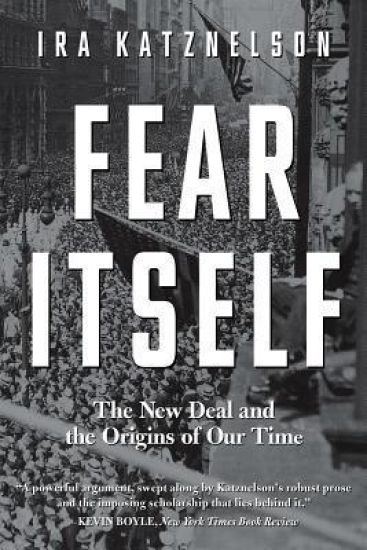
Fear Itself

Fear Itself

Ira Katznelson

Liveright Publishing Corporation
2014
nidottu
A work that “deeply reconceptualizes the New Deal and raises countless provocative questions” (David Kennedy), Fear Itself changes the ground rules for our understanding of this pivotal era in American history. Ira Katznelson examines the New Deal through the lens of a pervasive, almost existential fear that gripped a world defined by the collapse of capitalism and the rise of competing dictatorships, as well as a fear created by the ruinous racial divisions in American society. Katznelson argues that American democracy was both saved and distorted by a Faustian collaboration that guarded racial segregation as it built a new national state to manage capitalism and assert global power. Fear Itself charts the creation of the modern American state and “how a belief in the common good gave way to a central government dominated by interest-group politics and obsessed with national security” (Louis Menand, The New Yorker).
When Affirmative Action Was White

When Affirmative Action Was White

Ira Katznelson

WW NORTON CO
2023
nidottu
With this explosive analysis, Ira Katznelson fundamentally recast our understanding of twentieth-century American history, demonstrating that the key programs passed during the New Deal and Fair Deal eras were not, as we are so often told, fundamentally equitable or impartial, but discriminatory in the way they deliberately excluded African Americans from benefits. In fact, Katznelson writes, the gap between black and white Americans actually widened following this period, owing, in no small part, to the segregationist designs of southern Democrats. Now featuring a new introduction that situates this saga within the wider context of twentieth- and twenty-first-century history, When Affirmative Action Was White remains, tragically, as salient as ever, providing both a “painful understanding of how politics and race intersect” (Henry Louis Gates Jr.) and a broad justification for continuing affirmative action programs.
Religious Conversion

Religious Conversion

Ira Katznelson; Miri Rubin

TAYLOR FRANCIS LTD
2024
nidottu
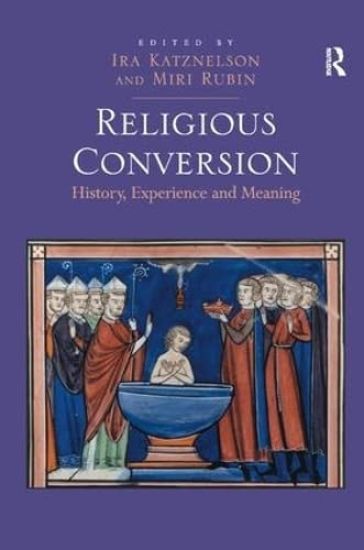
Religious conversion - a shift in membership from one community of faith to another - can take diverse forms in radically different circumstances. As the essays in this volume demonstrate, conversion can be protracted or sudden, voluntary or coerced, small-scale or large. It may be the result of active missionary efforts, instrumental decisions, or intellectual or spiritual attraction to a different doctrine and practices. In order to investigate these multiple meanings, and how they may differ across time and space, this collection ranges far and wide across medieval and early modern Europe and beyond. From early Christian pilgrims to fifteenth-century Ethiopia; from the Islamisation of the eastern Mediterranean to Reformation Germany, the volume highlights salient features and key concepts that define religious conversion, particular the Jewish, Muslim and Christian experiences. By probing similarities and variations, continuities and fissures, the volume also extends the range of conversion to focus on matters less commonly examined, such as competition for the meaning of sacred space, changes to bodies, patterns of gender, and the ways conversion has been understood and narrated by actors and observers. In so doing, it promotes a layered approach that deepens inquiry by identifying and suggesting constellations of elements that both compose particular instances of conversion and help make systematic comparisons possible by indicating how to ask comparable questions of often vastly different situations.
Religious Conversion

Religious Conversion

Ira Katznelson; Miri Rubin

Routledge
2014
sidottu
Religious conversion - a shift in membership from one community of faith to another - can take diverse forms in radically different circumstances. As the essays in this volume demonstrate, conversion can be protracted or sudden, voluntary or coerced, small-scale or large. It may be the result of active missionary efforts, instrumental decisions, or intellectual or spiritual attraction to a different doctrine and practices. In order to investigate these multiple meanings, and how they may differ across time and space, this collection ranges far and wide across medieval and early modern Europe and beyond. From early Christian pilgrims to fifteenth-century Ethiopia; from the Islamisation of the eastern Mediterranean to Reformation Germany, the volume highlights salient features and key concepts that define religious conversion, particular the Jewish, Muslim and Christian experiences. By probing similarities and variations, continuities and fissures, the volume also extends the range of conversion to focus on matters less commonly examined, such as competition for the meaning of sacred space, changes to bodies, patterns of gender, and the ways conversion has been understood and narrated by actors and observers. In so doing, it promotes a layered approach that deepens inquiry by identifying and suggesting constellations of elements that both compose particular instances of conversion and help make systematic comparisons possible by indicating how to ask comparable questions of often vastly different situations.
Liberal Beginnings

Liberal Beginnings

Andreas Kalyvas; Ira Katznelson

Cambridge University Press
2008
pokkari
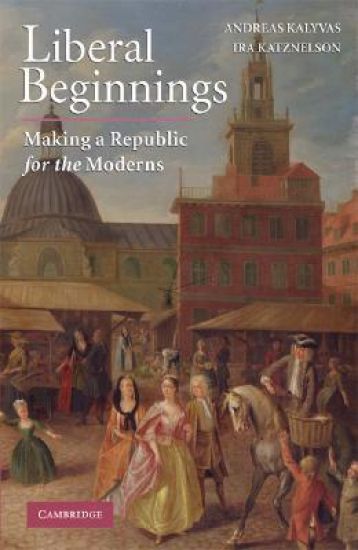
The book examines the origins and development of the modern liberal tradition and explores the relationship between republicanism and liberalism between 1750 and 1830. The authors consider the diverse settings of Scotland, the American colonies, the new United States, and France and examine the writings of six leading thinkers of this period: Adam Smith, Adam Ferguson, James Madison, Thomas Paine, Germaine de Staël, and Benjamin Constant. The book traces the process by which these thinkers transformed and advanced the republican project, both from within and by introducing new elements from without. Without compromising civic principles or abandoning republican language, they came to see that unrevised, the republican tradition could not grapple successfully with the political problems of their time. By investing new meanings, arguments, and justifications into existing republican ideas and political forms, these innovators fashioned a doctrine for a modern republic, the core of which was surprisingly liberal.
Southern Nation

Southern Nation

David Bateman; Ira Katznelson; John S. Lapinski

PRINCETON UNIVERSITY PRESS
2018
sidottu
How southern members of Congress remade the United States in their own image after the Civil WarNo question has loomed larger in the American experience than the role of the South. Southern Nation examines how southern members of Congress shaped national public policy and American institutions from Reconstruction to the New Deal—and along the way remade the region and the nation in their own image.The central paradox of southern politics was how such a highly diverse region could be transformed into a coherent and unified bloc—a veritable nation within a nation that exercised extraordinary influence in politics. This book shows how this unlikely transformation occurred in Congress, the institutional site where the South's representatives forged a new relationship with the rest of the nation. Drawing on an innovative theory of southern lawmaking, in-depth analyses of key historical sources, and congressional data, Southern Nation traces how southern legislators confronted the dilemma of needing federal investment while opposing interference with the South's racial hierarchy, a problem they navigated with mixed results before choosing to prioritize white supremacy above all else.Southern Nation reveals how southern members of Congress gradually won for themselves an unparalleled role in policymaking, and left all southerners—whites and blacks—disadvantaged to this day. At first, the successful defense of the South's capacity to govern race relations left southern political leaders locally empowered but marginalized nationally. With changing rules in Congress, however, southern representatives soon became strategically positioned to profoundly influence national affairs.
Time Counts

Time Counts

Gregory Wawro; Ira Katznelson

PRINCETON UNIVERSITY PRESS
2022
sidottu
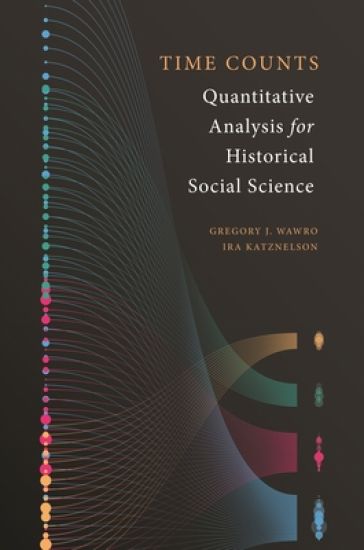
How to study the past using dataQuantitative Analysis for Historical Social Science advances historical research in the social sciences by bridging the divide between qualitative and quantitative analysis. Gregory Wawro and Ira Katznelson argue for an expansion of the standard quantitative methodological toolkit with a set of innovative approaches that better capture nuances missed by more commonly used statistical methods. Demonstrating how to employ such promising tools, Wawro and Katznelson address the criticisms made by prominent historians and historically oriented social scientists regarding the shortcomings of mainstream quantitative approaches for studying the past.Traditional statistical methods have been inadequate in addressing temporality, periodicity, specificity, and context—features central to good historical analysis. To address these shortcomings, Wawro and Katznelson argue for the application of alternative approaches that are particularly well-suited to incorporating these features in empirical investigations. The authors demonstrate the advantages of these techniques with replications of research that locate structural breaks and uncover temporal evolution. They develop new practices for testing claims about path dependence in time-series data, and they discuss the promise and perils of using historical approaches to enhance causal inference.Opening a dialogue among traditional qualitative scholars and applied quantitative social scientists focusing on history, Quantitative Analysis for Historical Social Science illustrates powerful ways to move historical social science research forward.
Time Counts

Time Counts

Gregory Wawro; Ira Katznelson

PRINCETON UNIVERSITY PRESS
2022
pokkari
How to study the past using dataQuantitative Analysis for Historical Social Science advances historical research in the social sciences by bridging the divide between qualitative and quantitative analysis. Gregory Wawro and Ira Katznelson argue for an expansion of the standard quantitative methodological toolkit with a set of innovative approaches that better capture nuances missed by more commonly used statistical methods. Demonstrating how to employ such promising tools, Wawro and Katznelson address the criticisms made by prominent historians and historically oriented social scientists regarding the shortcomings of mainstream quantitative approaches for studying the past.Traditional statistical methods have been inadequate in addressing temporality, periodicity, specificity, and context—features central to good historical analysis. To address these shortcomings, Wawro and Katznelson argue for the application of alternative approaches that are particularly well-suited to incorporating these features in empirical investigations. The authors demonstrate the advantages of these techniques with replications of research that locate structural breaks and uncover temporal evolution. They develop new practices for testing claims about path dependence in time-series data, and they discuss the promise and perils of using historical approaches to enhance causal inference.Opening a dialogue among traditional qualitative scholars and applied quantitative social scientists focusing on history, Quantitative Analysis for Historical Social Science illustrates powerful ways to move historical social science research forward.
Southern Nation

Southern Nation

David Bateman; Ira Katznelson; John S. Lapinski

Princeton University Press
2020
pokkari
How southern members of Congress remade the United States in their own image after the Civil WarNo question has loomed larger in the American experience than the role of the South. Southern Nation examines how southern members of Congress shaped national public policy and American institutions from Reconstruction to the New Deal—and along the way remade the region and the nation in their own image.The central paradox of southern politics was how such a highly diverse region could be transformed into a coherent and unified bloc—a veritable nation within a nation that exercised extraordinary influence in politics. This book shows how this unlikely transformation occurred in Congress, the institutional site where the South's representatives forged a new relationship with the rest of the nation. Drawing on an innovative theory of southern lawmaking, in-depth analyses of key historical sources, and congressional data, Southern Nation traces how southern legislators confronted the dilemma of needing federal investment while opposing interference with the South's racial hierarchy, a problem they navigated with mixed results before choosing to prioritize white supremacy above all else.Southern Nation reveals how southern members of Congress gradually won for themselves an unparalleled role in policymaking, and left all southerners—whites and blacks—disadvantaged to this day. At first, the successful defense of the South's capacity to govern race relations left southern political leaders locally empowered but marginalized nationally. With changing rules in Congress, however, southern representatives soon became strategically positioned to profoundly influence national affairs.