Kirjojen hintavertailu. Mukana 12 363 183 kirjaa ja 12 kauppaa.

Kirjahaku

Etsi kirjoja tekijän nimen, kirjan nimen tai ISBN:n perusteella.

5 kirjaa tekijältä Ira Rutkow

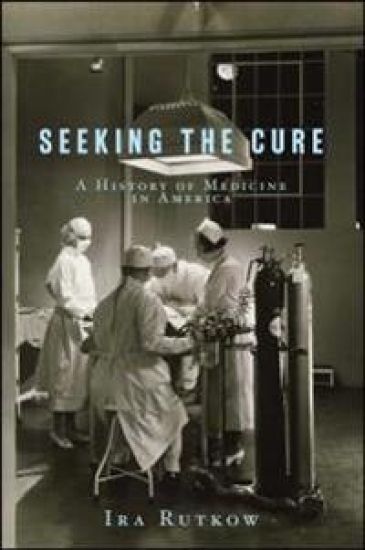
Seeking the Cure

Seeking the Cure

Ira Rutkow

Scribner Book Company
2012
nidottu
A timely, authoritative, and entertaining history of medicine in America by an eminent physician Despite all that has been written and said about American medicine, narrative accounts of its history are uncommon. Until Ira Rutkow's Seeking the Cure, there have been no modern works, either for the lay reader or the physician, that convey the extraordinary story of medicine in the United States. Yet for more than three centuries, the flowering of medicine--its triumphal progress from ignorance to science--has proven crucial to Americans' under-standing of their country and themselves. Seeking the Cure tells the tale of American medicine with a series of little-known anecdotes that bring to life the grand and unceasing struggle by physicians to shed unsound, if venerated, beliefs and practices and adopt new medicines and treatments, often in the face of controversy and scorn. Rutkow expertly weaves the stories of individual doctors--what they believed and how they practiced--with the economic, political, and social issues facing the nation. Among the book's many historical personages are Cotton Mather, Benjamin Franklin, George Washington (whose timely adoption of a controversial medical practice probably saved the Continental Army), Benjamin Rush, James Garfield (who was killed by his doctors, not by an assassin's bullet), and Joseph Lister. The book touches such diverse topics as smallpox and the Revolutionary War, the establishment of the first medical schools, medicine during the Civil War, railroad medicine and the beginnings of specialization, the rise of the medical-industrial complex, and the thrilling yet costly advent of modern disease-curing technologies utterly unimaginable a generation ago, such as gene therapies, body scanners, and robotic surgeries. In our time of spirited national debate over the future of American health care amid a seemingly infinite flow of new medical discoveries and pharmaceutical products, Rutkow's account provides readers with an essential historic, social, and even philosophical context. Working in the grand American literary tradition established by such eminent writer-doctors as Oliver Wendell Holmes, William Carlos Williams, Sherwin Nuland, and Oliver Sacks, he combines the historian's perspective with the physician's seasoned expertise. Capacious, learned, and gracefully told, Seeking the Cure will satisfy armchair historians and doctors alike, for, as Rutkow shows, the history of American medicine is a portrait of America itself.
Empire of the Scalpel: The History of Surgery

Empire of the Scalpel: The History of Surgery

Ira Rutkow

Scribner Book Company
2022
sidottu
From an eminent surgeon and historian comes the "by turns fascinating and ghastly" (The New York Times Book Review, Editors' Choice) story of surgery's development--from the Stone Age to the present day--blending meticulous medical research with vivid storytelling. There are not many life events that can be as simultaneously frightening and hopeful as a surgical operation. In America, tens-of-millions of major surgical procedures are performed annually, yet few of us consider the magnitude of these figures because we have such inherent confidence in surgeons. And, despite passionate debates about health care and the media's endless fascination with surgery, most of us have no idea how the first surgeons came to be because the story of surgery has never been fully told. Now, Empire of the Scalpel elegantly reveals surgery's fascinating evolution from its early roots in ancient Egypt to its refinement in Europe and rise to scientific dominance in the United States. From the 16th-century saga of Andreas Vesalius and his crusade to accurately describe human anatomy while appeasing the conservative clergy who clamored for his burning at the stake, to the hard-to-believe story of late-19th century surgeons' apathy to Joseph Lister's innovation of antisepsis and how this indifference led to thousands of unnecessary surgical deaths, Empire of the Scalpel is both a global history and a uniquely American tale. You'll discover how in the 20th century the US achieved surgical leadership, heralded by Harvard's Joseph Murray and his Nobel Prize-winning, seemingly impossible feat of transplanting a kidney, which ushered in a new era of transplants that continues to make procedures once thought insurmountable into achievable successes. Today, the list of possible operations is almost infinite--from knee and hip replacement to heart bypass and transplants to fat reduction and rhinoplasty--and "Rutkow has a raconteur's touch" (San Francisco Chronicle) as he draws on his five-decade career to show us how we got here. Comprehensive, authoritative, and captivating, Empire of the Scalpel is "a fascinating, well-rendered story of how the once-impossible became a daily reality" (Kirkus Reviews, starred review).
Empire of the Scalpel: The History of Surgery

Empire of the Scalpel: The History of Surgery

Ira Rutkow

Scribner Book Company
2023
nidottu
From an eminent surgeon and historian comes the "by turns fascinating and ghastly" (The New York Times Book Review, Editors' Choice) story of surgery's development--from the Stone Age to the present day--blending meticulous medical research with vivid storytelling. There are not many life events that can be as simultaneously frightening and hopeful as a surgical operation. In America, tens-of-millions of major surgical procedures are performed annually, yet few of us consider the magnitude of these figures because we have such inherent confidence in surgeons. And, despite passionate debates about health care and the media's endless fascination with surgery, most of us have no idea how the first surgeons came to be because the story of surgery has never been fully told. Now, Empire of the Scalpel elegantly reveals surgery's fascinating evolution from its early roots in ancient Egypt to its refinement in Europe and rise to scientific dominance in the United States. From the 16th-century saga of Andreas Vesalius and his crusade to accurately describe human anatomy while appeasing the conservative clergy who clamored for his burning at the stake, to the hard-to-believe story of late-19th century surgeons' apathy to Joseph Lister's innovation of antisepsis and how this indifference led to thousands of unnecessary surgical deaths, Empire of the Scalpel is both a global history and a uniquely American tale. You'll discover how in the 20th century the US achieved surgical leadership, heralded by Harvard's Joseph Murray and his Nobel Prize-winning, seemingly impossible feat of transplanting a kidney, which ushered in a new era of transplants that continues to make procedures once thought insurmountable into achievable successes. Today, the list of possible operations is almost infinite--from knee and hip replacement to heart bypass and transplants to fat reduction and rhinoplasty--and "Rutkow has a raconteur's touch" (San Francisco Chronicle) as he draws on his five-decade career to show us how we got here. Comprehensive, authoritative, and captivating, Empire of the Scalpel is "a fascinating, well-rendered story of how the once-impossible became a daily reality" (Kirkus Reviews, starred review).
Empire of the Scalpel: The History of Surgery
From a renowned surgeon and historian with five decades of experience comes a remarkable history of surgery's development--spanning the Stone Age to the present day--blending meticulous medical studies with lively and skillful storytelling.There are not many events in life that can be as simultaneously life-frightening and life-saving as a surgical operation. Yet, in America, tens-of-millions of major surgical procedures are performed annually but few of us pause to consider the magnitude of these figures because we have such inherent confidence in surgeons. And, despite passionate debates about healthcare and the endless fascination with surgical procedures, most of us have no idea how surgeons came to be because the story of surgery has never been fully told. Now, Empire of the Scalpel elegantly reveals the fascinating history of surgery's evolution from its earliest roots in Europe through its rise to scientific and social dominance in the United States. From the 16th-century saga of Andreas Vesalius and his crusade to accurately describe human anatomy while appeasing the conservative clergy who clamored for his burning at the stake, to the hard-to-believe story of late-19th century surgeons' apathy to Joseph Lister's innovation of antisepsis and how this indifference led to thousands of unnecessary surgical deaths, Empire of the Scalpel is both a global history and a uniquely American tale. You'll discover how in the 20th century the US achieved surgical world supremacy heralded by the Nobel Prize-winning, seemingly impossible feat of transplanting a kidney and how the heart-lung machine was developed, along with much more. Today, the list of possible operations is almost infinite--from knee and hip replacement to heart bypass and transplants to fat reduction and rhinoplasty--and Rutkow draws on his five-decade career to show us how we got here. Authoritative, captivating, and comprehensive, Empire of the Scalpel portrays the evolution of surgery in all its dramatic and life-enhancing complexity and shows that its history is truly one awe-inspiring triumph after another.