Kirjojen hintavertailu. Mukana 11 699 587 kirjaa ja 12 kauppaa.

Kirjahaku

Etsi kirjoja tekijän nimen, kirjan nimen tai ISBN:n perusteella.

8 kirjaa tekijältä Irad Malkin

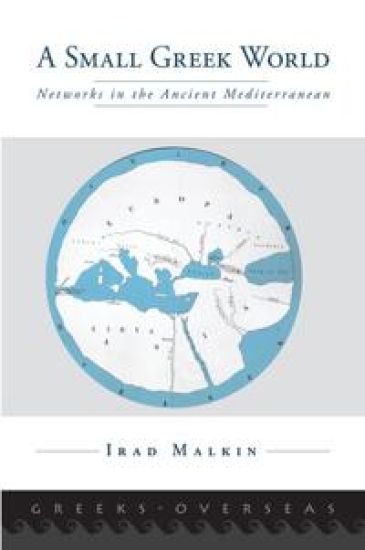
A Small Greek World

A Small Greek World

Irad Malkin

Oxford University Press Inc
2013
nidottu
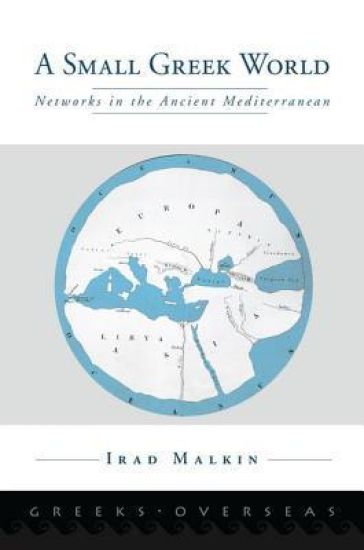
Greek civilization and identity crystallized not when Greeks were close together but when they came to be far apart. It emerged during the Archaic period when Greeks founded coastal city states and trading stations in ever-widening horizons from the Ukraine to Spain. No center directed their diffusion: mother cities were numerous and the new settlements ("colonies") would often engender more settlements. The "Greek center" was at sea; it was formed through back-ripple effects of cultural convergence, following the physical divergence of independent settlements. "The shores of Greece are like hems stitched onto the lands of Barbarian peoples" (Cicero). Overall, and regardless of distance, settlement practices became Greek in the making and Greek communities far more resembled each other than any of their particular neighbors like the Etruscans, Iberians, Scythians, or Libyans. The contrast between "center and periphery" hardly mattered (all was peri-, "around"), nor was a bi-polar contrast with Barbarians of much significance. Should we admire the Greeks for having created their civilization in spite of the enormous distances and discontinuous territories separating their independent communities? Or did the salient aspects of their civilization form and crystallize because of its architecture as a de-centralized network? This book claims that the answer lies in network attributes shaping a "Small Greek World," where separation is measured by degrees of contact rather than by physical dimensions.
A Small Greek World

A Small Greek World

Irad Malkin

Oxford University Press Inc
2011
sidottu
Greek civilization and identity crystallized not when Greeks were close together but when they came to be far apart. It emerged during the Archaic period when Greeks founded coastal city states and trading stations in ever-widening horizons from the Ukraine to Spain. No center directed their diffusion: mother cities were numerous and the new settlements ("colonies") would often engender more settlements. The "Greek center" was at sea; it was formed through back-ripple effects of cultural convergence, following the physical divergence of independent settlements. "The shores of Greece are like hems stitched onto the lands of Barbarian peoples" (Cicero). Overall, and regardless of distance, settlement practices became Greek in the making and Greek communities far more resembled each other than any of their particular neighbors like the Etruscans, Iberians, Scythians, or Libyans. The contrast between "center and periphery" hardly mattered (all was peri-, "around"), nor was a bi-polar contrast with Barbarians of much significance. Should we admire the Greeks for having created their civilization in spite of the enormous distances and discontinuous territories separating their independent communities? Or did the salient aspects of their civilization form and crystallize because of its architecture as a de-centralized network? This book claims that the answer lies in network attributes shaping a "Small Greek World," where separation is measured by degrees of contact rather than by physical dimensions.
Mediterranean Paradigms and Classical Antiquity
In this book, prominent historians apply Mediterranean paradigms to Classical Mediterranean Antiquty (Greece and Rome), allowing for a new approach to the ancient world and enhancing antiquity's relevance to the understanding of other historical periods as well as our contemporary world.This book was previously published as a special issue of the journal Mediterranean Historical Review.
Mediterranean Paradigms and Classical Antiquity
In this book, prominent historians apply Mediterranean paradigms to Classical Mediterranean Antiquty (Greece and Rome), allowing for a new approach to the ancient world and enhancing antiquity's relevance to the understanding of other historical periods as well as our contemporary world.This book was previously published as a special issue of the journal Mediterranean Historical Review.
The Returns of Odysseus

The Returns of Odysseus

Irad Malkin

University of California Press
1998
sidottu
This remarkably rich and multifaceted study of early Greek exploration makes an original contribution to current discussions of the encounters between Greeks and non-Greeks. Focusing in particular on myths about Odysseus and other heroes who visited foreign lands on their mythical voyages homeward after the Trojan War, Irad Malkin shows how these stories functioned to mediate encounters and conceptualize ethnicity and identity during the Archaic and Classical periods. Synthesizing a wide range of archaeological, mythological, and literary sources, this exceptionally learned book strengthens our understanding of early Greek exploration and city-founding along the coasts of the Western Mediterranean, reconceptualizes the role of myth in ancient societies, and revitalizes our understanding of ethnicity in antiquity. Malkin shows how the figure of Odysseus became a proto-colonial hero whose influence transcended the Greek-speaking world. The return-myths constituted a generative mythology, giving rise to oral poems, stories, iconographic imagery, rituals, historiographical interpretation, and the articulation of ethnic identities. Reassessing the role of Homer and alternative return-myths, the book argues for the active historical function of myth and collective representations and traces their changing roles through a spectrum of colonial perceptions--from the proto-colonial, through justifications of expansion and annexation, and up to decolonization.
Myth and Territory in the Spartan Mediterranean

Myth and Territory in the Spartan Mediterranean

Irad Malkin

Cambridge University Press
2003
pokkari
This book discusses Greek attitudes to settlement and territory as articulated through myths and cults. The emphasis is less on the poetic, timeless qualities of the myths, than on their historical function in the archaic and Classical periods, covering the spectrum from explicit charter myths legitimating conquest, displacement and settlement, to the ‘precedent-setting’ and even aetiological myths, rendering new landscapes ‘Greek’. This spectrum is broadest in the world of Spartan colonisation - the Spartan Mediterranean - where the greater challenges to territorial possession and Sparta’s acute self-awareness of her relative national youthfulness elicited explicit responses in the form of charter myths. The concept of a Spartan Mediterranean, in contrast to the image of a land-locked Sparta, is a major contribution of this book.
La Mediterranee Spartiate

La Mediterranee Spartiate

Irad Malkin

Les Belles Lettres
1999
nidottu
Ce livre traite de l'attitude des Grecs envers les notions d'implantation et de territoire telles qu'on les trouve exprimees dans les mythes et les cultes. Il y est question moins de la valeur poetique et intemporelle des mythes que de leur fonction historique aux epoques archaique et classique, qu'il s'agisse de mythes constitutifs legitimant la conquete, le deplacement et l'implantation ou de mythes etiologiques, tous redessinent a la grecque les nouvelles terres conquises. L'eventail des mythes est particulierement large dans le monde de la colonisation spartiate - la Mediterranee spartiate - ou le desir de conquete et la jeunesse de la nation spartiate susciterent force mythes fondateurs. Sparte elle-meme etait percue comme une jeune colonie dorienne, dotee de son propre mythe. Ses caracteristiques propres (constitution, cultes, heros, attitude envers les peuples sujets) passerent parfois a ses colonies, alors que dans des cites comme Tarente et Cyrene continuite et independance entretenaient une relation conflictuelle. L'idee d'une Mediterranee spartiate contrastant avec l'image d'une Sparte fermee sur elle-meme et la part prise par les mythes et les cultes dans la construction de cette identite sont les principales conclusions de cette etude. Antiquisants, historiens, anthropologues et historiens des religions et des mythes y trouveront de quoi nourrir leur reflexion. Irad Malkin est professeur d'Histoire de la Grece ancienne et directeur du Centre des Etudes mediterraneennes a l'Universite de Tel Aviv. Il a publie Religion and Colonization in Ancient Greece (1987) et The Returns of Odysseus: Colonization and Ethnicity (1998).
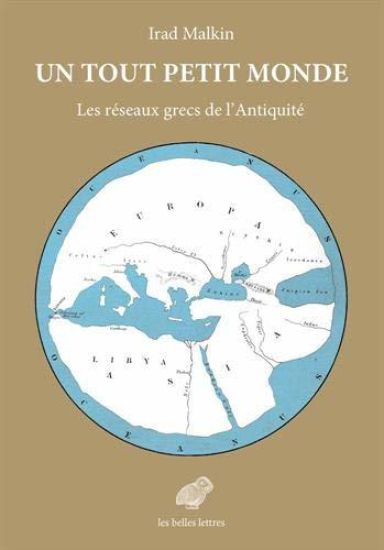
Un Tout Petit Monde: Les Reseaux Grecs de l'Antiquite
La civilisation grecque a emerge a partir du moment ou les Grecs se separaient les uns des autres et s'installaient loin de la Grece continentale, jusque sur les rivages de la mer Noire et de la peninsule Iberique. C'etait la une diaspora sans foyer d'origine, puisqu'il n'y avait pas d'empire grec ou de centre grec etabli qui aurait dirige la creation de ces centaines de communautes. Une fois disperses, au lieu de s'assimiler et de s'orienter vers leurs nouveaux environnements, ces Grecs continuerent a se referer les uns aux autres a travers la Mediterranee et la mer Noire tout en cristallisant par la meme leurs points communs et leur identite collective. A terme, les communautes grecques finirent par se ressembler entre elles bien plus qu'a aucun de leurs voisins etrusques, scythes ou libyens. Dans ce nouvel ouvrage, Irad Malkin emploie les concepts de la theorie des reseaux pour rendre compte de maniere originale de l'essor de la civilisation grecque au cours de la periode archaique. Les dynamiques de connectivite des reseaux actuels tels que l'Internet, qui tient tres peu compte des delimitations traditionnelles, sont remarquablement similaires aux reseaux de colonisation, de commerce, d'art et de cultes religieux de la Mediterranee archaique. Ces liens, a la fois penses et fortuits, reduisirent rapidement la distance qui separait les noeuds du reseau grec, faisant de la vaste Mediterranee et de la mer Noire un petit monde . Offrant une contribution majeure a un courant en plein essor de la recherche en Histoire, Un tout petit monde permet de depasser le traditionnel modele centre-peripherie de l'expansion grecque.