Kirjojen hintavertailu. Mukana 12 390 323 kirjaa ja 12 kauppaa.

Kirjahaku

Etsi kirjoja tekijän nimen, kirjan nimen tai ISBN:n perusteella.

10 kirjaa tekijältä Irene Eber

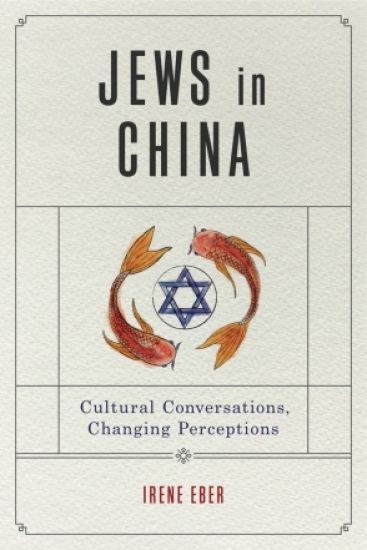
Jews in China

Jews in China

Irene Eber

Pennsylvania State University Press
2019
sidottu
Irene Eber was one of the foremost authorities on Jews in China during the twentieth and twenty-first centuries—a field that, in contrast to the study of the Jewish diaspora in Europe and the Americas, has been critically neglected. This volume gathers fourteen of Eber’s most salient articles and essays on the exchanges between Jewish and Chinese cultures, making available to students, scholars, and general readers a representative sample of the range and depth of her important work in the field of Jews in China.Jews in China delineates the centuries-long, reciprocal dialogue between Jews, Jewish culture, and China, all under the overarching theme of cultural translation. The first section of the book sets forth a sweeping overview of the history of Jews in China, beginning in the twelfth century and concluding with a detailed assessment of the two crucial years leading up to the Second World War. The second section examines the translation of Chinese classics into Hebrew and the translation of the Hebrew Bible into Chinese. The third and final section turns to modern literature, bringing together eight essays that underscore the cultural reciprocity that takes place through acts of translation.The centuries-long relationship between Judaism and China is often overlooked in the light of the extensive discourse surrounding European and American Judaism. With this volume, Eber reminds us that we have much to learn from the intersections between Jewish identity and Chinese culture.
Jews in China

Jews in China

Irene Eber

Pennsylvania State University Press
2021
pokkari
Irene Eber was one of the foremost authorities on Jews in China during the twentieth and twenty-first centuries—a field that, in contrast to the study of the Jewish diaspora in Europe and the Americas, has been critically neglected. This volume gathers fourteen of Eber’s most salient articles and essays on the exchanges between Jewish and Chinese cultures, making available to students, scholars, and general readers a representative sample of the range and depth of her important work in the field of Jews in China.Jews in China delineates the centuries-long, reciprocal dialogue between Jews, Jewish culture, and China, all under the overarching theme of cultural translation. The first section of the book sets forth a sweeping overview of the history of Jews in China, beginning in the twelfth century and concluding with a detailed assessment of the two crucial years leading up to the Second World War. The second section examines the translation of Chinese classics into Hebrew and the translation of the Hebrew Bible into Chinese. The third and final section turns to modern literature, bringing together eight essays that underscore the cultural reciprocity that takes place through acts of translation.The centuries-long relationship between Judaism and China is often overlooked in the light of the extensive discourse surrounding European and American Judaism. With this volume, Eber reminds us that we have much to learn from the intersections between Jewish identity and Chinese culture.
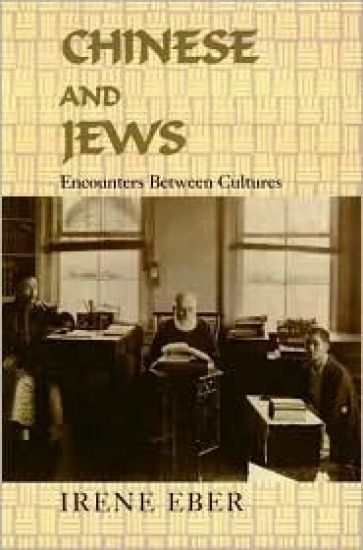
Chinese and Jews

Chinese and Jews

Irene Eber

Vallentine Mitchell Co Ltd
2008
nidottu
The essays featured in this important book span an entire millennium, from the arrival of Jews to Chinese shores during the Tang Dynasty in the 9th Century to modern times, illuminating the fascinating encounters between the two cultures. The first part of the book deals with the arrival of Jews to China and their organisation and life in the remote and isolated community of Kaifeng, the settlement of Jews after the Opium War in the mid-nineteenth century and finally the story of the Jewish refugees who flocked to China to find a haven from Nazi persecution in the twentieth century.The second part reflects on the intellectual exchanges between Jews and their Chinese hosts, how the Jewish communities maintained their identity and how their respective cultures met and merged in surprising and powerful ways through scholarship, literary exchange, the translation of Chinese and Yiddish works and through religious reciprocation. Unique in its breadth and depth of analysis, Irene Eber's account of the intellectual and inter-cultural history of these two civilisations, at first sight so diverse, is of great value to scholars and general readers alike.
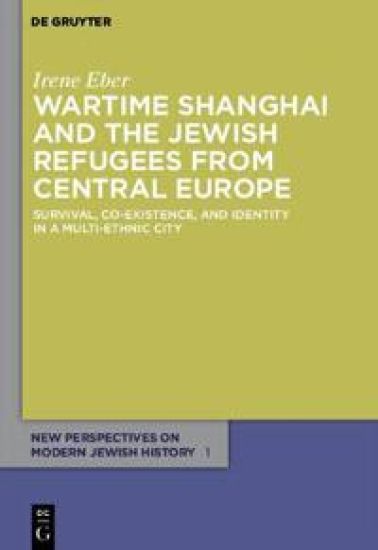
Wartime Shanghai and the Jewish Refugees from Central Europe
The study discusses the history of the Jewish refugees within the Shanghai setting and its relationship to the two established Jewish communities, the Sephardi and Russian Jews. Attention is also focused on the cultural life of the refugees who used both German and Yiddish, and on their attempts to cope under Japanese occupation after the outbreak of the Pacific War. Differences of identity existed between Sephardi and Ashkenazi Jews, religious and secular, aside from linguistic and cultural differences. The study aims to understand the exile condition of the refugees and their amazing efforts to create a semblance of cultural life in a strange new world.
Wartime Shanghai and the Jewish Refugees from Central Europe
The study discusses the history of the Jewish refugees within the Shanghai setting and its relationship to the two established Jewish communities, the Sephardi and Russian Jews. Attention is also focused on the cultural life of the refugees who used both German and Yiddish, and on their attempts to cope under Japanese occupation after the outbreak of the Pacific War.
The Jewish Bishop and the Chinese Bible
A study of the life and times of Bishop S.I.J. Schereschewsky (1831-1906) and his translation of the Hebrew Old Testament into northern vernacular (Mandarin) Chinese. Based largely on archival materials, missionary records and letters, the book includes an analysis of the translated Chinese text together with Schereschewsky's explanatory notes. The book examines his Jewish youth in Eastern Europe, conversion, American seminary study, journey to Shanghai and Beijing, mission routine, the translating committee's work, his tasks as Episcopal bishop in Shanghai and the founding of St. John's University. Concluding chapters analyze the controversial "Term Question" (the Chinese term for God) and Schereschewsky's techniques of translating the Hebrew text. Included are useful discussions of the Old Testament's Chinese reception and the role of this translation for subsequent Bible translating efforts.
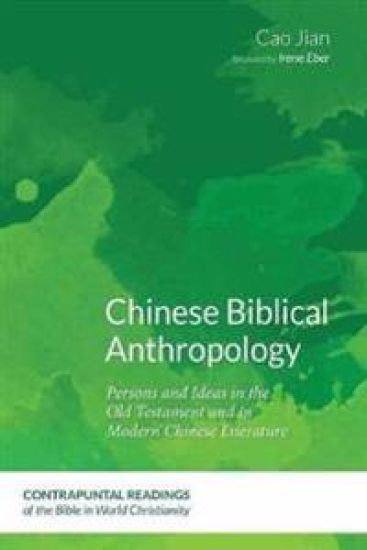
Chinese Biblical Anthropology

Chinese Biblical Anthropology

Jian Cao; Irene Eber

Pickwick Publications
2019
pokkari
In this study that is largely intellectual history, Cao Jian observes how Old Testament motifs were introduced by Protestant missionaries and Bible translators, with the help of Chinese co-workers in the beginning, and how those motifs drew attention from local converts and led to discussions among them in light of the norms in Confucianism. Then, Cao demonstrates how Confucian reformists started reacting to missionary publications and showing interest in Old Testament motifs. After the defeat of China in 1894-1895 in the Sino-Japanese War, the response to the Old Testament became more active and influential among China's population. The author shows new interests and tendencies in Old Testament interpretation among educated Chinese with various political ideals at a time of national crisis. He also demonstrates how the vernacular movement in Bible translating and missionary Old Testament education popularized and modernized Old Testament reading and studies in Chinese society. After that transitional period, discussions of Old Testament motifs became even more abundant and diverse. The author concentrates on those regarding the notion of God and monotheism. In China's nationalism, the Old Testament proved no less stimulating. The author deals with Moses and the prophets to understand how they became valid to those active in both religious and secular realms. ""In the unsettling era of change and crisis covered by the book, Chinese intellectuals have gained some insight and inspiration in the reading of the Chinese Union Version translation of the Bible, especially the Mandarin version of 1919, which is being celebrated for its centennial this year. Their contextual readings have contributed to the significant tradition of interpretation of a foreign text in the multiple textual heritage of China, which this present work sets out to critically engage. It is indicative to find that monotheistic perspective of the Bible is one of the challenging ideas not only in the Chinese cultural and religious context, but also for the very quest for a China in its modern setting."" --Archie C. C. Lee, Professor of the Hebrew Bible, Divinity School of Chung Chi College ""Cao Jian's study of the translation and reception of the Hebrew Scriptures in Chinese literary, political, and philosophical writings offers an impressive new vision of the scope of intellectual engagement with Scripture in the late Qing and early twentieth centuries. From political readings of the Jewish nation to poetic renditions of Lamentations, Cao's book expands and enriches our understanding of the Bible in Chinese history as pedagogical text, literary inspiration, and intellectual sounding-board."" --Chloe Starr, Associate Professor of Asian Christianity and Theology at Yale Divinity School Cao Jian is an associate professor in the Department of Philosophy at Sun Yat-sen University in Guangzhou, China. He completed his PhD in Biblical Studies at the Hebrew University in Jerusalem (2009). His interests in research and teaching include the Hebrew Bible, Jewish thought, and the Bible in China. He has published widely in major scholarly journals such as The Bible Translator (USA), Monumenta Serica (Germany), Asian and African Studies (Slovakia), Logos & Pneuma (Hong Kong), and Sino-Christian Studies (Taiwan).