Kirjojen hintavertailu. Mukana 11 244 527 kirjaa ja 12 kauppaa.

Kirjahaku

Etsi kirjoja tekijän nimen, kirjan nimen tai ISBN:n perusteella.

3 kirjaa tekijältä Irene Masing-Delic

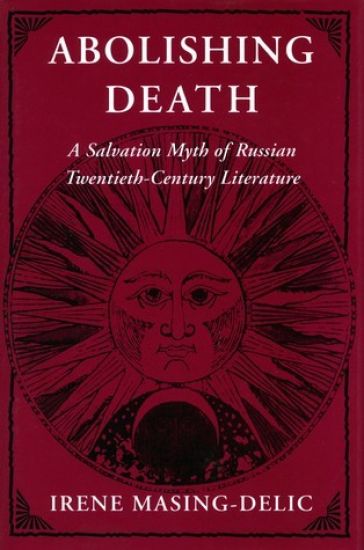
Abolishing Death

Abolishing Death

Irene Masing-Delic

Stanford University Press
1992
sidottu
The idea of abolishing death was one of the most influential myth-making concepts expressed in Russian literature from 1900 to 1930, especially in the works of writers who attributed a "life-modeling" function to art. To them, art was to create a life so aesthetically organized and perfect that immortality would be an inevitable consequence. This idea was mirrored in the thought of some who believed that the political revolution of 1917 would bring about a revolution in basic existential facts: specifically, the belief that communism and the accompanying advance of science would ultimately be able to bestow physical immortality and to resurrect the dead. According to one variant, for example, the dead were to be resurrected by extrapolation from the traces of their labor left in the material world. The author finds the seeds of this extraordinary concept in the erosion of traditional religion in late-nineteenth-century Russia. Influenced by the new power of scientific inquiry, humankind appropriated various divine attributes one after the other, including omnipotence and omniscience, but eventually even aiming toward the realization of individual, physical immortality, and thus aspiring to equality with God. Writers as different as the "decadent" Fyodor Sologub, the "political" Maxim Gorky, and the "gothic" Nikolai Ognyov created works for making mortals into gods, transforming the raw materials of current reality into legend. The book first outlines the ideological context of the immortalization project, notably the impact of the philosophers Fyodorov and Solovyov. The remainder of the book consists of close readings of texts by Sologub, Gorky, Blok, Ognyov, and Zabolotsky. Taken together, the works yield the "salvation program" that tells people how to abolish death and live forever in an eternal, self-created cosmos—gods of a legend that was made possible by creative artists, imaginative scientists, and inspired laborers.
Abolishing Death

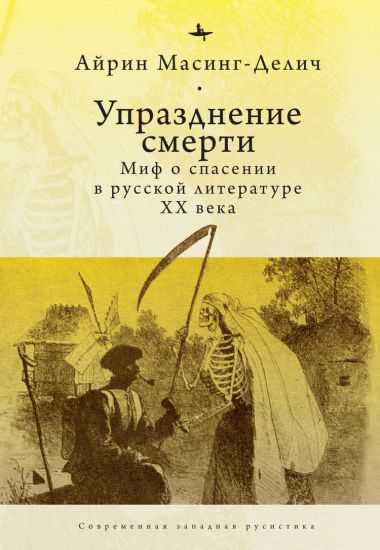
Abolishing Death

Irene Masing-Delic

Academic Studies Press
2020
sidottu
The idea of abolishing death was one of the most influential myth-making concepts expressed in Russian literature from 1900 to 1930. In this book Dr. Masing-Delic finds the seeds of this extraordinary concept in the erosion of traditional religion in late-nineteenth-century Russia. Influenced by the new power of scientific inquiry, humankind appropriated various divine attributes one after the other, including omnipotence and omniscience, but eventually even aiming toward the realization of individual, physical immortality, and thus aspiring to equality with God. This aspiration, expressed in the ideas of Vladimir Soloviev, Nikolai Fedorov and in the renewed concepts of Gnosticism, brought such different writers as Maxim Gorky, Alexander Blok, Fedor Sologub, Nikolai Ognev and Nikolai Zabolotsky together in a single space of the myth of the final victory over death.
Exotic Moscow under Western Eyes

Exotic Moscow under Western Eyes

Irene Masing-Delic

Academic Studies Press
2009
sidottu
This collection of essays on Turgenev, Goncharov, Conrad, Dos-toevsky, Blok, Briusov, Gor'kii, Pasternak and Nabokov presents a unified vision of diverse voices. Recurring themes in Masing-Delic's work include the distinction between 'culture' and 'civilisation' with Russia as the bearer of culture because it is 'barbaric'. Another deals with the synthesis of 'sense and sensibility' and the vision of 'Apollo' and 'Dionysus' creating a 'civilised culture' together. Voices that delight in the artificiality of civilisation are complemented by those apprehensive of the dangers of barbarism. Adding new perspectives to the much-debated oppo-sition of vital Russia and a declining West, Masing-Delic offers novel interpretations of classics from Oblomov to Lolito and "The Idiot" to "Doctor Zhivago".