Kirjojen hintavertailu. Mukana 11 342 296 kirjaa ja 12 kauppaa.

Kirjahaku

Etsi kirjoja tekijän nimen, kirjan nimen tai ISBN:n perusteella.

38 kirjaa tekijältä Irene Yates

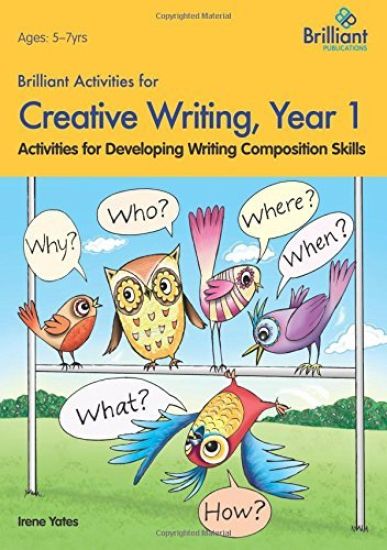
Brilliant Activities for Creative Writing, Year 1

Brilliant Activities for Creative Writing, Year 1

Irene Yates

Brilliant Publications
2014
nidottu
Brilliant Activities for Creative Writing Year 1 provides a flexible, but structured resource for developing writing skills, which both you and your pupils will enjoy. The activities address the Year 1 Programmes of Study for writing composition in the 2014 national curriculum for England. Different genres of writing, from narrative and poetry to recounts and persuasive writing are covered. The sheets are self-explanatory and ready to use; the only additional resources needed are a pen or pencil and, sometimes, extra paper. Word processing on a computer would be a bonus. The teacher tip boxes provide useful hints and suggestions for making the most of the activities.
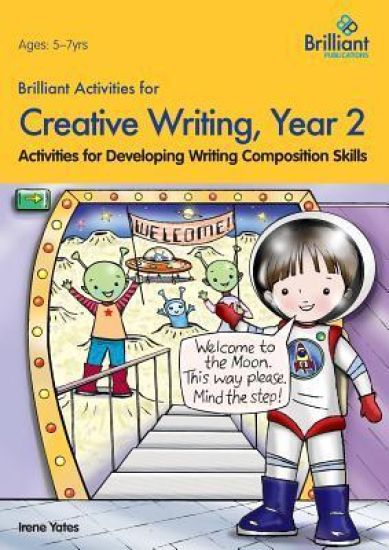
Brilliant Activities for Creative Writing, Year 2

Brilliant Activities for Creative Writing, Year 2

Irene Yates

Brilliant Publications
2014
nidottu
Brilliant Activities for Creative Writing Year 2 provides a flexible, but structured resource for developing writing skills, which both you and your pupils will enjoy.The activities address the Year 2 Programmes of Study for writing composition in the 2014 national curriculum for England.Different genres of writing, from narrative and poetry to recounts and persuasive writing are covered. The sheets are self-explanatory and ready to use; the only additional resources needed are a pen or pencil and, sometimes, extra paper. Word processing on a computer would be a bonus.The teacher tip boxes provide useful hints and suggestions for making the most of the activities.
Brilliant Activities for Creative Writing, Year 3

Brilliant Activities for Creative Writing, Year 3

Irene Yates

Brilliant Publications
2014
nidottu
Brilliant Activities for Creative Writing Year 3 provides a flexible, but structured resource for developing writing skills, which both you and your pupils will enjoy. The activities address many of lower Key Stage 2 Programmes of Study for writing composition in the 2014 national curriculum for England. Different genres of writing, from narrative and poetry to recounts and persuasive writing are covered. The sheets are self-explanatory and ready to use; the only additional resources needed are a pen or pencil and, sometimes, extra paper. Word processing on a computer would be a bonus. The teacher tip boxes provide useful hints and suggestions for making the most of the activities.
Brilliant Activities for Creative Writing, Year 4

Brilliant Activities for Creative Writing, Year 4

Irene Yates

Brilliant Publications
2014
nidottu
The Brilliant Activities for Creative Writing series provides a flexible, but structured resource for developing writing skills in primary schools. The activities address many of the Programmes of Study for writing composition in the 2014 National Curriculum for England. Through using the sheets in Brilliant Activities for Creative Writing, Year 4, pupils will learn how to: write for a widening range of purposes and audiencesorganise ideas into coherent and grammatically correct sentencesimprove, and make progress in, their own writing use and enlarge their writing vocabulary develop their knowledge and confidence in spelling write in different ways for different genres and types of text develop their own way with words. Genres covered range from narrative and poetry to recounts, instructions and persuasive writing. The narrative writing activities support pupils in developing settings, characters and plot. The sheets focusing on non-narrative writing encourage pupils to focus on the features and devices used with each text type. Throughout the series pupils are encouraged to compose and rehearse sentences orally, prior to writing. This will help pupils to build a varied and rich vocabulary and encourage an increased range of sentence structures. The teacher tip boxes provide useful ideas and suggestions for making the most of the activities. The photocopiable sheets are self-explanatory and ready to use; the only additional resources needed are a pen or pencil and, sometimes, extra paper. Hint boxes provide extra support for the children in completing the task. Brilliant Activities for Creative Writing, Year 4 is written by Irene Yates and published by Brilliant Publications.
Brilliant Activities for Creative Writing, Year 5

Brilliant Activities for Creative Writing, Year 5

Irene Yates

Brilliant Publications
2014
nidottu
The Brilliant Activities for Creative Writing series provides a flexible, but structured resource for developing writing skills in primary schools. The activities address many of the Programmes of Study for writing composition in the 2014 National Curriculum for England. Through using the sheets in Brilliant Activities for Creative Writing, Year 5, pupils will learn how to: write for a widening range of purposes and audiences organise ideas into coherent and grammatically correct sentencesimprove, and make progress in, their own writinguse and enlarge their writing vocabularydevelop their knowledge and confidence in spellingwrite in different ways for different genres and types of text develop their own way with words. Genres covered range from narrative and poetry to recounts, instructions and persuasive writing. The narrative writing activities support pupils in developing settings, characters and plot. The sheets focusing on non-narrative writing encourage pupils to focus on the features and devices used with each text type. Throughout the series pupils are encouraged to compose and rehearse sentences orally, prior to writing. This will help pupils to build a varied and rich vocabulary and encourage an increased range of sentence structures. The teacher tip boxes provide useful ideas and suggestions for making the most of the activities. The photocopiable sheets are self-explanatory and ready to use; the only additional resources needed are a pen or pencil and, sometimes, extra paper. Hint boxes provide extra support for the children in completing the task. Brilliant Activities for Creative Writing, Year 5 is written by Irene Yates and published by Brilliant Publications.
Brilliant Activities for Creative Writing, Year 6

Brilliant Activities for Creative Writing, Year 6

Irene Yates

Brilliant Publications
2014
nidottu
The Brilliant Activities for Creative Writing series provides a flexible, but structured resource for developing writing skills in primary schools. The activities address many of the Programmes of Study for writing composition in the National Curriculum for England. Through using the sheets in Brilliant Activities for Creative Writing, Year 6, pupils will learn how to: write for a widening range of purposes and audiencesorganise ideas into coherent and grammatically correct sentencesimprove, and make progress in, their own writinguse and enlarge their writing vocabularydevelop their knowledge and confidence in spellingwrite in different ways for different genres and types of text develop their own way with words. Genres covered range from narrative and poetry to recounts, instructions and persuasive writing. The narrative writing activities support pupils in developing settings, characters and plot. The sheets focusing on non-narrative writing encourage pupils to focus on the features and devices used with each text type. Throughout the series pupils are encouraged to compose and rehearse sentences orally, prior to writing. This will help pupils to build a varied and rich vocabulary and encourage an increased range of sentence structures. The teacher tip boxes provide useful ideas and suggestions for making the most of the activities. The photocopiable sheets are self-explanatory and ready to use; the only additional resources needed are a pen or pencil and, sometimes, extra paper. Hint boxes provide extra support for the children in completing the task. Brilliant Activities for Creative Writing, Year 6 is written by Irene Yates and published by Brilliant Publications.
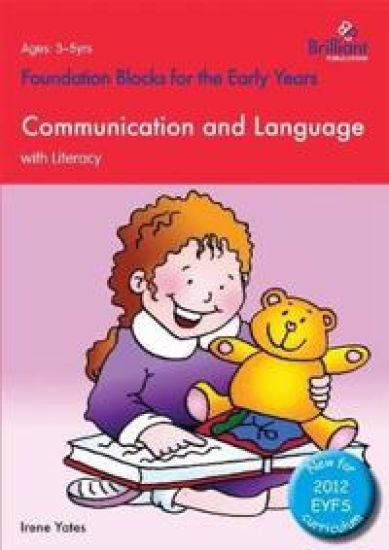
Foundation Blocks for the Early Years - Communication and Language
The Foundation Blocks for the Early Years series makes it easy to implement the Department of Education's new, revised Statutory Framework for the Early Years Foundation Stage (September 2012). The books are clearly laid out, with one activity per page, attractive illustrations and cross references to popular early years topics. Written by experienced early years practitioners, these books will be an invaluable resource for anyone working with 3-5 year olds. This book contains activities for the prime area of Communication and Language and the specific area of Literacy. They will encourage children to speak and listen; to express themselves clearly; and to develop confidence in using language in a variety of situations. They offer opportunities for children to use and enjoy books; to learn to link sounds and letters; to develop phonic knowledge and to begin to read and write.
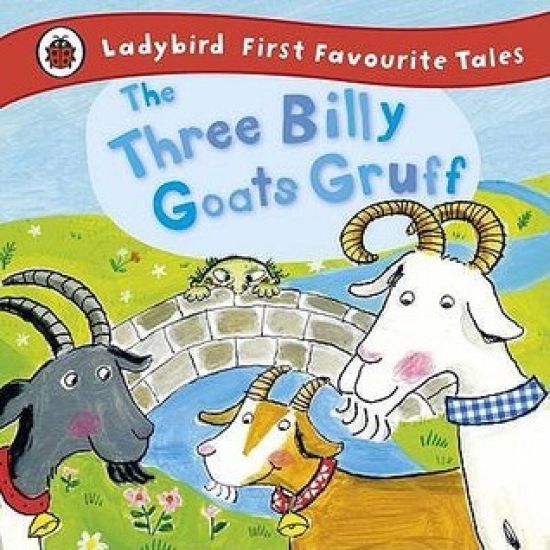
The Three Billy Goats Gruff: Ladybird First Favourite Tales
The classic fairy tale - The Three Billy Goats Gruff - from Ladybird!"Who's that trip-trapping over my bridge?" Based on the traditional fairy tale The Three Billy Goats Gruff, this vibrantly illustrated story is sure to become a favourite in every home. Part of the Ladybird First Favourite Tales series - a perfect introduction to fairy tales for preschoolers - this hardback book contains lots of funny rhythm and rhyme to delight young children. Ideal for reading aloud and sharing with 2-4 year olds.Ladybird's First Favourite Tales series is hugely popular and is a great introduction to the most important fairytales. 2011 brought a new look and great covers to the series, but the books are still just as fun to read as ever.Make sure you look out for the other tales in the series, too!The Elves and the Shoemaker; Goldilocks and the Three Bears; The Gingerbread Man; Little Red Riding Hood; The Three Little Pigs
The Enormous Turnip: Ladybird First Favourite Tales
Based on the traditional fairy tale The Enormous Turnip, this vibrantly illustrated story is sure to become a favourite in every home. Find out what happens when a very, very large turnip doesn't want to be pulled out of the ground! Part of the Ladybird First Favourite Tales series - a perfect introduction to fairy tales for preschoolers - this hardback book contains lots of funny rhythm and rhyme to delight young children. Ideal for reading aloud and sharing with 2-4 year olds.
Brilliant Activities for Grammar and Punctuation, Year 1
Brilliant Activities for Grammar and Punctuation, Year 1, is part of a 6-book photocopiable series to teach basic grammatical and punctuation concepts in a fun and memorable way, which will challenge and stimulate the whole class. Pupils are motivated to think logically about the activities and to share their knowledge and understanding with their peers through working individually, in pairs, groups or, sometimes, in whole class contexts. The rules of grammar and punctuation are not always easy to access and absorb - or even to teach. It is difficult for children to make the leap from speaking and writing to talking about speaking and writing and to think in the abstract about the words of the language. The ability or readiness to do this requires a certain way of thinking and, for the most part, repetition is the key. The sheets for this series are all written to add to the children's understanding of these fairly abstract ideas. They aim to improve children's ability to use English effectively and accurately in their own writing and speaking. The sheets contain oral as well as written contexts because grammar and punctuation are not just about writing. Sometimes the way children have learned to speak is not always grammatically correct, but it is the way of speaking that they own. We always have to be aware of instances of regional or familial language and make the point that what we are teaching is what is known universally as 'correct' speech without deprecating the children's own patterns of speech. The children should always be encouraged to discuss what it is they are learning, to ask questions and to make observations. All of this discussion will help them to understand how the English language works. The sheets are designed to be structured, but flexible so that they can be used to introduce a concept, as stand-alones or as follow-ons. The activities on the sheets can be used as templates to create lots more for practice and reinforcement purposes. Each book aims to offer: groundwork for the introduction of new conceptsa range of relevant activities ideas for continuation opportunity for reinforcementsimple and clear definition of concepts and termsopportunities for assessing learning clear information to teachers. The sheets are designed for the practice, reinforcement and consolidation of grammar and punctuation skills and they address the requirements laid out in the Programmes of Study in the September 2014 National Curriculum. The books provide teachers with the tools they need to teach grammar effectively and will complement other language and literacy schemes of work. The activities teach the technical terms pupils need in order to be able to discuss language and promote the necessity of making the children's learning functional. When pupils properly understand the effects that grammar and punctuation have on text, they can transfer that knowledge to their own writing and thus develop their skills. The books all include an assessment checklist and answers. Grammar and punctuation can sometimes be a hard grind, but nothing feels so good to a teacher as a pupil, eyes shining, saying, 'Oh, I get that now!' Once they 'get' a concept they never lose it and you can watch it become functional in their writing and, hopefully, hear it become functional in their speaking.
Brilliant Activities for Grammar and Punctuation, Year 2
Brilliant Activities for Grammar and Punctuation, Year 2, is part of a 6-book photocopiable series to teach basic grammatical and punctuation concepts in a fun and memorable way, which will challenge and stimulate the whole class. Pupils are motivated to think logically about the activities and to share their knowledge and understanding with their peers through working individually, in pairs, groups or, sometimes, in whole class contexts. The sheets for this series are all written to add to the children's understanding of these fairly abstract ideas. They aim to improve children's ability to use English effectively and accurately in their own writing and speaking. The sheets contain oral as well as written contexts because grammar and punctuation are not just about writing. Sometimes the way children have learned to speak is not always grammatically correct but it is the way of speaking that they own. We always have to be aware of instances of regional or familial language and make the point that what we are teaching is what is known universally as 'correct' speech without deprecating the children's own patterns of speech. The children should always be encouraged to discuss what it is they are learning, to ask questions and to make observations. All of this discussion will help them to understand how the English language works. The sheets are designed to be structured, but flexible so that they can be used to introduce a concept, as stand-alones or as follow-ons. The activities on the sheets can be used as templates to create lots more for practice and reinforcement purposes. Each book aims to offer: groundwork for the introduction of new concepts a range of relevant activities ideas for continuationopportunity for reinforcementsimple and clear definition of concepts and terms opportunities for assessing learningclear information to teachers The sheets are designed for the practice, reinforcement and consolidation of grammar and punctuation skills and they address the requirements laid out in the Programmes of Study in the National Curriculum. The books provide teachers with the tools they need to teach grammar effectively and will complement other language and literacy schemes of work. The activities teach the technical terms pupils need in order to be able to discuss language and promote the necessity of making the children's learning functional. When pupils properly understand the effects that grammar and punctuation have on text, they can transfer that knowledge to their own writing and thus develop their skills. The books all include an assessment checklist and answers. Grammar and punctuation can sometimes be a hard grind, but nothing feels so good to a teacher as a pupil, eyes shining, saying, 'Oh, I get that now!'
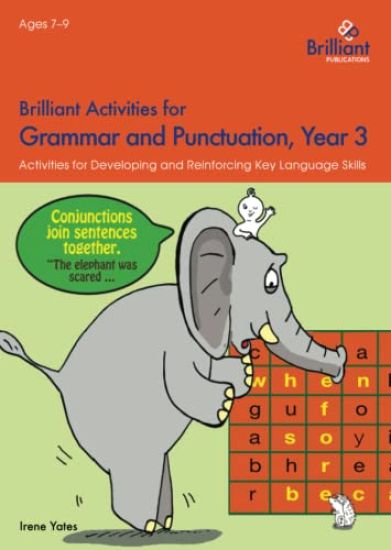
Brilliant Activities for Grammar and Punctuation, Year 3
Brilliant Activities for Grammar and Punctuation, Year 3, is part of a 6-book photocopiable series to teach basic grammatical and punctuation concepts in a fun and memorable way, which will challenge and stimulate the whole class. Pupils are motivated to think logically about the activities and to share their knowledge and understanding with their peers through working individually, in pairs, groups or, sometimes, in whole class contexts. The sheets for this series are all written to add to the children's understanding of these fairly abstract ideas. They aim to improve children's ability to use English effectively and accurately in their own writing and speaking. The sheets contain oral as well as written contexts because grammar and punctuation are not just about writing. Sometimes the way children have learned to speak is not always grammatically correct, but it is the way of speaking that they own. We always have to be aware of instances of regional or familial language and make the point that what we are teaching is what is known universally as 'correct' speech without deprecating the children's own patterns of speech. The children should always be encouraged to discuss what it is they are learning, to ask questions and to make observations. All of this discussion will help them to understand how the English language works. The sheets are designed to be structured but flexible so that they can be used to introduce a concept, as stand-alones or as follow-ons. The activities on the sheets can be used as templates to create lots more for practice and reinforcement purposes. Each book aims to offer: groundwork for the introduction of new concepts a range of relevant activities ideas for continuation opportunity for reinforcementsimple and clear definition of concepts and terms opportunities for assessing learningclear information to teachers The sheets are designed for the practice, reinforcement and consolidation of grammar and punctuation skills and they address the requirements laid out in the Programmes of Study in the National Curriculum. The books provide teachers with the tools they need to teach grammar effectively and will complement other language and literacy schemes of work. The activities teach the technical terms pupils need in order to be able to discuss language and promote the necessity of making the children's learning functional. When pupils properly understand the effects that grammar and punctuation have on text, they can transfer that knowledge to their own writing and thus develop their skills. The books all include an assessment checklist and answers. Grammar and punctuation can sometimes be a hard grind, but nothing feels so good to a teacher as a pupil, eyes shining, saying, 'Oh, I get that now!'
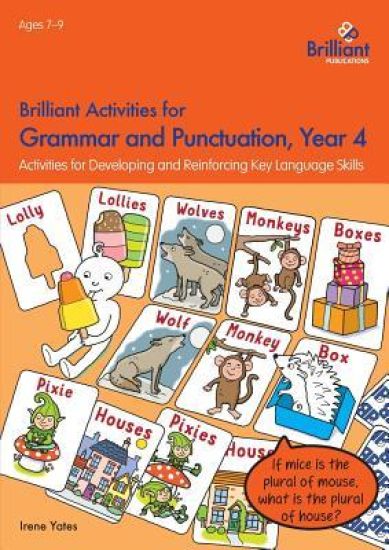
Brilliant Activities for Grammar and Punctuation, Year 4
Brilliant Activities for Grammar and Punctuation, Year 4, is part of a 6-book photocopiable series to teach basic grammatical and punctuation concepts in a fun and memorable way, which will challenge and stimulate the whole class. Pupils are motivated to think logically about the activities and to share their knowledge and understanding with their peers through working individually, in pairs, groups or, sometimes, in whole class contexts. The sheets for this series are all written to add to the children's understanding of these fairly abstract ideas. They aim to improve children's ability to use English effectively and accurately in their own writing and speaking. The sheets contain oral as well as written contexts because grammar and punctuation are not just about writing. Sometimes the way children have learned to speak is not always grammatically correct but it is the way of speaking that they own. We always have to be aware of instances of regional or familial language and make the point that what we are teaching is what is known universally as 'correct' speech without deprecating the children's own patterns of speech. The children should always be encouraged to discuss what it is they are learning, to ask questions and to make observations. All of this discussion will help them to understand how the English language works. The sheets are designed to be structured, but flexible so that they can be used to introduce a concept, as stand-alones or as follow-ons. The activities on the sheets can be used as templates to create lots more for practice and reinforcement purposes. Each book aims to offer: groundwork for the introduction of new conceptsa range of relevant activities ideas for continuationopportunity for reinforcementsimple and clear definition of concepts and termsopportunities for assessing learning clear information to teachers The sheets are designed for the practice, reinforcement and consolidation of grammar and punctuation skills and they address the requirements laid out in the Programmes of Study in the National Curriculum. The books provide teachers with the tools they need to teach grammar effectively and will complement other language and literacy schemes of work. The activities teach the technical terms pupils need in order to be able to discuss language and promote the necessity of making the children's learning functional. When pupils properly understand the effects that grammar and punctuation have on text, they can transfer that knowledge to their own writing and thus develop their skills. The books all include an assessment checklist and answers. Grammar and punctuation can sometimes be a hard grind, but nothing feels so good to a teacher as a pupil, eyes shining, saying, 'Oh, I get that now!'
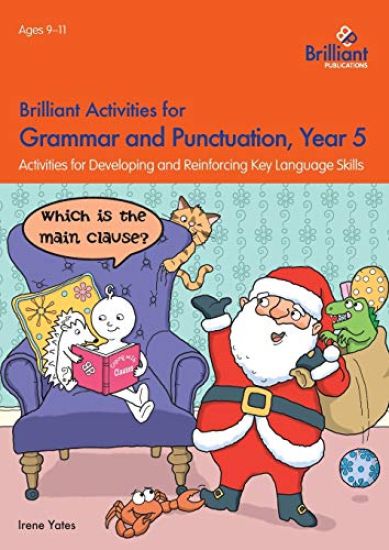
Brilliant Activities for Grammar and Punctuation, Year 5
Part of a 6-book photocopiable series to teach basic grammatical and punctuation concepts in a fun and memorable way, which will challenge and stimulate the whole class. Pupils are motivated to think logically about the activities and to share their knowledge and understanding with their peers through working individually, in pairs, groups or, sometimes, in whole class contexts. The sheets for this series are all written to add to the children's understanding of these fairly abstract ideas. They aim to improve children's ability to use English effectively and accurately in their own writing and speaking. The sheets contain oral as well as written contexts because grammar and punctuation are not just about writing. Sometimes the way children have learned to speak is not always grammatically correct but it is the way of speaking that they own. We always have to be aware of instances of regional or familial language and make the point that what we are teaching is what is known universally as 'correct' speech without deprecating the children's own patterns of speech. The children should always be encouraged to discuss what it is they are learning, to ask questions and to make observations. All of this discussion will help them to understand how the English language works. The sheets are designed to be structured, but flexible so that they can be used to introduce a concept, as stand-alones or as follow-ons. The activities on the sheets can be used as templates to create lots more for practice and reinforcement purposes. Each book aims to offer: groundwork for the introduction of new conceptsa range of relevant activities ideas for continuation opportunity for reinforcementsimple and clear definition of concepts and termsopportunities for assessing learningclear information to teachers The sheets are designed for the practice, reinforcement and consolidation of grammar and punctuation skills and they address the requirements laid out in the Programmes of Study in the National Curriculum. The books provide teachers with the tools they need to teach grammar effectively and will complement other language and literacy schemes of work. The activities teach the technical terms pupils need in order to be able to discuss language and promote the necessity of making the children's learning functional. When pupils properly understand the effects that grammar and punctuation have on text, they can transfer that knowledge to their own writing and thus develop their skills. The books all include an assessment checklist and answers. Grammar and punctuation can sometimes be a hard grind, but nothing feels so good to a teacher as a pupil, eyes shining, saying, 'Oh, I get that now!'
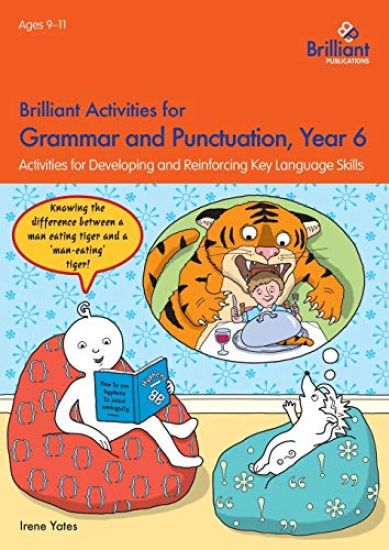
Brilliant Activities for Grammar and Punctuation, Year 6
This book is part of a 6-book photocopiable series to teach basic grammatical and punctuation concepts in a fun and memorable way, which will challenge and stimulate the whole class. Pupils are motivated to think logically about the activities and to share their knowledge and understanding with their peers through working individually, in pairs, groups or, sometimes, in whole class contexts. The sheets for this series are all written to add to the children's understanding of these fairly abstract ideas. They aim to improve children's ability to use English effectively and accurately in their own writing and speaking. The sheets contain oral as well as written contexts because grammar and punctuation are not just about writing. Sometimes the way children have learned to speak is not always grammatically correct but it is the way of speaking that they own. We always have to be aware of instances of regional or familial language and make the point that what we are teaching is what is known universally as 'correct' speech without deprecating the children's own patterns of speech. The children should always be encouraged to discuss what it is they are learning, to ask questions and to make observations. All of this discussion will help them to understand how the English language works. The sheets are designed to be structured, but flexible so that they can be used to introduce a concept, as stand-alones or as follow-ons. The activities on the sheets can be used as templates to create lots more for practice and reinforcement purposes. Each book aims to offer: groundwork for the introduction of new concepts a range of relevant activitiesideas for continuationopportunity for reinforcement simple and clear definition of concepts and termsopportunities for assessing learning clear information to teachers The sheets are designed for the practice, reinforcement and consolidation of grammar and punctuation skills and they address the requirements laid out in the Programmes of Study in the National Curriculum. The books provide teachers with the tools they need to teach grammar effectively and will complement other language and literacy schemes of work. The activities teach the technical terms pupils need in order to be able to discuss language and promote the necessity of making the children's learning functional. When pupils properly understand the effects that grammar and punctuation have on text, they can transfer that knowledge to their own writing and thus develop their skills. The books all include an assessment checklist and answers. Grammar and punctuation can sometimes be a hard grind, but nothing feels so good to a teacher as a pupil, eyes shining, saying, 'Oh, I get that now!'
How to be Brilliant at Writing Stories

How to be Brilliant at Writing Stories

Irene Yates

Brilliant Publications
1993
nidottu
The 40 photocopiable worksheets in How to be Brilliant at Writing Stories focus on the process of writing - from the initial idea gathering to redrafting and the final product. The activities recognize that a sense of audience and purpose are crucial, and allow children to feel ownership of their stories. Activities include: getting ideas, making notes, planning the story and developing characters.
How to be Brilliant at Writing Poetry

How to be Brilliant at Writing Poetry

Irene Yates

Brilliant Publications
1993
nidottu
The activities in How to be Brilliant at Writing Poetry are open-ended and focus on the process of writing - from initial idea gathering to redrafting and the final product. They recognize that a sense of audience and a purpose for writing are crucial. The 40 photocopiable worksheets aimed at 7 11 year olds (KS2) pupils provide models for different forms of poetry. Activities include: finding a beginning, using words to paint a picture, making up similes and rhyming.
How to be Brilliant at Grammar

How to be Brilliant at Grammar

Irene Yates

Brilliant Publications
1993
nidottu
How to be Brilliant at Grammar helps Key Stage 2 (KS2) children to talk about and understand language, and as a result to develop their own language skills. The book contains 42 photocopiable sheets, designed for immediate use. The activities include recognizing parts of speech, making sentences and clauses, alphabetization and using punctuation. Full of new and different ideas, this book will provide hours of fun learning.
How to be Brilliant at Making Books

How to be Brilliant at Making Books

Irene Yates

Brilliant Publications
1993
nidottu
How to be Brilliant at Making Books gives children a greater appreciation and awareness of audience and helps them to develop their own critical evaluation skills. The 40 photocopiable worksheets in this book encourage a wide range of skills; composing, creating, publishing and responding to print. The technological side of book production involves lots of problem solving and engages children in gathering information, prioritizing, negotiating, decision-making and evaluating.