Kirjojen hintavertailu. Mukana 11 342 296 kirjaa ja 12 kauppaa.

Kirjahaku

Etsi kirjoja tekijän nimen, kirjan nimen tai ISBN:n perusteella.

19 kirjaa tekijältä Irving Horowitz

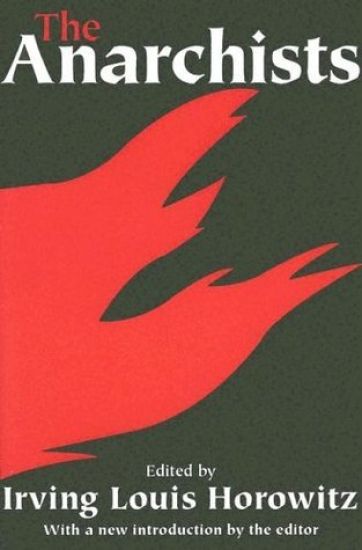
The Anarchists

The Anarchists

Irving Horowitz

AldineTransaction
2005
nidottu
In his new introduction to The Anarchists, Horowitz points out that anarchism is an ideology in search of a movement, and also a psychology in search of a polity. While this seems to be a paradox, the fact is that anarchism has more than one hundred thousand entries on electronic search engines, but one can search high and low for a society that embraces its essential anti-Statist vision. At the same time, anarchism continues to attract people to its premises, seemingly generation after generation. Despite similarities in values and goals, anarchism seems especially attractive to those for whom individualism rather than collectivism provides a way of life. In this, it stands at the opposite pole from Behemoth, from the gods of political order. The Anarchists is a rich collection of theories and practices in the words of those who have rebelled against the restrictive institutions and oppressive conditions imposed by state power upon the individual. Idealists and self-seekers, saints and assassins, they have often served as the conscience of the world and have expressed with eloquence and convictions, the deep-seated sense of anarchy that resides, to a greater or lesser degree, in most human beings.Anarchism is not simply a European import; it is deeply rooted in the American political experience. The volume gives strong representation to this side of the anarchist tradition. Thomas Paine wrote, "Government even in its best state is but a necessary evil. This was a sentiment echoed by Ralph Waldo Emerson, who said, "the less government we have the better." The Anarchists offers the most thoughtful and comprehensive selection of writings by and about those who protest against all rule by man over man, particularly that embodied in the State. As such, this anthology presents the history and philosophy of anarchism in the words of thirty-five of its greatest students, observers, and proponents.

Tributes

Tributes

Irving Horowitz

Transaction Publishers
2003
sidottu
In one of his final works, Stephen Jay Gould spoke of the human race "as a wildly improbable evolutionary event well within the realm of contingency." Drawing on his personal knowledge of fifty figures from the world of twentieth-century social science, Irving Louis Horowitz offers commentaries drawn from a variety of public occasions to explain one segment of this improbable event. In the process he reveals how the past century was defined in substantial measure by the rise of social research.Commenting on Tributes, Daniel Mahoney observes, "some pieces are completely authoritative and detailed, others more conversational and informal. That diversity of approaches tied to the special character of these people increases the readability and interest in the book as a whole. In addition to illuminating the life and thought of these major figures, these essays and addresses reveal the impressive catholicity of Horowitz's concerns and his ability to remain open to the widest range of theoretical and practical approaches." In a certain sense, this book is also an intellectual autobiography in the form of an expression of Horowitz's debt to intellectual interlocutors and influences over the years. As a consequence, Tributes will be of the greatest interest to anyone who wishes to come to terms with the intellectual formation of the people who gave substance to new ways of experiencing as well as explaining society. The book is thus a thoughtful guide to the intellectual life of our times.From Arendt and Aron to Veblen and Wildavsky, these essays take shape as a systematic mosaic of the past century. Written by a central participant in social theory, Tributes is both an informal guide and a formal text for readers coming upon social science innovators for the first time. The book breaks the boundaries of conventional discourse and in so doing gives voice to the outstanding figures that helped make the twentieth century "the century of social research."
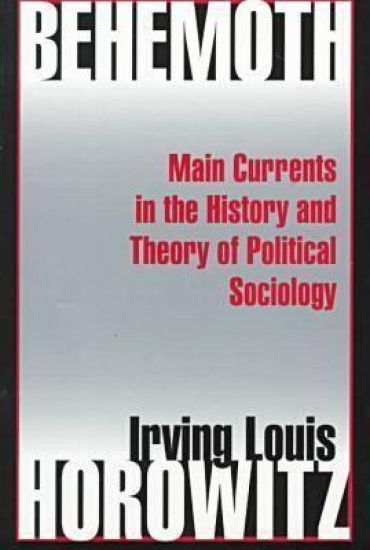
Behemoth

Behemoth

Irving Horowitz

Transaction Publishers
1999
nidottu
The title, Behemoth, derives from the Hebrew word Behemah-a beast, an enormous creature, monstrously huge and vast. It is an apt description of the State on the eve of the twenty-first century. Loved by few, vilified by many from all perspectives, it nonetheless continues to grow; by turns rivaling and co-opting that more pleasant-sounding word: Society. Political sociology aims to define and understand the interrelationship between these two huge terms: State and Society.Continuing in a path begun by Horowitz in the 1950s in The Idea of War and Peace in Contemporary Social and Philosophical Thought, expanded upon in the 1970s with Foundations of Political Sociology, this summing up in the late 1990s is an effort to extract and evolve the canon of political sociology. Starting with Montesquieu, Horowitz proceeds through the European experience of Rousseau, Tocqueville, Hegel, Marx, Durkheim, Sorel, and Weber. He then takes the field on its tangled migration to America with the Frankfurt School in exile, followed by searching chapters on Schumpeter, Mills, Arendt, and Huntington, among others.The result is a stunning revaluation of the intellectual sources of the present day divisions between statists and socialists, welfarists and individualists, advocates of dictatorship and of democracy, mandated rules and voluntary association, hard realists and soft utopians, a world without states and a world with a single state. Horowitz does not offer the usual evolutionary notion of doctrines, but a canon embedded in and embattled with the societies they aim to serve or overthrow in the present as in the past. The result is a major recasting of the theory and practice of social science and normative frameworks.The final chapter offers Horowitz's own prognosis of what we can expect in the recasting of the Welfare State to include the Welfare Society, and its growing nemesis the global economy which threatens to engulf State and Society alike in a return to civilizational concerns. This is an essential text for policy-makers and social scientists interested in macroscopic changes in the political order.
Persuasions and Prejudices

Persuasions and Prejudices

Irving Horowitz

Transaction Publishers
1988
sidottu
Review essays and statements written for special occasions may reveal as much about the writer as those written about; this is the presumption undergirding this collection of thirty-five years of criticism and commentary by Irving Louis Horowitz. For this volume, he selected his comments on famous, near famous, and infamous sociologists, political scientists, and assorted literary figures in between. Taken as a whole, this volume will surprise and delight readers who are acquainted with Horowitz's other works as well as those who are interested in the people he writes about.The book covers notable social scientists, from Arendt to Zetterberg, and such major figures in between as Becker, Bell, de Jouvenel, Mills, Parsons, Solzhenitsyn, and more than eighty others who have had an effect on the contemporary social and political landscape. Each is critically examined, sometimes positively, other times negatively. Horowitz was a major figure in his own right, and his writing here displays the kind of refreshing frankness experts will expect and the general reader will appreciate.The underlying assumption behind the volume, giving its disparate parts a unified characteristic, is that together these observations on others amount to a general perspective on social science held by the author. Whether his larger ambition is accepted or disputed, there is no doubt that the volume provides a standard against which to measure the literary quality of writing in the world of professional social research.
Hannah Arendt

Hannah Arendt

Irving Horowitz

Routledge
2017
nidottu
Hannah Arendt: Radical Conservative paints a broad picture of the personal traits and professional achievements in the work of an extremely complex iconographic figure in twentieth-century intellectual life. Writing about Hannah Arendt is an exercise in the biographic intersecting with the academic. It is an effort to bring together contexts of work with contents of thought. This volume was written in response to continuing interest in her work and also to the bitter and sometimes emotional attacks of her toughest critics. Horowitz emphasizes her unique contributions to political philosophy.Hannah Arendt has been described in many ways. She has been called a feminist, a dedicated worker for and writer about Jewish causes, a German advocate of its highest aspirations and assumed superiority to just about any other linguistic and national tradition, and a person whose very name is identified with anti-Nazism. Irving Louis Horowitz conveys the passion Hannah Arendt's scholarship has elicited as well as the diversity of her writings.Hannah Arendt's career is a lesson in the life of the human mind. Her reflections on our political universe are both interesting and compelling. Those who identify themselves firmly within a single tradition or culture may escape the problem of relativism, but they also suffer the problem of absolutism. This long-standing tension between traditions, cultures, and systems is what Horowitz has taken from Arendt's writings. Her sense of nuance has made her a compelling figure in twentieth-century ideas and a controversial voice well into the twenty-first century.
Publishing as a Vocation

Publishing as a Vocation

Irving Horowitz

Routledge
2017
nidottu
The linkage of politics and technology is now the driving momentum in communication. Publishers are now part of the astonishing transformation of the slow to the instant. From twitters to bloggers, the communication of ideas can now be accomplished in a matter of minutes, not weeks, months, or even years.Horowitz believes that at its best, information technology can be harnessed to facilitate the expression of democratic thought. In providing better access to production and technology, there is great hope to liberate humankind from ignorance and ideology and imagination is what the purpose of publishing is and always will be about. If politics is the art of the possible, then technology can be harnessed to the higher art of transforming scientific principles into everyday practices.Publishing as a Vocation places publishing in America in its political and commercial setting. It addresses the political implications of scholarly communication in the era of new computerized technology. Horowitz examines problems of political theory in the context of property rights versus the presumed right to know, and the special strains involved in publishing as commerce versus information as a public trust. Offering a knowledgeable and insightful view of publishing in America and abroad, this book makes an important contribution to the study of mass culture in advanced societies.
Tributes

Tributes

Irving Horowitz

Routledge
2017
nidottu
In one of his final works, Stephen Jay Gould spoke of the human race "as a wildly improbable evolutionary event well within the realm of contingency." Drawing on his personal knowledge of fifty figures from the world of twentieth-century social science, Irving Louis Horowitz offers commentaries drawn from a variety of public occasions to explain one segment of this improbable event. In the process he reveals how the past century was defined in substantial measure by the rise of social research.Commenting on Tributes, Daniel Mahoney observes, "some pieces are completely authoritative and detailed, others more conversational and informal. That diversity of approaches tied to the special character of these people increases the readability and interest in the book as a whole. In addition to illuminating the life and thought of these major figures, these essays and addresses reveal the impressive catholicity of Horowitz's concerns and his ability to remain open to the widest range of theoretical and practical approaches." In a certain sense, this book is also an intellectual autobiography in the form of an expression of Horowitz's debt to intellectual interlocutors and influences over the years. As a consequence, Tributes will be of the greatest interest to anyone who wishes to come to terms with the intellectual formation of the people who gave substance to new ways of experiencing as well as explaining society. The book is thus a thoughtful guide to the intellectual life of our times.From Arendt and Aron to Veblen and Wildavsky, these essays take shape as a systematic mosaic of the past century. Written by a central participant in social theory, Tributes is both an informal guide and a formal text for readers coming upon social science innovators for the first time. The book breaks the boundaries of conventional discourse and in so doing gives voice to the outstanding figures that helped make the twentieth century "the century of social research."
Daydreams and Nightmares

Daydreams and Nightmares

Irving Horowitz

Routledge
2017
sidottu
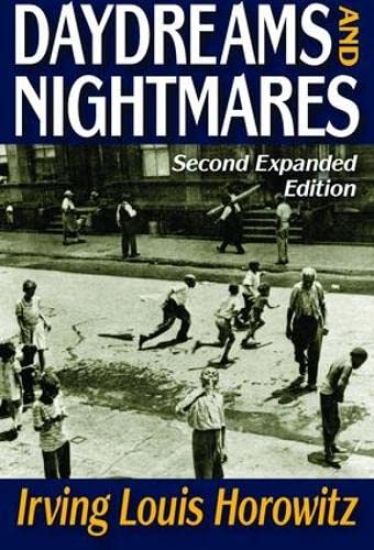
*Winner of the National Jewish Book Award for Biography and Autobiography This is the story of the making of a world-famous sociologist. It is even more the story of a boy hustling to survive. Here in an astonishing and candidly written memoir by one of America's premier social scientists recounting the intensely personal story of his tormented youth in a ghetto within a ghetto. It etches the painful details of a boy's overcoming alienation and isolation in a hostile place in an unloving family.In the 1930s a small remnant community of Eastern European Jewish immigrants still resided in predominantly black Harlem. As shopkeepers trying to make out a marginal existence, Harlem's Jews were a minority within a minority. Into this restricted world the author of this book was born. Irving Louis Horowitz's parents had fled Russia, his father the victim of persecution in the Tsarist army during World War I. The boy's schoolmates were the children of black sharecroppers who had immigrated to the North. Poverty, language, and culture all cut off the Horowitz family from traditional community life, and the stress of a survival existence led to the trauma of a deteriorating family unit.Harlem and its environs, the Apollo and the Alhambra theaters, the Polo Grounds, and Central Park were the stage on which a youngster from this ghetto built a kind of self-reliance at the cost of social graces. The recipient of the National Jewish Book Award for Biography and Autobiography, this new, augmented edition contains the author's reflection of the impact of the Great Depression on Harlem family life.
Foundations of Political Sociology

Foundations of Political Sociology

Irving Horowitz

Routledge
2018
sidottu
When initially published in 1972, Foundations of Political Sociology was acknowledged to be the first unified study of the field. It still provides a cross-fertilization of knowledge concerning the interrelation of social class and political power. Taking into account new specializations in social theory, the book covers all major social systems on a comparative international basis. The opening remarks prepared for this new printing provide an estimate of how the field has changed during the past quarter century, and what unexpected challenges have arisen in areas of public trust and personal privacy.This book examines fascism, communism, anarchism, conservatism, and liberalism as systems of rule as well as domains of theory. It is thus a unique effort at linking problems of history with problems of policy. The six sections of the book detail the historical and theoretical antecedents of this relatively new hybrid area in social research: policy coordinates of political sociology, types of social systems, forms of political ideologies, polarities of revolution and counter-revolution, civil-military relations, mass vs. elite contradictions, and threads of consensus and conflict running through these themes."Horowitz presents as his central thesis that in today's world no economic determinism can do justice to social reality. Foundations is the work of a politically sensitive and knowledgeable scholar." Louis Schneider, Social Forces"Foundations of Political Sociology reflects extensive teaching and research in the area of political sociology. The book combines analytical insight with a provocative cutting edge and represents the best of Professor Horowitz." Thomas R. McFaul, The Annals"Horowitz's political stance is interesting. Though he knows the radical literature, he distances himself from it. He sympathizes with everyone and strives to be provocative and yet elusive a personal voice in a dogmatic discipline." W.J.M. Mackenzie, Political Studies
The Anarchists

The Anarchists

Irving Horowitz

Routledge
2018
sidottu
In his new introduction to The Anarchists, Horowitz points out that anarchism is an ideology in search of a movement, and also a psychology in search of a polity. While this seems to be a paradox, the fact is that anarchism has more than one hundred thousand entries on electronic search engines, but one can search high and low for a society that embraces its essential anti-Statist vision. At the same time, anarchism continues to attract people to its premises, seemingly generation after generation. Despite similarities in values and goals, anarchism seems especially attractive to those for whom individualism rather than collectivism provides a way of life. In this, it stands at the opposite pole from Behemoth, from the gods of political order. The Anarchists is a rich collection of theories and practices in the words of those who have rebelled against the restrictive institutions and oppressive conditions imposed by state power upon the individual. Idealists and self-seekers, saints and assassins, they have often served as the conscience of the world and have expressed with eloquence and convictions, the deep-seated sense of anarchy that resides, to a greater or lesser degree, in most human beings.Anarchism is not simply a European import; it is deeply rooted in the American political experience. The volume gives strong representation to this side of the anarchist tradition. Thomas Paine wrote, "Government even in its best state is but a necessary evil. This was a sentiment echoed by Ralph Waldo Emerson, who said, "the less government we have the better." The Anarchists offers the most thoughtful and comprehensive selection of writings by and about those who protest against all rule by man over man, particularly that embodied in the State. As such, this anthology presents the history and philosophy of anarchism in the words of thirty-five of its greatest students, observers, and proponents.
The Long Night of Dark Intent

The Long Night of Dark Intent

Irving Horowitz

AldineTransaction
2009
sidottu
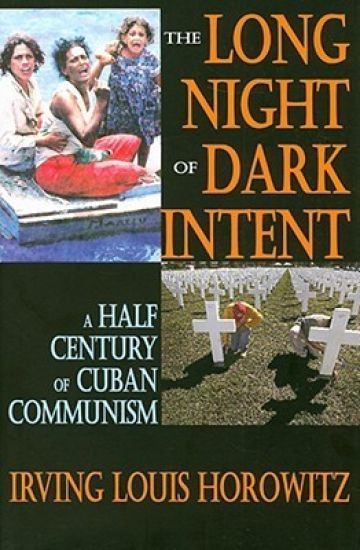
The Cuban Revolution of 1959 was a benchmark of triumph and a harbinger of tragedy to come. Rather than herald a new era of Cuba joining the world community of nations as a paragon of democracy as many fervently hoped and believed it would, it became instead a new stage in authoritarian rule in the Western hemisphere.For more than a half century since then Cuba has been defined by the capacity of a single family to command and determine the fate of a nation—and to do so with a minimum of opposition. Incredibly, even those professing adhesion to democratic norms have been ready to forgive the dictator his excesses. This volume explains the theory and practice of this absence of internal opposition and the persistence of external support for the Castro family and its entourage.The Long Night of Dark Intent is chronological in order, with the author indicating major points in each of the five decades covered. The volume covers five centers of system analysis: economics, politics, society, military, and ideology. Who or what "determines" events and decisions is the stuff of real history. It is precisely due to variability in causal chains in society that we have huge variance in levels of predictability. The course of the Cuban Revolution gives strong support for such an approach to the Castro Era. This is a unique, unflinching account with a strong emphasis on the importance of U.S. policy decisions over time.
Publishing as a Vocation

Publishing as a Vocation

Irving Horowitz

AldineTransaction
2010
sidottu
The linkage of politics and technology is now the driving momentum in communication. Publishers are now part of the astonishing transformation of the slow to the instant. From twitters to bloggers, the communication of ideas can now be accomplished in a matter of minutes, not weeks, months, or even years.Horowitz believes that at its best, information technology can be harnessed to facilitate the expression of democratic thought. In providing better access to production and technology, there is great hope to liberate humankind from ignorance and ideology—and imagination is what the purpose of publishing is and always will be about. If politics is the art of the possible, then technology can be harnessed to the higher art of transforming scientific principles into everyday practices.Publishing as a Vocation places publishing in America in its political and commercial setting. It addresses the political implications of scholarly communication in the era of new computerized technology. Horowitz examines problems of political theory in the context of property rights versus the presumed right to know, and the special strains involved in publishing as commerce versus information as a public trust. Offering a knowledgeable and insightful view of publishing in America and abroad, this book makes an important contribution to the study of mass culture in advanced societies.
The Long Night of Dark Intent

The Long Night of Dark Intent

Irving Horowitz

AldineTransaction
2011
nidottu
The Cuban Revolution of 1959 was a benchmark of triumph and a harbinger of tragedy to come. Rather than herald a new era of Cuba joining the world community of nations as a paragon of democracy as many fervently hoped and believed it would, it became instead a new stage in authoritarian rule in the Western hemisphere.For more than a half century since then Cuba has been defined by the capacity of a single family to command and determine the fate of a nation—and to do so with a minimum of opposition. Incredibly, even those professing adhesion to democratic norms have been ready to forgive the dictator his excesses. This volume explains the theory and practice of this absence of internal opposition and the persistence of external support for the Castro family and its entourage.The Long Night of Dark Intent is chronological in order, with the author indicating major points in each of the five decades covered. The volume covers five centers of system analysis: economics, politics, society, military, and ideology. Who or what "determines" events and decisions is the stuff of real history. It is precisely due to variability in causal chains in society that we have huge variance in levels of predictability. The course of the Cuban Revolution gives strong support for such an approach to the Castro Era. This is a unique, unflinching account with a strong emphasis on the importance of U.S. policy decisions over time.
Daydreams and Nightmares

Daydreams and Nightmares

Irving Horowitz

AldineTransaction
2011
nidottu
*Winner of the National Jewish Book Award for Biography and Autobiography This is the story of the making of a world-famous sociologist. It is even more the story of a boy hustling to survive. Here in an astonishing and candidly written memoir by one of America's premier social scientists recounting the intensely personal story of his tormented youth in a ghetto within a ghetto. It etches the painful details of a boy's overcoming alienation and isolation in a hostile place in an unloving family.In the 1930s a small remnant community of Eastern European Jewish immigrants still resided in predominantly black Harlem. As shopkeepers trying to make out a marginal existence, Harlem's Jews were a minority within a minority. Into this restricted world the author of this book was born. Irving Louis Horowitz's parents had fled Russia, his father the victim of persecution in the Tsarist army during World War I. The boy's schoolmates were the children of black sharecroppers who had immigrated to the North. Poverty, language, and culture all cut off the Horowitz family from traditional community life, and the stress of a survival existence led to the trauma of a deteriorating family unit.Harlem and its environs, the Apollo and the Alhambra theaters, the Polo Grounds, and Central Park were the stage on which a youngster from this ghetto built a kind of self-reliance at the cost of social graces. The recipient of the National Jewish Book Award for Biography and Autobiography, this new, augmented edition contains the author's reflection of the impact of the Great Depression on Harlem family life.
Hannah Arendt

Hannah Arendt

Irving Horowitz

AldineTransaction
2012
sidottu
Hannah Arendt: Radical Conservative paints a broad picture of the personal traits and professional achievements in the work of an extremely complex iconographic figure in twentieth-century intellectual life. Writing about Hannah Arendt is an exercise in the biographic intersecting with the academic. It is an effort to bring together contexts of work with contents of thought. This volume was written in response to continuing interest in her work and also to the bitter and sometimes emotional attacks of her toughest critics. Horowitz emphasizes her unique contributions to political philosophy.Hannah Arendt has been described in many ways. She has been called a feminist, a dedicated worker for and writer about Jewish causes, a German advocate of its highest aspirations and assumed superiority to just about any other linguistic and national tradition, and a person whose very name is identified with anti-Nazism. Irving Louis Horowitz conveys the passion Hannah Arendt's scholarship has elicited as well as the diversity of her writings.Hannah Arendt's career is a lesson in the life of the human mind. Her reflections on our political universe are both interesting and compelling. Those who identify themselves firmly within a single tradition or culture may escape the problem of relativism, but they also suffer the problem of absolutism. This long-standing tension between traditions, cultures, and systems is what Horowitz has taken from Arendt's writings. Her sense of nuance has made her a compelling figure in twentieth-century ideas and a controversial voice well into the twenty-first century.
Culture and Civilization

Culture and Civilization

Irving Horowitz

AldineTransaction
2012
nidottu
Debates on the meaning of religious belief in an advanced technological age have established the emergence of religion as a fact of daily life. The nineteenth-century imagery of "warfare" between science and religion is long dismissed. Emphasizing this fact of the continuing relevance and importance of religion as a driving force in contemporary life is the stunning emergence on the world scene of militant Muslim beliefs in a period of relatively inactive religious belief elsewhere. In this volume of Culture and Civilization, religion is examined in the context of post-modern societies.The collection of essays is divided by themes: religions, civilizations, cultures, and the history of ideas. The contributors William Donohue, Simon Kuznets, A. L. Kroeber, Greg Mills, Yoani Sanchez, Murray Weidenbaum, Andreas Herberg-Rothe, Daniel Bell, John W. Gardner, John Charles, and Liu Xiaobo's discuss a variety of topics, with titles including "The Catholic Church and Sexual Abuse," "Why is Africa Poor?," "Freedom and Exchange in Communist Cuba," and the "Economic Structure and the Life of the Jews."This volume concludes with a grouping of review essays on famous figures ranging from Crane Brinton and Herbert Spencer to Max Gluckman and Hannah Arendt. The volume as a whole projects a sense of the future and avoids hysteria about the past. The contributors have a sharp edge and speak in a critical voice to the dilemmas of the present world order.
Persuasions and Prejudices

Persuasions and Prejudices

Irving Horowitz

AldineTransaction
2016
nidottu
Review essays and statements written for special occasions may reveal as much about the writer as those written about; this is the presumption undergirding this collection of thirty-five years of criticism and commentary by Irving Louis Horowitz. For this volume, he selected his comments on famous, near famous, and infamous sociologists, political scientists, and assorted literary figures in between. Taken as a whole, this volume will surprise and delight readers who are acquainted with Horowitz's other works as well as those who are interested in the people he writes about.The book covers notable social scientists, from Arendt to Zetterberg, and such major figures in between as Becker, Bell, de Jouvenel, Mills, Parsons, Solzhenitsyn, and more than eighty others who have had an effect on the contemporary social and political landscape. Each is critically examined, sometimes positively, other times negatively. Horowitz was a major figure in his own right, and his writing here displays the kind of refreshing frankness experts will expect and the general reader will appreciate.The underlying assumption behind the volume, giving its disparate parts a unified characteristic, is that together these observations on others amount to a general perspective on social science held by the author. Whether his larger ambition is accepted or disputed, there is no doubt that the volume provides a standard against which to measure the literary quality of writing in the world of professional social research.
Foundations of Political Sociology

Foundations of Political Sociology

Irving Horowitz

Transaction Publishers
1997
nidottu
When initially published in 1972, Foundations of Political Sociology was acknowledged to be the first unified study of the field. It still provides a cross-fertilization of knowledge concerning the interrelation of social class and political power. Taking into account new specializations in social theory, the book covers all major social systems on a comparative international basis. The opening remarks prepared for this new printing provide an estimate of how the field has changed during the past quarter century, and what unexpected challenges have arisen in areas of public trust and personal privacy.This book examines fascism, communism, anarchism, conservatism, and liberalism as systems of rule as well as domains of theory. It is thus a unique effort at linking problems of history with problems of policy. The six sections of the book detail the historical and theoretical antecedents of this relatively new hybrid area in social research: policy coordinates of political sociology, types of social systems, forms of political ideologies, polarities of revolution and counter-revolution, civil-military relations, mass vs. elite contradictions, and threads of consensus and conflict running through these themes."Horowitz presents as his central thesis that in today's world no economic determinism can do justice to social reality. Foundations is the work of a politically sensitive and knowledgeable scholar."—Louis Schneider, Social Forces"Foundations of Political Sociology reflects extensive teaching and research in the area of political sociology. The book combines analytical insight with a provocative cutting edge and represents the best of Professor Horowitz."—Thomas R. McFaul, The Annals"Horowitz's political stance is interesting. Though he knows the radical literature, he distances himself from it. He sympathizes with everyone and strives to be provocative and yet elusive—a personal voice in a dogmatic discipline."—W.J.M. Mackenzie, Political Studies
Behemoth

Behemoth

Irving Horowitz

Transaction Publishers
1999
sidottu
The title, Behemoth, derives from the Hebrew word Behemah-a beast, an enormous creature, monstrously huge and vast. It is an apt description of the State on the eve of the twenty-first century. Loved by few, vilified by many from all perspectives, it nonetheless continues to grow; by turns rivaling and co-opting that more pleasant-sounding word: Society. Political sociology aims to define and understand the interrelationship between these two huge terms: State and Society. Continuing in a path begun by Horowitz in the 1950s in The Idea of War and Peace in Contemporary Social and Philosophical Thought, expanded upon in the 1970s with Foundations of Political Sociology, this summing up in the late 1990s is an effort to extract and evolve the canon of political sociology. Starting with Montesquieu, Horowitz proceeds through the European experience of Rousseau, Tocqueville, Hegel, Marx, Durkheim, Sorel, and Weber. He then takes the field on its tangled migration to America with the Frankfurt School in exile, followed by searching chapters on Schumpeter, Mills, Arendt, and Huntington, among others. The result is a stunning revaluation of the intellectual sources of the present day divisions between statists and socialists, welfarists and individualists, advocates of dictatorship and of democracy, mandated rules and voluntary association, hard realists and soft utopians, a world without states and a world with a single state. Horowitz does not offer the usual evolutionary notion of doctrines, but a canon embedded in and embattled with the societies they aim to serve or overthrow in the present as in the past. The result is a major recasting of the theory and practice of social science and normative frameworks. The final chapter offers Horowitz's own prognosis of what we can expect in the recasting of the Welfare State to include the Welfare Society, and its growing nemesis the global economy which threatens to engulf State and Society alike in a return to civilizational concerns. This is an essential text for policy-makers and social scientists interested in macroscopic changes in the political order.