Kirjojen hintavertailu. Mukana 11 627 220 kirjaa ja 12 kauppaa.

Kirjahaku

Etsi kirjoja tekijän nimen, kirjan nimen tai ISBN:n perusteella.

6 kirjaa tekijältä Isaac Babel

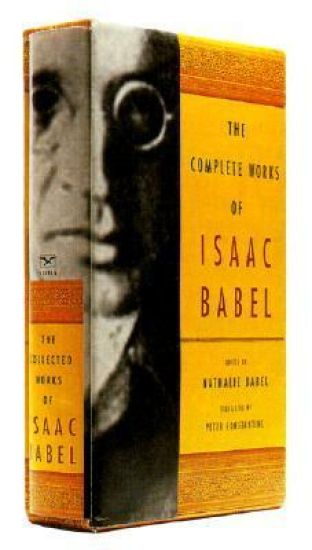
The Complete Works of Isaac Babel

The Complete Works of Isaac Babel

Isaac Babel

W. W. Norton Company
2001
sidottu
Considered one of the greatest writers of the twentieth century--and the most revered short-story writer since Chekhov--Isaac Babel (1894-1940) left an extraordinary literary legacy that continues to grow, remarkably, more than sixty years after his death in Lubyanka Prison at the hands of Stalin's secret police. Despite Babel's celebrated stature--which had already been achieved during his lifetime--the whole of his work, owing to his arrest and the state of affairs in the Soviet Union, was never assembled in one place. This magnificent edition of Babel's collected work fulfills a lifelong ambition of Babel's daughter, Nathalie, who has authorized and edited the entire collection, and has collaborated with award-winning translator Peter Constantine in readying the work for publication. Every story or selection included in this volume (147 in total) has been newly edited and translated, beginning with Babel's first published story, "Old Shloyme," originally published in 1913, and concluding with two scenes from a screenplay that Babel did not live to see made into a film. Included in The Complete Works are stories that will be familiar to Babel enthusiasts, like the "Red Cavalry" cycle and his diaries, as well as untranslated stories and other works that appear in English for the first time. To read Babel is to relive the wild and often terrifying swings of twentieth-century Russian history. No writer has conveyed with such emotion and convulsive energy the tragic story of a modern nation that remained a prisoner of its brutal and repressive past. Combining the compassion of Dostoevsky with the mordant wit of Chekhov, Babel injected a daring social criticism and a palpable sexual tension into the literary climate of post-tsarist Russia. In the process, he created a style so vivid, so lacerating, and so utterly hypnotic that his stories have come to define the sanguinary landscape of the Soviet Union in the years between the two world wars. As these stories illustrate, and as Cynthia Ozick insightfully observes in her passionate introduction, Babel was a man of acute contradictions. Born in the cosmopolitan port city of Odessa during the long reign of Alexander II, Babel was quite competent in both Hebrew and Yiddish but, influenced by both Flaubert and Maupassant, wrote his first stories in fluent French. His often comic portrayal of characters--such as the ruthless Jewish mobsters depicted in his Benya Krik stories--resulted from observing them firsthand as a boy in the Moldavanka neighborhood of Odessa. As Ozick notes, the "breadth and scope of his social compass enabled him to see through the eyes of peasants, soldiers, priests, rabbis, children, artists, actors, women of all classes. . . . He was at once a poet of the city ('the glass sun of Petersburg') and a lyricist of the countryside ('the walls of sunset collapsing into the sky')." Arranged sequentially in fourteen sections, The Complete Works traces the entire arc of Babel's literary career, beginning with early stories, which are followed by The Odessa Stories and The Red Cavalry Stories. Also included are his Reports from St. Petersburg (1918), the remarkable 1920 Diary, and reports from Soviet Georgia and France, where his wife, Evgenia, and his daughter, Nathalie, lived. Many of his later stories (1925-38) reflect a compelling literary quality and abrupt change in style that have challenged translators for years. An accomplished playwright and screenwriter, Babel, at the height of his popularity, began writing for the Soviet cinema as early as the 1920s, and many of these works have never been translated before. This edition also includes a foreword and a biographical afterword by Nathalie Babel, a translator's preface and annotations throughout by Peter Constantine, and a chronology by Gregory Freidin, regarded as one of the foremost Babel scholars in the world. Unprecedented for both its literary and its scholarly achievement, The Complete Works of Isaac Babel will stand as Babel's final, most enduring legacy.
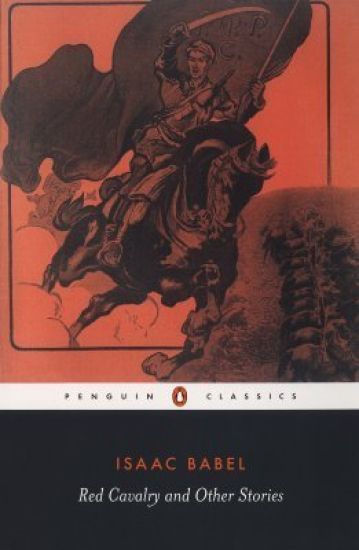
Red Cavalry and Other Stories

Red Cavalry and Other Stories

Isaac Babel

Penguin Classics
2005
pokkari
Throughout his life Isaac Babel was torn by opposing forces, by the desire both to remain faithful to his Jewish roots and yet to be free of them. This duality of vision infuses his work with a powerful energy from the earliest tales including 'Old Shloyme' and 'Childhood', which affirm his Russian-Jewish childhood, to the relatively non-Jewish world of his collection of stories entitled 'Red Cavalry'. Babel's masterpiece, 'Red Cavalry' is the most dramatic expression of his dualism and in his simultaneous acceptance and rejection of his heritage heralds the great American-Jewish writers from Henry Roth to Saul Bellow and Philip Roth.
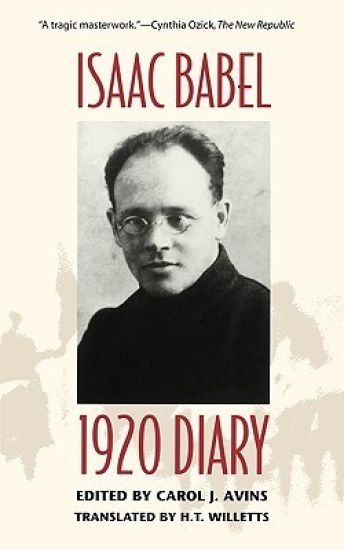
1920 Diary

1920 Diary

Isaac Babel

Yale University Press
2002
pokkari
This diary by the famed twentieth-century Russian writer recounts Babel’s experiences with the Cossack cavalry during the Polish-Soviet war of 1919–1920. The basis for Red Cavalry, Babel’s best-known work, it records the devastation of the war, the extreme cruelty of the Polish and Red armies alike toward the Jewish population in the Ukraine and eastern Poland, and Babel’s own conflicted role as both Soviet revolutionary and Jew. “Babel’s 1920 Diary, the source for many of his remarkable Red Cavalry stories, is itself as remarkable as the stories, particularly when one considers that the diarist was a journalist of only twenty-six. The staccato sentences in which Babel rapidly describes the horrific details of revolutionary brutality have the impact of an accomplished style, one that in its spontaneously elliptical way is strangely no less artful than the artfully nuanced directness that is the triumph of Red Cavalry.”—Philip Roth “An electrifying translation accompanied by an indispensable introduction. . . . Babel’s journey is a Jewish lamentation . . . a tragic masterwork.” —Cynthia Ozick, The New Republic “A precursor of Holocaust literature, and more powerful in its effect than any Holocaust literature that I have managed to read.”—Harold Bloom, New York Times Book Review
The Essential Fictions

The Essential Fictions

Isaac Babel

Northwestern University Press
2017
nidottu
The Essential Fictions offers contemporary readers seventy-two short stories by one of twentieth-century Russia’s premier storytellers, Isaac Babel. This unique volume, which includes Babel’s famous Red Cavalry series and his Odessa Stories, is translated, edited, introduced, and annotated by Val Vinokur, a 2008 Guggenheim Fellow in Translation, and features illustrations by Yefim Ladyzhensky, a painter known for his depictions of everyday life under Soviet rule in Babel’s native Odessa.Babel was born in 1894 into multicultural Odessa’s thriving Jewish community. Working as a journalist, he witnessed the Bolshevik Revolution and Civil War, and accompanied the Cossack horsemen of the Red Cavalry during the 1920 Polish-Soviet War, distilling these experiences into his fiction. Vinokur highlights Babel’s “horrified hopefulness” and “doleful and bespectacled Jewish comedy” in the face of the bloody conflicts that plagued his generation.On the centenary of the revolution that toppled the Romanov tsars, Babel’s fictions continue to absorb and fascinate contemporary readers interested in eastern European and Jewish literature as well as the history and politics of the twentieth century.
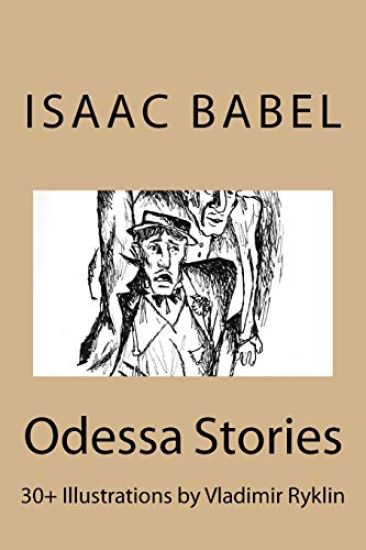
Odessa Stories.: Illustrations by Vladimir Ryklin

Odessa Stories.: Illustrations by Vladimir Ryklin

Isaac Babel

Createspace Independent Publishing Platform
2018
nidottu
As all of his works, these stories are a nightmare to translate. You are lucky if you can read the original. Set 100 years ago, these tales tell of the lives of the people of Odessa, a big Ukrainian city and a port, run by gangsters, which are, interestingly, Jewish gangsters. So we get characters such as Lyubka the Cossack, who ignores her newborn baby in order to run her business empire; and, the greatest of all, Benya Krik, the King.