Kirjojen hintavertailu. Mukana 12 240 471 kirjaa ja 12 kauppaa.

Kirjahaku

Etsi kirjoja tekijän nimen, kirjan nimen tai ISBN:n perusteella.

5 kirjaa tekijältä Isaac Martin

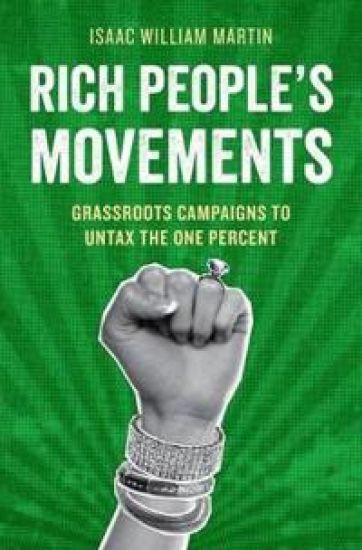
Rich People's Movements

Rich People's Movements

Isaac Martin

Oxford University Press Inc
2015
nidottu
On tax day, April 15, 2010, hundreds of thousands of Americans took to the streets with signs demanding lower taxes on the richest one percent. But why? Rich people have plenty of political influence. Why would they need to publicly demonstrate for lower taxes-and why would anyone who wasn't rich join the protest on their behalf? Isaac William Martin shows that such protests long predate the Tea Party of our own time. Ever since the Sixteenth Amendment introduced a Federal income tax in 1913, rich Americans have protested new public policies that they thought would threaten their wealth. But while historians have taught us much about the conservative social movements that reshaped the Republican Party in the late 20th century, the story of protest movements explicitly designed to benefit the wealthy is still little known. Rich People's Movements is the first book to tell that story, tracking a series of protest movements that arose to challenge an expanding welfare state and progressive taxation. Drawing from a mix of anti-progressive ideas, the leaders of these movements organized scattered local constituencies into effective campaigns in the 1920s, 1950s, 1980s, and our own era. Martin shows how protesters on behalf of the rich appropriated the tactics used by the Left-from the Populists and Progressives of the early twentieth century to the feminists and anti-war activists of the 1950s and 1960s. He explores why the wealthy sometimes cut secret back-room deals and at other times protest in the public square. He also explains why people who are not rich have so often rallied to their cause. For anyone wanting to understand the anti-tax activists of today, including notable defenders of wealth inequality like the Koch brothers, the historical account in Rich People's Movements is an essential guide.
Rich People's Movements

Rich People's Movements

Isaac Martin

Oxford University Press Inc
2013
sidottu
On tax day, April 15, 2010, hundreds of thousands of Americans demonstrated with signs demanding lower taxes on the richest one percent. Where do protest movements like this come from? Rich people are an unpopular minority with plenty of political influence. Why would rich people need to demonstrate in the streets to demand lower taxes-and why would anyone who wasn't rich join in the protest on their behalf? Such rich people's movements are hardy perennials of American politics. Ever since the ratification of the Sixteenth Amendment in 1913, they have emerged whenever public policies are perceived to threaten the property rights of rich people. The protesters on behalf of the rich have picked up the protest tactics of the poor and powerless because they have been organized and led by activists who have acquired their skills and protest techniques from other social movements, from the Populists and Progressives of the early twentieth century to the feminists and anti-war activists of the mid-twentieth century. At times when conservative Republicans are in power, rich people's movements have helped to bring about some of the biggest tax cuts for the rich in American history. This is the untold story of the tax clubs and Tea Parties that have shaped American politics and policy for the last hundred years.
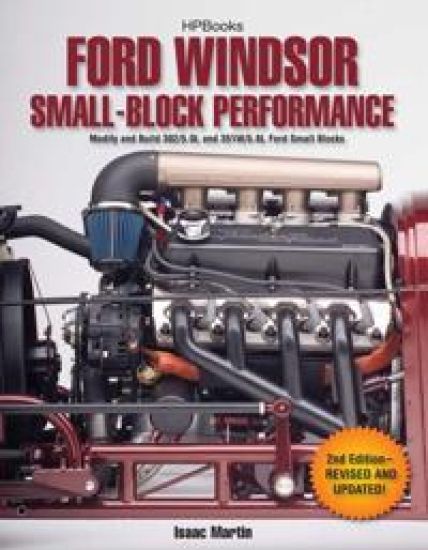
Ford Windsor Small-block Performance

Ford Windsor Small-block Performance

Isaac Martin

H.P.Books,U.S.
2010
nidottu
This completely revised and updated edition of HP's bestselling book on how to build high performance 5.0/5.8L Ford small-block engines-the second most popular engine modified in the aftermarket-contains five new chapters on the latest technology for modifying the cylinder block, heads, camshafts, valvetrain, exhaust systems, and more.
Foreclosed America

Foreclosed America

Isaac Martin; Christopher Niedt

Stanford University Press
2015
pokkari
From 2007 to 2012, almost five percent of American adults—about ten million people—lost their homes because they could not make mortgage payments. The scale of this home mortgage crisis is unprecedented—and it's not over. Foreclosures still displace more American homeowners every year than at any time before the twenty-first century. The dispossession and forced displacement of American families affects their health, educational success, and access to jobs. It continues to block any real recovery in the hardest-hit communities. While we now know a lot about how this crisis affected the global economy, we still know very little about how it affected the people who lost their homes. Foreclosed America offers the first representative portrait of those people—who they are, how and where they live after losing their homes, and what they have to say about their finances, their neighborhoods, and American politics. It is a sobering picture of Americans down on their luck, and of a crisis that is testing American democracy.