Kirjojen hintavertailu. Mukana 11 717 486 kirjaa ja 12 kauppaa.

Kirjahaku

Etsi kirjoja tekijän nimen, kirjan nimen tai ISBN:n perusteella.

2 kirjaa tekijältä Isaac W. Oliver

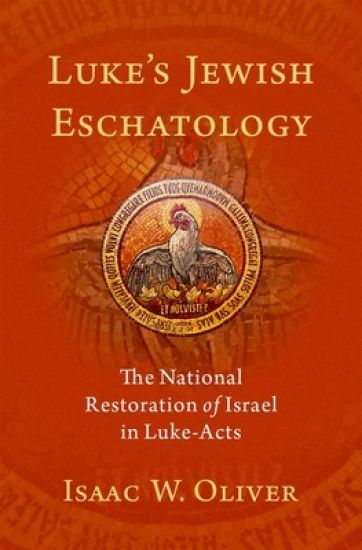
Luke's Jewish Eschatology

Luke's Jewish Eschatology

Isaac W. Oliver

Oxford University Press Inc
2021
sidottu
Luke, the eponymous author of the gospel that bears his name as well as the book of Acts, wrote the largest portion of the New Testament. Luke is generally thought to be a gentile. This book addresses a question raised by Jesus's disciples at the very beginning of Acts: "Lord, will you at this time restore the kingdom to Israel?" The question is freighted with political and national significance as it inquires about the restoration of political sovereignty to the Jewish people. This book investigates Luke's perspective on the salvation of Israel in light of Jewish restoration eschatology. It situates Luke-Acts in the aftermath of the destruction of the Second Temple in 70 CE. The author of Luke-Acts did not write the Jews off but still awaited the restoration of Israel. Luke conceived of Israel's eschatological restoration in traditional Jewish terms. The nation of Israel would experience liberation in the fullest sense, including national and political restoration. Luke's Jewish Eschatology builds upon the appreciation of the Jewish character of early Christianity in the decades after the Holocaust, which has witnessed the reclamation of the Jewishness of the historical Jesus and even Paul.
Torah Praxis after 70 CE

Torah Praxis after 70 CE

Isaac W. Oliver

Mohr Siebeck
2013
nidottu
Many consider the gospel of Matthew to be one of the most "Jewish" texts of the New Testament. Luke-Acts, on the other hand, has traditionally been viewed as a very "Greek" and Gentile-Christian text. Isaac W. Oliver challenges this dichotomy, reading Matthew and Luke-Acts not only against their Jewish "background" but as early Jewish literature. He explores the question of Torah praxis, especially its ritual aspects, in each writing. By assessing their attitude toward three central markers of Jewish identity - Sabbath, kashrut, and circumcision - Oliver argues that both Matthew and Luke affirm the perpetuation of Torah observance within the Jesus movement, albeit by differentiating which Mosaic commandments are incumbent upon Jewish and Gentile followers of Jesus. Luke proves to be just as "Jewish" as his cousin Matthew in so far as his affirmation of the Mosaic Torah is concerned. The evidence in both Matthew and Luke-Acts suggests that Jewish practices such as the Sabbath and even circumcision continued to enjoy a prominent status in the Jesus movement even after 70 CE, and that Jewish followers of Jesus played an important and integral role in the formation of the ekklesia well throughout the latter third of the first century CE.