Kirjojen hintavertailu. Mukana 12 016 292 kirjaa ja 12 kauppaa.

Kirjahaku

Etsi kirjoja tekijän nimen, kirjan nimen tai ISBN:n perusteella.

5 kirjaa tekijältä Isabel Moreira

Balthild of Francia

Balthild of Francia

Isabel Moreira

OXFORD UNIVERSITY PRESS INC
2024
nidottu
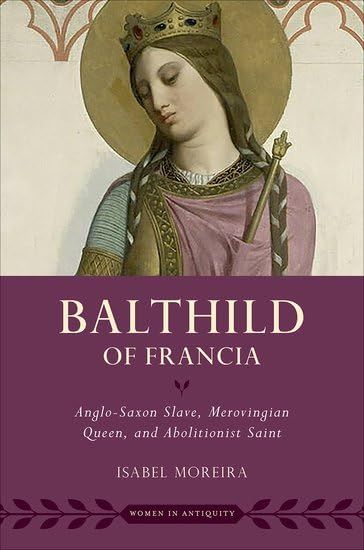
This book tells the remarkable life of Balthild of Francia (c. 633-80), a seventh-century Anglo-Saxon slave who became a queen of France. Described in contemporary sources as beautiful and intelligent, she rose to power though her marriage to the short-lived King Clovis II. As regent for her young son, she promoted social and political reforms in Francia that included the rescue and rehousing of Christian slaves who, like Balthild herself, had been caught up in the human-trafficking practices of the mid-seventh century. Implicated in the violent politics of the era, Balthild spent the remainder of her life in the convent of Chelles where a unique cache of surviving relics and personal items, including her hair, were protected and dispersed as relics over the following centuries. In the nineteenth century, Balthild's anti-slave trade policies were recalled for new audiences when she was adopted as an icon for the cause of the abolition of the slave trade and installed as one of the twenty illustrious women whose statues are situated in the Luxembourg Gardens in Paris. Although critical to her age, because of the remote time period and the specialized nature of the sources, Balthild is little known today. This book will correct this oversight by shining a light on a fascinating and courageous figure whose legacy long outlived the era to which she belonged.
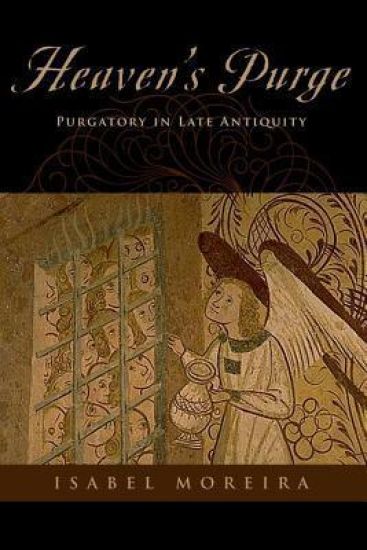
Heaven's Purge

Heaven's Purge

Isabel Moreira

Oxford University Press Inc
2014
nidottu
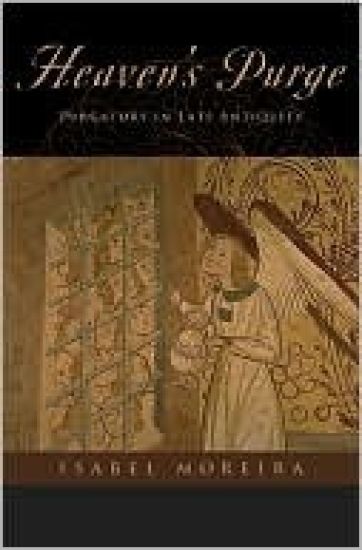
The doctrine of purgatory - the state after death in which Christians undergo punishment by God for unforgiven sins - raises many questions. What is purgatory like? Who experiences it? Does purgatory purify souls, or punish them, or both? How painful is it? Heaven's Purge explores the first posing of these questions in Christianity's early history, from the first century to the eighth: an era in which the notion that sinful Christians might improve their lot after death was contentious, or even heretical. Isabel Moreira discusses a wide range of influences at play in purgatory's early formation, including ideas about punishment and correction in the Roman world, slavery, the value of medical purges at the shrines of saints, and the authority of visions of the afterlife for informing Christians of the hereafter. She also challenges the deeply ingrained supposition that belief in purgatory was a symptom of barbarized Christianity, and assesses the extent to which Irish and Germanic views of society, and the sources associated with them - penitentials and legal tariffs - played a role in purgatory's formation. Special attention is given to the writings of the last patristic author of antiquity, the Northumbrian monk Bede. Heaven's Purge is the first study to focus on purgatory's history in late antiquity, challenging the conclusions of recent scholarship through an examination of the texts, communities and cultural ideas that informed purgatory's early history.
Heaven's Purge

Heaven's Purge

Isabel Moreira

Oxford University Press Inc
2010
sidottu
The sixth-century bishop Gregory of Tours described how mixing water with dust from the tomb St. Martin would create a potion that would act as a ¨celestial purgative.¨ Indeed, Gregory could observe Christians being purged of sickness and sin all around him. By contrast, God's willingness to purge Christians of their sin after death was a more complicated proposition. As a process hidden from view, it raised questions: What was purgatory like? Who would experience it? Did purgatory purify souls, punish them, or both? And how painful would it be? This book explores purgatory's earliest history from the first century to the eighth. This was an era in which the idea that sinful Christians might improve their lot after death was often contentious, even heretical. In this, the first study focused on purgatory's history in late antiquity, Moreira explores a wide variety of interests and influences at play in purgatory's early formation. Some of the influences discussed are ideas about punishment and correction in the Roman world, slavery, the value of medical purges at the shrines of saints, and the authority of visions of the afterlife for informing Christians on the hereafter. Finally, this study challenges the deeply ingrained supposition that purgatory was a symptom of barbarized Christianity. It assesses the extent to which Irish and Germanic views of society, and the sources associated with them - penitentials and legal tariffs - played a role in purgatory's formation. Highlighting the importance of the Anglo-Saxon contribution to purgatory, special attention is given to the writings of the last patristic author of antiquity, the Northumbrian monk, Bede.
Dreams, Visions, and Spiritual Authority in Merovingian Gaul
In early medieval Europe, dreams and visions were believed to reveal divine information about Christian life and the hereafter. No consensus existed, however, as to whether all Christians, or only a spiritual elite, were entitled to have a relationship of this sort with the supernatural. Drawing on a rich variety of sources—histories, hagiographies, ascetic literature, and records of dreams at saints' shrines—Isabel Moreira provides insight into a society struggling to understand and negotiate its religious visions. Moreira analyzes changing attitudes toward dreams and visionary experiences beginning in late antiquity, when the church hierarchy considered lay dreamers a threat to its claims of spiritual authority. Moreira describes how, over the course of the Merovingian period, the clergy came to accept the visions of ordinary folk—peasants, women, and children—as authentic. Dream literature and accounts of visionary experiences infiltrated all aspects of medieval culture by the eighth century, and the dreams of ordinary Christians became central to the clergy's pastoral concerns. Written in clear and inviting prose, this book enables readers to understand how the clerics of Merovingian Gaul allowed a Christian culture of dreaming to develop and flourish without compromising the religious orthodoxy of the community or the primacy of their own authority.
Balthild of Francia

Balthild of Francia

Isabel Moreira

OXFORD UNIVERSITY PRESS INC
2025
sidottu
This book tells the remarkable life of Balthild of Francia (c. 633-80), a seventh-century Anglo-Saxon slave who became a queen of France. Described in contemporary sources as beautiful and intelligent, she rose to power though her marriage to the short-lived King Clovis II. As regent for her young son, she promoted social and political reforms in Francia that included the rescue and rehousing of Christian slaves who, like Balthild herself, had been caught up in the human-trafficking practices of the mid-seventh century. Implicated in the violent politics of the era, Balthild spent the remainder of her life in the convent of Chelles where a unique cache of surviving relics and personal items, including her hair, were protected and dispersed as relics over the following centuries. In the nineteenth century, Balthild's anti-slave trade policies were recalled for new audiences when she was adopted as an icon for the cause of the abolition of the slave trade and installed as one of the twenty illustrious women whose statues are situated in the Luxembourg Gardens in Paris. Although critical to her age, because of the remote time period and the specialized nature of the sources, Balthild is little known today. This book will correct this oversight by shining a light on a fascinating and courageous figure whose legacy long outlived the era to which she belonged.