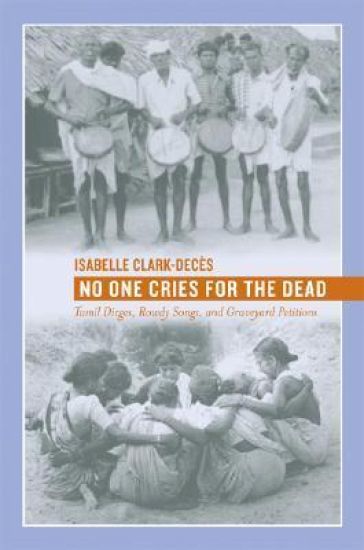
At South Indian village funerals, women cry and lament, men drink and laugh, and untouchables sing and joke to the beat of their drums. No One Cries for the Dead offers an original interpretation of these behaviors, which seem almost unrelated to the dead and to the funeral event. Isabelle Clark-Deces demonstrates that rather than mourn the dead, these Tamil funeral songs first and foremost give meaning to the caste, gender, and personal experiences of the performers.
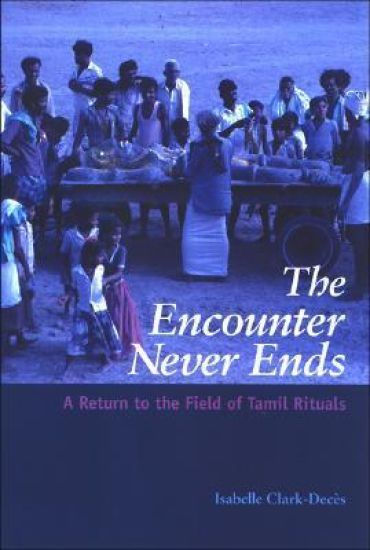
A reconsideration of the relationship between fieldwork and anthropological knowledge.The Encounter Never Ends offers a thoughtful meditation on the relationship between fieldwork and anthropological knowledge through the analysis of Tamil ritual practice in a South Indian village. Isabelle Clark-Decès revisits field notes taken more than fifteen years earlier, and reveals what she intended when she took the notes, what she came to understand and record, and why she proceeded to ignore her ethnography until recently. Returning to these notes with fresh eyes and matured experience, Clark-Decès gains insight into Tamil rural society that complicates anthropological analyses of the Indian village. She realizes that the village she lived in was neither a community nor a "system" but rather a loose hodgepodge of caste groups and advises that the social order is not necessarily the best place to start looking for important insights into the ways in which cultures construe ritual action. Drawing on the recent work of Don Handelman to discuss the two Tamil ritual complexes recovered from her field notes, a drought "removal" ritual and a post-funeral ceremony, the author shows how they articulate complex notions regarding knowledge, reflexivity, and action. Throughout, the author shares her own story, including the mixture of frustration and fascination she felt while conducting fieldwork, illustrating how extraordinarily difficult ethnographic description is.
A reconsideration of the relationship between fieldwork and anthropological knowledge.The Encounter Never Ends offers a thoughtful meditation on the relationship between fieldwork and anthropological knowledge through the analysis of Tamil ritual practice in a South Indian village. Isabelle Clark-Decès revisits field notes taken more than fifteen years earlier, and reveals what she intended when she took the notes, what she came to understand and record, and why she proceeded to ignore her ethnography until recently. Returning to these notes with fresh eyes and matured experience, Clark-Decès gains insight into Tamil rural society that complicates anthropological analyses of the Indian village. She realizes that the village she lived in was neither a community nor a "system" but rather a loose hodgepodge of caste groups and advises that the social order is not necessarily the best place to start looking for important insights into the ways in which cultures construe ritual action. Drawing on the recent work of Don Handelman to discuss the two Tamil ritual complexes recovered from her field notes, a drought "removal" ritual and a post-funeral ceremony, the author shows how they articulate complex notions regarding knowledge, reflexivity, and action. Throughout, the author shares her own story, including the mixture of frustration and fascination she felt while conducting fieldwork, illustrating how extraordinarily difficult ethnographic description is.
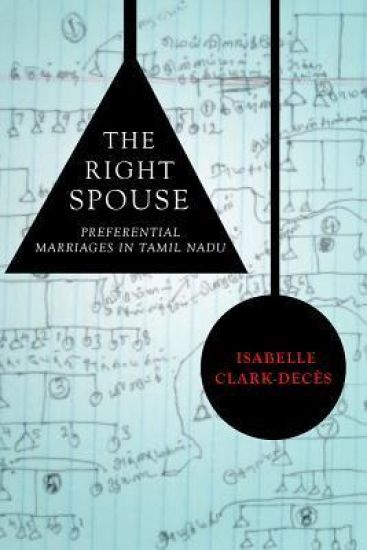
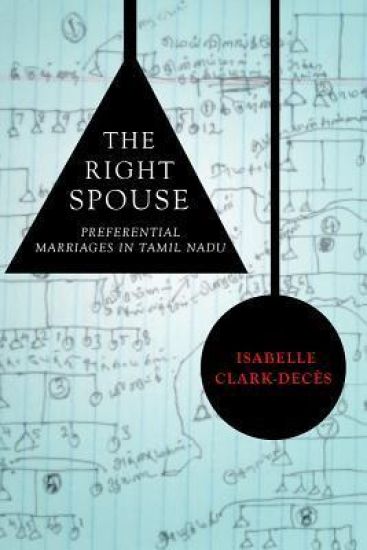
The Right Spouse is an engaging investigation into Tamil (South Indian) preferential close kin marriages, so-called Dravidian Kinship. This book offers a description and an interpretation of preferential marriages with close kin in South India, as they used to be arranged and experienced in the recent past and as they are increasingly discontinued in the present. Clark-Decès presents readers with a focused anthropology of this waning marriage system: its past, present, and dwindling future. The book takes on the main pillars of Tamil social organization, considers the ways in which Tamil intermarriage establishes kinship and social rank, and argues that past scholars have improperly defined "Dravidian" kinship. Within her critique of past scholarship, Clark-Decès recasts a powerful and vivid image of preferential marriage in Tamil Nadu and how those preferences and marital rules play out in lived reality. What Clark-Decès discovers in her fieldwork are endogamous patterns and familial connections that sometimes result in flawed relationships, contradictory statuses, and confused roles. The book includes a fascinating narration of the complex terrain that Tamil youth currently navigate as they experience the complexities and changing nature of marriage practices and seek to reconcile their established kinship networks to more individually driven marriages and careers.
The Right Spouse is an engaging investigation into Tamil (South Indian) preferential close kin marriages, so-called Dravidian Kinship. This book offers a description and an interpretation of preferential marriages with close kin in South India, as they used to be arranged and experienced in the recent past and as they are increasingly discontinued in the present. Clark-Decès presents readers with a focused anthropology of this waning marriage system: its past, present, and dwindling future. The book takes on the main pillars of Tamil social organization, considers the ways in which Tamil intermarriage establishes kinship and social rank, and argues that past scholars have improperly defined "Dravidian" kinship. Within her critique of past scholarship, Clark-Decès recasts a powerful and vivid image of preferential marriage in Tamil Nadu and how those preferences and marital rules play out in lived reality. What Clark-Decès discovers in her fieldwork are endogamous patterns and familial connections that sometimes result in flawed relationships, contradictory statuses, and confused roles. The book includes a fascinating narration of the complex terrain that Tamil youth currently navigate as they experience the complexities and changing nature of marriage practices and seek to reconcile their established kinship networks to more individually driven marriages and careers.