Kirjojen hintavertailu. Mukana 11 244 527 kirjaa ja 12 kauppaa.

Kirjahaku

Etsi kirjoja tekijän nimen, kirjan nimen tai ISBN:n perusteella.

16 kirjaa tekijältä Isabelle Stengers

Power and Invention

Power and Invention

Isabelle Stengers

University of Minnesota Press
1997
nidottu
Using the law of thermodynamics, Stengers sets out to explain the consequences of non-linear dynamics (or chaos theory) for philosophy and science. The author makes a case for the concept of complexity that transcends the conventional boundaries of scientific discourse and that clearly exposes the risks of scientific theories.
Cosmopolitics I

Cosmopolitics I

Isabelle Stengers

University of Minnesota Press
2010
nidottu
A sweeping critique of the role and authority of modern science in contemporary society From Einstein’s quest for a unified field theory to Stephen Hawking’s belief that we “would know the mind of God” through such a theory, contemporary science—and physics in particular—has claimed that it alone possesses absolute knowledge of the universe. In a sweeping work of philosophical inquiry, originally published in French in seven volumes, Isabelle Stengers builds on her previous intellectual accomplishments to explore the role and authority of science in modern societies and to challenge its pretensions to objectivity, rationality, and truth. For Stengers, science is a constructive enterprise, a diverse, interdependent, and highly contingent system that does not simply discover preexisting truths but, through specific practices and processes, helps shape them. She addresses conceptual themes crucial for modern science, such as the formation of physical-mathematical intelligibility, from Galilean mechanics and the origin of dynamics to quantum theory, the question of biological reductionism, and the power relations at work in the social and behavioral sciences. Focusing on the polemical and creative aspects of such themes, she argues for an ecology of practices that takes into account how scientific knowledge evolves, the constraints and obligations such practices impose, and the impact they have on the sciences and beyond. This perspective, which demands that competing practices and interests be taken seriously rather than merely (and often condescendingly) tolerated, poses a profound political and ethical challenge. In place of both absolutism and tolerance, she proposes a cosmopolitics—modeled on the ideal scientific method that considers all assumptions and facts as being open to question—that reintegrates the natural and the social, the modern and the archaic, the scientific and the irrational. Cosmopolitics I includes the first three volumes of the original work. Cosmopolitics II will be published by the University of Minnesota Press in Fall 2011.
Cosmopolitics II

Cosmopolitics II

Isabelle Stengers

University of Minnesota Press
2011
sidottu
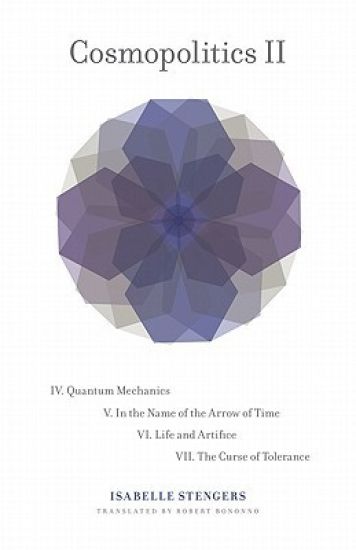
Originally published in French in seven volumes, Cosmopolitics investigates the role and authority of the sciences in modern societies and challenges their claims to objectivity, rationality, and truth. Cosmopolitics II includes the first English-language translations of the last four books: Quantum Mechanics: The End of the Dream, In the Name of the Arrow of Time: Prigogine’s Challenge, Life and Artifice: The Faces of Emergence, and The Curse of Tolerance. Arguing for an “ecology of practices” in the sciences, Isabelle Stengers explores the discordant landscape of knowledge derived from modern science, seeking intellectual consistency among contradictory, confrontational, and mutually exclusive philosophical ambitions and approaches. For Stengers, science is a constructive enterprise, a diverse, interdependent, and highly contingent system that does not simply discover preexisting truths but, through specific practices and processes, helps shape them. Stengers concludes this philosophical inquiry with a forceful critique of tolerance; it is a fundamentally condescending attitude, she contends, that prevents those worldviews that challenge dominant explanatory systems from being taken seriously. Instead of tolerance, she proposes a “cosmopolitics” that rejects politics as a universal category and allows modern scientific practices to peacefully coexist with other forms of knowledge.
Cosmopolitics II

Cosmopolitics II

Isabelle Stengers

University of Minnesota Press
2011
nidottu
Originally published in French in seven volumes, Cosmopolitics investigates the role and authority of the sciences in modern societies and challenges their claims to objectivity, rationality, and truth. Cosmopolitics II includes the first English-language translations of the last four books: Quantum Mechanics: The End of the Dream, In the Name of the Arrow of Time: Prigogine’s Challenge, Life and Artifice: The Faces of Emergence, and The Curse of Tolerance. Arguing for an “ecology of practices” in the sciences, Isabelle Stengers explores the discordant landscape of knowledge derived from modern science, seeking intellectual consistency among contradictory, confrontational, and mutually exclusive philosophical ambitions and approaches. For Stengers, science is a constructive enterprise, a diverse, interdependent, and highly contingent system that does not simply discover preexisting truths but, through specific practices and processes, helps shape them. Stengers concludes this philosophical inquiry with a forceful critique of tolerance; it is a fundamentally condescending attitude, she contends, that prevents those worldviews that challenge dominant explanatory systems from being taken seriously. Instead of tolerance, she proposes a “cosmopolitics” that rejects politics as a universal category and allows modern scientific practices to peacefully coexist with other forms of knowledge.
Hypnosis Between Science and Magic

Hypnosis Between Science and Magic

Isabelle Stengers

BLOOMSBURY PUBLISHING PLC
2024
nidottu
What if judgment returned to the craft of magic? How would that relieve the burdens of critique and realign its priorities? These questions regarding the value of magic to thinking are at the very heart of the acclaimed philosopher of science Isabelle Stengers' political and philosophical thought and her insistence that ‘the smoke of the burned witches still hangs in our nostrils’.Now, in the first English translation of this classic text, Hypnosis Between Science and Magic provides an entry point to the work of Isabelle Stengers, who has so originally and forcefully shifted how we think about the history of ideas. The book focuses in on an area of her thought that has recurred throughout her career: the presumed antagonism between magic and science, and especially the evacuation of magic from all that is thought to be scientifically valid.
Hypnosis Between Science and Magic

Hypnosis Between Science and Magic

Isabelle Stengers

BLOOMSBURY PUBLISHING PLC
2024
sidottu
What if judgment returned to the craft of magic? How would that relieve the burdens of critique and realign its priorities? These questions regarding the value of magic to thinking are at the very heart of the acclaimed philosopher of science Isabelle Stengers' political and philosophical thought and her insistence that ‘the smoke of the burned witches still hangs in our nostrils’.Now, in the first English translation of this classic text, Hypnosis Between Science and Magic provides an entry point to the work of Isabelle Stengers, who has so originally and forcefully shifted how we think about the history of ideas. The book focuses in on an area of her thought that has recurred throughout her career: the presumed antagonism between magic and science, and especially the evacuation of magic from all that is thought to be scientifically valid.
Speculative Empiricism

Speculative Empiricism

Isabelle Stengers

Edinburgh University Press
2017
nidottu
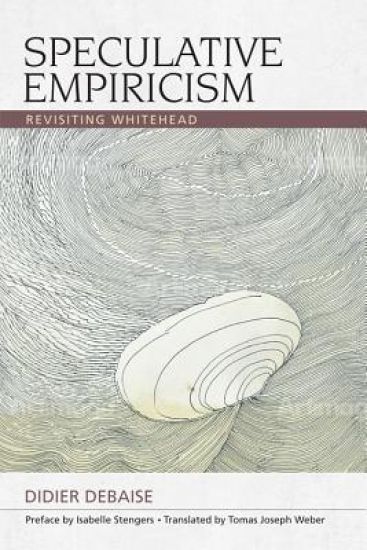
Can experience be thought systematically without transforming the richness of the world as it is lived into reductive philosophical generalities? Can the method of empiricism ever be reconciled with a method of systematic cosmological speculation? Didier Debaise's reading of Process and Reality shows clearly what a philosophy that makes this possible looks like, how it works and what is at stake. He focuses in on Whitehead's attempt to construct a metaphysical system of everything in the universe that exists whilst simultaneously claiming that it can account for every element of our experience: everything enjoyed and perceived, willed or thought. In this way, Debaise illustrates how Whitehead's philosophy gives us a radically new way of conceiving the relations between experience and speculation.
Virgin Mary and the Neutrino

Virgin Mary and the Neutrino

Isabelle Stengers

DUKE UNIVERSITY PRESS
2023
sidottu
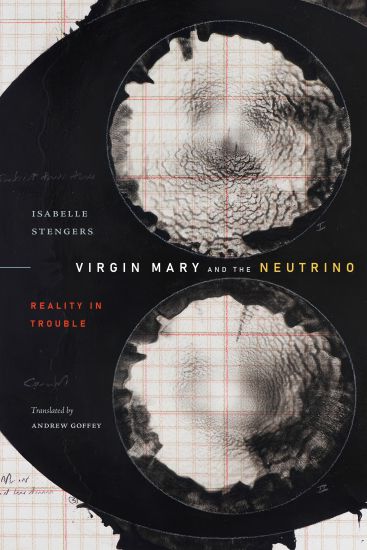
In Virgin Mary and the Neutrino, first published in French in 2006 and here appearing in English for the first time, Isabelle Stengers experiments with the possibility of addressing modern practices not as a block but through their divergence from each other. Drawing on thinkers ranging from John Dewey to Gilles Deleuze, she develops what she calls an “ecology of practices” into a capacious and heterogeneous perspective that is inclusive of cultural and political forces but not reducible to them. Stengers first advocates for an approach to sciences that would emphasize the way each should be situated by the kind of relationships demanded by what it attempts to address. This approach turns away from the disabling scientific/nonscientific binary-like the opposition between the neutrino and the Virgin Mary. An ecology of practices instead stimulates an appetite for thinking reality not as an arbiter but as what we can relate to through the generation of diverging concerns and obligations.
Virgin Mary and the Neutrino

Virgin Mary and the Neutrino

Isabelle Stengers

DUKE UNIVERSITY PRESS
2023
pokkari
In Virgin Mary and the Neutrino, first published in French in 2006 and here appearing in English for the first time, Isabelle Stengers experiments with the possibility of addressing modern practices not as a block but through their divergence from each other. Drawing on thinkers ranging from John Dewey to Gilles Deleuze, she develops what she calls an “ecology of practices” into a capacious and heterogeneous perspective that is inclusive of cultural and political forces but not reducible to them. Stengers first advocates for an approach to sciences that would emphasize the way each should be situated by the kind of relationships demanded by what it attempts to address. This approach turns away from the disabling scientific/nonscientific binary-like the opposition between the neutrino and the Virgin Mary. An ecology of practices instead stimulates an appetite for thinking reality not as an arbiter but as what we can relate to through the generation of diverging concerns and obligations.
Another Science is Possible

Another Science is Possible

Isabelle Stengers

Polity Press
2017
sidottu
Like fast food, fast science is quickly prepared, not particularly good, and it clogs up the system. Efforts to tackle our most pressing issues have been stymied by conflict within the scientific community and mixed messages symptomatic of a rushed approach. What is more, scientific research is being shaped by the bubbles and crashes associated with economic speculation and the market. A focus on conformism, competitiveness, opportunism and flexibility has made it extremely difficult to present cases of failure to the public, for fear that it will lose confidence in science altogether. In this bold new book, distinguished philosopher Isabelle Stengers shows that research is deeply intertwined with broader social interests, which means that science cannot race ahead in isolation but must learn instead to slow down. Stengers offers a path to an alternative science, arguing that researchers should stop seeing themselves as the 'thinking, rational brain of humanity' and refuse to allow their expertise to be used to shut down the concerns of the public, or to spread the belief that scientific progress is inevitable and will resolve all of society's problems. Rather, science must engage openly and honestly with an intelligent public and be clear about the kind of knowledge it is capable of producing. This timely and accessible book will be of great interest to students, scholars and policymakers in a wide range of fields, as well anyone concerned with the role of science and its future.
Another Science is Possible

Another Science is Possible

Isabelle Stengers

Polity Press
2017
nidottu
Like fast food, fast science is quickly prepared, not particularly good, and it clogs up the system. Efforts to tackle our most pressing issues have been stymied by conflict within the scientific community and mixed messages symptomatic of a rushed approach. What is more, scientific research is being shaped by the bubbles and crashes associated with economic speculation and the market. A focus on conformism, competitiveness, opportunism and flexibility has made it extremely difficult to present cases of failure to the public, for fear that it will lose confidence in science altogether. In this bold new book, distinguished philosopher Isabelle Stengers shows that research is deeply intertwined with broader social interests, which means that science cannot race ahead in isolation but must learn instead to slow down. Stengers offers a path to an alternative science, arguing that researchers should stop seeing themselves as the 'thinking, rational brain of humanity' and refuse to allow their expertise to be used to shut down the concerns of the public, or to spread the belief that scientific progress is inevitable and will resolve all of society's problems. Rather, science must engage openly and honestly with an intelligent public and be clear about the kind of knowledge it is capable of producing. This timely and accessible book will be of great interest to students, scholars and policymakers in a wide range of fields, as well anyone concerned with the role of science and its future.
Making Sense in Common

Making Sense in Common

Isabelle Stengers

UNIVERSITY OF MINNESOTA PRESS
2023
sidottu
A leading philosopher seeks to recover “common sense” as a meeting place to reconcile science and philosophy With her previous books on Alfred North Whitehead, Isabelle Stengers not only secured a reputation as one of the premier philosophers of our times but also inspired a rethinking of critical theory, political thought, and radical philosophy across a range of disciplines. Here, Stengers unveils what might well be seen as her definitive reading of Whitehead.Making Sense in Common will be greeted eagerly by the growing group of scholars who use Stengers’s work on Whitehead as a model for how to think with conceptual precision through diverse domains of inquiry: environmentalism and ecology, animal studies, media and technology studies, the history and philosophy of science, feminism, and capitalism. On the other hand, the significance of this new book extends beyond Whitehead. Instead, it lies in Stengers’s recovery of the idea of “common sense” as a meeting place-a commons-where opposed ideas of science and humanistic inquiry can engage one another and help to move society forward. Her reconciliation of science and philosophy is especially urgent today-when climate disaster looms all around us, when the values of what we thought of as civilization and modernity are discredited, and when expertise of any kind is under attack.
Making Sense in Common

Making Sense in Common

Isabelle Stengers

UNIVERSITY OF MINNESOTA PRESS
2023
nidottu
A leading philosopher seeks to recover “common sense” as a meeting place to reconcile science and philosophy With her previous books on Alfred North Whitehead, Isabelle Stengers not only secured a reputation as one of the premier philosophers of our times but also inspired a rethinking of critical theory, political thought, and radical philosophy across a range of disciplines. Here, Stengers unveils what might well be seen as her definitive reading of Whitehead.Making Sense in Common will be greeted eagerly by the growing group of scholars who use Stengers’s work on Whitehead as a model for how to think with conceptual precision through diverse domains of inquiry: environmentalism and ecology, animal studies, media and technology studies, the history and philosophy of science, feminism, and capitalism. On the other hand, the significance of this new book extends beyond Whitehead. Instead, it lies in Stengers’s recovery of the idea of “common sense” as a meeting place-a commons-where opposed ideas of science and humanistic inquiry can engage one another and help to move society forward. Her reconciliation of science and philosophy is especially urgent today-when climate disaster looms all around us, when the values of what we thought of as civilization and modernity are discredited, and when expertise of any kind is under attack.
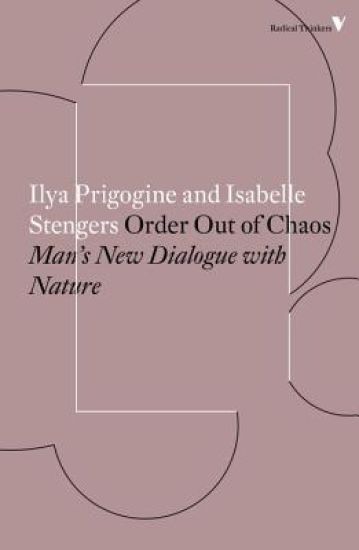
Porjadok iz khaosa. Novyj dialog cheloveka s prirodoj
Kniga izvestnogo belgijskogo fiziko-khimika, laureata Nobelevskoj premii I.Prigozhina i ego soavtora I.Stengers posvjaschena rassmotreniju nauki i filosofii XIX i XX vv. s pozitsij nauki vtoroj poloviny XX stoletija, a takzhe problemam i osobennostjam sovremennogo nauchnogo myshlenija. Tsel knigi - osmyslit put, projdennyj naukoj i poznaniem, i izlozhit trebovanija sovremennoj nauki i obschestva vosstanovit na novykh osnovanijakh sojuz cheloveka s prirodoj, v kotorom budet edinstvo ne tolko prirody i cheloveka, no takzhe nauki, kultury i obschestva. Avtory dajut glubokoe istoriko-filosofskoe rassmotrenie nauchnogo poznanija, nachinaja s Njutona i Laplasa i zakanchivaja ego pozdnejshej kritikoj sovremennymi zapadnymi filosofami.Rekomenduetsja kak spetsialistam estestvenno-nauchnykh i gumanitarnykh distsiplin, tak i shirokomu krugu chitatelej, interesujuschikhsja problemami sovremennoj nauki.