Kirjojen hintavertailu. Mukana 11 678 731 kirjaa ja 12 kauppaa.

Kirjahaku

Etsi kirjoja tekijän nimen, kirjan nimen tai ISBN:n perusteella.

3 kirjaa tekijältä Ivan Moscati

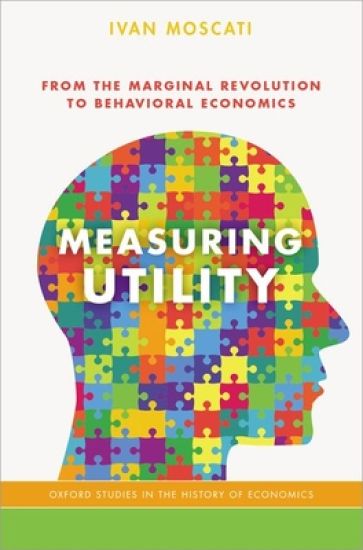
Measuring Utility

Measuring Utility

Ivan Moscati

Oxford University Press Inc
2018
sidottu
Utility is a key concept in the economics of individual decision-making. However, utility is not measurable in a straightforward way. As a result, from the very beginning there has been debates about the meaning of utility as well as how to measure it. This book is an innovative investigation of how these arguments changed over time. Measuring Utility reconstructs economists' ideas and discussions about utility measurement from 1870 to 1985, as well as their attempts to measure utility empirically. The book brings into focus the interplay between the evolution of utility analysis, economists' ideas about utility measurement, and their conception of what measurement in general means. It also explores the relationships between the history of utility measurement in economics, the history of the measurement of sensations in psychology, and the history of measurement theory in general. Finally, the book discusses some methodological problems related to utility measurement, such as the epistemological status of the utility concept and its measures. The first part covers the period 1870-1910, and discusses the issue of utility measurement in the theories of Jevons, Menger, Walras and other early utility theorists. Part II deals with the emergence of the notions of ordinal and cardinal utility during the period 1900-1945, and discusses two early attempts to give an empirical content to the notion of utility. Part III focuses on the 1945-1955 debate on utility measurement that was originated by von Neumann and Morgenstern's expected utility theory (EUT). Part IV reconstructs the experimental attempts to measure the utility of money between 1950 and 1985 within the framework provided by EUT. This historical and epistemological overview provides keen insights into current debates about rational choice theory and behavioral economics in the theory of individual decision-making and the philosophy of economics.
Measuring Utility

Measuring Utility

Ivan Moscati

Oxford University Press Inc
2019
nidottu
Utility is a key concept in the economics of individual decision-making. However, utility is not measurable in a straightforward way. As a result, from the very beginning there has been debates about the meaning of utility as well as how to measure it. This book is an innovative investigation of how these arguments changed over time. Measuring Utility reconstructs economists' ideas and discussions about utility measurement from 1870 to 1985, as well as their attempts to measure utility empirically. The book brings into focus the interplay between the evolution of utility analysis, economists' ideas about utility measurement, and their conception of what measurement in general means. It also explores the relationships between the history of utility measurement in economics, the history of the measurement of sensations in psychology, and the history of measurement theory in general. Finally, the book discusses some methodological problems related to utility measurement, such as the epistemological status of the utility concept and its measures. The first part covers the period 1870-1910, and discusses the issue of utility measurement in the theories of Jevons, Menger, Walras and other early utility theorists. Part II deals with the emergence of the notions of ordinal and cardinal utility during the period 1900-1945, and discusses two early attempts to give an empirical content to the notion of utility. Part III focuses on the 1945-1955 debate on utility measurement that was originated by von Neumann and Morgenstern's expected utility theory (EUT). Part IV reconstructs the experimental attempts to measure the utility of money between 1950 and 1985 within the framework provided by EUT. This historical and epistemological overview provides keen insights into current debates about rational choice theory and behavioral economics in the theory of individual decision-making and the philosophy of economics.
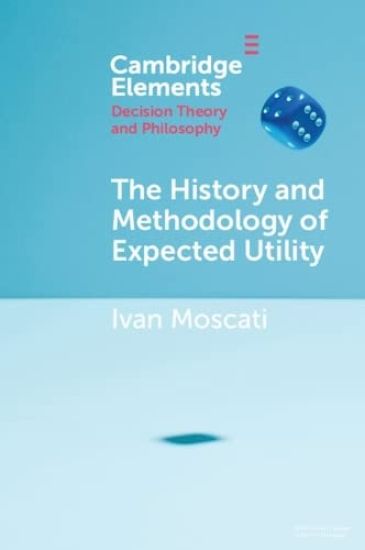
The History and Methodology of Expected Utility

The History and Methodology of Expected Utility

Ivan Moscati

Cambridge University Press
2023
pokkari
This Element offers an accessible but technically detailed review of expected utility theory (EU), which is a model of individual decision-making under uncertainty that is central for both economics and philosophy. The Element's approach falls between the history of ideas and economic methodology. At the historical level, it reviews EU by following its conceptual evolution from its original formulation in the eighteenth century through its transformations and extensions in the mid-twentieth century to its more recent supersession by post-EU theories such as prospect theory. In reconstructing the history of EU, it focuses on the methodological issues that have accompanied its evolution, such as whether the utility function and the other components of EU correspond to actual mental entities. On many of these issues, no consensus has yet been reached, and in this Element the author offers his view on them.