Kirjojen hintavertailu. Mukana 11 717 486 kirjaa ja 12 kauppaa.

Kirjahaku

Etsi kirjoja tekijän nimen, kirjan nimen tai ISBN:n perusteella.

14 kirjaa tekijältä Ivan Strenski

Durkheim and the Jews of France

Durkheim and the Jews of France

Ivan Strenski

University of Chicago Press
1997
sidottu
Discussing the work of Emile Durkheim, the author of this study discounts the theory that there is anything "essentially" Jewish in his work. He seeks to show that Durkheim's sociology (especially his sociology of religion), was formed in relation to 19th and 20th century Jewish intellectual life in France. The book examines claims, some anti-Semitic, some not, for the Jewishness of Durkheim's work. In each case Strenski overturns the claim while showing that it can nevertheless open up a fruitful enquiry into the relation of Durkheim to French Jewry. For example, Strenski shows that Durkheim's celebration of ritual had no innately Jewish source, but derived crucially from work on Hinduism by the Jewish Indologist Sylvain Levi, whose influence on Durkheim and his followers has never been acknowledged.
Durkheim and the Jews of France

Durkheim and the Jews of France

Ivan Strenski

University of Chicago Press
1997
nidottu
Discussing the work of Emile Durkheim, the author of this study discounts the theory that there is anything "essentially" Jewish in his work. He seeks to show that Durkheim's sociology (especially his sociology of religion), was formed in relation to 19th and 20th century Jewish intellectual life in France. The book examines claims, some anti-Semitic, some not, for the Jewishness of Durkheim's work. In each case Strenski overturns the claim while showing that it can nevertheless open up a fruitful enquiry into the relation of Durkheim to French Jewry. For example, Strenski shows that Durkheim's celebration of ritual had no innately Jewish source, but derived crucially from work on Hinduism by the Jewish Indologist Sylvain Levi, whose influence on Durkheim and his followers has never been acknowledged.
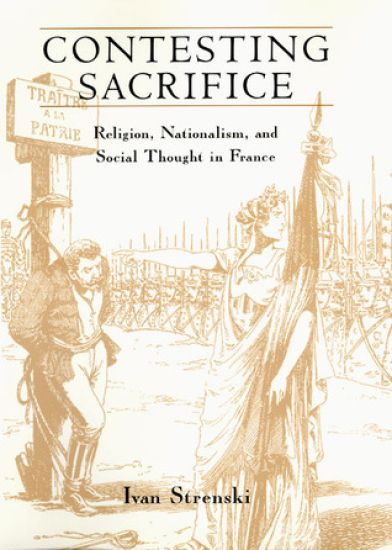
Contesting Sacrifice

Contesting Sacrifice

Ivan Strenski

University of Chicago Press
2002
sidottu
From the counter-reformation through the twentieth century, the notion of sacrifice has played a key role in French culture and nationalist politics. Ivan Strenski traces the history of sacrificial thought in France, starting from its origins in Roman Catholic theology. Throughout, he highlights not just the dominant discourse on sacrifice but also the many competing conceptions that contested it. Strenski suggests that the annihilating spirituality rooted in the Catholic model of Eucharistic sacrifice persuaded the judges in the Dreyfus Case to overlook or play down his possible innocence because a scapegoat was needed to expiate the sins of France and save its army from disgrace. Strenski also suggests that the French army's strategy in World War I, French fascism, and debates over public education and civic morals during the Third Republic all owe much to Catholic theology of sacrifice and Protestant reinterpretations of it. Pointing out that every major theorist of sacrifice is French, including Bataille, Durkheim, Girard, Hubert, and Mauss, Strenski argues that we cannot fully understand their work without first taking into account the deep roots of sacrificial thought in French history.
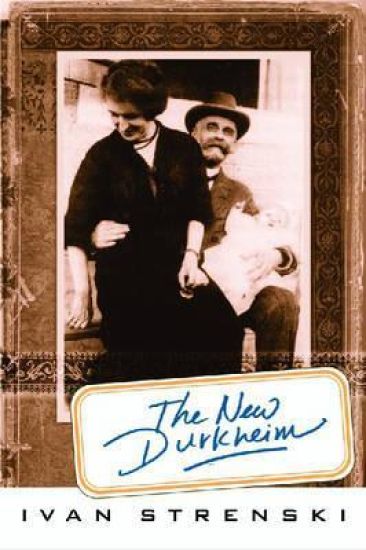
The New Durkheim

The New Durkheim

Ivan Strenski

Rutgers University Press
2006
nidottu
The French sociologist Emile Durkheim (1858–1917) is considered to be a founding father of several academic disciplines: sociology, anthropology, and religious studies. His books, The Elementary Forms of the Religious Life, Suicide, The Rules of Sociological Method, and The Division of Labor in Society are still required reading for any serious student in these fields.Religion as the objectification of social ties, ritual as a source of “collective effervescence,” anomie as a force shaping modern suicide—all these are ideas derived from Durkheim. While commonly recognized for these fundamental concepts, however, Durkheim is becoming increasingly known for far more. In recent years, social theorists have begun looking at his work in new ways, situating him in the social, intellectual, and cultural context of his time.Ivan Strenski, a leading figure in this reexamination, brings together a collection of his own essays to demonstrate the fruitful ways that Durkheimian perspectives can be applied to contemporary issues. Chapters focus on a wide range of topics, including sacrifice, religion, animal rights, and terrorism. Strenski concludes by linking the revitalization of Durkheimian social theory with an exciting new approach to teaching his texts and ideas. This book will be essential reading for scholars in religious studies, anthropology, and sociology.
Religion in Relation

Religion in Relation

Ivan Strenski

Palgrave Macmillan
1993
nidottu
In this collection of 11 essays the author outlines a programme of integrative, contextualized studies of religion. A number of different themes are included in these modern studies of religion.
Thinking About Religion

Thinking About Religion

Ivan Strenski

Wiley-Blackwell (an imprint of John Wiley Sons Ltd)
2006
nidottu
Matching pivotal theorists and theories of religion alongside cutting-edge criticism from a team of leading contemporary scholars, this vibrant collection enables students to gain a balanced understanding of the diverse methods, theories, and theorists involved in the historical and methodological development of the study of religion. It can be used alongside Ivan Strenski’s textbook, Thinking about Religion: An Historical Introduction to Theories of Religion, to offer a complete resource for introductory students of religious studies. Creates a useful mix of classic and contemporary responses to issues in the study of religion, ideal for those coming to the subject for the first time. Traces the major historical and methodological development of the study of religion in the modern West, enabling students to gain a balanced understanding of the diverse methods, theories, and theorists involved. Primary theorists featured include Cherbury, Durkheim, Eliade, Frazer, Freud, Hume, Brede Kristensen, Malinowski, Max Müller, Ninian Smart, Robertson Smith, Spinoza, Tylor, and Weber. Contemporary contributors include Winston Davis, Sidney Hook, Robert Alun Jones, Karl Menninger, Sam Preus, Philip Rieff, Robert Segal, Georges Sorel, George Stocking, and William Dwight Whitney.
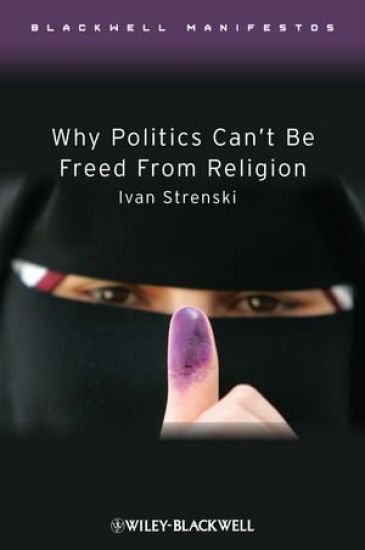
Why Politics Can't Be Freed From Religion

Why Politics Can't Be Freed From Religion

Ivan Strenski

Wiley-Blackwell (an imprint of John Wiley Sons Ltd)
2010
nidottu
Why Politics Can't be Freed From Religion is an original, erudite, and timely new book from Ivan Strenski. Itinterrogates the central ideas and contexts behind religion, politics, and power, proposing an alternative way in which we should think about these issues in the twenty-first century. A timely and highly original contribution to debates about religion, politics and power – and how historic and social influences have prejudiced our understanding of these conceptsProposes a new theoretical framework to think about what these ideas and institutions mean in today&'s societyApplies this new perspective to a variety of real-world issues, including insights into suicide bombers in the Middle EastIncludes radical critiques of the religious and political perspectives of thinkers such as Talal Asad and Michel FoucaultDislodges our conventional thinking about politics and religion, and in doing so, helps make sense of the complexities of our twenty-first century world
Why Politics Can't Be Freed From Religion

Why Politics Can't Be Freed From Religion

Ivan Strenski

Wiley-Blackwell (an imprint of John Wiley Sons Ltd)
2010
sidottu
Why Politics Can't be Freed From Religion is an original, erudite, and timely new book from Ivan Strenski. Itinterrogates the central ideas and contexts behind religion, politics, and power, proposing an alternative way in which we should think about these issues in the twenty-first century. A timely and highly original contribution to debates about religion, politics and power – and how historic and social influences have prejudiced our understanding of these conceptsProposes a new theoretical framework to think about what these ideas and institutions mean in today&'s societyApplies this new perspective to a variety of real-world issues, including insights into suicide bombers in the Middle EastIncludes radical critiques of the religious and political perspectives of thinkers such as Talal Asad and Michel FoucaultDislodges our conventional thinking about politics and religion, and in doing so, helps make sense of the complexities of our twenty-first century world
Understanding Theories of Religion

Understanding Theories of Religion

Ivan Strenski

Wiley-Blackwell (an imprint of John Wiley Sons Ltd)
2015
nidottu
Featuring comprehensive updates and additions, the second edition of Understanding Theories of Religion explores the development of major theories of religion through the works of classic and contemporary figures. • A new edition of this introductory text exploring the core methods and theorists in religion, spanning the sixteenth-century through to the latest theoretical trends • Features an entirely new section covering religion and postmodernism; race, sex, and gender; and religion and postcolonialism • Examines the development of religious theories through the work of classic and contemporary figures from the history of anthropology, sociology, psychology, philosophy, and theology • Reveals how the study of religion evolved in response to great cultural conflicts and major historical events • Student-friendly features include chapter introductions and summaries, biographical vignettes, a timeline, a glossary, and many other learning aids
How to Do Things with Myths

How to Do Things with Myths

Ivan Strenski

EQUINOX PUBLISHING LTD
2025
sidottu
How to Do Things with Myths assembles a radically updated collection of the author's oft-cited publications on myth. Together, they tell how theories of myth have changed and led to a novel "performative" theory of myth. Beginning from its mid-19th-century foundations with philologist, Friedrich Max Muller, myths had been conceived in textual terms as quasi-biblical, static narratives. Not until the impact of ethnographic studies of traditional societies in the early 20th century did myths come to be regarded in situ as living agents shaping their societies. Leading a movement against Muller's static, textual view of myths were his French sociological critics, notably Emile Durkheim and his equipe. The Durkheimians felt that myths mattered because of what they "did" by functioning within human societies. Adopting the Durkheimian notion of function was Bronislaw Malinowski. But as a pragmatist and positivist, Malinowski narrowed his conception of myths to utilitarian terms. In place of Malinowski's utilitarianism, the author proposes a "performative theory" of myths - a theory freeing myths for a wider range of agency in culture, unrestricted by Malinowski's behaviorism and positivism. Conceived as "important stories," myths can thus "do things" in many, often subtle and unquantifiable, ways, depending upon a given culture's own value system. Conceptually and theoretically, a performative theory situates itself with respect to the efforts of some of the most popular contemporary myth theorists -- Bruce Lincoln, Mircea Eliade, Claude Levi-Strauss, Georges Dumezil, Robert A. Segal and Jonathan Z. Smith.
How to Do Things with Myths

How to Do Things with Myths

Ivan Strenski

EQUINOX PUBLISHING LTD
2025
pokkari
How to Do Things with Myths assembles a radically updated collection of the author's oft-cited publications on myth. Together, they tell how theories of myth have changed and led to a novel "performative" theory of myth. Beginning from its mid-19th-century foundations with philologist, Friedrich Max Muller, myths had been conceived in textual terms as quasi-biblical, static narratives. Not until the impact of ethnographic studies of traditional societies in the early 20th century did myths come to be regarded in situ as living agents shaping their societies. Leading a movement against Muller's static, textual view of myths were his French sociological critics, notably Emile Durkheim and his equipe. The Durkheimians felt that myths mattered because of what they "did" by functioning within human societies. Adopting the Durkheimian notion of function was Bronislaw Malinowski. But as a pragmatist and positivist, Malinowski narrowed his conception of myths to utilitarian terms. In place of Malinowski's utilitarianism, the author proposes a "performative theory" of myths - a theory freeing myths for a wider range of agency in culture, unrestricted by Malinowski's behaviorism and positivism. Conceived as "important stories," myths can thus "do things" in many, often subtle and unquantifiable, ways, depending upon a given culture's own value system. Conceptually and theoretically, a performative theory situates itself with respect to the efforts of some of the most popular contemporary myth theorists -- Bruce Lincoln, Mircea Eliade, Claude Levi-Strauss, Georges Dumezil, Robert A. Segal and Jonathan Z. Smith.
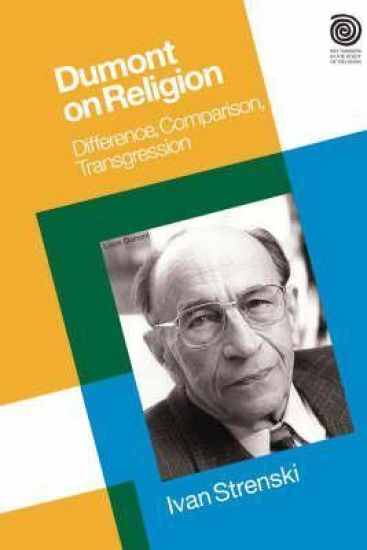
Dumont on Religion

Dumont on Religion

Ivan Strenski

Equinox Publishing Ltd
2008
sidottu
Louis Dumont was a prominent anthropologist and sociologist whose work - notably on Indian society - influenced the study of religion. 'Dumont on Religion' introduces Dumont's work on kinship studies, structural theory, and his views on idealism. Subjects of particular interest to students of religion are highlighted, including Dumont's concepts of the sacred and profane, pure and impure, transcendence, values and hierarchy. The book also presents the ethical implications of Dumont's ideas and his comparison between the world views of modern and traditional societies.
Dumont on Religion

Dumont on Religion

Ivan Strenski

Equinox Publishing Ltd
2008
nidottu
Louis Dumont was a prominent anthropologist and sociologist whose work - notably on Indian society - influenced the study of religion. 'Dumont on Religion' introduces Dumont's work on kinship studies, structural theory, and his views on idealism. Subjects of particular interest to students of religion are highlighted, including Dumont's concepts of the sacred and profane, pure and impure, transcendence, values and hierarchy. The book also presents the ethical implications of Dumont's ideas and his comparison between the world views of modern and traditional societies.
Muslims, Islams and Occidental Anxieties

Muslims, Islams and Occidental Anxieties

Ivan Strenski

Ethics International Press Ltd
2022
sidottu
Muslims, Islams and Occidental Anxieties deconstructs our common prejudices about both the compatibility and incompatibility of Muslim and Western civilizations. Rather than reinforcing the well-meant, but misinformed, opinion that the religions all fundamentally teach identical values, we identify what seem different distinctive Muslim "goods." Rather than offering the facile moral choice between an Islam either "all good" or "all bad," we argue the case for pluralism derived from Sir Isaiah Berlin. In many cases, Islam thus represents a distinctive system of alternative ethical and religious "goods" to those valued in the West. In other cases, differences will remain different and unresolved. Far from necessarily threatening Western moral and religious identity, we explore how the alternative "goods" Islam offers the West can enrich our notions of what constitutes "the good," even to the extent of reviving or enlivening certain Western religious practices. Along with instructional guidelines for classroom use, the book in informed by the powerful and intellectually rigorous device of investigative, empathetic "dialogue" or "conversation," as articulated by MIT's Sherry Turkle and Oxford's Theodore Zeldin, respectively. This form of dialogue steers clear of the didactic mode and instead recovers the open models of philosophical dialogues pioneered by Plato, Socrates, and the "tolerant" Renaissance humanists, such as Erasmus and Jean Bodin.