Kirjojen hintavertailu. Mukana 12 363 183 kirjaa ja 12 kauppaa.

Kirjahaku

Etsi kirjoja tekijän nimen, kirjan nimen tai ISBN:n perusteella.

26 kirjaa tekijältä Ivo Andric

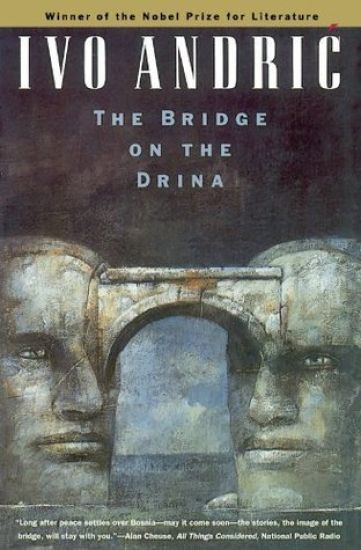
The Andric: the Bridge on the Drina (Pr Only)

The Andric: the Bridge on the Drina (Pr Only)

Ivo Andric

University of Chicago Press
1977
nidottu
A vivid depiction of the suffering history has imposed upon the people of Bosnia from the late 16th century to the beginning of World War I, "The Bridge on the Drina" was awarded the Nobel Prize for Literature in 1961. As we seek to make sense of the current nightmare in this region, this remarkable, timely book serves as a reliable guide to its people and history. No better introduction to the study of Balkan and Ottoman history exists, nor do I know of any work of fiction that more persuasively introduces the reader to a civilization other than our own. It is an intellectual and emotional adventure to encounter the Ottoman world through Andric's pages in its grandiose beginning and at its tottering finale. It is, in short, a marvelous work, a masterpiece, and very much "sui generis." . . . Andric's sensitive portrait of social change in distant Bosnia has revelatory force." (William H. McNeill, from the introduction)Born in Bosnia, Ivo Andric (1892-1975) was a distinguished diplomat and novelist. His books include "The Damned Yard: And Other Stories," and "The Days of the Consuls."
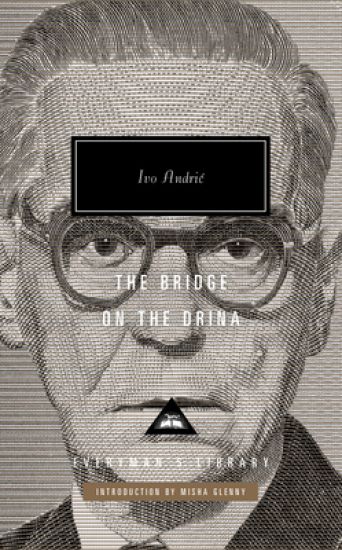
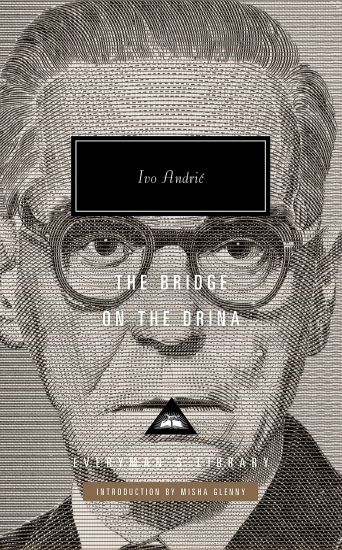
The Bridge on the Drina: Introduction by Misha Glenny
In this masterpiece of historical fiction by the Nobel Prize-winning Yugoslavian author, a stone bridge in a small Bosnian town bears silent witness to three centuries of conflict. The town of Visegrad was long caught between the warring Ottoman and Austro-Hungarian Empires, but its sixteenth-century bridge survived unscathed--until 1914 when tensions in the Balkans triggered the first World War. Spanning generations, nationalities, and creeds, The Bridge on the Drina brilliantly illuminates a succession of lives that swirl around the majestic stone arches. Among them is that of the bridge's builder, a Serb kidnapped as a boy by the Ottomans; years later, as the empire's Grand Vezir, he decides to construct a bridge at the spot where he was parted from his mother. A workman named Radisav tries to hinder the construction, with horrific consequences. Later, the beautiful young Fata climbs the bridge's parapet to escape an arranged marriage, and, later still, an inveterate gambler named Milan risks everything on it in one final game with the devil. With humor and compassion, Ivo Andric chronicles the ordinary Christians, Jews, and Muslims whose lives are connected by the bridge, in a land that has itself been a bridge between East and West for centuries. Everyman's Library pursues the highest production standards, printing on acid-free cream-colored paper, with full-cloth cases with two-color foil stamping, decorative endpapers, silk ribbon markers, European-style half-round spines, and a full-color illustrated jacket.
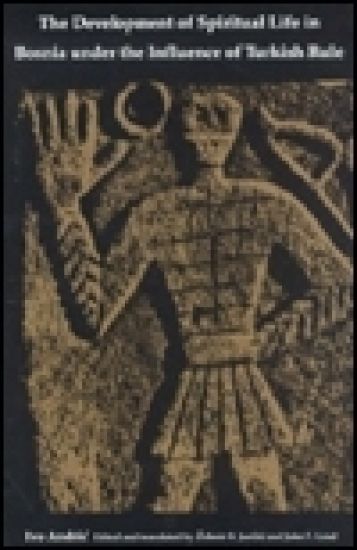
The Development of Spiritual Life in Bosnia Under the Influence of Turkish Rule
Ivo Andric (1892-1975), Nobel Prize laureate for literature in 1961, is undoubtedly the most popular of all contemporary Yugoslav writers. Over the span of fifty-two years some 267 of his works have been published in thirty-three languages. Andric’s doctoral dissertation, The Development of Spiritual Life in Bosnia under the Influence of Turkish Rule (1924), never before translated into English, sheds important light on the author’s literary writings and must be taken into account in any current critical analysis of his work.Over his long and distinguished career as a diplomat and man of letters Andric never again so directly or discursively addressed, as a social historian, the impact of Turkish hegemony on the Bosnian people (1463–1878), a theme he returns to again and again in his novels. Although Andric’s fiction was embedded in history, scholars know very little of his actual readings in history and have no other comparable treatment of it from his own pen. This dissertation abounds with topics that Andric incorporated into his early stories and later novels, including a focus on the moral stresses and compromises within Bosnia’s four religious confessions: Catholic, Orthodox, Jew, and Muslim.Z. B. Juricic provides an extensive introduction describing the circumstances under which this work was written and situating it in Andric’s oeuvre. John F. Loud’s original bibliography drawn from this dissertation stands as the only comprehensive inventory of historical sources known to have been closely familiar to the author at this early stage in his development.
Bosnian_chronicle_ivandric

Bosnian_chronicle_ivandric

Ivo Andric

Hassell Street Press
2021
nidottu
This work has been selected by scholars as being culturally important and is part of the knowledge base of civilization as we know it.This work is in the public domain in the United States of America, and possibly other nations. Within the United States, you may freely copy and distribute this work, as no entity (individual or corporate) has a copyright on the body of the work.Scholars believe, and we concur, that this work is important enough to be preserved, reproduced, and made generally available to the public. To ensure a quality reading experience, this work has been proofread and republished using a format that seamlessly blends the original graphical elements with text in an easy-to-read typeface.We appreciate your support of the preservation process, and thank you for being an important part of keeping this knowledge alive and relevant.
The Bridge Over the Drina

The Bridge Over the Drina

Ivo Andric

Vintage Classics
2025
pokkari
'By the time I finished it something in me had shifted forever' Elif Shafak, New StatesmanThere is no hero or heroine in this book. Instead, there is a bridge, and there are the characters that have loved it, hated it, built it or tried to destroy it. Ivo Andric, winner of the Nobel Prize in Literature, grew up beside it.For more than four hundred years a bridge has spanned the River Drina in Bosnia. This novel is its chronicle. Radisav, a workman, tries to hinder its construction and is impaled alive on its highest point. Beautiful Fata leaps from its parapet to escape an arranged marriage. Milan, inveterate gamble, risks all in one last game on it. Spanning generations, nationalities, creeds, and a great stretch of green water, the bridge bears witness to the lives played out on it, connections forged and centuries of conflict.
The Bridge on the Drina

The Bridge on the Drina

Ivo Andric

Everyman's Library
2021
sidottu
The town of Visegrad was long caught between the warring Ottoman and Austro-Hungarian Empires, but its sixteenth-century bridge survived unscathed--until 1914 when tensions in the Balkans triggered the first World War. Spanning generations, nationalities, and creeds, The Bridge on the Drina brilliantly illuminates a succession of lives that swirl around the majestic stone arches. Among them is that of the bridge's builder, a Serb kidnapped as a boy by the Ottomans; years later, as the empire's Grand Vezir, he decides to construct a bridge at the spot where he was parted from his mother. A workman named Radisav tries to hinder the construction, with horrific consequences. Later, the beautiful young Fata climbs the bridge's parapet to escape an arranged marriage, and, later still, an inveterate gambler named Milan risks everything on it in one final game with the devil. With humor and compassion, Ivo Andric chronicles the ordinary Catholics, Muslims, and Orthodox Christians whose lives are connected by the bridge, in a land that has itself been a bridge between East and West for centuries.
Bosnian Chronicle

Bosnian Chronicle

Ivo Andric

The Harvill Press
2014
nidottu
Set in the town of Travnik, Bosnian Chronicle presents the struggle for supremacy in a region that stubbornly refuses to submit to any outsider. The time is Napoleonic and the novel, both in its historical scope and psychological subtlety, is Tolstoyan. Inevitably, in its portrayal of conflict and fierce ethnic loyalties, the story is eerily relevant to readers today. Ottoman viziers, French consuls, and Austrian plenipotentiaries are consumed by a ceaseless game of diplomacy and double-dealing: expansive and courtly face-to-face, brooding and scheming behind closed doors. As they have for centuries, the Bosnians themselves observe and endure the machinations of greater powers that vie, futilely, to absorb them. Ivo Andric’s masterwork is imbued with the richness and complexity of a region that has brought much tragedy to our century and known so little peace.
The Bridge Over the Drina

The Bridge Over the Drina

Ivo Andric

Vintage Publishing
1994
pokkari
In the small Bosnian town of Visegrad the stone bridge of the novel's title, built in the sixteenth century on the instruction of a grand vezir, bears witness to three centuries of conflict. Visegrad has long been a bone of contention between the Ottoman and Austro-Hungarian Empires, but the bridge survives unscathed until 1914, when the collision of forces in the Balkans triggers the outbreak of World War I.The bridge spans generations, nationalities and creeds, silent testament to the lives played out on it. Radisav, a workman, tries to hinder its construction and is impaled alive on its highest point; beautiful Fata leaps from its parapet to escape an arranged marriage; Milan, inveterate gamble, risks all in one last game on it. With humour and compassion, Andric chronicles the lives of Catholics, Muslims and Orthodox Christians unable to reconcile their disparate loyalties.
Most na Drine

Most na Drine

Ivo Andric

Ast
2023
sidottu
Ivo Andrich (1892-1975) - edinstvennyj serbskij pisatel, udostoennyj Nobelevskoj premii po literature za roman "Most na Drine", okhvatyvajuschij okolo chetyrekh vekov - ot rastsveta Osmanskoj imperii i do nachala XX veka.Tsentralnyj obraz, stavshij osnovopolagajuschim dlja vsego proizvedenija, - most cherez reku Drina v gorode Vishegrad. Most, slovno nemoj svidetel, pomnit vse vremena, kogda on soedinjal ili razdeljal, razlichnye kultury, very, traditsii i tsivilizatsii - vostochnuju i zapadnuju.V romane avtor ne tolko opisyvaet realnye sobytija istorii regiona, no i dostoverno izobrazhaet byt i nravy svoeobraznogo mnogonatsionalnogo soobschestva, slozhivshegosja na territorii Vishegrada i vsego Balkanskogo poluostrova, vpletaja v povestvovanie legendy i predanija, skazki i mify, rodivshiesja v etoj unikalnoj srede.Perevodchik: Virta Tatjana Nikolaevna
Most na Drine

Most na Drine

Ivo Andric

Ast
2025
nidottu
Ivo Andrich (1892-1975) - edinstvennyj jugoslavskij pisatel, udostoennyj Nobelevskoj premii po literature za roman "Most na Drine", okhvatyvajuschij okolo chetyrekh vekov - ot rastsveta Osmanskoj imperii i do nachala XX veka. Tsentralnyj obraz, stavshij osnovopolagajuschim dlja vsego proizvedenija, - most cherez reku Drina v gorode Vishegrad. Most, slovno nemoj svidetel, pomnit vse vremena, kogda on soedinjal ili razdeljal, razlichnye kultury, very, traditsii i tsivilizatsii - vostochnuju i zapadnuju.V romane avtor ne tolko opisyvaet realnye sobytija istorii regiona, no i dostoverno izobrazhaet byt i nravy svoeobraznogo mnogonatsionalnogo soobschestva, slozhivshegosja na territorii Vishegrada i vsego Balkanskogo poluostrova, vpletaja v povestvovanie legendy i predanija, skazki i mify, rodivshiesja v etoj unikalnoj srede.
Prokljatij dvir

Prokljatij dvir

Ivo Andric

Vidavnitstvo 21
2020
sidottu
"Prokljatij dvir" - odin iz najkraschikh i najvidomishikh romaniv Nobelivskogo laureata z literaturi Ivo Andricha. Tsej roman pobudovano za printsipom "istorija v istoriji", scho dozvolilo pismenniku pojednati odrazu kilka opovidej. Odna z nikh vidbuvajetsja na pochatku minulogo stolittja v stambulskij tjurmi, kudi likha dolja zakinula monakha-frantsiskantsja z Bosniji. Insha zh istorija sjagaje XV stolittja i opovidaje pro realnu dolju Dzhem-sultana, jakij boretsja za vladu zi svojim bratom Bajazidom II. Popri napruzhenij sjuzhet, tse sche j filosofskij roman, u jakomu pritcha pro brativ-supernikiv pererostaje v rozdum pro sutichku romantichnogo j pragmatichnogo nachal, a "prokljatim dvorom" staje ne tilki tjuremne podvir'ja, a j same ljudske zhittja.
Pasjaens elskerinne og andre noveller
Fem av Andric's noveller gjengitt av Arne Gallis. De tre første foregår i tiden like før eller like etter den østerrikske okkupasjonen av Bosnia i 1882, de to siste nærmere vår egen tid. Rammen er livet på en badestrand, med hovedvekt på livsfilosofiske problemer.
Fortellinger fra Bosnia

Fortellinger fra Bosnia

Ivo Andric

Solum
2009
nidottu
Utvalgte noveller. Her presenteres leseren for tidligere tiders liv i Bosnia og menneskeskjebner der: storskryteren, sigøyneren, den tyrkiske vesiren, overtroens makt over sinnene, og den serbiske husmanns kamp mot den muslimske jordeier, som sier noe om bakgrunnen for det som skjer i Bosnia i dag. Andric fikk Nobelprisen i litteratur i 1961.