Kirjojen hintavertailu. Mukana 11 627 220 kirjaa ja 12 kauppaa.

Kirjahaku

Etsi kirjoja tekijän nimen, kirjan nimen tai ISBN:n perusteella.

4 kirjaa tekijältä Ivo Burum

The Mojo Handbook

The Mojo Handbook

Ivo Burum

Routledge
2020
sidottu
The Mojo Handbook: Theory to Praxis offers a detailed and engaging crash course on how to use mobile tools to create powerful journalistic stories. Drawing on both theoretical underpinnings and practical techniques, the book outlines the fundamentals of mobile journalism methods, by placing mobile storytelling within a wider context of current affairs, documentary filmmaking and public relations. The book offers expert advice for how to use storytelling skills to transform mobile content into engaging and purposeful user-generated stories for audiences. Topics covered include tips for recording dynamic video and clean audio, conducting interviews on your phone and editing and post-production processes, as well as advice on how to handle copyright issues and a primer on journalistic ethics. The book also includes a comprehensive glossary of terms to help students navigate the video production and mobile journalism world. The Mojo Handbook is a valuable resource for aspiring multimedia professionals in journalism, strategic and corporate communication, community and education, as well as anyone looking to incorporate mobile into their visual storytelling tool kit.
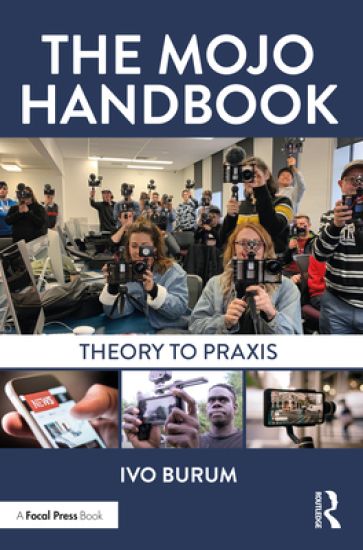
The Mojo Handbook

The Mojo Handbook

Ivo Burum

Routledge
2020
nidottu
The Mojo Handbook: Theory to Praxis offers a detailed and engaging crash course on how to use mobile tools to create powerful journalistic stories. Drawing on both theoretical underpinnings and practical techniques, the book outlines the fundamentals of mobile journalism methods, by placing mobile storytelling within a wider context of current affairs, documentary filmmaking and public relations. The book offers expert advice for how to use storytelling skills to transform mobile content into engaging and purposeful user-generated stories for audiences. Topics covered include tips for recording dynamic video and clean audio, conducting interviews on your phone and editing and post-production processes, as well as advice on how to handle copyright issues and a primer on journalistic ethics. The book also includes a comprehensive glossary of terms to help students navigate the video production and mobile journalism world. The Mojo Handbook is a valuable resource for aspiring multimedia professionals in journalism, strategic and corporate communication, community and education, as well as anyone looking to incorporate mobile into their visual storytelling tool kit.
Democratizing Journalism through Mobile Media
Fuelled by a distrust of big media and the development of mobile technologies, the resulting convergence of journalism praxis (professional to alternative), workflows (analogue to multipoint digital) and platforms (PC to mobile), result in a 24-hour always-on content cycle. The information revolution is a paradigm shift in the way we develop and consume information, in particular the type we call news. While many see this cultural shift as ruinous, Burum sees it as an opportunity to utilize the converging information flow to create a galvanizing and common digital language across spheres of communication: community, education and mainstream media. Embracing the digital literacies researched in this book will create an information bridge with which to traverse journalism’s commercial precarity, the marginalization of some communities, and the journalism school curricula.
Democratizing Journalism through Mobile Media
Fuelled by a distrust of big media and the development of mobile technologies, the resulting convergence of journalism praxis (professional to alternative), workflows (analogue to multipoint digital) and platforms (PC to mobile), result in a 24-hour always-on content cycle. The information revolution is a paradigm shift in the way we develop and consume information, in particular the type we call news. While many see this cultural shift as ruinous, Burum sees it as an opportunity to utilize the converging information flow to create a galvanizing and common digital language across spheres of communication: community, education and mainstream media. Embracing the digital literacies researched in this book will create an information bridge with which to traverse journalism’s commercial precarity, the marginalization of some communities, and the journalism school curricula.