Kirjojen hintavertailu. Mukana 11 244 527 kirjaa ja 12 kauppaa.

Kirjahaku

Etsi kirjoja tekijän nimen, kirjan nimen tai ISBN:n perusteella.

5 kirjaa tekijältä Iwan Morgan

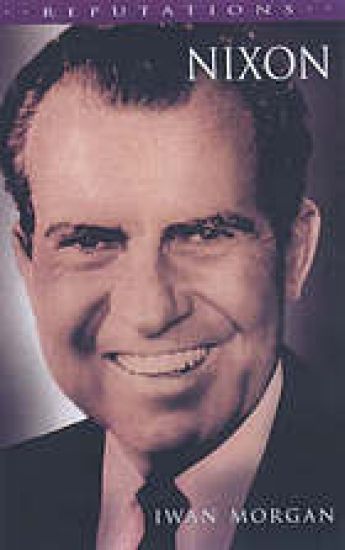
Nixon

Nixon

Iwan Morgan

Hodder Arnold
2002
nidottu
This book examines Richard Nixon within the context of the emerging revisionism that his place in history should not be defined entirely by Watergate. It assesses his many achievements and explains his equally numerous shortcomings. Nixon himself was assidious in taking advantage of changing perspectives to remodel his shattered image and portray himself as a great leader brought down by one mistake. While most historians resisted this revisionism during his lifetime, a growing number have called for his achievements to be reassessed since his death in 1994. It is time to look again at the Nixon presidency and, without falling into the trap of apologia, try to discern how Nixon's reputation has evolved and how far it corresponds to his actions and their effects. Can we give credence to his self-promotion as 'world statesman'? Should we re-evaluate the domestic record of a president whose policies had more in common with those of his liberal predecessors than his conservative successors? These and other issues that contribute to a fresh understanding of the ways in which Richard Nixon's historical image has been fashioned are at the heart of this incisive new study.
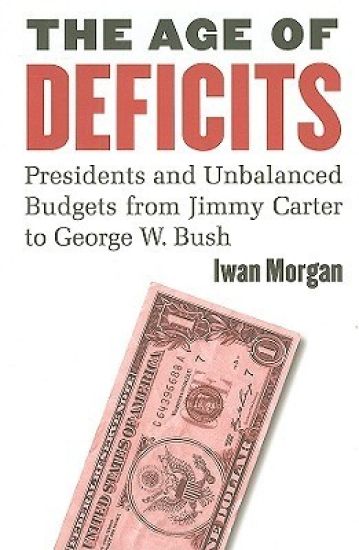
The Age of Deficits

The Age of Deficits

Iwan Morgan

University Press of Kansas
2009
sidottu
The debate over the federal budget - and the deficit spending it tends to produce - has assumed a renewed urgency for reasons that are painfully clear to all of us. Over the past thirty-two years - from the presidency of Jimmy Carter through that of George W. Bush - the U.S. government has in fact balanced its budget in only four of them, while the fiscal challenges confronting President Obama make a balanced budget anytime soon a remote possibility. Iwan Morgan's book provides a much-needed historical perspective on this perennially troubling issue. The prominent role of Congress notwithstanding, Morgan closely examines the role of presidents in the emergence of large federal budget deficits in the 1970s and 1980s, the reduction of the deficit problem in the 1990s, and its resurrection in the early twenty-first century. He focuses in particular on presidential budget policy to show how, over five administrations, deficit reduction merely complemented rather than took precedence over political priorities - and how Democrats came to support deficit reduction as necessary to preserve the liberal state, while Republicans largely tolerated deficits in order to safeguard their tax programs. Along the way, he considers such curiosities as why Carter and Clinton sought to reduce the deficit at a high level of revenue while Reagan and Bush 43 took the low road, and why Reagan and Bush 41 pressed for constitutional change prohibiting unbalanced budgets while Carter and Clinton opposed such an amendment. Through this historical perspective, Morgan offers an innovative analysis of the relationship between presidential budget policy and the Federal Reserve's direction of monetary policy and probes the emerging link between America's domestic public indebtedness and external indebtedness. He also provides a fresh look at the growth of the entitlement state in a generally conservative era and the failure of efforts to place it on a secure financial footing. ""The Age of Deficits"" boldly places the budget deficit at the center of modern American political history. Morgan clearly shows that, however much our recent leaders defined the deficit as a threat, their responses to it ultimately reflected their concern with reconciling its reduction with other elements of their governing agenda.
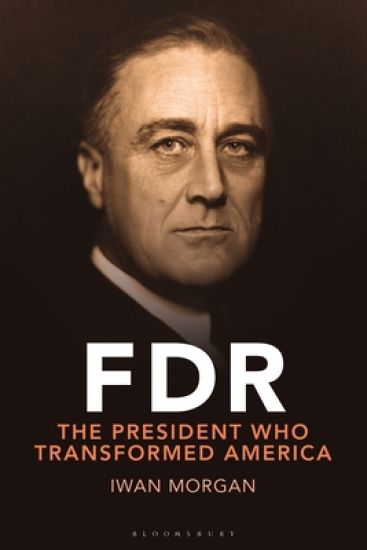
FDR

FDR

Iwan Morgan

BLOOMSBURY PUBLISHING PLC
2022
sidottu
One of the greatest American presidents, Franklin Delano Roosevelt built a coalition of labour, ethnic, urban, low-income and African American voters that underwrote the Democratic Party’s national ascendancy from the 1930s to the 1980s. Over his four terms, he promoted the New Deal – the greatest reform programme in US history – to meet the challenges of the Great Depression, led the United States to the brink of victory in the Second World War, and established the modern presidency as the driving force of American politics and government. Iwan Morgan takes a fresh look at FDR, showing how his leadership enabled the United States of America to become the most successful country of the twentieth century. This astute and original assessment of a highly consequential presidency explains how Roosevelt enhanced the governing capacity of his office, promoted a constitutional revolution through his dealings with the Supreme Court, and forged a new intimacy between the president and the American people through his genius for political communication. It also demonstrates the significance of his organizational and strategic leadership as commander-in-chief in America’s greatest foreign war, his role in holding together the US-British-Soviet Grand Alliance against the Axis powers, and his pioneering development of the national-security presidency that sought to promote a lasting post-war peace for the world. In fluid, immensely readable prose, Morgan focuses on the ways in which FDR transformed the presidency into an institution of domestic and international leadership to establish the modern ideal of the office as an assertive, democratic executive charged with meeting the challenges facing the US at home and abroad.
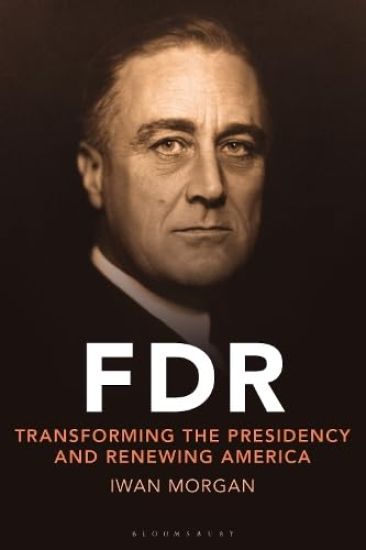
FDR

FDR

Iwan Morgan

BLOOMSBURY PUBLISHING PLC
2024
nidottu
'[A] superb study of the way FDR successfully created a presidency that could renew America' - Times Literary SupplementOne of the greatest American presidents, Franklin Delano Roosevelt built a coalition of labour, ethnic, urban, low-income and African American voters that underwrote the Democratic Party’s national ascendancy from the 1930s to the 1980s. Over his four terms, he promoted the New Deal – the greatest reform programme in US history – to meet the challenges of the Great Depression, led the United States to the brink of victory in the Second World War, and established the modern presidency as the driving force of American politics and government. Iwan Morgan takes a fresh look at FDR, showing how his leadership enabled the United States of America to become the most successful country of the twentieth century. This astute and original assessment of a highly consequential presidency explains how Roosevelt enhanced the governing capacity of his office, promoted a constitutional revolution through his dealings with the Supreme Court, and forged a new intimacy between the president and the American people through his genius for political communication. It also demonstrates the significance of his organizational and strategic leadership as commander-in-chief in America’s greatest foreign war, his role in holding together the US-British-Soviet Grand Alliance against the Axis powers, and his pioneering development of the national-security presidency that sought to promote a lasting post-war peace for the world. In fluid, immensely readable prose, Morgan focuses on the ways in which FDR transformed the presidency into an institution of domestic and international leadership to establish the modern ideal of the office as an assertive, democratic executive charged with meeting the challenges facing the US at home and abroad.
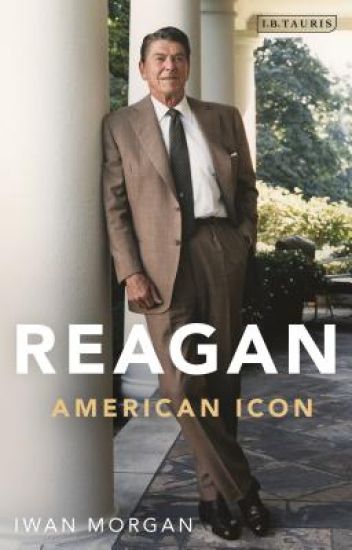
Reagan

Reagan

Iwan Morgan

Bloomsbury Publishing PLC
2020
nidottu
Ronald Reagan is arguably the most successful post-war American president. A transformational leader, he is broadly credited with renewing American prosperity after the stagflation-hit 1970s, laying the foundations for Cold War victory and bringing about the shift to the right in late-twentieth century politics. In this new biography, Iwan Morgan shrewdly assesses Reagan's considerable achievements whilst also highlighting the shortcomings that were an indisputable part of his record. This edition also features a new chapter on 'Reagan in the Age of Trump'.