Kirjojen hintavertailu. Mukana 12 407 188 kirjaa ja 12 kauppaa.

Kirjahaku

Etsi kirjoja tekijän nimen, kirjan nimen tai ISBN:n perusteella.

5 kirjaa tekijältä J. Alison Rosenblitt

E. E. Cummings' Modernism and the Classics

E. E. Cummings' Modernism and the Classics

J. Alison Rosenblitt

Oxford University Press
2016
sidottu
This volume is a major, ground-breaking study of the modernist E. E. Cummings' engagement with the classics. With his experimental form and syntax, his irreverence, and his rejection of the highbrow, there are probably few current readers who would name Cummings if asked to identify 20th-century Anglophone poets in the Classical tradition. But for most of his life, and even for ten or twenty years after his death, this is how many readers and critics did see Cummings. He specialised in the study of classical literature as an undergraduate at Harvard, and his contemporaries saw him as a 'pagan' poet or a 'Juvenalian' satirist, with an Aristophanic sense of humour. In E.E. Cummings' Modernism and the Classics, Alison Rosenblitt aims to recover for the contemporary reader this lost understanding of Cummings as a classicizing poet. The book also includes an edition of previously unpublished work by Cummings himself, unearthed from archival research. For the first time, the reader has access to the full scope of Cummings' translations from Horace, Homer, and Greek drama, as well as two short pieces of classically-related prose, a short 'Alcaics' and a previously unknown and classicizing parody of T. S. Eliot's The Waste Land. This new work is exciting in its own right and essential to understanding Cummings' development as a poet.
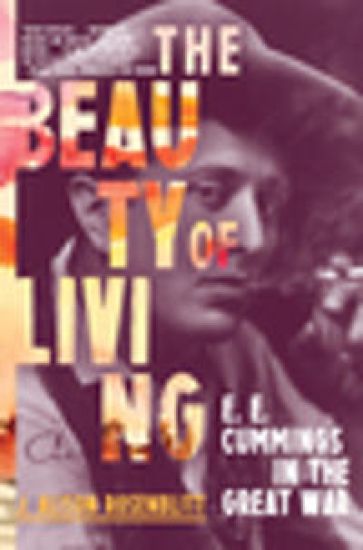
The Beauty of Living

The Beauty of Living

J. Alison Rosenblitt

WW Norton Co
2020
sidottu
Intimate and richly detailed, The Beauty of Living begins with Cummings’s Cambridge, Massachusetts upbringing and his relationship with his socially progressive but domestically domineering father. It follows Cummings through his undergraduate experience at Harvard, where he fell into a circle of aspiring writers including John Dos Passos, who became a lifelong friend. Steeped in classical paganism and literary decadence, Cummings and his friends rode the explosion of Cubism, Futurism, Imagism and other “modern” movements in the arts. As the United States prepared to enter the First World War, Cummings volunteered as an ambulance driver, was shipped out to Paris and met his first love, Marie Louise Lallemand, who was working in Paris as a prostitute. Soon after reaching the front, however, he was unjustly imprisoned in a brutal French detention centre at La Ferté-Macé. Through this confrontation with arbitrary and sadistic authority, he found the courage to listen to his own voice. Probing an underexamined yet formative time in the poet’s life, this deeply researched account illuminates his ideas about love, justice, humanity and brutality. J. Alison Rosenblitt weaves together letters, journal entries and sketches with astute analyses of poems that span Cummings’ career, revealing the origins of one of the twentieth century’s most famous poets.
The Beauty of Living

The Beauty of Living

J. Alison Rosenblitt

WW Norton Co
2022
nidottu
Intimate and richly detailed, The Beauty of Living begins with Cummings’s Cambridge, Massachusetts upbringing and his relationship with his socially progressive but domestically domineering father. It follows Cummings through his undergraduate experience at Harvard, where he fell into a circle of aspiring writers including John Dos Passos, who became a lifelong friend. Steeped in classical paganism and literary decadence, Cummings and his friends rode the explosion of Cubism, Futurism, Imagism and other “modern” movements in the arts. As the United States prepared to enter the First World War, Cummings volunteered as an ambulance driver, was shipped out to Paris and met his first love, Marie Louise Lallemand, who was working in Paris as a prostitute. Soon after reaching the front, however, he was unjustly imprisoned in a brutal French detention centre at La Ferté-Macé. Through this confrontation with arbitrary and sadistic authority, he found the courage to listen to his own voice. Probing an underexamined yet formative time in the poet’s life, this deeply researched account illuminates his ideas about love, justice, humanity and brutality. J. Alison Rosenblitt weaves together letters, journal entries and sketches with astute analyses of poems that span Cummings’ career, revealing the origins of one of the twentieth century’s most famous poets.
Rome after Sulla

Rome after Sulla

J. Alison Rosenblitt

Bloomsbury Academic
2019
sidottu
Rome after Sulla offers a new perspective on the damaged, volatile, and conflictual political culture of the late Roman republic. The book begins with a narrative of the years immediately following the dictatorship of Sulla (80-77 BC), providing both a new reconstruction of events and original analysis of key sources including Cicero’s pro Roscio, Appian, the Livian tradition, and Sallust’s Historiae. Arguing that Sulla’s settlement was never stable, Rome after Sulla emphasises the uncertainty and fear felt by contemporaries and the problems caused in Rome by consciousness of the injustices of the Sullan settlement and its lack of moral legitimacy. The book argues that the events and the unresolved traumas of the first civil war of the Roman republic triggered profound changes in Roman political culture, to which Sallust’s magnum opus, his now-fragmentary Historiae, is our best guide. An in-depth exploration of a new, more Sallust-centred vision of the late republic contributes to the historical picture not only of the legacy of Sulla, but also of Caesar and of Rome’s move from republic to autocratic rule. The book studies a society grappling with a question broader than its own times: what is the price of stability?
Rome after Sulla

Rome after Sulla

J. Alison Rosenblitt

Bloomsbury Academic
2020
nidottu
Rome after Sulla offers a new perspective on the damaged, volatile, and conflictual political culture of the late Roman republic. The book begins with a narrative of the years immediately following the dictatorship of Sulla (80-77 BC), providing both a new reconstruction of events and original analysis of key sources including Cicero’s pro Roscio, Appian, the Livian tradition, and Sallust’s Historiae. Arguing that Sulla’s settlement was never stable, Rome after Sulla emphasises the uncertainty and fear felt by contemporaries and the problems caused in Rome by consciousness of the injustices of the Sullan settlement and its lack of moral legitimacy. The book argues that the events and the unresolved traumas of the first civil war of the Roman republic triggered profound changes in Roman political culture, to which Sallust’s magnum opus, his now-fragmentary Historiae, is our best guide. An in-depth exploration of a new, more Sallust-centred vision of the late republic contributes to the historical picture not only of the legacy of Sulla, but also of Caesar and of Rome’s move from republic to autocratic rule. The book studies a society grappling with a question broader than its own times: what is the price of stability?